

Take-Two CEO: ‘Google’s Project Genie AI is a great sign of things to come’
The games giant delivers another big financial quarter. Plus, Epic targets smaller developers with its Store


Google’s Project Genie, which allows people to create their own virtual worlds, is an opportunity for GTA company Take-Two, says CEO Strauss Zelnick.
His comments follow a 12% drop in Take-Two’s share price since Friday, which mirrors similar falls from other big public game companies. It followed the release of Project Genie, with investors seemingly spooked by the technology’s apparent ability to generate GTA-style open worlds.
“This company was built on the use of machine learning and artificial intelligence,” Zelnick told The Game Business. “All video games are created almost entirely in computers, and we embrace technology. We have hundreds of AI pilots and implementations going on right now across our company, including our labels. And we’re really enthusiastic about what this new technology can mean.
“From one point-of-view, I’m surprised about the market reaction, because I’ve been optimistic about all things AI since this question came up a couple of years ago. That is how we’re built, that’s where we started. Innovation is one of our core tenets. Our three-part strategy is to be the most creative, the most innovative and the most efficient company in the business, and the innovations surrounding AI is definitely driving efficiencies, and we think also can drive creativity. Because as tools get better, our teams can do cooler and cooler things.
“I am even more optimistic than I’ve ever been. And I thought the [Google] release was a great sign of things to come.”
He added: “It’s an opportunity, not a problem.”
However, Zelnick stresses that the technology itself is not a replacement for creativity.
“I think the confusion though is… somehow the new technology and the new tools will become entertainment experiences by themselves. That’s just not going to happen. Tools are not entertainment experiences. Creators use tools to create great entertainment.”
“AI tools are not entertainment experiences. Creators use tools to create great entertainment.”
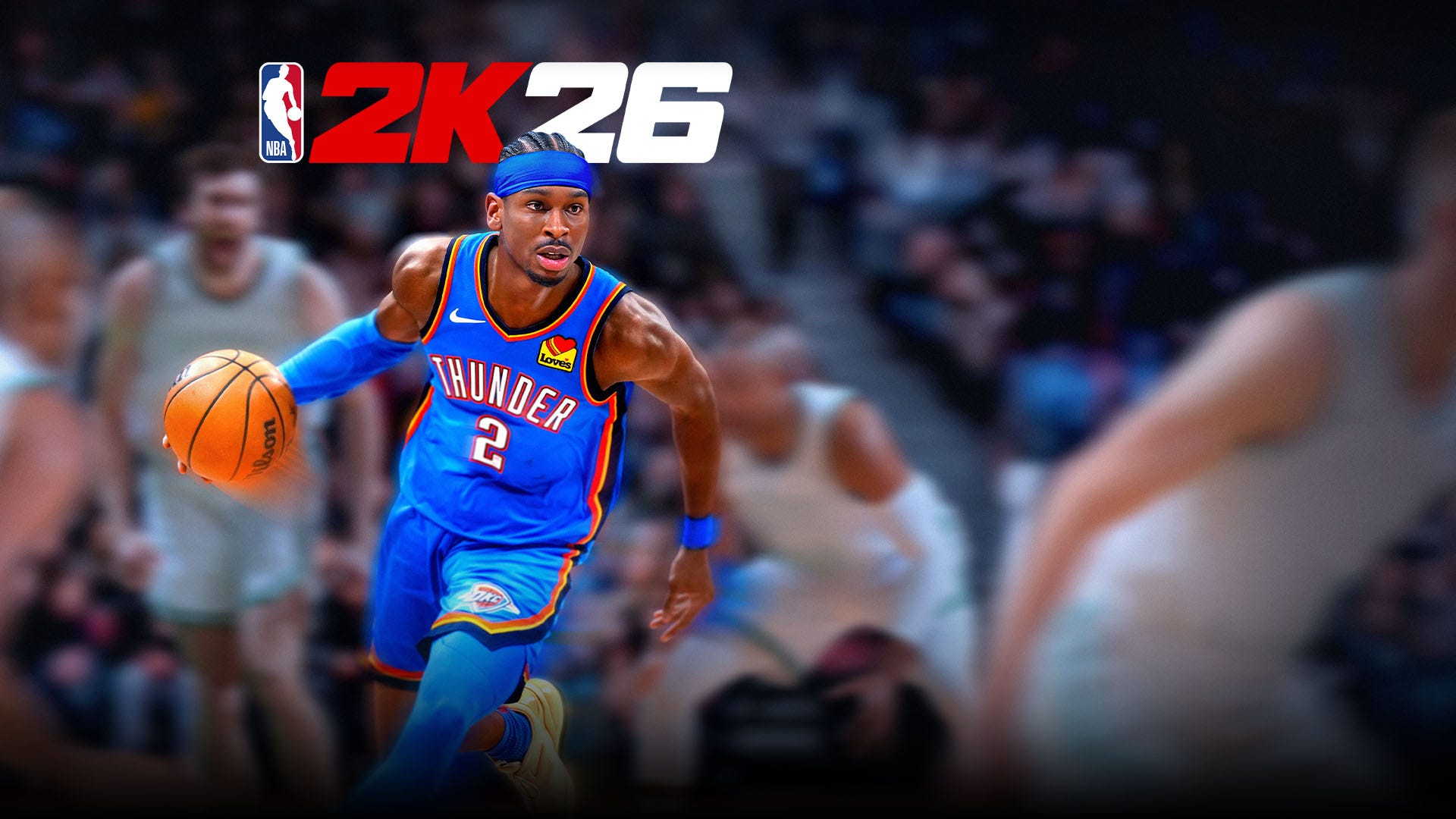
His comments follow another big quarter for the Take-Two. The company delivered $1.76 billion in net bookings, well above even its highest guidance of $1.6 billion. All of its divisions over-performed, Zynga’s mobile games grew 19% in revenue, Rockstar’s GTA Online game increased 27%, while NBA 2K saw a 30% jump.
NBA was a particular breakout, with Zelnick pointing to improved quality for the game, and the sport’s continued growth worldwide.
“Right now, we’re the biggest sports title in North America, we’re not the biggest sports title worldwide,” he said. “There’s great opportunities in international markets. NBA 2K Online in China is the No.1 PC sports title in China. We’ve launched a new mobile title in association with Tencent in China in the basketball space recently, which has been hugely successful. So, we’re feeling really good and energized, and we think there are much more opportunities to come.”
Another interesting area for Take-Two is its growing partnership with Netflix. The firm has released numerous mobile games via the subscription service, including WWE, Red Dead Redemption, Grand Theft Auto and Civilization titles.
“It’s been great,” Zelnick said of the partnership. “It’s been great for the business, it’s been great for the consumers. We’ve said several times, we’re not precious about distribution. We want the broadest possible distribution, as long as it makes sense for consumers, and as long as it’s beneficial, of course, for us and our creators.”
Is it helping the company reach new audiences?
“That’s a great question. I imagine it is. The friction associated with, for example, buying a console just goes away.”
Speaking of consoles, Zelnick acknowledged that “there’s no doubt that PC has become a growing part of what was once the console business. And I do believe that distribution is opening up.” However, he remains “optimistic” about Nintendo Switch 2, with WWE 2K and PGA Tour 2K launching on the machine in the coming weeks.
Of course, we had to ask about Grand Theft Auto 6, which is still set to launch on November 19. “We feel great about it,” Zelnick says. I tried to get more information about the planned marketing beats for the summer months.
“You know me pretty well, for me to even say we’ve got marketing beats coming this summer, is a huge departure from what I usually say, which is that our labels will make marketing announcements.”
With GTA still on track, and Project Genie representing an opportunity for Take-Two, I ended our chat by asking Zelnick what are the biggest challenges he’s facing right now?
“We have an extraordinary company. It’s a very unusual company with a very unusual culture. “
“My biggest challenge, given how well this company functions, is always to drive new hits,” he answered.
“That’s what I spend my time doing and focusing on. I travel widely, I spend a lot of time with my creative teams. I am not a creator myself, I am not an editor myself. I am the person here who drives our team, both executive and creative, to think big, to pursue their passions, and do their best work all the time. To be ambitious, to work as a team, and also to be kind.
“We have an extraordinary company. It’s a very unusual company with a very unusual culture. It is my job to drive that culture and that execution daily. That is my daily challenge, which is never to rest on our prior success, never to claim future success before it occurs, always to run scared and always operate that is consistent with our strategy of being the most creative, most innovative and most efficient, and to do so in accordance with our culture.”
Epic: “We want developers to think of Epic Store at the same time as Steam”
Epic wants smaller developers to not automatically default to Steam when thinking about where to release their games.
That’s according to Epic Store boss Steve Allison, who was speaking to The Game Business after the firm released its year-in-review statistics. Epic says that player spending on third-party PC games, via its Store, hit $400 million last year, which is a rise of 57% over 2024.
The company also reported that 2.78 billion hours were spent on third-party games on the Epic Store, and 35% of those hours went on games that use their own web stores or payment solutions. In 2021/2022, that figure was around 10 – 11%.
Nevertheless, Epic admitted it has a long journey ahead of it.
“We have ambitions to get to at least 25% to 35% market share on PC where third-party stores are involved,” Allison said. “Depending on the data, we are somewhere between 9% and 12%, although in some cases if you think Steam is bigger than it is, you might even say we’re 6% or 5%. The focus is continued growth. We need to MAU over 100 million on average. The next four or five years is about making progress on that.
“In a lot of cases, I don’t think that will be at the expense of Steam. PC gaming is growing right now, as consoles are going through some shifts. I’m really proud that when we entered this space in 2018, Steam’s MAU was 67 million, which is what ours is today. PC gaming has got much larger, I believe, because of this competitive thing we’ve got going on here.”
“PC gaming has got much larger, I believe, because of this competitive thing we’ve got going on here.”
Epic Store is still playing catch-up with Steam’s features. It’s adding community functionality (including voice chat) this year, and rebuilding its launcher so it moves faster. But Allison is aware that Epic also needs to show how it’s different from Valve’s store.
“Part of the work is just getting to table stakes. It’s really important for players and the discourse around everything we’re doing,” he told us. “But also… how are we different? A multiplatform store is a vision we’ve had since we launched this thing. You will hear the marketing tag of being ‘one store across four platforms’. But we’re not really that now. We’re three stores on three different platforms, which aren’t really connected in any way. So around June, we expect to launch the multiplatform store. You can switch between stores, social will be there… so we will start to connect this vision of multiplatform store, community and ecosystem. That coming together we think will be pretty transformative.”
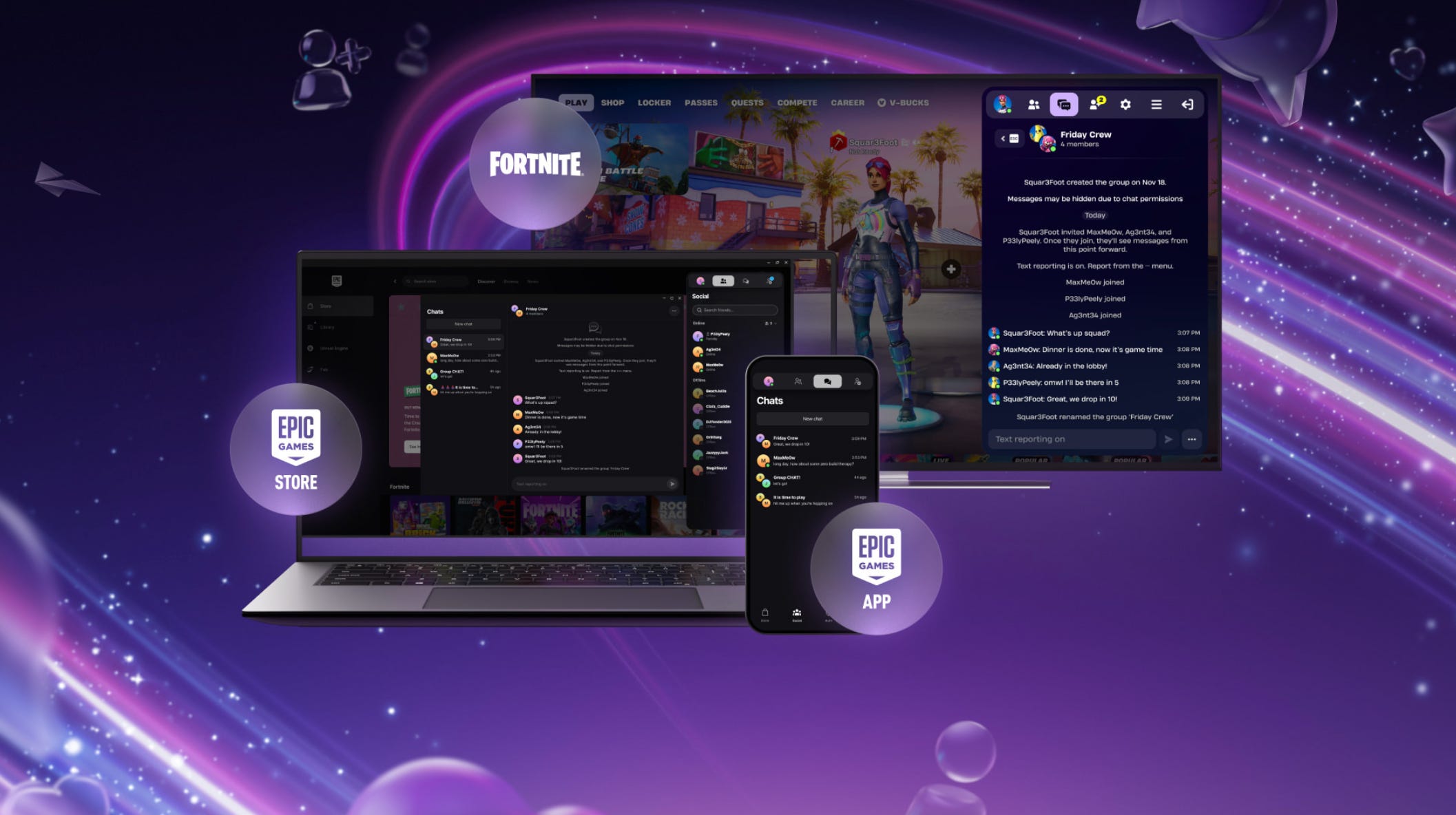
Another element that’s different to Steam is the Epic Store’s connection with Fortnite. And that’s something the company is looking to leverage. In the past, there have been a handful of games – such as Alan Wake and Borderlands – where those who purchased these titles via the Epic Store, would get a Fortnite cosmetic and character avatar. That’s now being rolled out more broadly, starting with Resident Evil Requiem next month.
“We’ve had this very powerful anchor [in Fortnite], and we’ve not tapped into the marketing power that it provides,” Allison admitted. “Maybe four times in seven years. When I was at Telltale, we did this with Valve and Team Fortress hats, and that would have this profound impact. This year we will probably do 40 of them starting with Resident Evil. Our plan is to scale that up to 100 a year in the next 18 to 24 months.”
Allison hopes that will move the needle in terms of players buying from the Epic Store. But another battle is to convince developers to use their store in the first place. He says this has become a lot better, particularly amongst the larger developers, but not so much with the smaller ones. It’s part of the motivation behind why developers will receive 100% of the revenue for the first $1 million they make via the Epic Store.
“We want see [developers] think of us at the same time that they think of Steam,” he said.
“It’s gotten so much better, but the cohort I covet the most from my position, is the small developer who is launching their first game that blows up. Whether that’s friend slop, or Schedule 1, or the two-person team that just builds the thing that they love. They don’t have a lot of exposure to the industry, they don’t worry how it works, they just build a PC game that they love, and they’re going to go to Steam. That is just all they know. We have got to get in their ear, we’ve got to find them, and get them to come [to us] at the same time.
“Having success with that cohort of development is going to be important for our growth, and also really good for the developers if we can create results for them.”
That’s it for today’s bonus newsletter. We’ll be back Thursday where we will reveal the biggest games coming out in 2026 that are not called Grand Theft Auto. Until then, thank you for reading.