


The Game Business is Live in Los Angeles on Monday, June 8, where we will be interviewing game industry veterans Laura Miele, Jason Rubin and Matthew Ball live on stage. Tickets are available now.
Listen now on Apple, Spotify or YouTube
In This Edition,
The Circana US charts are changing
More on game exclusives
Can a price drop save Game Pass?
GTA players in for console price shock
Hello there. Welcome back to this week’s The Game Business.
At one point, this week’s edition was going to be so big that I wasn’t sure how we were going to fit it all in. But embargoes move and plans change. We ended up covering the PlayStation UK case yesterday (although it is still in today’s Show), and another piece has shifted back a week.
But I’m not especially disappointed, because that means we can 100% focus on our chat with Mat Piscatella, the senior director and top games analyst at US charts company Circana. We had a wonderful conversation on today’s edition of The Game Business Show, and I’ve written up some of his opinions, data points and observations in the article below. Including news of a change to the US video game charts.
Enjoy!
Next month’s US games charts will look a little different
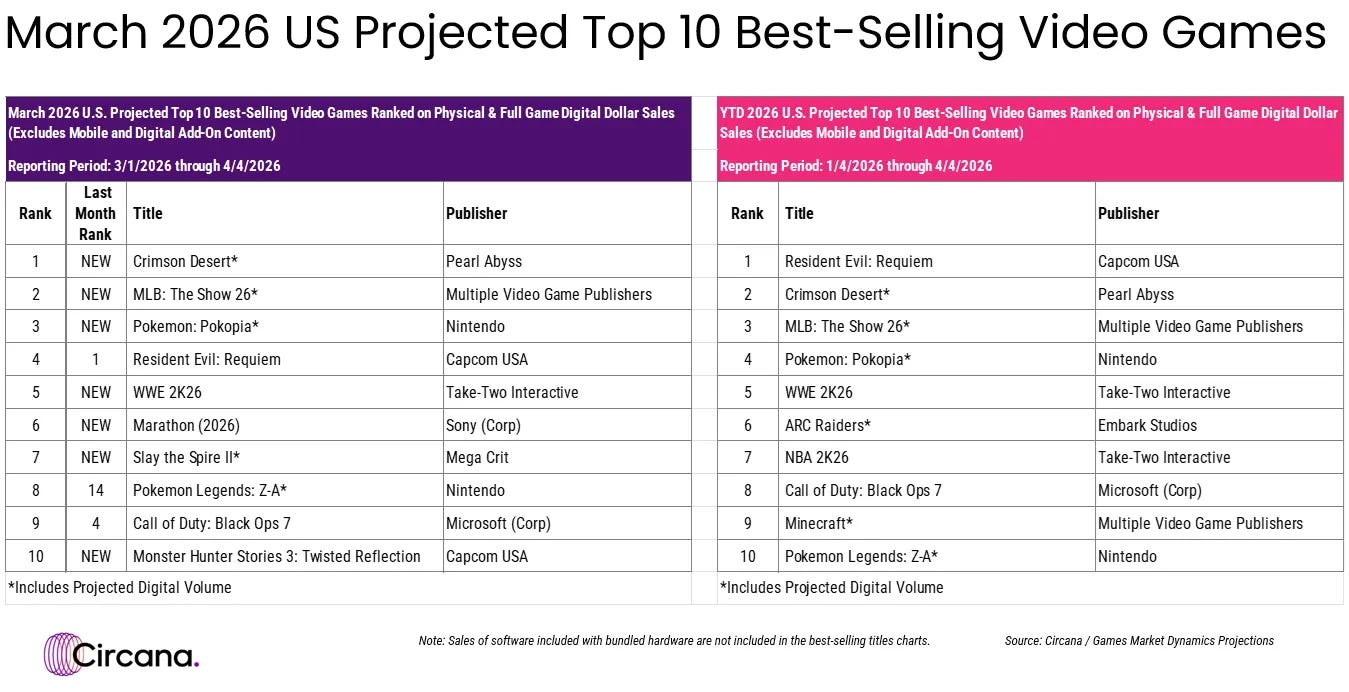
The US video games chart company is changing how it’s doing its monthly charts and will now include projected digital sales figures.
The current chart from Circana covers all physical games, plus digital games data supplied by publishers. But not all publishers share their download data, which means certain titles are missed, or only physical sales are counted.
Speaking to The Game Business, Circana’s games boss Mat Piscatella says that from next month they’ll be running a chart that will look to cover the whole market. The company believes it can accurately estimate how certain games are selling based on the data it receives.
“We’ve been doing these the best-selling titles charts forever,” Piscatella told us. “We’re going to be moving towards a projected total market number for those top titles starting next month. So, no asterisks and dots around physical-only or whatever. We’ll be moving towards a complete projected list. Hopefully people will get a more accurate picture of what’s selling out here in the old US of A.”
Piscatella has already posted how the charts might differ. For March 2026, MLB: The Show 26 was the No.1 game according to Circana’s initial chart, but under its new projected model, Crimson Desert would have been No.1. Slay The Spire 2 would have also made the chart at No.7, and Pokémon Pokopia would have charted higher at No.3.
PS5 enjoys biggest week of the year so far, followed by its lowest
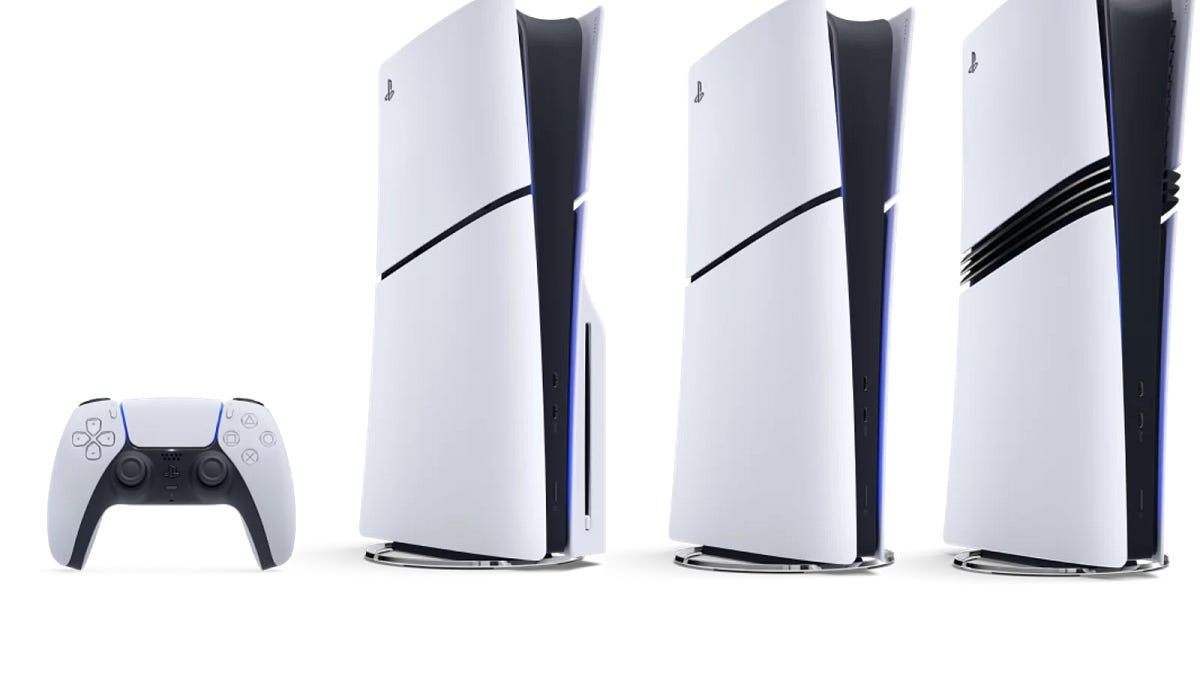
PlayStation 5 US sales reached a 2026 high in March, followed immediately by a 2026 low.
Speaking on today’s The Game Business Show, Piscatella was discussing a strong March for sales of video games and hardware, which included Sony’s flagship console.
“The price increase really boosted PlayStation 5 hardware at the end of the month. It had the biggest week of the year the week the announcement came out, and then subsequently had its two lowest weeks of performance since,” he said.
He added: “We’ve seen an immediate impact on the demand for PlayStation 5 hardware because of that price increase. But it could just be an issue of some demand being pulled forward between the announcement and the implementation of the price increase. These things take time to balance out.”
‘GTA 6 buyers are in for a shock at new console prices’
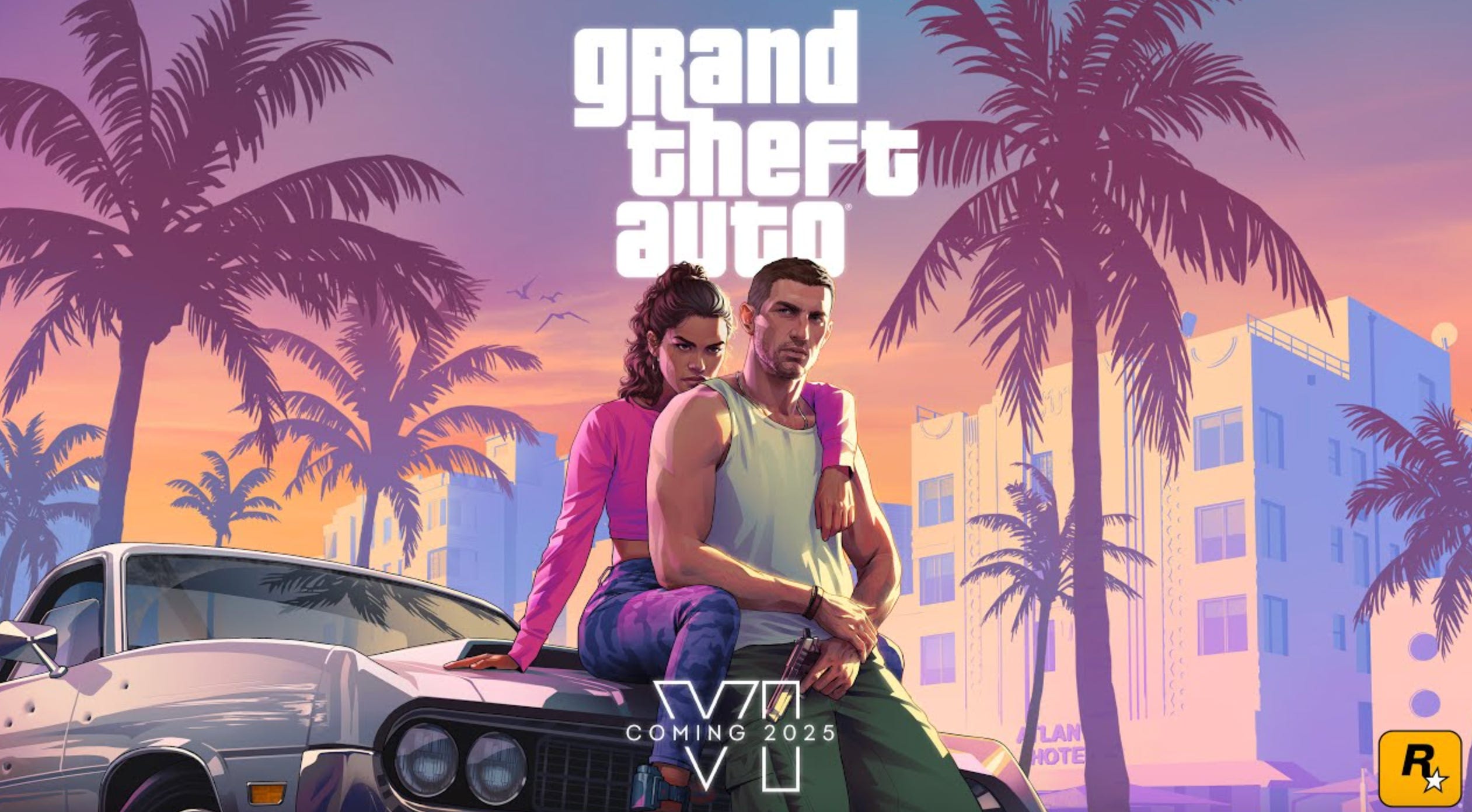
The PS5 price rise was certainly steep, and Piscatella expects a large number of players to be stunned by console prices when Grand Theft Auto 6 finally arrives.
“Those folks who don’t pay a lot of attention, but have heard that GTA is coming, and that’s a lot of people, they will show up and go, “GTA is finally out. I’m going to pick it up.” And then… “A $1,000 console!” There’s going to be a price shock for a lot of people. And yeah, I said $1,000 because I’ve just already assumed we’re going to get more price increases. I hope we don’t.
“What’s going on across pricing in the US has made the console audience shift towards higher income households really quite rapidly. Well over half of video game hardware buyers are $100,000-plus household income level. And the average price of hardware has gone from $250 in 2019, and we’re probably going to exceed $500 just a few years later. All the dynamics of the console market have changed quite dramatically in these last few years. It’s no longer a mass market video game device; it’s a video game device targeted to high income households. It’s a whole different economic picture too, which blows everything up.”
“Exclusives do matter, but not as much as some folks say”
Piscatella and I decided it was time to put the debate around video game exclusives to bed.
There is a lot of discourse around the possibility of Xbox shifting away from releasing games on PlayStation, and PlayStation scaling back its plans for PC. It’s the apparent return of exclusives. But do exclusives really matter?
“Exclusives do matter, but they don’t matter as much as a lot of folks say they do,” Piscatella told us. “I’ve been saying that for a while, and get yelled at about it sometimes, but it’s true. It matters to some folks and it doesn’t matter to others. [Non-exclusive game] EA Sports College Football, when that showed up in the US, was one of the biggest drivers of hardware we’ve seen in years.
“It’s a hearts and minds issue, as Jeff Gerstmann put it on his latest podcast. It’s a perception issue. It’s a positioning issue. It’s a marketing and brand issue, even more than it is a consumer demand one.”
Last week, we shared Circana survey data that revealed that the No.1 reason US gamers play on consoles is for exclusive games, with 41% citing that as the main reason for playing on Xbox, PlayStation or Nintendo.
“But it wasn’t that far ahead of other things like, ‘that’s where my friends are’ and ‘I like buying physical discs’ and some of these other reasons,” Piscatella observed. “Everything matters to an extent.”
“We didn’t see a drop in PlayStation 5 momentum because these games were all of a sudden available on PC later”
PlayStation had been releasing some of its single-player games on PC a few years after release. And Piscatella said he didn’t see anything in the data to suggest it hurt PS5 sales.
“It had no impact at all on PlayStation sales. We didn’t see a drop in PlayStation 5 momentum because these games were all of a sudden available on PC later. There was no blip whatsoever, and I really don’t think when those games aren’t on PC any longer, we’re going to see a positive blip. I don’t think it matters when it comes to console demand.
“However, it does matter to perception, right? If your marketing message and your brand positioning is, “We have all this cool stuff. Look at us.” Okay, well then that’s a different question. You’re trying to raise the overall profile of the thing you’re trying to sell.
“We tend to get a little too in the weeds on this stuff when more than 60% of people who turned on their PlayStation last year played Fortnite at least once, and there’s no exclusive in the Top 20 games by that metric.”
Of course, with console hardware continuing to rise in price, the conversation might be irrelevant when it comes to future generations.
“If the next generation devices are four figures, or $1,200… because that’s possible, then this whole conversation is kind of moot because these games are still expensive [to make]. You’re going to have to find audience, and if you’re selling a $1,200 box, you’re not going to achieve the same install base you would when they were $600. You’re just not. So, making back some of these investment costs on these big games, you’ve got to go where the market is.”
Call of Duty on Game Pass didn’t really benefit Xbox long-term
Circana has been reporting a rise in subscription revenue over the last two years, helped by price increases and the launch of Switch 2.
So, what does he make of Xbox’s decision to lower the cost of Xbox Game Pass Ultimate from $29.99 to $22.99?
“It’s a big drop,” Piscatella said. “It makes sense pulling Call of Duty out because Call of Duty had a moderate impact at launch, but didn’t really impact anything long-term. It didn’t make a lick of difference on hardware sales when it made it to Game Pass, at least in the US. So pulling that out makes a lot of sense, making it more reasonably priced makes a lot of sense. But that’s a big percentage price drop, and are they going to make up for that by a huge influx of new subscribers? Microsoft signalled that they were expecting a revenue decline from Game Pass in the next quarter because of the price increase.
“It should help subscriber numbers, but is it going to help push the revenue higher? Does it have to? And what difference will it really make to Call of Duty sales? I’m of the position that the impact of Game Pass on Call of Duty sales volume was much lower than a lot of people seem to think. I think it’s being used as an excuse more than anything for the performance of the game. But we will see. The proof will be this holiday.”
Ultimately, Game Pass hasn’t been able to appeal to the mass market player.
“Game Pass might just be for that super dedicated player that wants to dabble in everything, whereas the average Call of Duty player plays Call of Duty, maybe Madden, maybe EA FC, and that’s it. That’s all they care about. Maybe Fortnite.”
He added: “[Xbox] tried to make this huge umbrella to try to get to that three billion gamers worldwide target that [former Xbox boss] Phil Spencer was talking about. Most of the people didn’t want to be under the umbrella. And now they’re trying to reposition to do the best they can with the people that really want to play those games. And hopefully they can figure it out.”
Meanwhile…
VC firm Griffin Gaming Partners has launched a new $100 million fund for indie game. The Special Opportunities Fund provides funding in exchange for a share of a game’s revenue. The fund is led by Hooded Horse CEO Tim Bender.
Xbox have made some leadership changes around its platform business, these include new recruits and promotions. Jared Palmer, former CoreAI vice president of product and a senior VP of GitHub, has been named VP of Xbox Engineering. Former CoreAI president of design Tim Allen has been named CVP of Xbox Design. Jonathan McKay, previously a director at Meta and head of growth for ChatGPT and OpenAI, is now head of growth at Xbox. Evan Chaki, who had been general manager at CoreAI, will by general manager of transformation. And David Schloss, former Instacart senior director of product and growth, is head of Xbox subscriptions and cloud.
There were some promotions and new roles, too. Jason Ronald is now accountable for Project Helix and the Xbox platform. Jason Beaumont, VP of Xbox experiences, will lead product and services. Fatima Kardar will remain VP of gaming AI and will lead a ‘newly formed personalization organisation’. And Jennifer Creegan, VP of strategy, business model, and insights, will now lead Xbox’s media business.
There are some departures. Corporate vice president Kevin Gammill, who was part of the Xbox user experience team, is leaving. As is Roanne Sones, who was corporate vice president for Xbox devices and ecosystem. She will be shifting to an advisor role.In addition, Xbox is winding down Gaming Copilot on mobile and halting its development on console. The firm announced in March that Gaming Copilot would be available on console this year. It launched it in beta on PC, mobile and the ROG Ally handheld in 2025.
Build A Rocket Boy has reportedly laid off a further 170 employees across level design, audio, QA and social. It follows the disastrous launch of the action game MindsEye in June 2025.
Epic Games and Disney have launched creation tools that allow fans to develop their own Star Wars games within Fortnite. It includes gameplay features, templates and assets, such as characters, locations, vehicles and weapons from previous Star Wars/Fortnite collaborations.
Remedy reported a slight drop in Q1 revenue, down 1.9% to €13.1 million Euros, and a 23% drop in profit to €1 million. In more positive news, the original Control saw a rise in sales year-on-year and has now surpassed six million sales.
Atari has acquired the rights to the first five Wizardry games and the overall IP. The five titles it now owns includes 1981’s Wizardry: Proving Grounds of the Mad Overlord, 1982’s Wizardry II: The Knight of Diamonds, 1983’s Wizardry III: Legacy of Llylgamyn, 1987’s Wizardry IV: The Return of Werdna and 1988’s Wizardry V: Heart of the Maelstrom.
Roblox has lowered its annual growth outlook due to the introduction of mandatory age checks and new safety measures. The firm’s Q1 revenue was up 39% to $1.4 billion, while net losses widened to $248 million compared with the $216 million the year before. However, due to the introduction of new age checks and verification, the company now expects full year revenue growth to be between 20 to 25%. As a result of this change, Roblox’s share price fell over 20%.
Capcom has revised upwards its 2025 financial year forecast due to stronger-than-expected sales of Resident Evil Requiem. The publisher now expects net sales of $1.22 billion, which is up 2.8% from the previous forecast, and a net income of $342 million, which is up 6.9%.
Sticking with Capcom, the company’s new IP Pragmata has now sold over two million copies in just over two weeks.
Rebellion’s Atomfall is being turned into a TV series. The post-apocalyptic game set in the UK’s Lake District received solid reviews upon release last year, and has since won a BAFTA for Best British Game. It has also attracted 3.7 million players, boosted by its inclusion in Xbox Game Pass.
The Steam Early Access release of Subnautica 2 has been set for May 14. The game is No.1 in the Steam Wishlists charts with more than four million wishlists.
That’s it for today’s edition. Join us next week for more big news and interviews. Until then, thank you for reading.


