


Listen now on Apple, Spotify or YouTube
In This Edition,
Netflix Narrative Games GM Sean Krankel on…
The success of Unhinged
Netflix’s story game dream
Developing for non-gamers
Last month, Netflix surprised released Unhinged.
It’s a horror thriller starring Sadie Sink (Stranger Things, Spider-Man), Zoë Kravitz (Mad Max, The Batman) and Troy Baker (The Last of Us, Indiana Jones). It tells the story of Ava, who is trapped in an abandoned apartment building during a storm with a killer on the loose.
Oh, and it’s a video game.
But rather than something aimed at fans of Resident Evil Requiem, Unhinged is specifically targeted at some of the 700 million people who watch Netflix.
“This could’ve been a big swing and a miss,” admits Sean Krankel, who is head of narrative games at Netflix and studio director at developer Night School .
“It was a hypothesis that was not based on any data. It was based on our gut. Well it was based on some data, we know there is a massive audience who loves horror and/or thriller films and series. We’re seeing this amazing horror renaissance happening. I believed that there are folks who love that type of storytelling, but may be intimidated by certain mechanics that are very difficult, or an experience that’s 30 hours long, or one that is rooted in achievements and dying over and over and over again. The thought here was: can we make it so that the mechanics and the way you interact with the story are extremely novel and immersive, but the skills that it takes are super approachable.”
Unhinged is 30 to 40 minutes long. It’s played on the TV (or computer) and uses your smartphone as the controller. It’s effectively a point-a-click game, where players must choose directions or investigate objects. But your phone is also an extension of the experience. Ava uses a flashlight from her phone to navigate dark rooms, and she will receive calls and text messages, and all of that happens through your actual phone.
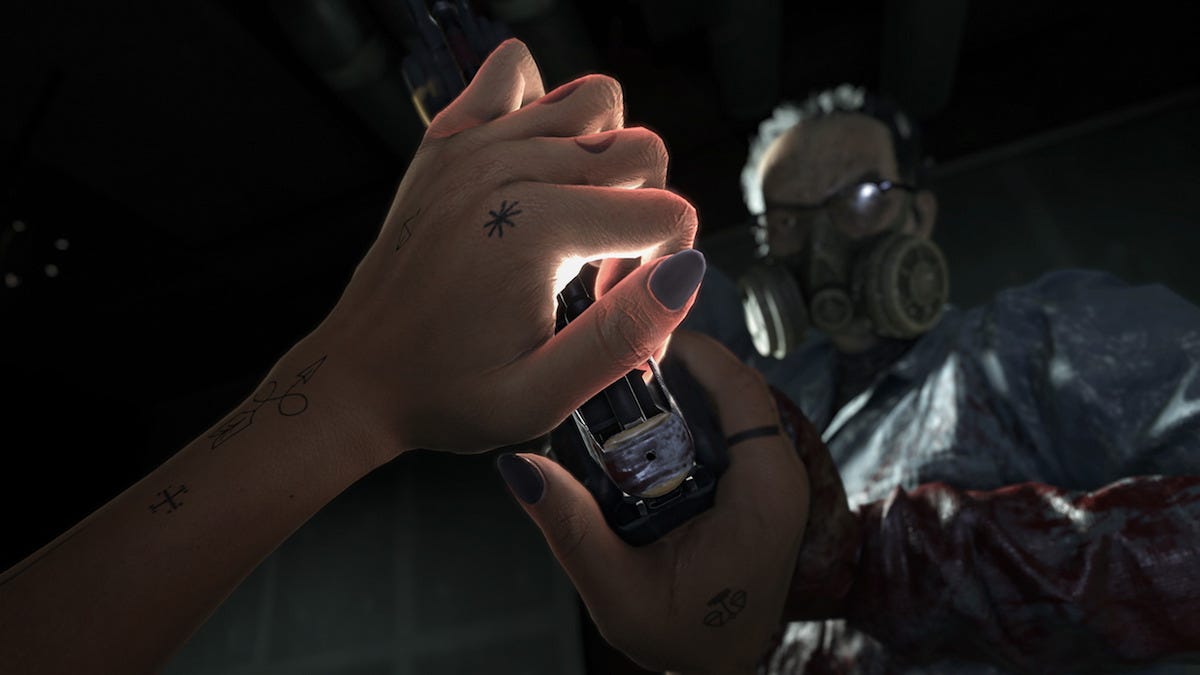
It reminded me of the found phone genre, which is a type of smartphone game that mimics the experience of finding a lost phone, and users need to go through it to uncover the story. Unhinged developer Night School made one such game ten years ago as a tie-in to the TV series Mr Robot.
“We have talked about this as a spiritual sequel to that title,” Krankel says. “Nobody brings that up, and I don’t even think you can get it on the App Store anymore. It’s one of our favorite titles. You find a phone from the hacker group fsociety, and they puppet you to participate in major events from the first season [of Mr Robot]. And what we found, because it was just text and photos and interactions that felt more intrinsically understood than some esoteric input of going around and doing combat, it closed the gap on the uncanny valley. It just felt real to people. We wanted to tap back into that.”
Unhinged took 18 months to create, but it was the result of numerous experiments, which explains the surprising number of names in the credits. And some of those earlier versions included more complex versions of the game.
“The title does not have branching dialogue, but in the beginning it did, and it felt cumbersome,” Krankel said. “And giving the player too much ability to navigate freely, it felt weird. The refinements of the language of the game were some of the biggest challenges, In the beginning it was… we have a phone, we have this crazy story, we could do everything. We could do a fake full phone interface with dating apps and all these other things. And if it’s a narrative game, of course it should have branching dialogue. And we went, ‘You know what? No, the agency the player will have will be more about whether or not they’re making calls or accepting calls, or whether they go to a certain place and reveal a certain thing.’ And that actually branches the story under the hood. But it took a while to get there.
“And it took a while to get there because the ability to do a lot of player verbs was in direct competition with the pacing that we were trying to keep, and so we had to be very subtractive as we went. We wanted the pacing to be quick. We want you to be stressed and moving. And if you have 30 little toys on your phone, it kind-of boxes with that.”
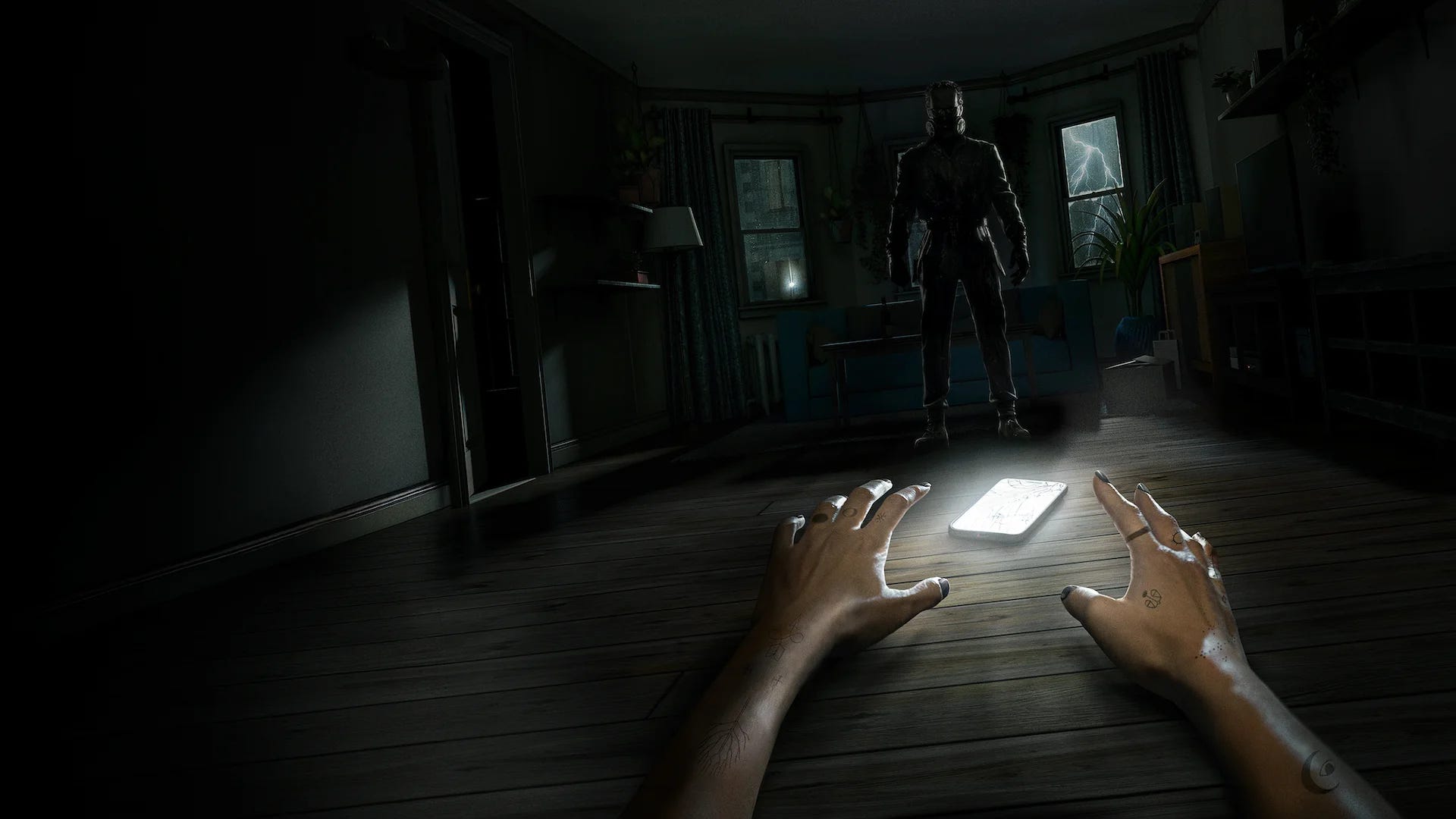
It also simplified the experience for the wider, non-gaming audience that Netflix is hoping to reach. This isn’t about competing with PC and console.
“A lot of the time when people talk about the elusive non-gamer that we’re trying to bring into our industry, sometimes people extremely oversimplify, or lower the bar too low, on all the other aspects of what makes a story or experience interesting,” Krankel says. “Like, to get a non-gamer, it has to be a Fisher-Price baby toy. I don’t think we need to look at it that way. And for our team, it’s really more looking at what is the emotional depth and core, and what’s exciting about either a particular franchise or a world or a genre, in this case thriller and horror. The game goes places. It’s just, how do we let you touch that easily? It’s a hard mind shift to take because it is easy to conflate complexity with more “elevated” types of stories or worlds, but I don’t think you need to do that. I think we can shave off a lot of the mechanical roughness, or the turn-offs of video game language, and let people access those types of stories pretty well.
“This game being out and this now not being a theoretical conversation anymore, but rather us seeing that it’s resonating, feels really good because it can lead to the next ones.”
Ah yes, the next ones. Krankel couldn’t share numbers, but the response to Unhinged has been so strong there are active conversations on what comes next.
“[A lot has] come out of Unhinged, from the base level mechanics and input to: is horror going to resonate? Could this turn into something linear? What is the right length of the game? Should we sequelize it or anthology-ize it? There’s a lot of those things that we’re looking at right now.
“It’s not just can we turn this IP into a film or a TV show… which certainly is being talked about, but nothing is remotely real yet. But [we’ve found] a phone as a controller doesn’t actually have to be a hindrance and it can be something extremely cool and novel. And if you can deliver it to players in an elegant way that feels pretty painless, you can tell all kinds of stories. Doing a 30 or 40-minute thing is not something that will be gospel. It could be anything from episodic to… what could a multiplayer version of this look like? There are a lot of really interesting things that we’re learning.”
He adds that Netflix Games is still learning: “At a business level, each one of our titles will serve different things. Some of them will be to key up a new IP. Some of them will be to try a new type of interactivity and be the bleeding edge of what the platform can be if we’re thinking about it through the lens of a first party studio. Some of it is longer engagement, so that might mean different release models. But each one, we’re still in the learning mode.”
There are four verticals within Netflix Games: Mainstream, Kids and Family, Party and Puzzle, and Narrative. Krankel leads the latter division, and that involves working with numerous teams outside of Netflix.
“I think of it as a bunch of mini publishers. We have some other internal development stuff that’s kicking up, but it’s very early. And then we’ve got third-party developers and second-party developers that we’re working with as well. So, it’s exciting because now we get the opportunity to work with all kinds of different, talented folks. There will definitely be more of that you’ll be hearing about in the next six months to a little longer.”
So, what does success look like for these narrative Netflix games?
“That’s another thing that is evolving, and it’s very similar to the early days of Netflix,” Krankel answers. “The success metrics change and have changed. Right now the thing that we’re so thrilled by, without giving specific numbers, is this has been a very big top of funnel for people who have not tried a game at all on Netflix, let alone a cloud game, and then let alone an experience rated M as this is. Getting lots of players is a great success story.”
“Like, to get a non-gamer, it has to be a Fisher-Price baby toy. I don’t think we need to look at it that way.”
What’s exciting about Unhinged, and similar experiences, is the potential to expand the industry. It’s quite a leap to go from watching a horror movie to playing Resident Evil. But what Krankel’s team is building is a smaller step. Unhinged doesn’t require a console or a controller, it’s on a service they already subscribe to, it’s mechanically simple, and there’s even an option to play the game without dying
This is about finding an audience that may not exist. One that wants to play a story, but doesn’t want to navigate skill trees or combat or complex controls.
“I would love to see these experiences seeming less experimental and more natural,” Krankel concludes.
“I would love, in a year or two, for people to be going: ‘This is naturally the place that I would go to play a story’. And that ‘playing a story’ doesn’t sound weird.
“The ambitious thing here is that we create a new way of interacting with story and character that doesn’t feel like you have to be trepidatious or worried about trying it, or, ‘am I going to be good at this?’ The same way that somebody’ll go to Disneyland and jump on a ride or go into an escape room, and it just becomes a new form of entertainment. That’s where I’d love to see this go.”
That’s it for today’s edition of The Game Business. Join us on Thursday when we will be joined by EA’s new in-game advertising boss Alex Dao. Until then, thank you for reading.


