


Listen now on Apple, Spotify or YouTube
In This Edition,
Naughty Dog Co-Founder Jason Rubin on…
Discovering games
Building Crash Bandicoot
Trying to save THQ
Life at Meta
Since launching The Game Business, we’ve spoken to numerous legends and veterans from the industry’s past.
We’ve chatted to Peter Moore (twice), Reggie Fils-Aime, and even covered the history of PlayStation’s European launch with the likes of Jim Ryan and Chris Deering. We love hearing about the industry’s history as much as we enjoy predicting where it’s all going.
But we’ve not done one like this before. On stage at The Game Business Live, we told the story of Jason Rubin, the man who co-founded Naughty Dog, who tried to save THQ, and then attempted to establish virtual reality at Oculus and Meta. And we did it with the help of a few other industry legends and friends.
We think it’s a pretty special session, filled with fascinating stories and insight. It’s one of those editions of The Game Business where I really recommend listening or watching the full Show. There’s only so much we can squeeze into a newsletter.
If you enjoy this, please let us know. It was a big undertaking, but we loved putting it together and we’d really like to do some more.
So, please check out the video or podcast above. Alternatively, here are some stories I didn’t know about Jason Rubin, from getting his first computer and abandoning Crash Bandicoot, to working with the South Park creators and Mark Zuckerberg.
Enjoy.
Jason Rubin’s parents wanted him to be a lawyer
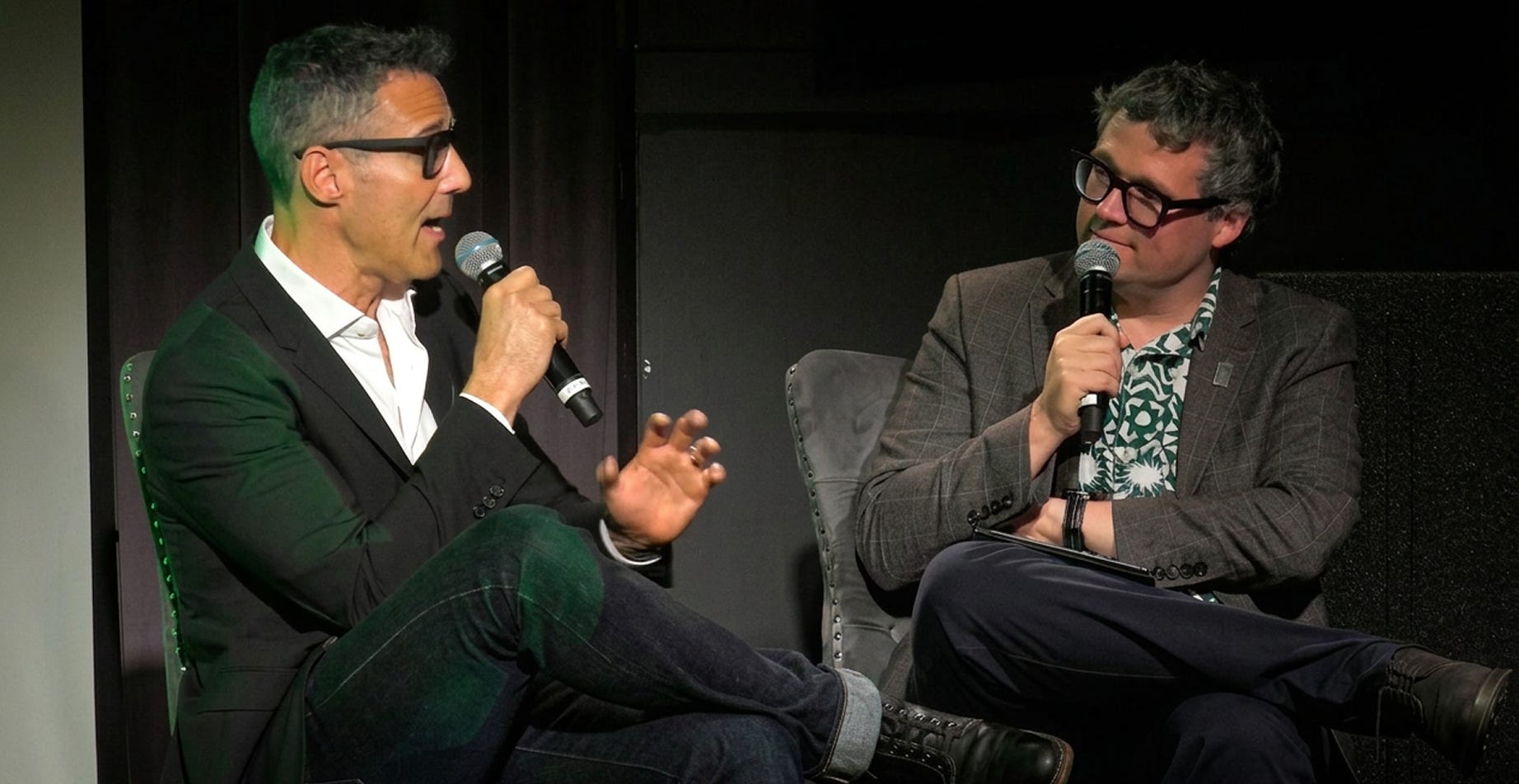
In 1977, Jason Rubin saw Star Wars and his world changed.
“My friends were smacking each other with sticks,” remembers Rubin. “They wanted to be Luke Skywalker. I was seven, and I was like, ‘I want to be Lucas.’ It touched me. Lucas did the thing that I wanted to do, which was put people in another world and make them go ‘Wow.’”
Rubin’s parents didn’t give in to his request for a movie camera, but he eventually convinced them to buy a computer.
“They bought me a computer at 13 when that was two and a half months of my father’s salary. And that was the last computer my father ever bought because every computer subsequently, up until the time we sold Naughty Dog, was bought based on the success of my work on that computer,” Rubin says.
“So, my parents created this opportunity, and it wasn’t a cheap, low-risk thing for them to do. At the same time, they subsequently started taking away the monitor cables from me as a punishment because they thought that could get me to clean my room or do whatever. And the whole time it was like, ‘This game thing is neat, but you’re going to be a lawyer, right?’ So, fundamentally my parents gave me the opportunity to sit on this stage today, and at the same time tried to take it away from me.”
The Naughty Dog name was based on Rubin’s comic book
Andy Gavin and Jason Rubin began making games under the name JAM Software. The two released a number of games for the boutique publisher Baudville, before signing with EA. And it was EA that informed them that the name JAM Software had been taken. So a new company identity was needed.
“Jason was drawing this comic in like maybe 1985 of this dog character,” recalls Naughty Dog co-founder Andy Gavin. “It was like a teenage dog party animal cartoon character that he named Naughty Dog. And we’re like, ‘Oh, why don’t we just use that for the game company? It’s a great name.’”
Rubin lived in darkness during the development of Way of the Warrior
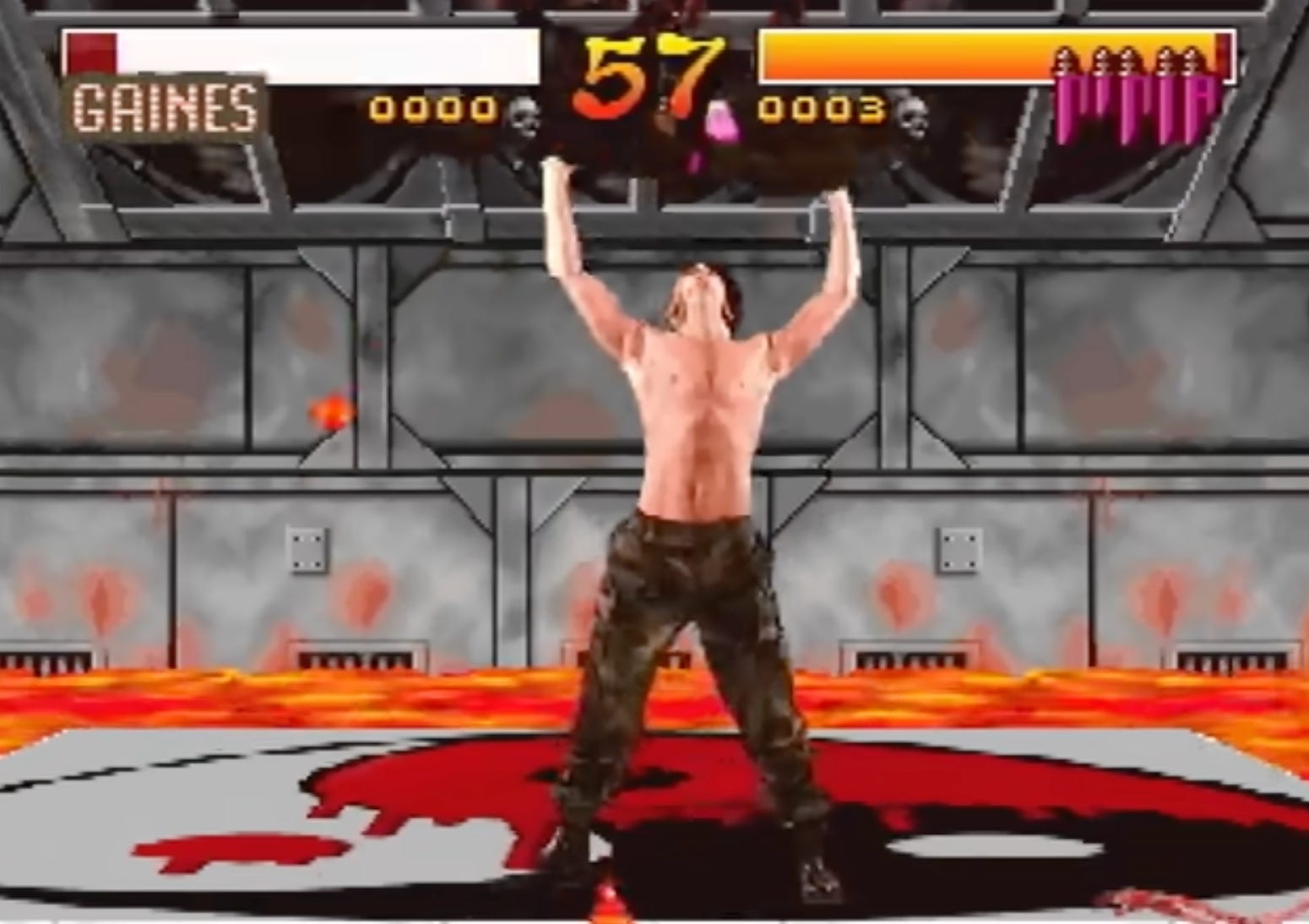
After a brief hiatus following a frustrating end to their partnership with EA, Rubin and Gavin were coaxed back to games by former EA leaders Trip Hawkins and Bing Gordon, who were now launching a new game console called 3DO.
With Mortal Kombat and Street Fighter proving popular on Nintendo and Sega, Naughty Dog wanted to make 3DO’s answer to those games, so started building Way of the Warrior.
“We funded it ourselves,” Rubin says. “At one point during Way of the Warrior, the light bulb went out in my room. I had moved to Boston, where Andy was in MIT, and it was this expensive $15 bulb, so I lived in darkness in my room for the next six months. We were broke.”
But they soon wouldn’t be. 3DO wanted to publish the game, but so did a famous Hollywood studio: Universal.
The relationship with Universal was abysmal
As part of the deal with Universal, Naughty Dog was able to set-up offices within the Universal Studios lot, alongside sister developer Insomniac.
Over the course of five games, Naughty Dog would generate big money for Universal, particularly with Crash Bandicoot.
“We were the second highest grossing product in the entire 1997 Universal slate after Jurassic Park 2,” says Gavin. “And we had cost $2.7 million, of which Sony had prepaid them $5 million. So the ROI was like infinite.”
But Universal didn’t really appreciate games. The firm moved Naughty Dog into an office that Andy called “awkward.” He says: “It didn’t even have enough power. We had to buy extension cords and run them and plug in under the lawyers’ desks and draw power back from other circuits in the building just to keep our section running.”
Rubin didn’t hold back.
“The relationship with Universal was abysmal. To give you an idea, at one point, one of the people there put a target that he had gone and shot with real bullets on the wall, went to Andy and said, ‘Your partner ought to look at this. I’m not a bad shot’ about something. Andy didn’t mention that most of our desks were in a hallway. At night, on the 34th floor, the heat would rise, but they turned the AC off at 6pm. Our normal hours ended at 4am. That was the Crash Bandicoot hours. So, by 4am on a summer day on the 34th floor, it was over 100 degrees in the building, and I’m not exaggerating. I know that because our servers would shut down at about 105. They wouldn’t let us bring in air conditioning on our own. So, we had to bring in ice and a fan to keep Crash Team Racing going.”
Rubin says that Universal offered nothing outside of the Crash IP.
“[After producer Mark Cerny left] There was no value we were getting,” he says. “They were openly hostile to us.”
He said he recently took his daughter to Universal CityWalk, and saw all the Sonic and Mario merchandise, plus the fact there’s a Mario area within the Universal theme park.
“We built Crash 500 yards from that point, and they are now borrowing the other IP, when Crash was bigger than both for five years running,” Rubin says. “Had the relationship worked out better, there might be a Crash Ride at Universal. But they just didn’t see it.”
He doesn’t actually want to kill all the marketing people
One famous moment in the history of Jason Rubin was his Tara Reid talk at DICE.
The talk centered on the treatment of game developers, and how they were being pushed aside by publishers. He cited stories around developers not being invited to their own company’s parties (where celebrities like Tara Reid were given VIP treatment), or even having their names on the screen at events.
During the talk, he showed two planes. He said one is full of the industry’s marketers, and the other is full of the game makers. If the marketing plane goes down, the industry would move ahead with minimal impact. If the development plane crashed, it would set the industry back decades.
Suffice to say, PlayStation was not happy.
“I’m very passionate. And I say things that sometimes are stronger worded than the intention, and that was one of the cases where I probably should have looked into the language,” says Rubin.
“There was a moment where there was a wrestling match, and the question was, ‘Were developers going to have any place at the table?’ And to give you an example, there were companies that were sending people to DICE and GDC, who were not allowing the people’s names to be put on the screens as they were speaking. They didn’t want the people to be the power.”
He continues: “I was not suggesting that anyone should be harmed in any way. It is that the talent making the games is the value here, in the same way that it is in film and in music. It’s not that distribution isn’t important, it’s not that the hardware isn’t important. What is easily quotable as me wanting to harm the marketing department… it was absolutely never that.”
Meetings with South Park creators Matt Stone and Trey Parker was… entertaining
After Naughty Dog, Jason Rubin worked on a number of start-ups before taking up the challenge of trying to save troubled game publisher THQ.
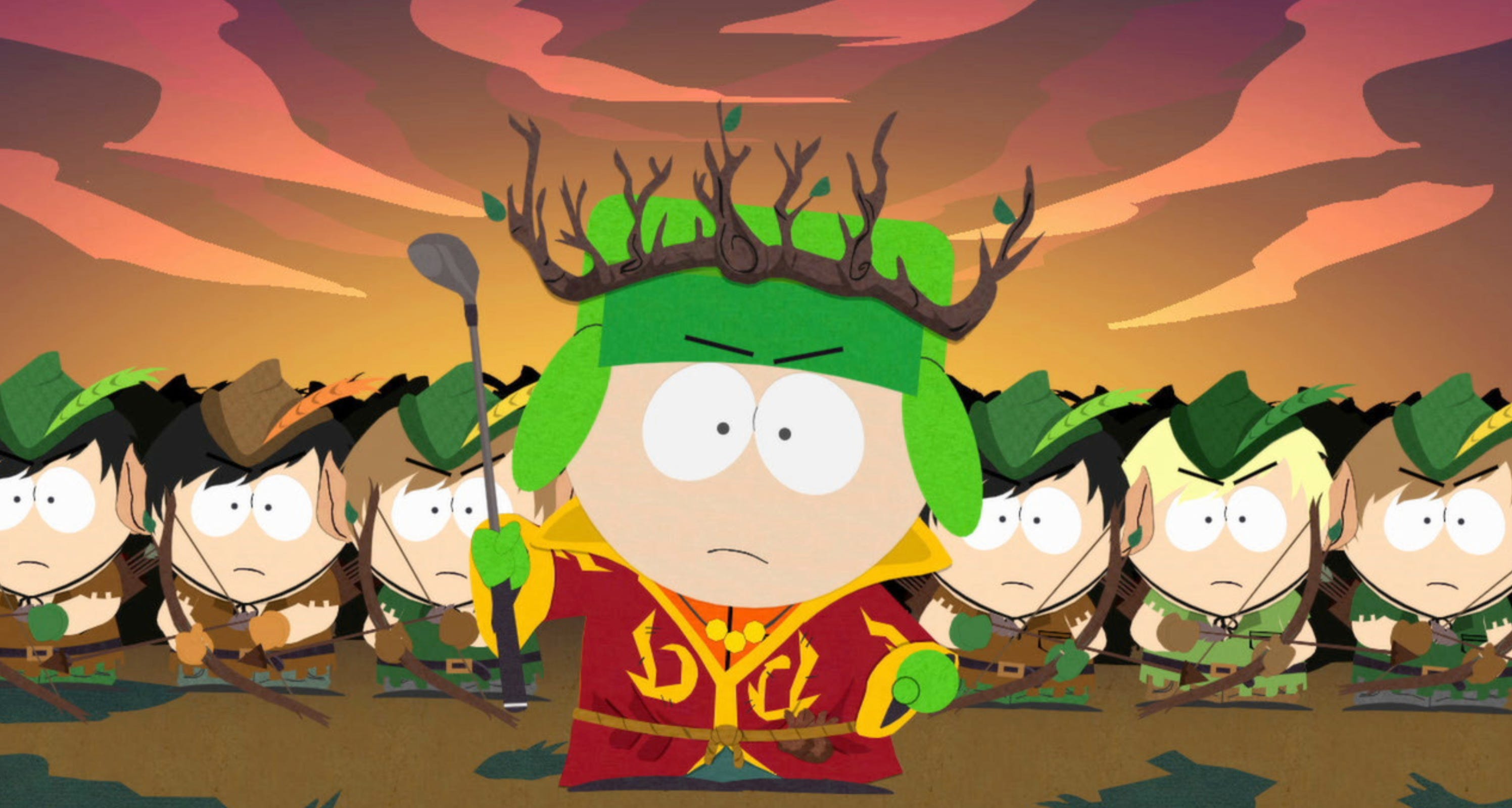
It proved an impossible mission, but it wasn’t without its fun moments. Rubin naturally threw himself into supporting the studios. This involved having regular meetings with South Park’s Matt Stone and Trey Parker, who were working with THQ and developer Obsidian on the RPG South Park: The Stick of Truth.
“We were in one of these meetings and Trey was really quiet,” recalls Kathleen Nicholls, who ran production at THQ. “We went through all of our administrative things, and then he goes, ‘I had this great idea. We’re totally redoing the fight mechanic. We’re going to change it all, and it’s going to be a fart mechanic.’ Almost every meeting, it was like, ‘I had this great idea, and I’m going to completely blow up the schedule.’”
Rubin recalls talking to Stone and Parker about the game’s script.
“It had been in the works for two years at this point. I asked, ‘how long do you think this game will be?’ It was pretty linear. They said, ‘about 20 hours’. ‘Okay, best I can tell you, you have nine minutes.’ And there was just silence in the room. Matt is a mathematician by training. He did the math on that, and he’s like, ‘Oh, boy.’
“I’m like, ‘how many scripts worth is this to get to the full thing?’ ‘It’s [the equivalent of] two and a half seasons.’ ‘Okay, I’ll give you a month and a half to write that. Because I can’t take this any longer. THQ doesn’t have the money.’ ‘Well, we’re doing this Book of Mormon thing right now. You’re seeing them actually rehearse behind us as we’re talking.’ ‘Yeah, I get that. You got a month and a half.’
“They did it.”
Jason Rubin and Meta helped Insomniac survive
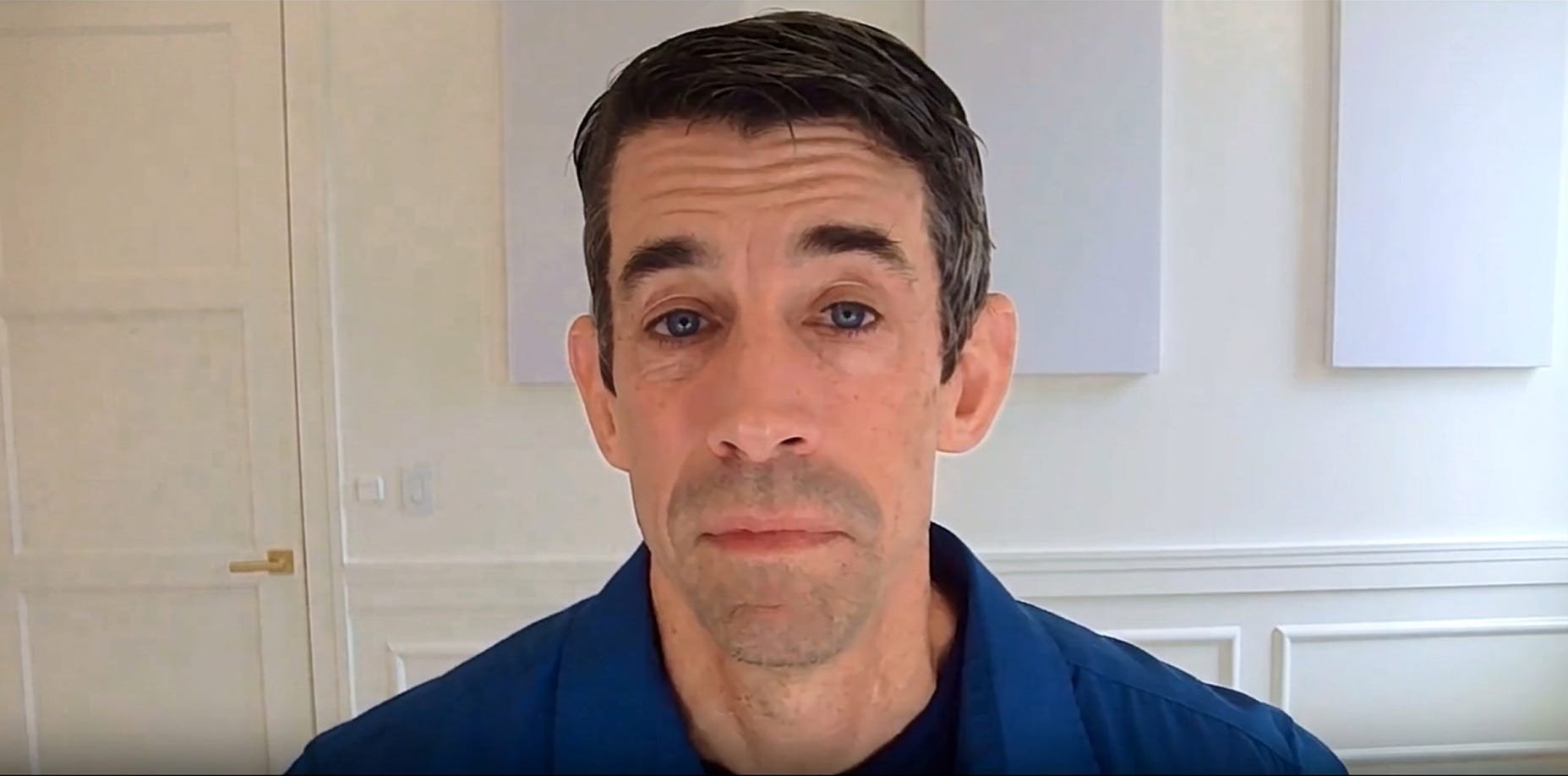
Rubin and Insomniac founder Ted Price are firm friends. There was some professional rivalry (Insomniac made Spyro The Dragon and Ratchet & Clank, while Naughty Dog had Crash Bandicoot and Jak and Daxter), but in truth they were very close.
“On the court, competitors to the end. Off the court, best friends,” Rubin said.
In 2014, Insomniac released Sunset Overdrive for Xbox. It was well received, but sales were low and Xbox didn’t commission a sequel. The studio was in trouble, and Price got on the phone to Rubin, who had joined Oculus and Meta.
“I said, ‘Hey, Jason, we’ve been talking about virtual reality down here. We now have a fairly large team that is ready to move on to something different. What do you think?’ Jason flew down, I think it might’ve been the next day, to hear pitches that we had for the Oculus platform. He was fantastic. And because of our long relationship, there was a lot of mutual trust there, and he said, ‘Let’s go for it.’ The Oculus games, working with Jason, was crucial to our survival within the industry and our later success.”
He believes Mark Zuckerberg is right about the Metaverse
Jason Rubin spent 11 years at Oculus and Meta trying to drive forward the VR business. He would frequently put together presentations and work with Meta boss Mark Zuckerberg on what the future of VR, and the metaverse, might look like.
Meta has since pivoted away from virtual reality. But Rubin feels that Zuckerberg’s vision for where things are heading is correct.
“I love Mark. I loved working at Meta,” Rubin says. “I loved the people there. I left because I didn’t feel that what they were working at the time was interesting to me.
“When I read the press saying the metaverse failed… Whoa, whoa, whoa. Look at Matthew Ball and what he said about Roblox, and what Roblox is doing to the business. Roblox is a metaverse. Mark was right about the metaverse. Was he right about VR as part of the metaverse? That one is a little bigger stretch.
“If you look at this as a social media company, my daughter is not that interested right now in texting. She texts her friends, but it’s mostly to get into Roblox. My 12-year-old is not that interested in Instagram. She’s not that interested in video. And if you think of where that’s going, Roblox is going to be a greater and greater percentage of their future. So as a social media company looking at that, I think he got it all right. Where we failed was the actual implementation.”
His one regret is not working more with Andy Gavin
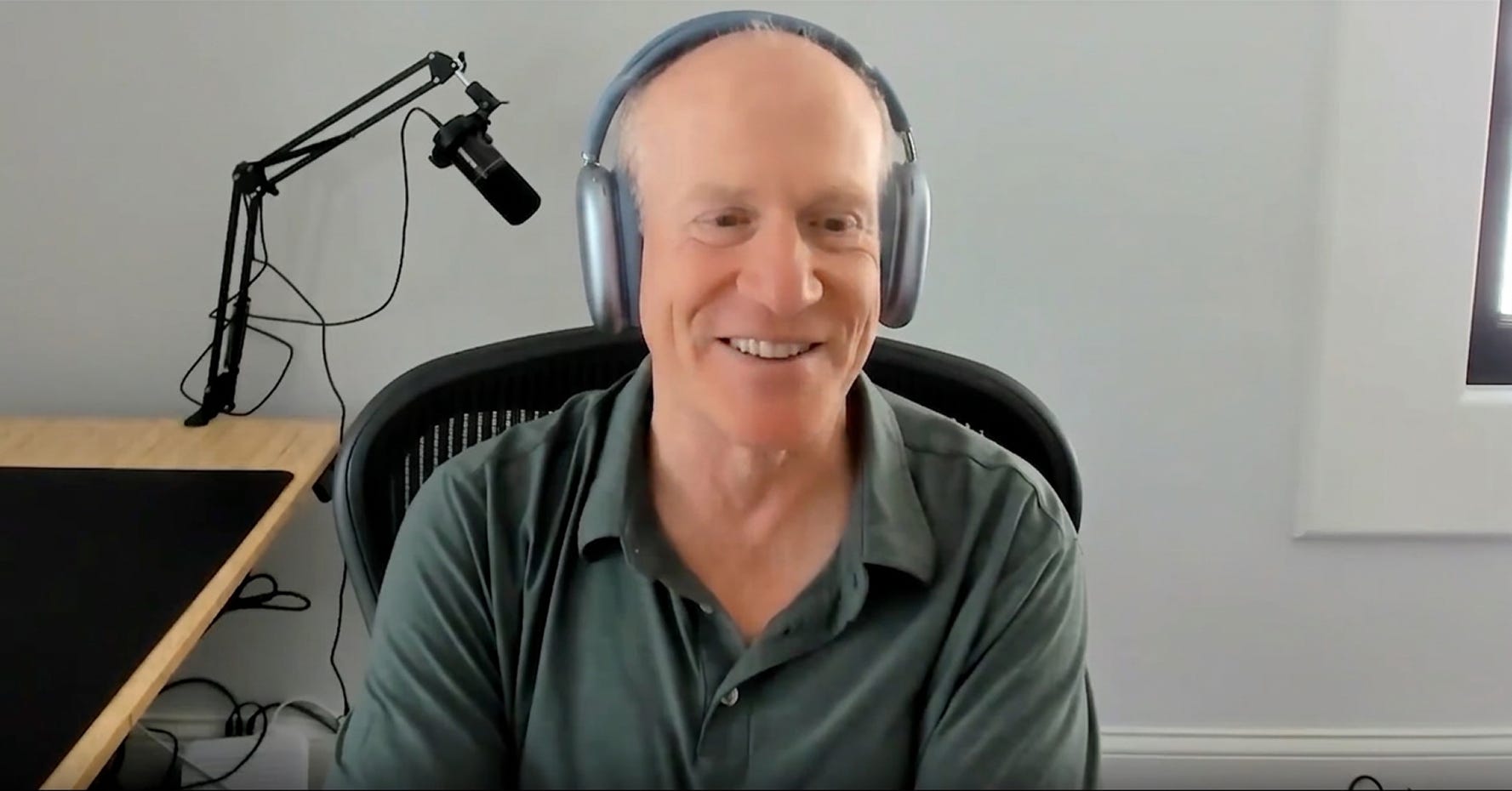
Gavin and Rubin began making games together when they were barely teenagers. For decades, they were side-by-side building a studio, before working on other start-ups. Gavin described their relationship as “like brothers”, while fellow collaborate Jason Kay said: “They are like Scotty and Kirk.”
But it didn’t last forever. Ultimately, Gavin didn’t join Rubin at THQ or Meta.
“I’m 56 and I’m at the point where I’m starting to say, ‘Do I have regrets in life?’” concludes Rubin. “One regret I have is I didn’t spend more time with more companies with Andy. There have been periods I haven’t, and I should have.”
That’s it for today’s edition of The Game Business. Do check out the full interview above if you have time. We’ll be back with more big legend interviews, including a chat with ‘the father of PlayStation’ Ken Kutaragi, later in the year. Until next time, thank you for reading.


