


We’re celebrating one year of The Game Business by offering 20% off paid subscriptions. Paid subscribers receive a bonus weekly podcast, plus a monthly market report. Click here for more.
Listen now on Apple, Spotify or YouTube
In This Edition,
Scopely co-CEO Javier Ferreira on…
- The Western mobile market
- Lessons from Niantic
- Google fee changes
- Its acquisition strategy
- ‘The sphere of incompetence’
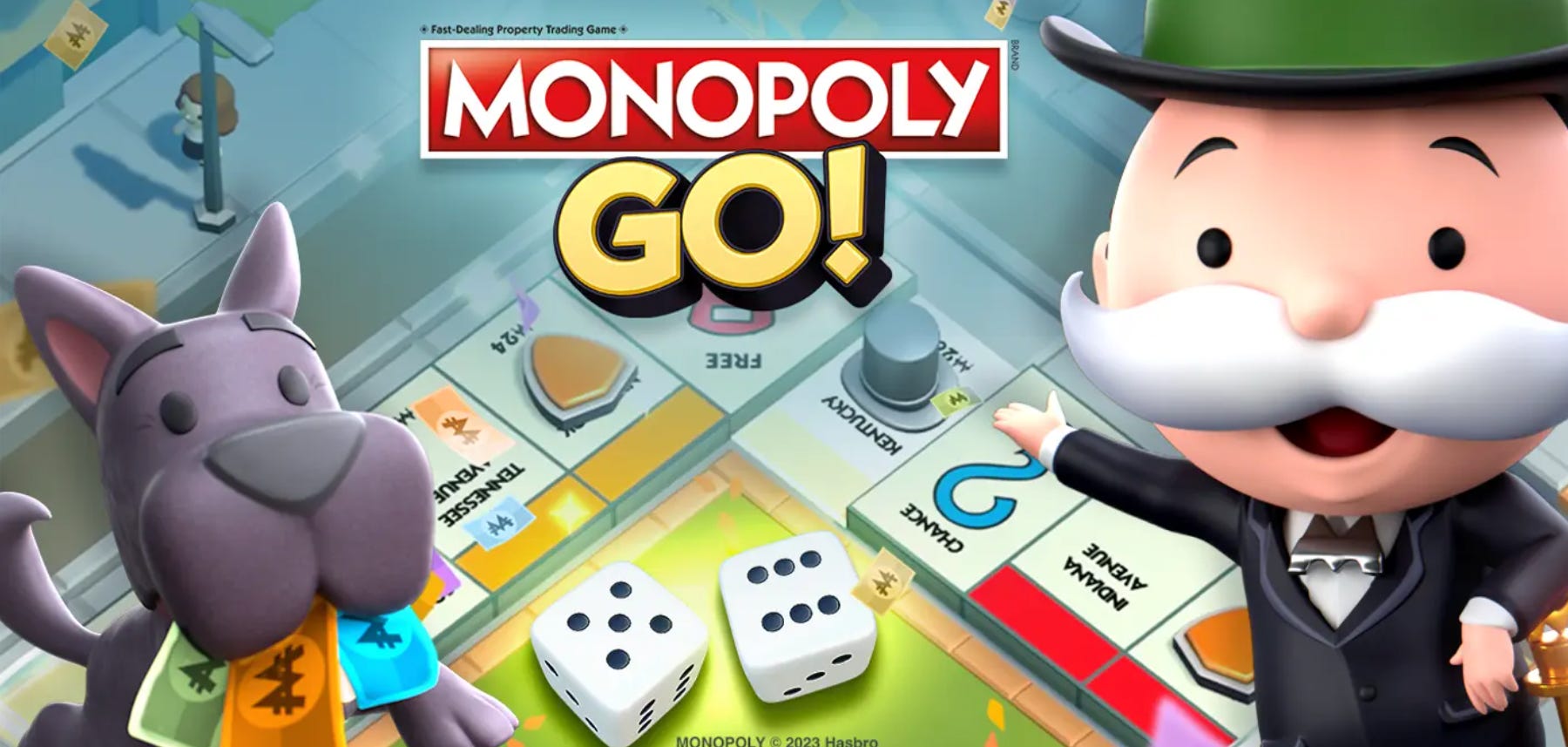
Monopoly Go is a bit of a rarity.
It’s something Ilkka Paananen, CEO of mobile giant Supercell, observed in his recent blog.
He noted that just 22 mobile games grossed $1 billion or more since 2020. 20 of those games came from developers in China, Japan and South Korea, and just two were made in the West: Royal Match by Dream Games and Monopoly Go from Scopely.
Paananen was critical of the West’s mobile efforts. He wrote: “The fact is, we have not brought radical new gameplay innovation to the market.”
So, as a company behind one of those two Western breakout hits, I asked Scopely co-CEO Javier Ferreira if he shares Paananen’s views.
“If we were having this conversation six years ago, and we were thinking about the scale of the market we have today… both of us would’ve been saying this is an amazing outcome,” says Ferreira. “On top of that, it’s unquestionable that gaming and play has won. We have billions and billions of people playing these products every day.
“Having said that, the industry has changed. What is successful today are not the same things that were successful five years ago. The path to success is different. You have to be nimble and be very adaptable. Five or 10 years ago, you still had a lot of people coming in and discovering mobile games. That is no longer the case. Five or 10 years ago, you still had a lot of people trying to build a long-lasting relationship with some of these games. That is not the case today. All of these billions of gamers are playing these games with really high levels of engagement. About 80% of our revenue comes from people that have been playing our games for more than a year.”
“About 80% of our revenue comes from people that have been playing our games for more than a year.”
Ferreira says that big mobile companies want games that can last years or decades, but to succeed at doing that they are “asking players to abandon their [existing] experiences.”
“And not just try a new thing - we’ve seen success in people trying new things - but to try and stay. And stay not for a week, or two months, but stay for years. You’ve got to make a gamer feel something very special to achieve that
“That’s maybe the internalization that still hasn’t happened across the industry. The reality is that there’s less of a need for new games. But exceptional games that make players feel [very special], can achieve levels of success that are unrivalled and bigger than anything that was happening a decade ago. Monopoly Go got to $6 billion faster than any mobile game in history. And we launched it in 2023 when a lot of people were saying that it’s not possible to launch new mobile games.”
We were speaking to Ferreira to mark Scopely’s 15 years in business. During our interview, we discussed what it’s learnt from its acquisition of Pokémon Go developer Niantic, the opening up of the app stores, PC and console games, future acquisitions, licensed IP and its obsession with getting things wrong,
You can hear the full interview above. And here are our highlights below.
‘We are never right’
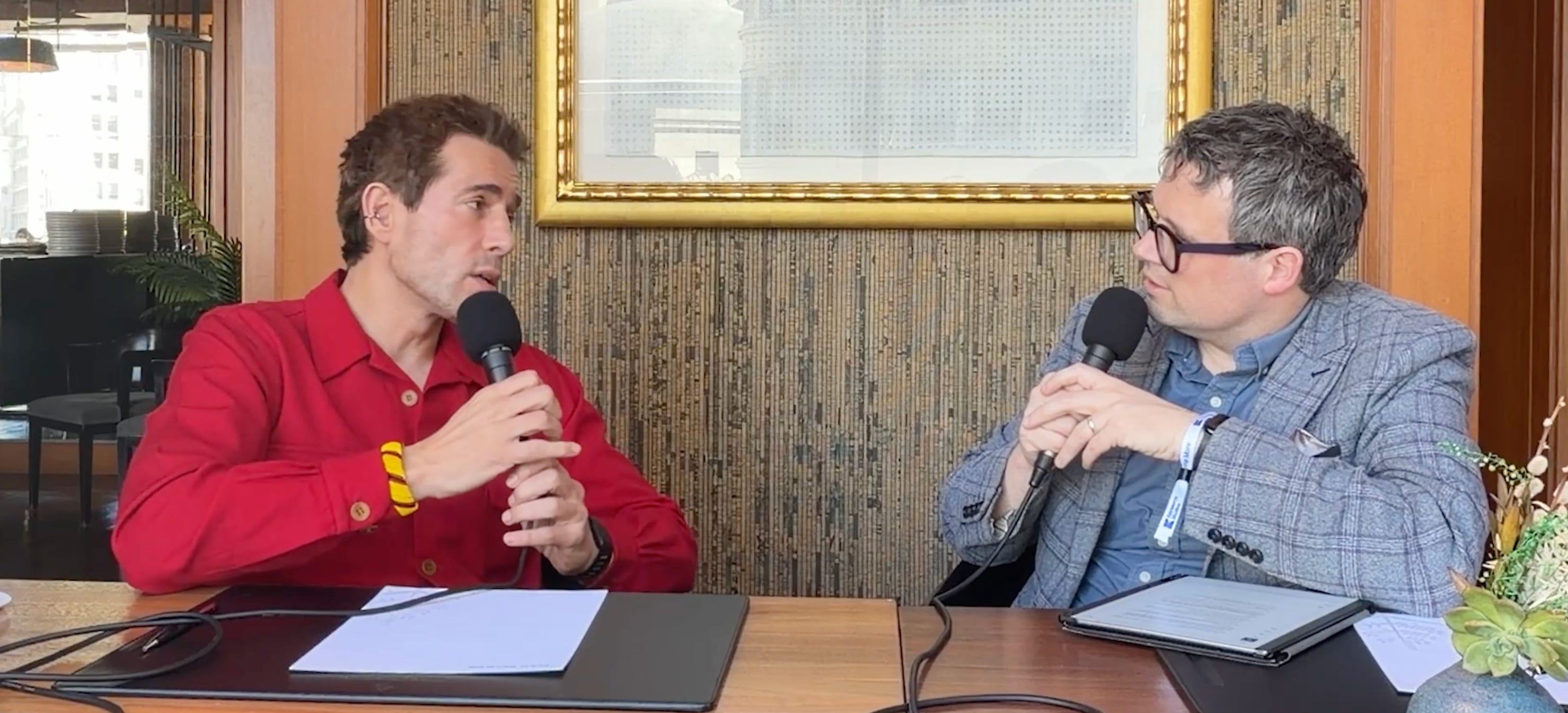
Scopely is obsessed with learning.
“We are an ever-evolving organization,” Ferreira tells us. “Nothing is ever done. We have this idea of iterating to greatness, and underlying that is the belief we’re never right. We are always in the pursuit of greater levels of accuracy, which means: can we find better ideas than the ones we have?
“We are never right. The leadership of the company is very clear about that. We are very clear that nobody has been more wrong at Scopely than [co-CEO] Walter [Driver] and I have. That’s a fact. If we can normalize that, then we can focus a lot energy on the real work, which is learning and growing.”
Ferreira says success in video games means constant evolution.
“You don’t choose the conditions of success,” he says. “The market has certain characteristics, certain dynamics, and what you can choose is how you operate, and how you react to that marketplace. The opportunities are huge. There are still companies that are growing very meaningfully, and have found the success. It requires evolution and innovation at the company level.
“And at the individual level, too. Who we were as game leaders, as game makers, five years ago, is not going to serve us for who we need to be today. And most likely who we are today, is not going to serve us in terms of who we need to be three or four years.”
I asked how do you facilitate that learning when you’ve got 3,000 employees split across offices in entirely different countries?
“These things need to happen organically at companies,” he explains. “I don’t think in a talent industry you can govern from the top. So, we try to distribute decision making and behaviors. And then we elevate and promote the people that best follow or live our values.”
Niantic is teaching Scopely about community

By acquiring Niantic, Scopely added Pokémon Go to its roster of titles. But the acquisition was about more than just one big revenue generator.
“Niantic has been truly inspiring,” Ferreira says. “The game had an amazing 2025. It’s the ninth year that it’s been live, and it’s been the biggest year in the history of the game. The team has inspired us with two things. First, the fundamental deep commitment to the community. When you go to these Pokémon Go Fest events, the work that the team puts into these, and the bonding that’s created with the player base, is just extraordinary. It’s a good reminder of why we do what we do.
“The other thing is that they are very mission-oriented. They want to make the real world more fun and interesting through play. That’s a mission that’s exciting. To stay true to that mission, you’ve got to pay a price. It restricts the types of things that you can do. The belief in that mission and the discipline around it has energized the whole company.”
It’s eyeing up PC and console
Scopely is known for mobile, but it’s previously expressed an interest in the PC and console space. When we asked Ferreira about that, he said: “If there’s a gamer, we want to be there.”
But the PC and console market is very different to mobile. In this very newsletter, analysts such as Matthew Ball, Nicholas Lovell and Owen Mahoney have discussed how there are ‘multiple game industries’, with mobile having vastly different characteristics to PC and console.
But Ferreira, slightly, disagrees.
“They’re the same industry,” he says. “I’ve seen Matthew Ball’s presentation and it’s super insightful. And maybe the drivers of success are different, and the capabilities required are different, but I still think that the fundamental product, or experience, that you are delivering is the same. It’s just different types of players. The players of Monopoly are different than from Pokémon players that are different from Star Trek players, that are different from Call of Duty players, that are different from FIFA players.
“I go back to players. They are our bosses. We’ll try to live up to their expectations wherever they are.”
Ultimately, Ferreira relishes the idea of doing something he doesn’t know how to do.
“I enjoy it the most when we are operating in our sphere of incompetence, when we hit against things that we don’t know how to do,” he says. “That’s how we’ve got better. That’s how we’ve grown. Believe me, there are a number of projects that we are working on where we are hitting our heads against that wall.
“The opportunity to go to new platforms, with new gameplay and genres, it’s exciting. Hopefully we can talk about some of those in the future.”
It is not obsessed with licensed IP
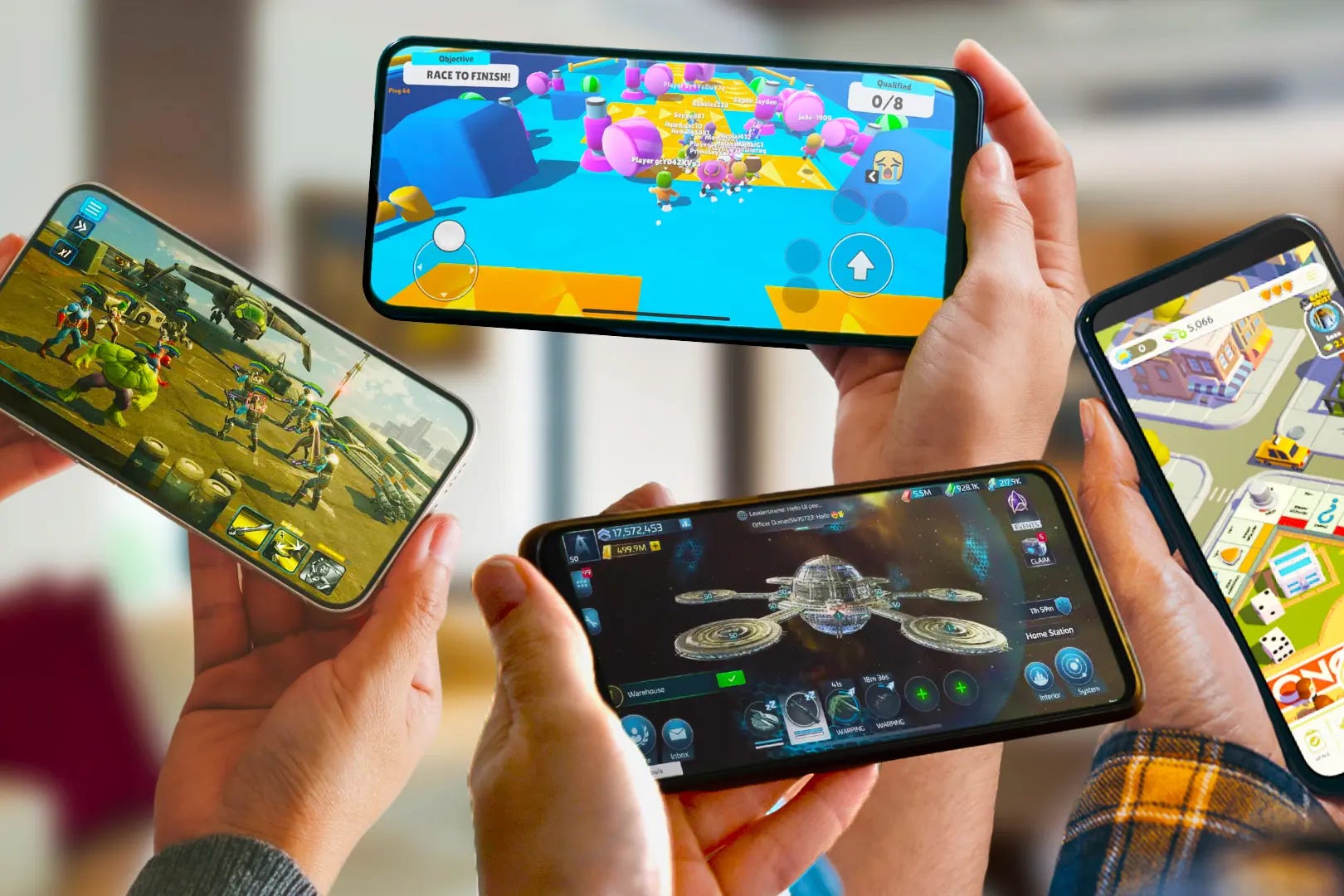
Scopely’s biggest games are mostly based on existing brands, such as Monopoly, Pokémon, Star Trek, WWE and Marvel.
But despite how it looks, Scopely isn’t all about external IP.
“We are trying to build people’s favorite things,” Ferreira says. “For some people, Pokémon is their favorite thing, Marvel is their favorite thing.
“So, we’re excited about partnering with such IPs. I don’t think we are interested in IP as a universe. We are interested in the fandom and communities that exist around those IPs. And those communities can be built around original IP and third party IP. It’s not the IP that governs our strategy. It’s making sure that we have, and are building, deep communities.”
It’s not fussed by Google’s fee changes
Google has lowered its store fees following an agreement with Epic. The change should prove a boost to mobile developers of all sizes. But when I asked Ferreira about it, he almost shrugged.
“I could say the lower the fees the better. But it’s not a big driver of how we think about the business today or in the future. There are bigger themes that a success depends on than those.”
What about the idea that a more open mobile ecosystem enables a more direct relationship with players?
“I’ve never felt that neither Google or Apple have restricted our ability to build direct relationships with players.”
“I’ve never felt that neither Google or Apple have restricted our ability to build direct relationships with players.”
It wants to acquire businesses that make it better
“Obviously, with acquisitions you’re adding revenue or audience,” Ferreira says. “And, of course, those things matter. But we are always on the lookout for how these acquisitions make the company better. How do they enhance the capabilities that we have? How do they accelerate the journey that we’re on? In the case of Niantic, we were valuing the communities that they had built. They are the most engaged and largest community in mobile gaming, bar none. And we thought that was an incredible, unique asset which could make the company better.
“In the case of [recent investment] Loom Games, [its puzzle game] Pixel Flow is amazing with some phenomenal long-term retention and KPIs. But what I’m really excited about is their prototyping culture. Its way of making game is so different from the way that we’ve been making games.”
He concludes: “We believe that you build a stronger, more resilient and more strategically powerful company if you can bring in people and teams that can accelerate what you’re doing and enhance the DNA of the company.”
That’s it for today. We’ll be back tomorrow with our market report (paid subscribers only), and on Thursday with our latest news and analysis show. Until then, thank you for reading.


