


Listen now on Apple, Spotify or YouTube
In This Edition,
Black Pony’s Harvey Smith and Ben Horne on…
Sticking with immersive sims
Working on Redfall after being fired
Optimism in the face of misery
Building a modern studio
Is the ‘immersive sim’ dead?
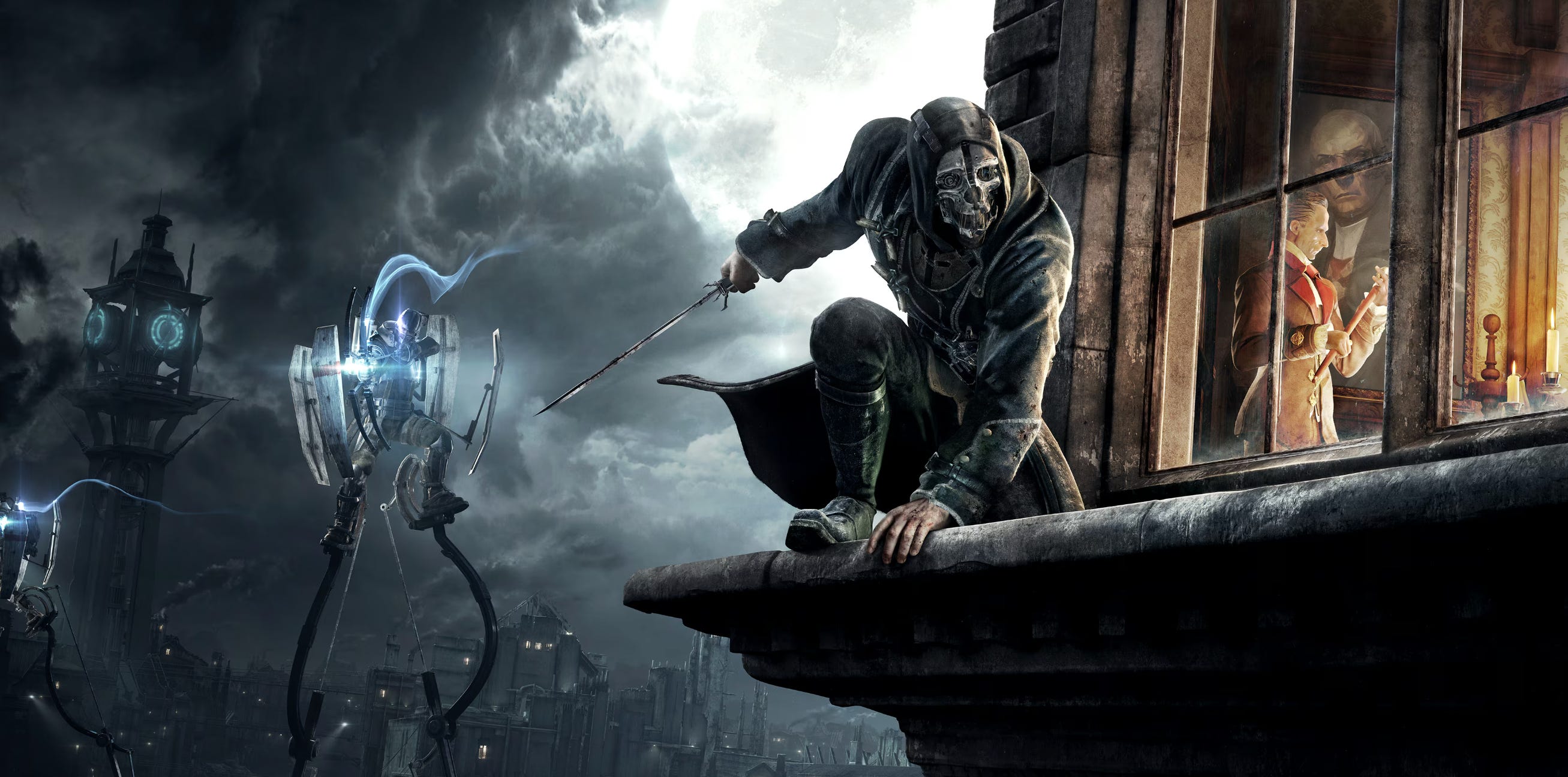
It certainly feels that way. For those unfamiliar with the term, immersive sims are games like Deus Ex, Dishonored, Prey and Thief… action RPGs that let players approach the game in all sorts of ways. Critics love them.
But we’ve not had a new entry in those series for the best part of a decade. Arkane, the Microsoft studio famous for making them, has endured office closures and lay-offs over the past two years. And just this week, legendary immersive sim maker Warren Spector announced he was hanging up his keyboard.
However, today, a new immersive sim studio has formed called Black Pony Immersive. The US developer is made up of former Arkane veterans, including Harvey Smith, one of the genre’s most celebrated creators, alongside Ricardo Bare and Ben Horne.
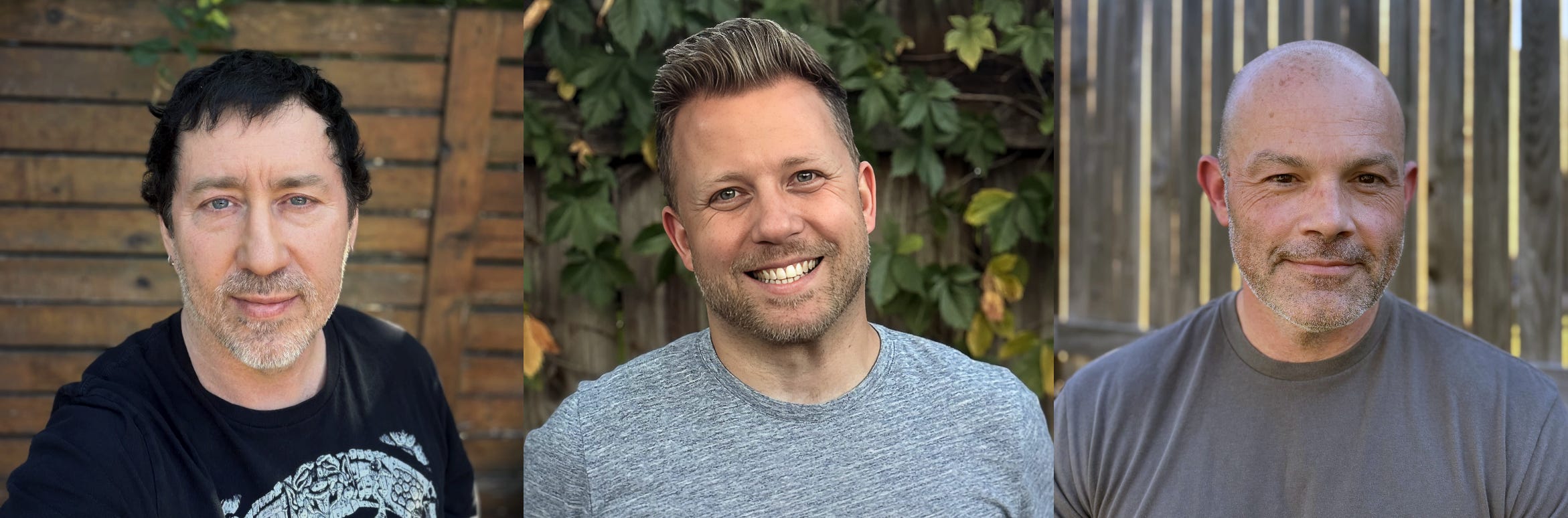
The studio has been running for a year, it’s made up of 26 people, and it’s received funding from an unnamed publisher.
So, is the immersive sim really dead?
“At some point you’re worried… do questions like that create a self-fulfilling prophecy?” asks Smith in today’s episode of The Game Business Show.
“If you look back through those games, there are a lot of titles that people still talk about 10 or 20 years later. They have a lot of cultural cachet. And there are a few, if you look at BioShock or Deus Ex or Dishonored, that make a lot of money. If you look at Dishonored, for instance, the budget that we were working with was… I wouldn’t say tiny, many triple-I developers would envy that budget, but it was very reasonable. And our [return on investment] was four or five times the total spend.”
Ben Horne adds: “The industry is growing in such a way that there are a large amount of players with a really varied appetite. We don’t really know what turn the industry might take, and we’re probably not going to be very good at trend chasing. And so, our best shot is to rally around a creative vision that excites us as developers. It excites the audience that we know wants to play this kind-of game. That’s the best chance of making something great.”
Back to Smith: “Very well-paid people say things to me, going way back now, like, ‘First-person games don’t sell,’ or, ‘RPGs are a niche market,’ ‘If you’re not working on a free-to-play game now, in five years you’ll be out of a job,’ ‘MMOs are the future,’ ‘In the future, games will have live motion video sections with Hollywood actors in them.’ I’ve heard smart, good people, friends of mine in executive positions, say these things over the years, and sometimes they’re right. But what Ben said, going back to what you love with a strong vision, that often comes through for us, so that’s what we have got to do.”
“There was a point in time when Arkane was about to go under. We had four months of money left.”
Regular readers to The Game Business won’t be surprised to hear that I agree. We’ve seen huge success in recent years from games in what had been considered ‘niche’ genres. Games like Hollow Knight, Elden Ring, Arc Raiders and Dispatch. If you stay true to what you love,and satisfy a specific audience, there is a chance it could break out.
In fact, Dishonored came from such an approach.“I was at Arkane for 16 years,” he tells us. “Raphael Colantonio is a friend. We had an office together for years. And people would come tell us, ‘Man, to keep the business alive, you better take some contracts. You need to be working on whatever you can get.’ And for a while, we tried that, even though it felt wrong.
“There was a point in time when Arkane was about to go under. I think we had four months of money left. We were working on [Wii puzzle game] Boom Blox with EA. We were pitching to Ubisoft. We had a couple of guys on a zombie shooter. We were farming people out left and right. We were on nine projects at once. And at some point, we realized this is not the way. We are here to do a very specific thing, let’s focus on that, and let’s go under if that’s what is going to happen. Instead, the result was Dishonored, which was one of the big turnarounds of my career.”
Sponsored Message
Every market gets the real game

Keywords Studios is the games industry’s end-to-end partner, with 13,000 people across 26 countries helping studios build, launch and support games at global scale. Supercharged by technology and shaped by long-term partnership, Keywords Studios connects specialist expertise around the player experience.
For global impact, that means making scale feel local. Through localisation, QA, LQA and player experience expertise, Keywords Studios helps studios protect meaning, cultural nuance and in-context quality across every market, so players get the real game, not just a translation
The Redfall lesson
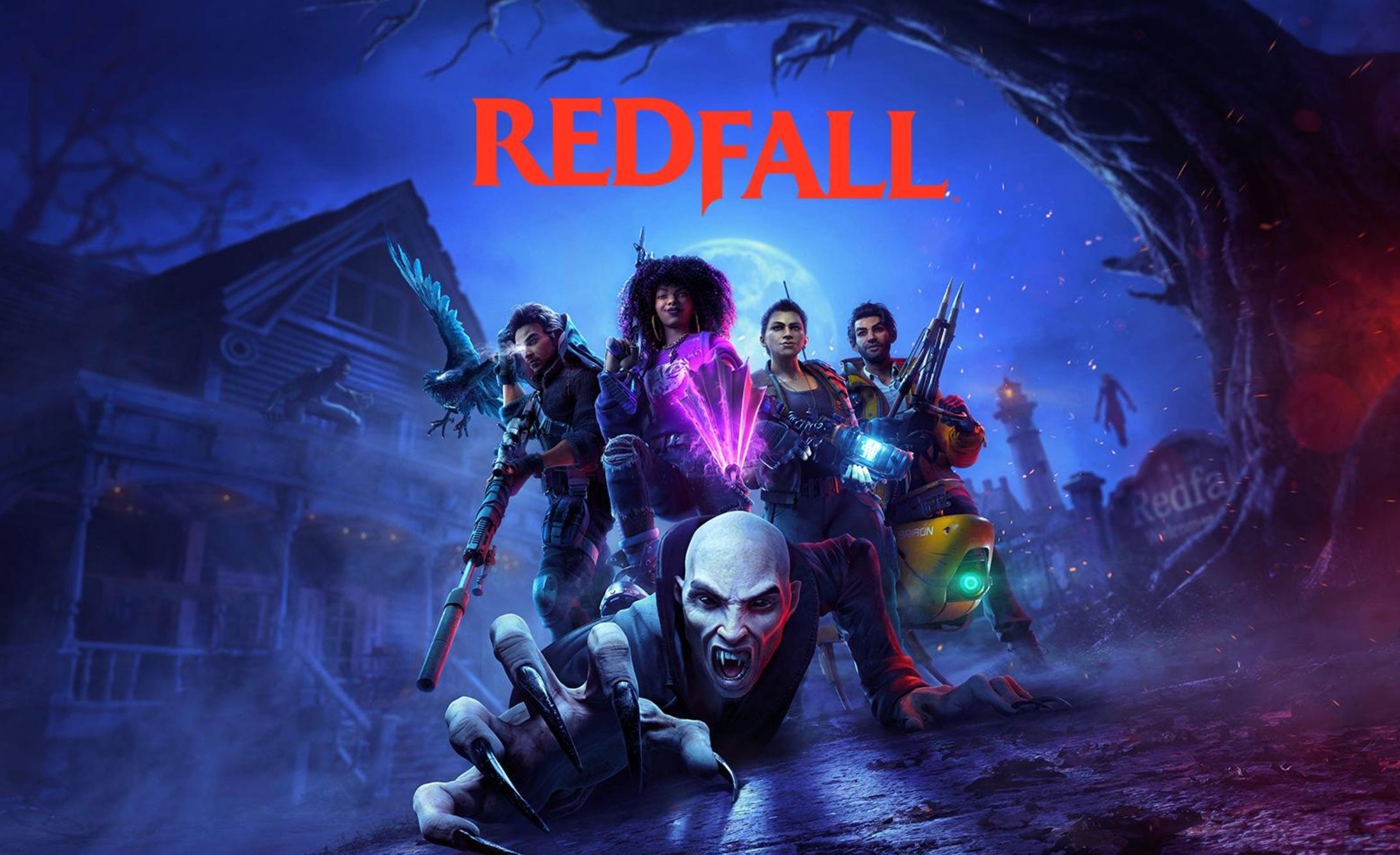
The idea of not following trends has been a common topic on The Game Business over the past year, but Smith and Horne have first-hand experience of what can go wrong when you do.
The last project they both worked on was the ill-fated Redfall. This was another immersive sim, but one built for the live-service era. It was a critical and commercial failure.
“Redfall really came about when games-as-a-service was the prevailing strategy,” Horne says. “So, we got to figure out, how do we do this? There were many projects during the time at ZeniMax that were going that direction.”
Smith adds: “That was a difficult project. Arkane is very specialized, but the industry is growing, and there’s always more mouths to feed. And it’s great when you can reach a wider audience. We got swept up in the games-as-a-service thing, and I had the foolish chutzpah to assume that it always works out for us. We can do this. Let’s take what we love, and mix it with [games-as-a-service]. And do different mechanics by day and night. And have character classes. Then in the middle of all that, COVID happened. We also had the great resignation where everybody went remote and started changing jobs.”
And yet, despite the difficulties, and despite how the game turned out, Smith and Horne were surprisingly positive about the experience.
“We went to Microsoft and said, ‘I know we don’t work here anymore, but can we please release this?’ And to their credit, they did not say no.”
“We finished the game and it was very poorly received. We then worked on it for a year. We patched thousands of bugs. We then got laid off, but we had in the pipe version 1.4. It was the one that fixed tons of stuff. So, we went to Microsoft and said, ‘I know we don’t work here anymore, but can we please release this?’ And to their credit, they did not say no. They let six or seven of us sign forms that we could come back in the building. After being fired, we released 1.4, which I think if we had that on day one, it wouldn’t have set the world on fire, but it was a much, much better game.”
“The experience we went through on that long, troubled project where I was clearly out of my lane, and I was not working on the things that I should be working on… Some of my proudest moments was watching the team rally around incredibly difficult things. Politically, there were very hard things. There were fires. The government announced aliens at some point. There was a swarm of murder hornets coming toward Texas. We had an ice storm that put power and water out for like two weeks for some people. It was crazy. That development cycle, I’ll never forget it. And yet at the end of it, people came back together to release that patch even after losing their jobs. And some of them wanted to work with us again after that.
“You know the old cliche, it’s about the journey? Sometimes it’s about the golden ring. And you really want the golden ring. But sometimes it really is just about the experience of trying to do something really difficult together.”
Back to Horne: “It feels like an achievement unlocked for me in my career to release something after I’ve been fired and the studio closed down.”
What’s in a name?
If there was one thing that surprised me about Smith and Horne’s new studio, it was the name: Black Pony Immersive.
“It feels like a sea of doom and gloom the last few years, so many of our colleagues suffering, developers falling left and right, and everybody else doing everything they can to reach out or help…. Even on the publisher side, nobody’s happy to see the business in the state that it is,” Smith begins.
“I’ve heard you talk about various movements and trends. And one of your kick-offs to one of your segments, you mentioned Vince Zampella passing. Ben and I had dinner with him in Austin over a year ago, when we were starting to talk about Black Pony Immersive… there’s just so much bad news and it’s shocking, the state of the world, beyond video games. So, it feels like to do something optimistic in the face of that is to be a dark horse. We’re going to fall back on what we love. We’re going to work with the people we love. We’re going to have fun doing it.
“So, Black Pony Immersive is tongue-in-cheek for that, but also ‘immersive’ is right there in the title. We want to make immersive sims. We want to make single player, narrative driven, first person games where you explore and solve problems creatively. Think Deus Ex, think Dishonored, that’s what we’re doing.”
A modern studio
Smith and Horne are turning to the games they love, but that doesn’t mean returning to the old way of making them.
A common approach to starting a studio today is to have a small core team, and then scale up using outsource groups and contractors when needed. It’s ‘the Hollywood model’, and Black Pony is taking that approach.
“Being a small core of people who get the vision, have a lot of institutional knowledge, and importantly have a lot of creative chemistry, that helps,” Smith says.
“External partners are getting better and better […] If you give them a good enough brief, and you give them notes on how your animator likes to work, they can air drop in a bunch of people rapidly and do the job.
“And then at some point we need to be smaller again. At the beginning and end, you don’t want to be a giant team, because then you have animator number five asking, ‘What am I doing for the next project?’ It’s fraught talking about the Hollywood model, but look at film, they figured out a long time ago that there is a very delicate creative force here that’s also very powerful.
“You need the industry side, but I feel like games ran with the industry side for decades. And sometimes what gets crushed is this little core, because if that creative core just answers to layer upon layer of groups above, then its priorities become lessened. Being independent, having a contract between us and a giant partner, is a healthier model. Being small at the beginning and at the end is a healthier model. So, that’s the model we’re pursuing.”
Check out our full interview with Smith and Horne in today’s edition of The Game Business Show.


