


Listen now on Apple, Spotify or YouTube
In This Edition,
Sumo’s Andy Stewart and Gary Dunn on…
The ‘race to the bottom’ in outsourcing
Cutting jobs in the UK, not India
UK tax relief reforms
Plus, AI, Sackboy, AAA games and more

Five years ago, Sumo Digital was a BAFTA-winning developer and publisher that Tencent bought for nearly $1.3 billion.
It had become the home for the Sonic racing series and the stewards of PlayStation’s Sackboy/LittleBigPlanet franchise. It was aggressively developing its own IP, and had acquired and set-up studios around the world.
Five years on, and Sumo has scaled back significantly. It’s no-longer in charge of the Sonic racing games. There’s no sign of a new Sackboy title. It’s sold off its publishing label, and returned to working on third-party brands and franchises.
“Nine years ago, around 80% of our revenue was two or three clients,” explains Sumo Co-CEO Andy Stewart. “The Microsofts and Sonys of the world. And obviously after the Tencent acquisition, it’s no secret that large publishers started reining in on what they were spending.”
He adds: “The appetite for risk and investment for large, big budget AAA games, the sorts of games that we were doing five, six, seven years ago, those $50 million budget games… we haven’t seen one of those come through the door for a long time. But what we are seeing is an appetite in that AA space, with a $15 million budget.”
Fellow Co-CEO Gary Dunn continues: “Five years ago it was $50 million games, you just don’t see an RFP [request for proposal] for anything like that anymore. It literally does not exist. So, it’s about making great games at a lower price point.”
In today’s edition of The Game Business Show, Dunn and Stewart talk us through where Sumo is today. It is still making full games, but at a $15 million level rather than $50 million. And that involves finding ways to make things cheaper.
“There’s a bit of a race to the bottom in the development industry at the moment,” Stewart says.
The UK studio hasn’t completely abandoned developing its own IP, either.
“It’s a bit of a misconception that we’re not doing our own IP still, and that we’re not doing full games,” Stewart tells us. “Sumo’s definitely very much in the full game, business and we’re also doing our own IP. What we’re not doing is fully funding our own IP. That’s the key nuance, and that’s where co-funding comes in.”
Sumo is actively looking to identify legacy brands that might be viable for a new title. And if the IP owner is not able to fund a new project, the company is able to take on some of that financial risk.
“Remember, we were a publisher, so we have a lot of market data, and we’ve used that to start analyzing which IPs we should proactively pitch for,” Dunn explains. “There is a whole package of work that we’re doing now where we’re analyzing an IP and saying, ‘right, this is an IP that’s done these sales in the past. There’s no known development for it, and it interfaces with our excellence.’ That could be horror, family, platforming, adventure. And where we can see that intersection, we’re happy to co-fund. We’re happy to create that commercially viable win-win proposal for the publisher.”
You can hear more about Sumo’s attempts to navigate the current game industry, the challenges facing outsource companies, the role of AI and more in our full interview above. Alternatively, check out some selected stories below.
Sponsored Message

If you’re a PC studio selling on Steam, you already have the players: you just don’t have a direct line to them.
More than 1,000 PC studios have added a direct sales channel to change that, alongside Steam, not replacing it. Building real relationships with their communities and growing revenue along the way.
Market data from this year’s biggest premium PC releases found that up to four in ten Steam reviews came from players who bought the game elsewhere, proof that Steam’s discovery and social pull holds even off-platform.
Xsolla’s new ebook explains exactly how the hybrid model works, what Steam’s rules allow, and how to set one up without months of engineering.
Sumo Digital has made no job cuts in India
Sumo Digital is based in Sheffield in the north of England, with other offices scattered across the country. Sheffield isn’t a particularly expensive place to run a business (it’s certainly not California) but it’s more expensive than some countries, particularly in Asia and Eastern Europe.
This is a challenge for a co-dev and work-for-hire studio like Sumo, which can find itself being undercut by similar studios in more affordable parts of the world. This is particularly an issue today, with publishers and developers trying to drive down the cost of development.
Sumo Co-CEOs Gary Dunn and Andy Stewart insist that going the cheaper route isn’t always the best option for clients, and they point out that not all of their teams are UK-based.
“We’ve downsized a lot In the UK. I don’t think we’ve lost any heads in Pune”
“Sumo’s second oldest studio is our Pune studio in India,” Dunn says. “It’s 20 years old next year. They’re literally part of our fabric. They’re integrated. Our developers in Pune sit alongside our UK-based developers as absolute equals and do the same workflows and production methodologies.
“We’ve downsized a lot In the UK. I don’t think we’ve lost any heads in Pune in the last two years. Maybe some attrition, but we’ve not made any redundancies in India because they’re so valuable. And low-cost geo is part of staying competitive.”
Stewart adds: “We approach games in a different way than we used to. So, keeping the development team lean until you’ve found the fun. Not scaling too big too quickly.
“Go back 18 months, we were being asked to compete and race to the bottom on price. We tried to hold on there and we were largely successful with it. But nowadays we’re seeing a lot less of that. First, because we’ve become cheaper and more agile, but also we’ve had clients come back to us and say, ‘Yeah, okay, that project that we went cheap with didn’t work out.’”
Sumo has four or five full games coming over the next two years
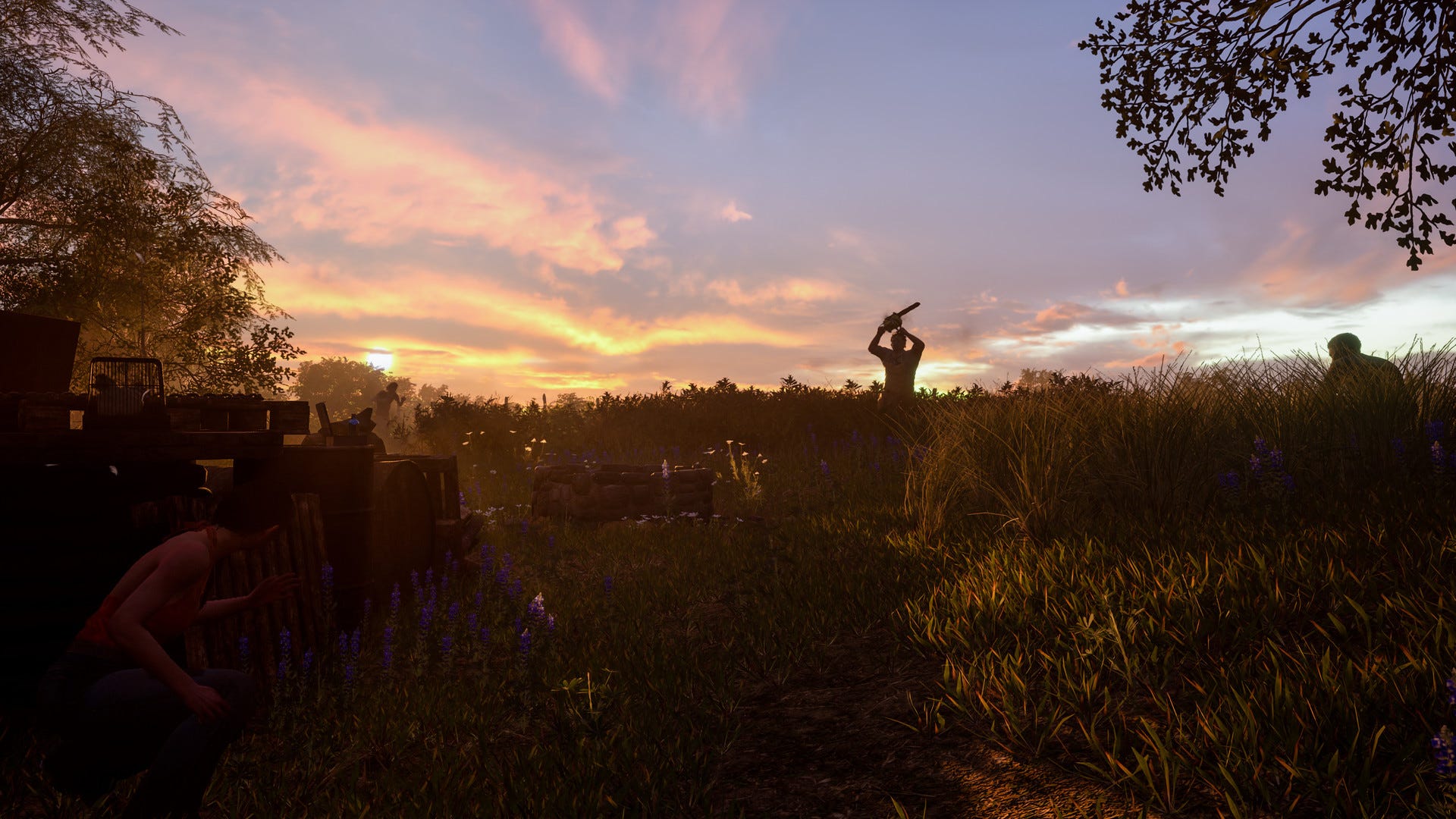
Part of our conversation with Sumo focused on where it was six years ago, when it was making big budget award-winning full games.
The firm still works on big IP. It is currently working across 30 projects, including Warframe, which is the popular shooter from fellow Tencent-owned studio Digital Extremes.
And Stewart and Dunn repeatedly told us there were exciting projects to be revealed… just not yet.
“In terms of full games, over the next two years, I can think of four or five full games across different platforms that you’re going to see coming out where Sumo is the developer,” Stewart says. “A lot of people are desperate to see what the Texas Chainsaw Massacre team are going to do next, and you’re not going to have to wait too long for that. And what the Sackboy team is doing next. You’re not going to have to wait five years for that.”
60% of Sumo’s work didn’t qualify for UK tax credits
As a UK studio, Sumo is eligible for the Video Games Expenditure Credit (VGEC), which is a UK tax incentive that offers developers a 34% taxable credit on qualifying development costs.
However, there’s a set of criteria that companies need to meet to receive the credit, and most of Sumo’s projects don’t meet that criteria.
“A lot more of the work that we do no longer qualifies for the UK tax relief”
“I still think the UK is a jewel in the crown of global gaming,” Stewart says. “We have so much talent here. We have so much pedigree. We need to do what we can to protect that.
“A lot more of the work that we do no longer qualifies for the UK tax relief. Part of our strategy is to support these evergreen titles from a co-dev capacity. That doesn’t always qualify, because they’re existing titles with a non-UK-based publishers. Around 60% of the work we did last year didn’t quality. So, that puts us at a huge disadvantage globally.
“Reform to VGEC is definitely something that, through our industry bodies, we need to tackle with the government. As more and more players play fewer and fewer titles, it’s only going in that direction. The tax relief should support the whole spectrum of video games, right down to those indie developers.
“But the larger companies that drive employment in video gaming in the UK, and the work they’re doing, needs the same level of support that they get in Canada. In Canada, in some states, you can just put your payroll through and get the tax relief. In the UK, you’ve got to jump through so many more hoops and you often find that what you’re doing doesn’t qualify.”
You can watch our full conversation with Sumo’s Gary Dunn and Andy Stewart above.
Thank you for reading. We’ll be back on Thursday as we dive into the Stop Killing Games debate!


