


Listen now on Apple, Spotify or YouTube
In This Edition,
Digital Extremes’ Sheldon Carter on…
Warframe’s ‘massive’ growth
Soulframe’s careful development
The death of Destiny
‘Trust-based development’
Bungie’s ‘looter shooter’ Destiny was a real thorn in the side of Warframe.
The Digital Extremes game had launched 18 months earlier, and found itself facing off against a better resourced rival.
“There’s a lot of overlap between the two games,” says Digital Extremes president Sheldon Carter.
“Destiny 1 really hit us when it came out. It’s a looter shooter with tons of marketing and really great developers on the team. Destiny 2 as well.”
In May this year, Bungie announced the end of Destiny. It would no longer be making updates to the series. And since then, most of the Destiny team has been laid off.
“For a while we thought about [Destiny] as competition and we were aggressively wanting to compete with what they’re doing. But over time, developers from their team come onto our team. New people who we started, they learnt what looter shooters are because they’ve put thousands of hours into Destiny. And so, at our studio, it was a bit of mourning with that news. The mood was pretty dour.
“The budgets and the competition to keep putting updates out… it’s really difficult and every studio has its own culture and different way of doing things. I can’t imagine [what it’s like] with a studio as big as Bungie, which also had Marathon going on, and a lot of different things pulling them in a lot of directions. Honestly, for me, it’s more sadness that it’s over. I hope the best for all the people there.”
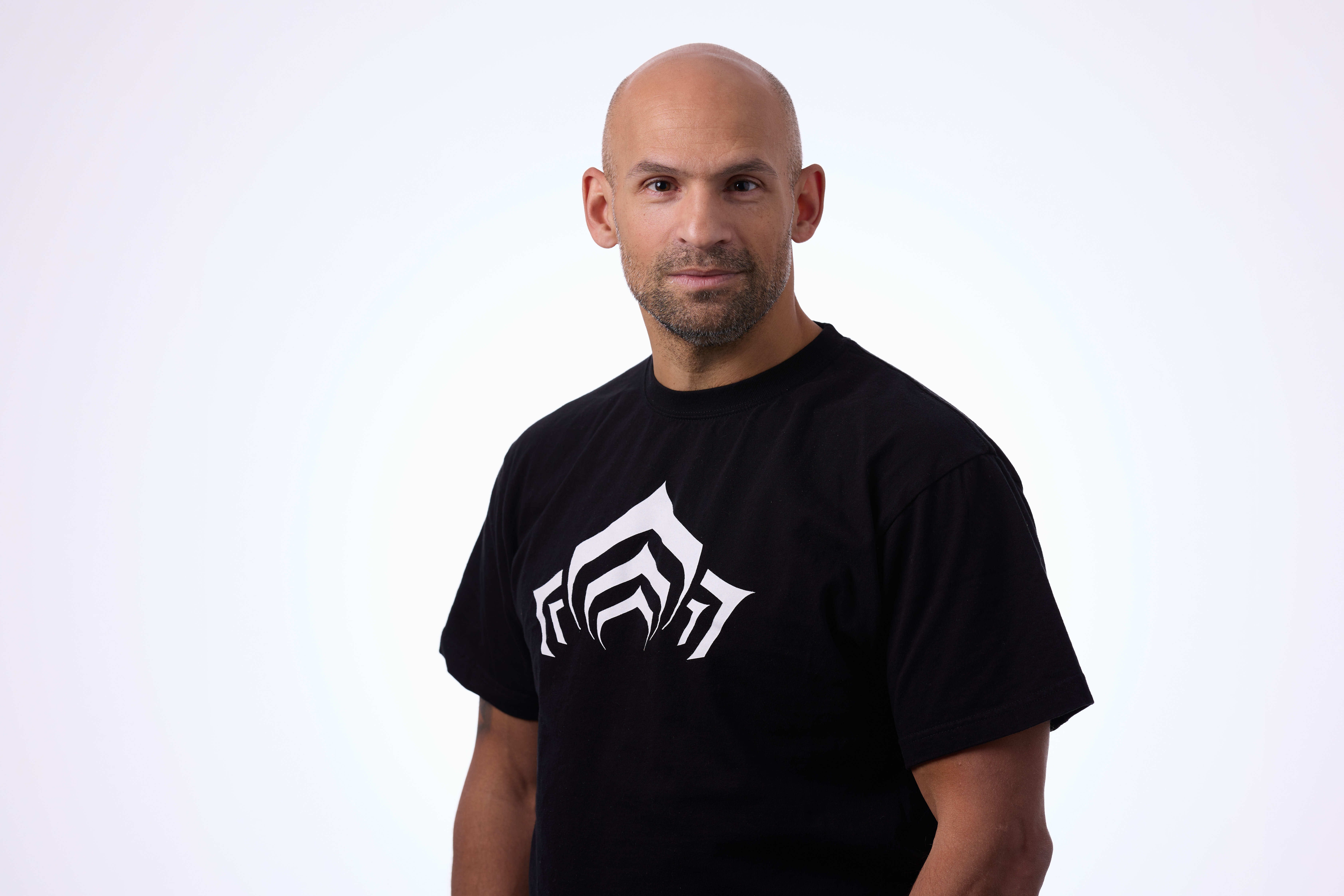
Warframe is in a very different position. Five years ago, Digital Extremes felt that the game had peaked and it began work on a new game, a multiplayer RPG called Soulframe.
“Some people in the company were like, ‘Oh, Warframe’s peaked. And as it gradually goes to the West, we will have to start something new.” And while we did start another project, we changed our focus about how we were developing Warframe, how we were promoting it, and we’ve had a few years of straight just massive growth.
“Now we’re in this happy position where Warframe’s really thriving, and that gives us the ability to give Soulframe a tone of rope to try stuff out.”
Sponsor Message
Game Development, built to scale

Keywords Studios is the games industry’s end-to-end partner, with over 13,000 people across 26 countries helping studios build, launch and grow games at global scale. Supercharged by technology and shaped by long-term partnership, Keywords Studios connects specialist expertise around the player experience.
For game development, that means flexible production support that scales with ambition. From co-development and engineering to live operations and technical delivery, Keywords Studios helps teams move faster, solve complexity and keep production connected, without losing sight of the game players are waiting for.
‘Trust-based development’
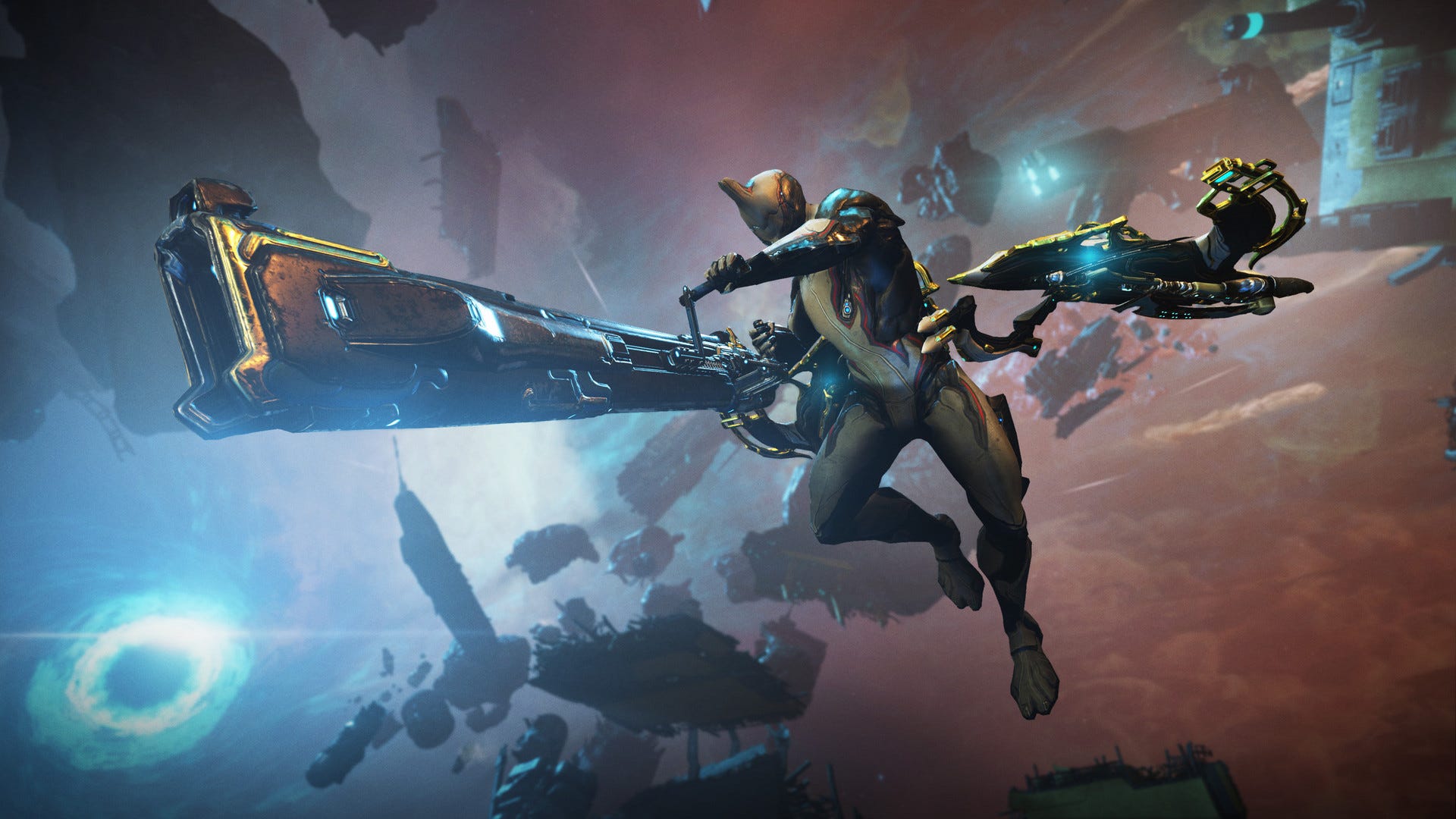
Although Warframe lacks the profile of Destiny, the game and its studio is still a significant operation. Digital Extremes, which is owned by Tencent, now has over 500 staff.
So, what’s the secret? The answer is a boring one, and one you’d expect any live service developer to say: it’s about community.
Digital Extremes says it has a “trust-based development philosophy”, which involves continued communication and reacting quickly when mistakes are made. It’s not something that comes naturally to most studios, but it’s something that the Warframe team has mastered. It no doubt helps that the game’s creative director Rebecca Ford was previously its community director.
And when you have the trust of players, they can do “great things” for you, says Carter.
“Warframe has always felt like a bit of an underdog story. It’s one of those games that’s been big for a long time, but not a lot of people know about it. That makes our players really want to bring other people into their hobby. And when you know that you’re taken care of and you’re excited about it, you want to share it with others.”
‘There’s still growth on consoles’
Warframe is now on most platforms, and Digital Extremes is eyeing up new markets in which to push the game. However, it believes there is plenty of growth in some of the more mature areas.
“The last two years of Warframe have been our biggest growth period,” Carter says.
“Of course, we look at new geographies. We just launched on Android a few months ago, and Android opens a whole bunch of geographies and a whole set of players that we’ve never been able to interact with. A lot of people in the mobile space… our version of fair free-to-play is totally foreign to most mobile monetization schemes. So, there’s a bit of an education piece there, but I do see that as a growth [area].
“But honestly, even in our core markets, there is a lot of room for Warframe, both on the consoles and PC. And I know there’s a feeling of the decline of consoles, but there’s a huge segment of people on them. We see our player base is there, and we know there’s lots of growth to be had.”
Even with hardware pricing continuing to rise?
“That’s not going to help,” he admits. “We have this amazing optimization team, so you can play Warframe on your PS5 Pro and it looks cutting edge, and you can also play it on a four generations old Android phone. So, if people need to look at older hardware because the new stuff is so expensive, they’re still going to have Warframe to play. That’s potentially a huge opportunity for us as well.
“We laughed. As soon as we did Android, we started saying, ‘Hey, you’re going to run this on a Samsung fridge now’.”
The very careful development of Soulframe
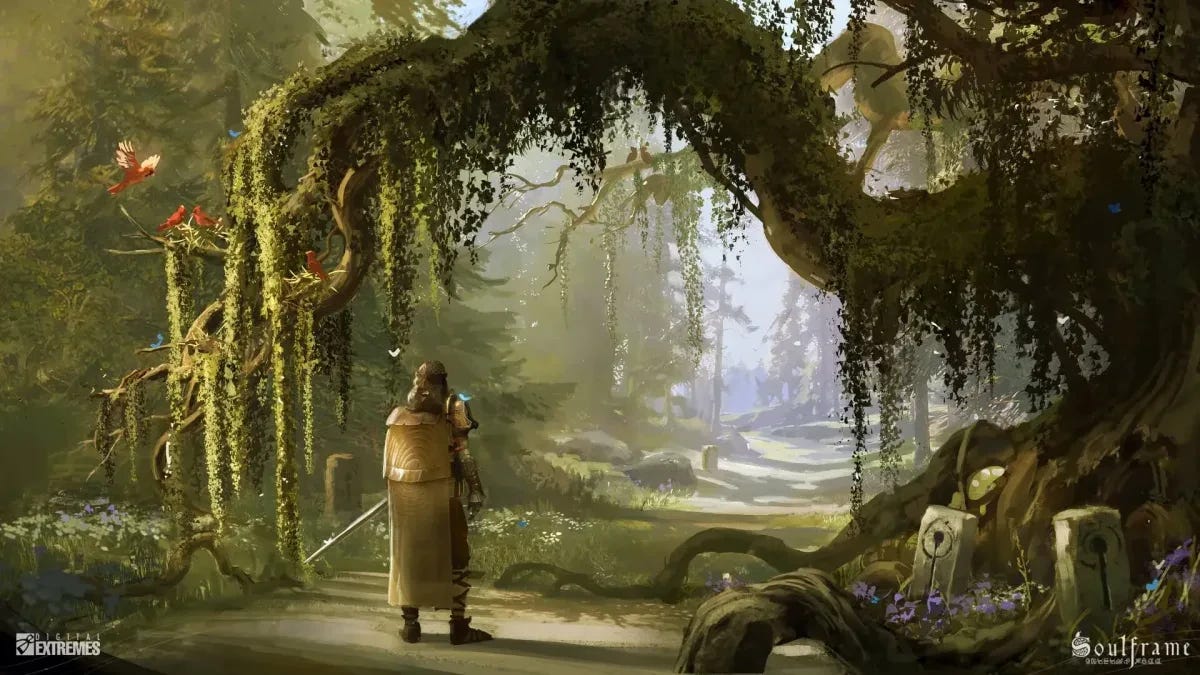
As Warframe continues to do well, the pressure has come off Soulframe. Digital Extremes has made the RPG available to play via its website in a pre-release state. It’s not currently on Steam.
The studio is being very careful when it comes to the game, partly to give it the time it needs, but also to ensure the firm doesn’t lose focus on the core part of its business.
“We wanted to really carefully grow [the Soulframe] team without hurting Warframe,” Carter says. “We wanted to transition people slowly. That literally took two years, and it was not easy. Warframe updates are incredibly ambitious. They have huge cinematics. Geoff Crookes is the creative director of Soulframe and he’s also just a fantastic cinematic animator. So, it’s like, ‘Oh, Geoff has to come back and animate a few things.’
“And that’s at a high level. That trickles down to the whole company as the teams have to jump in, and I think that’s good. It’s good because the teams aren’t competitive with each other when they can work back and forth. You see your colleagues coming in to help. There’s camaraderie. I’ve heard of studios where the two teams can become competitive, and that’s definitely the opposite of what we wanted.”
Soulframe is not the same genre as Warframe, so they don’t directly compete. However, Carter says there is a ‘DE audience’ that moves between the two games.
“But the majority [of Soulframe players] are just people who are more into action RPGs. Maybe they liked Elden Ring, but they don’t want something that’s so punishing and precise.”
Nevertheless, Warframe does bring benefits to Soulframe. For one, it has helped it secure attention and coverage it might not have had otherwise. Soulframe is also benefitting from the studio’s deeper understanding of community.
“One of the things you learn as you do a second game is that expertise doesn’t necessarily mean you don’t make the same mistakes as you did before. It just means you can recover from them a little bit faster,” Carter says
“The journey of Soulframe has been relearning a few of the things that we forgot after so many years. But at the same time, using that core that I was talking about earlier, which is just establishing communication, building trust with the audience, and taking our time to get it to a point where we feel like there’s enough content, enough story, enough gameplay that when we release it to a wider audience, it’s going to have its core [fans]. And that’s all we’re looking at right now. We’re building the core of the audience before we go wider.
“We’re really excited about it. The numbers that we’re seeing, in terms of retention and engagement, is looking really promising.”
Carter isn’t naïve. He knows that Soulframe launches into a far more competitive space than Warframe did. But he remains confident that, in five years, Digital Extremes will be a significantly bigger company than it is today.
“[It won’t be] double where we are now, but maybe we’ve added a couple hundred people,” he concludes. “That’s our five-year vision, to have both these games neck and neck with totally different audiences.”
That’s it for today’s newsletter! Join us on Thursday as we reveal the biggest games still to come in 2026… which aren’t called Grand Theft Auto. Until then, thank you for reading.


