


The Game Business is Live in Los Angeles on Monday, June 8, where we will be interviewing industry experts Laura Miele, Jason Rubin and Matthew Ball live on stage. Tickets are available now.
Listen now on Apple, Spotify or YouTube
In This Edition,
Could AI solve investment woes?
The growth of Turkey (podcast only)
Griffin’s new $100m indie fund
Plus, Nintendo, Sony and Sega news
Welcome back to The Game Business.
This week, we’re joined by two leading video game investors. First, we have David Gardner, one of the world’s most successful gaming VCs who backed Supercell, Unity and NaturalMotion. He spoke to us about the state of game investment, where it’s going and what may cause it to come back.
Then we have Hooded Horse and Griffin Gaming Partners’ Tim Bender sharing details about a new $100m indie fund.
Plus, we chat investor anxiety over Nintendo, Sega’s cancelled ‘Super Game’, Capcom’s results and a whole lot more.
You can watch or listen to it all above. Or, as usual, we’ve picked out some key stories below. Enjoy!
AI could entice investors back to games

AI could see money flow back into the video game business, says one of the industry’s most successful investors.
David Gardner is a 45-year industry veteran, best known for his 26-years at Electronic Arts. Today, he’s a major VC investor and co-founder of London Venture Partners. He’s backed the likes of Supercell, Unity and NaturalMotion, and sits on the board of various major companies.
During today’s episode of The Game Business Show, we asked Gardner if he agreed with comments made by former Nexon CEO Owen Mahoney, who said “VC entry into games has been a trainwreck”
“In short, probably,” Gardner said. “We were one of the early ones to start with a dedicated game-focused fund. We had so much early success. That was during that massive rise in mobile. Unicorns [start-ups with a valuation of at least $1 billion] were made from that. And it attracted a huge amount of capital. And then of course, COVID. Hollywood had to shut down productions and gaming was going through the roof. So, billions and billions poured in, and basically teams thought, ‘Now we can just hire anybody and build anything.’ Because if you’d worked at Supercell or Riot, you’re going to get funded, and most investors weren’t from the games industry and they were just funding any of the names that came through.
“Most investors weren’t from the games industry and they were just funding any of the names that came through”
“I remember when we had one of our first mega investments, so $100 million capital raised. The game shipped, and it did like $500,000 in revenue that month. It needed to do $10 million. We’d been on this project for five years. And it reminded me of why EA was criticized for not investing in new IP. You realize that when you’re spending $100 million on a game, it needs to work. You can’t just write it off.”
There are still VC-backed projects and studios to come to fruition. But Gardner said that VCs need to make roughly five times what they put in, and overall they’ve put in around $7 - $8 billion.
“So, we need $40 billion in exits,” he noted. “And we’ve had a few billion here and there. So, we’re going to see that on an aggregate basis, venture has overinvested in gaming.”
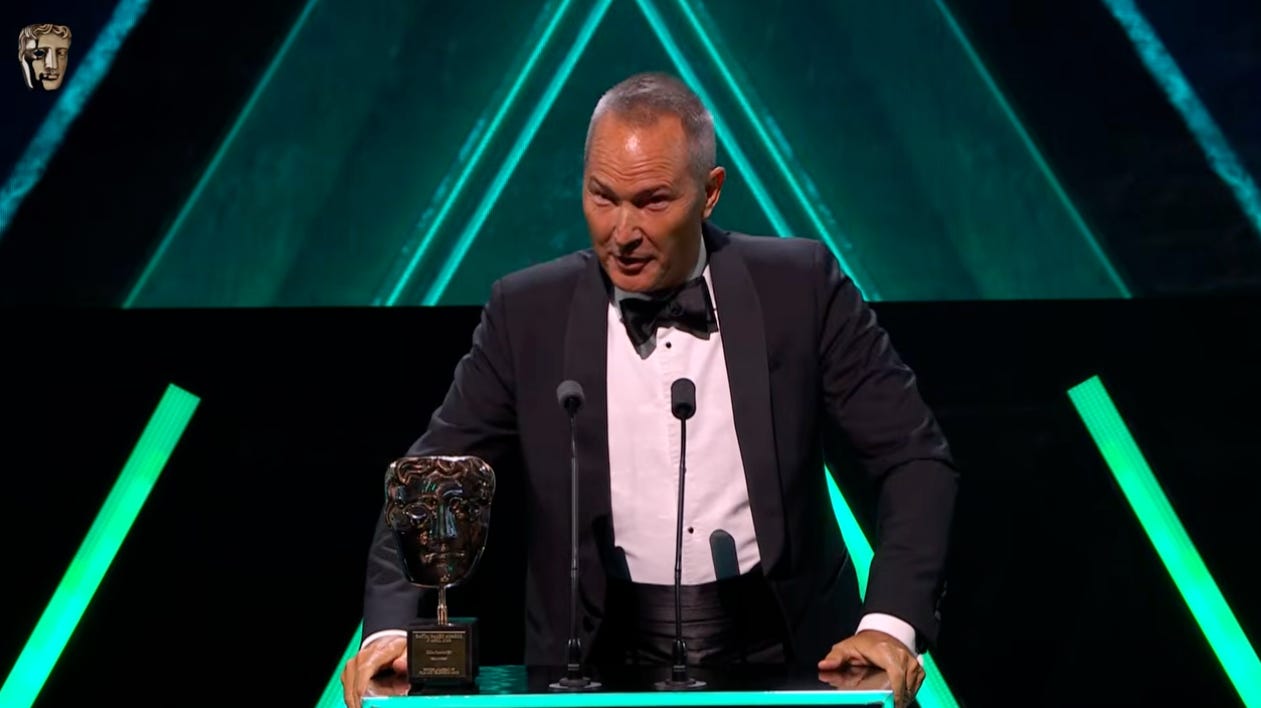
Increasingly, VC funds have pivoted to other industries, including games-focused ones like London Venture Partners. For instance, LVP has invested in a finance app called Rule, which has game-like elements but is actually about tracking a user’s spending.
“That’s more blue ocean,” he says. “1,000 games a day are being released. It’s a red ocean. It’s super hard. We are still doing some games, but they have to be an extraordinary team.”
VCs may have shifted away from game investment, but AI might unlock future funding, Gardner said. In particularly, he’s talking about games or platforms that incorporate AI to create new experiences.
“I’m not sure I’m inventive enough to describe it, but I think it’s going to feel like magic,” he said. “It’s going to be something where we partly do something as a player, and then the AI snaps that to a game flow and a logic that works, and that is fun. If music were an analogy, you might hum a few notes, and then it will create the symphony for you. I think that could be pretty magical.”
AI tools could also make game companies more investible in the future, Gardner added.
“These long, long, long development cycles are a problem. The only strength that a start-up really has is being nimble, and being able to move fast with a new idea. I do worry for the industry if we continue to have these mega long projects. This is a bit like what China’s doing in the car industry. Why do you need a five-year development cycle? They’re working on two-year development cycles. Now, in the old days, the output and quality wasn’t that good, but they’ve gone through so much learning, and now you’re like, “Oh, actually the car is better and faster.”
“AI and small teams… that is the new business model, at least for a new IP. You get in, you start the flywheel moving, your community, you get your cash flow coming in because people are spending. And then you go big. You don’t have to have a mega team. You have more and more AI agents running to help your development be productive.”
“AI and small teams… that is the new business model, at least for a new IP.”
Gardner stressed that AI won’t lead to a better product, but it’ll help investors and businesses know faster whether something is working.
“If you’re heading in a bad direction, you will get there quicker,” Gardner added. “Can we compress getting to, ‘this is going to work’ from five years down to one year, which is how it used to be in mobile? One of the reasons we made a lot of money in that era, was it was half a million dollars to make a mobile game, and you needed to make six of them to find one that worked. So, $3 million would get you something that would make you $10, $50, $100 million.
“If we can get roughly down to a similar time, and under a million dollars to figure out whether something works, you can fund teams and afford a few million dollars risk, because the reward is going to be a $100 million franchise. If you can do that, then the game is back on. I’ve seen so many pitches that, more or less, is three to six-person teams with a full AI stack.”
But the technology only works if the team is good, he stressed.
“Can they get the quality? Are the individuals any good? Because the AI will just get them quicker to some place, whether it’s a good place or a bad place. My work as an investor is to figure out: is that team going to be able to nail it? Are they going to be able to understand what the customers will love? And can they even get along during the journey?”
He concluded: “We are going to have to wash through all the bad [AI] investments like we did with VR and Web3 and everything else. But humans are ultimately so greedy, but so optimistic. They all keep coming back for more. And we will get there.”
Sponsor Message
GameDiscoverCo Pro: unprecedented insight into PC/console game data

Want actionable data and real takeaways when planning and executing your PC & console game strategy? The GameDiscoverCo Pro data set, created by the folks behind the popular newsletter and licensed by 90+ game publishers, platforms & devs worldwide, now includes:
Steam wishlist & player insights: who’s trending, how, and why?
Steam ‘deep dive’ data: from player overlap to review sentiment & demographics.
Console data: key insights across PlayStation, Xbox and Switch eShop.
If you want to try the tool for yourself, we have a free demo of GDCo Pro available right now - just reach out to us and we’ll add you to our platform to check it out.
New $100 million indie fund would take “minority share” of a game’s revenue
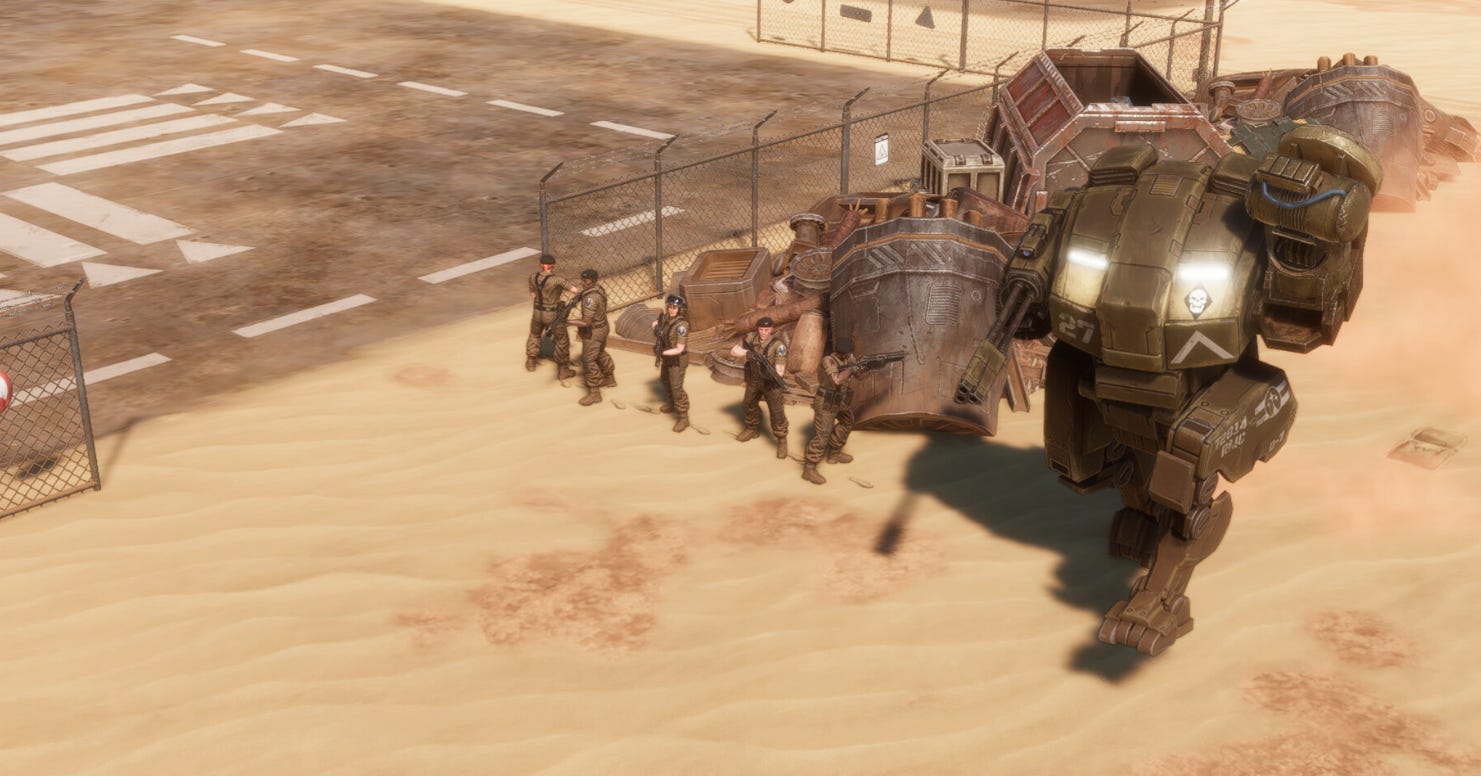
A $100 million VC fund that backs projects rather than studios will take a ‘minority share’ of a game’s revenue.
Griffin Gaming Partners announced its Special Opportunities Fund last week. It is a way for studios to secure VC funding without giving up equity. The fund has already backed fifteen titles, and it’s being run by Tim Bender, who is also CEO of publisher Hooded Horse.
“Very normal for this fund would be an investment in the $1 – $2.5 million range,” Bender told us on The Game Business Show. “There is going to be plenty that go lower, and plenty that go above. It’s really about what’s promising. You don’t want to take a smaller dev that can do it for $200,000 and say ‘let’s do it for $1m now’, because that can ruin projects. And there will be teams that might need a bit more.”
Griffin will take a share of the game’s revenue after release, and that share will vary depending on the scale of the investment.
“The common thing is it will always be a minority percentage. It should be something less than 50%. The idea is to participate alongside, to leave the studio fully incentivized, to leave them with all the cash-flow that they need to continue to invest in the game post-release, and make it the best it can be. So, always the minority share, but with the exact terms differing very greatly based on what’s fair, what’s needed, and what went into it before we got involved.”
Meanwhile…
Nintendo’s share price dropped more than 9% after its financial results last week. The firm expects to ship 16.5 million Switch 2 units in its next financial year, which is a three million drop on the year before. Nintendo says this is due to stronger-than-expected sales in the first year, plus a global price rise on Switch 2. The console will soon cost $50 more in the US, ¥10,000 more in Japan, €30 more in Europe and $50 more in Canada.
Sega has cancelled its ambitious Super Game project. The title was to combine Sega’s online capabilities with its library of major IPs. However, due to strong competition in online games, the firm has discontinued the project., Sega is also lowering its focus on free-to-play due to the weak performance of its Rovio business.
The former face and leader of the Tekken series, Katsuhiro Harada, has formed a new studio with SNK. SNK VS Studio is based in Tokyo, and Harada will be its CEO. SNK is known for the The King of Fighters, Fatal Fury, and Samurai Showdown games.
Sony went into detail on how it’s using AI in game creation. CEO Hideaki Nishino believes AI will lead to fresh experiences, better discovery and will lower the barriers to entry for making games. In terms of how it uses AI, Nishino-san said AI is automating repetitive workloads, and accelerating areas like QA, 3D-modelling and animations. Studios such as Naughty Dog and San Diego studio are already utilizing AI tools.
Capcom saw a rise in profits across all divisions for the ninth consecutive year, driven by Resident Evil Requiem, which has now sold seven million units worldwide. Older Resident Evil games also sold strongly during the period. Overall, Capcom sold over 59 million games, with 49.5 million coming from older releases.
Sticking with Capcom, new IP Pragmata has now sold two million copies in 16 days. The game will be part of the publisher’s next financial year.
The PC version of Forza Horizon 6 leaked over the weekend ahead of its May 19 release, with pirates cracking and sharing the full game online. In a statement, developer Playground Games says that any players caught playing the pirated version will face a ban from the entire Forza series.
Nintendo legend Takashi Tezuka is retiring. Tezuka-san has worked on almost every major Mario game from Super Mario Bros right up to Super Mario Bros Wonder. He also played a major role in The Legend of Zelda and Pikmin series.
That’s it for today. We’ll be back next week where we’ll be joined by Hasbro CEO Chris Cocks. Until then, thank you for reading.


