


Listen now on Apple, Spotify or YouTube
In This Edition,
EA discusses the in-game ad opportunity
Should we develop for adverts?
Gaining trust of marketers
Hello and welcome back to The Game Business. I hope you’re having a pleasant week.
Today, we’re discussing advertising within PC and console games.
It was back in February when Matthew Ball (in his pre-Xbox days) pointed to in-game advertising as a potentially big opportunity for PC and console titles. On the mobile side, in-game advertising generated around $55 billion of revenue in 2025 (excluding China), whereas very little is generated from PC and console titles.
Ball told me: “If we say that audiences in the eight major markets [US, UK, Germany, Japan, Korea, Canada, Italy, France], which are 60% of all PC/console sales globally, are not spending more, the costs are going up, we don’t want layoffs, we don’t want fewer games, we don’t just want the same games… we don’t want price increases…. The money needs to come in one way or another.”
Then just last month EA revealed EA Advertising, a new platform to simplify in-game advertising for marketers, and also create standardize practices around tracking, measurement and targeting of ads within PC and console games.
With Ball’s words still ringing in my ear, this felt like a significant development. And so, we invited EA’s advertisement and sponsorships boss, Alexander Dao, onto our Show. And he accepted.
You can listen to our full chat above. Or alternatively, we’ve selected a handful of moments from the conversation below.
By the way, if you’re enjoying reading The Game Business, why not consider becoming a paid subscriber? Not only do you support us doing our twice-weekly free newsletters and shows, but you will receive a weekly bonus ‘Micro’ podcast on a Monday, and a monthly market report, too. TGB paying subscribers also get free access to our annual Summer Game Fest event.
PC and console game studios should consider in-game advertising during development, says EA
Video game makers should plan for in-game advertising during the development process, says the boss of EA’s ad division.
Alexander Dao, VP of advertising and sponsorship at Electronic Arts, joined us on today’s episode of The Game Business Show. He discussed EA’s new advertising platform, and the “huge opportunity” around in-game advertising within PC and console games.
And one of the key opportunities is with game developers planning for advertising during the creation process.
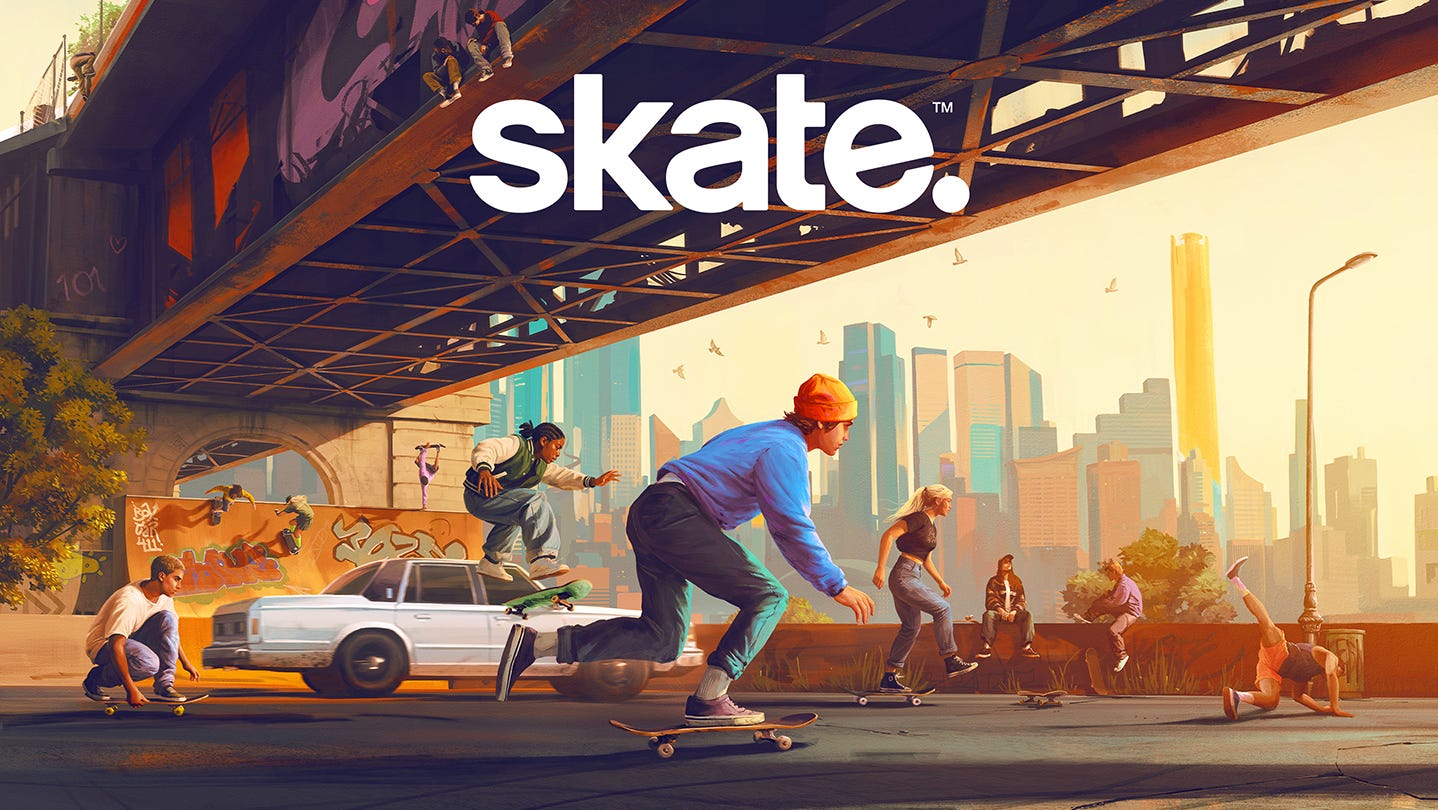
“That’s a huge opportunity, not just for EA but broadly, because most of the games that have been around for a while, building the advertising experience is really retrofitting it in,” he explained. “But as you think about new games that are coming out, as you think about free-to-play experiences that are happening on the console side… like our Skate game. Those are opportunities where if you actually design them with the right advertising and brand experience in there from the get-go, it just makes it easier. It makes it feel more native and it creates more flexibility in the types of brands that can come in and out. So, I do see a big opportunity there.
“Part of the reason why we launched our ad platform is because as we create new experiences in addition to the existing titles, it allows us to bring brands in in a much more flexible, creative and dynamic way.”
EA’s new advertising platform is primarily aimed at the firm’s sports titles. It’s linked to the company’s Frostbite engine and allows advertisers to place ads in various spots within the games, and they can even use existing assets and have them converted into 3D. What’s more EA has worked with the Interactive Advertising Bureau and Integral Ad Science to help standardize how in-game advertising shows up and is measured.
Dao said that this investment is something that could bolster the entire in-game advertising sector.
“We are working with third parties to try to standardize some of this. So, when we think about in-game 3D assets, how do we start to standardize what that looks like for a brand? When we think about in-game measurement and viewability standards, how do we make sure that’s consistent so that when other publishers and platforms also do this, and we share back reports to the brand or the marketer, they’re seeing consistency? And they know that it’s showing up the way that it should be showing up, and it’s being measured the way that it should be measured. Some of the things that we’re doing here, I believe, will drive a bit more consistency and standardization [across the industry].”
Sponsored Message
Gamescom’s indie showcase event returns
The Gamescom Awesome Indies Show will return next month, and Gamescom exhibitors can submit their title for inclusion today.
The Awesome Indies Show is a digital indie showcase featuring new announcements, world premieres, exclusive trailers and new gameplay footage from upcoming indie titles created around the world. What’s more, this year’s event is produced by media giant IGN to ensure a strong selection and global reach.
The submission deadline is August 2, and indie exhibitors can submit through the link above. There are also sponsorship opportunities for those that want to showcase their brand in the best way, and you can find out more about that here.
Can in-game advertising work outside of sports games?
In March we asked Take-Two CEO Strauss Zelnick about in-game advertising. And he seemed relatively downbeat on the revenue stream’s potential, at least for premium games.
“We have limited advertising inside games like NBA 2K because it fits with the vernacular,” he told us. “You want to see advertising in a stadium, because you would if you were there in real life. But that’s not a big economic contributor.
“It’s difficult for me to believe that we would want to have interstitial advertising in a game that someone paid $70 or $80 for. It would seem unfair.”
EA is more optimistic on the potential, but much of what the company has shared is around EA Sports FC, College Football, Madden and Skate. Is there really much potential here for games outside of sports?
“It has to make sense for the game,” Dao answered. “It’s easier to imagine what that looks like with sports because what you’re really trying to do is mirror the real-world experience. But if we pull on the thread of… how do we actually understand what the players want? The progression? And can brands be a part of that experience?
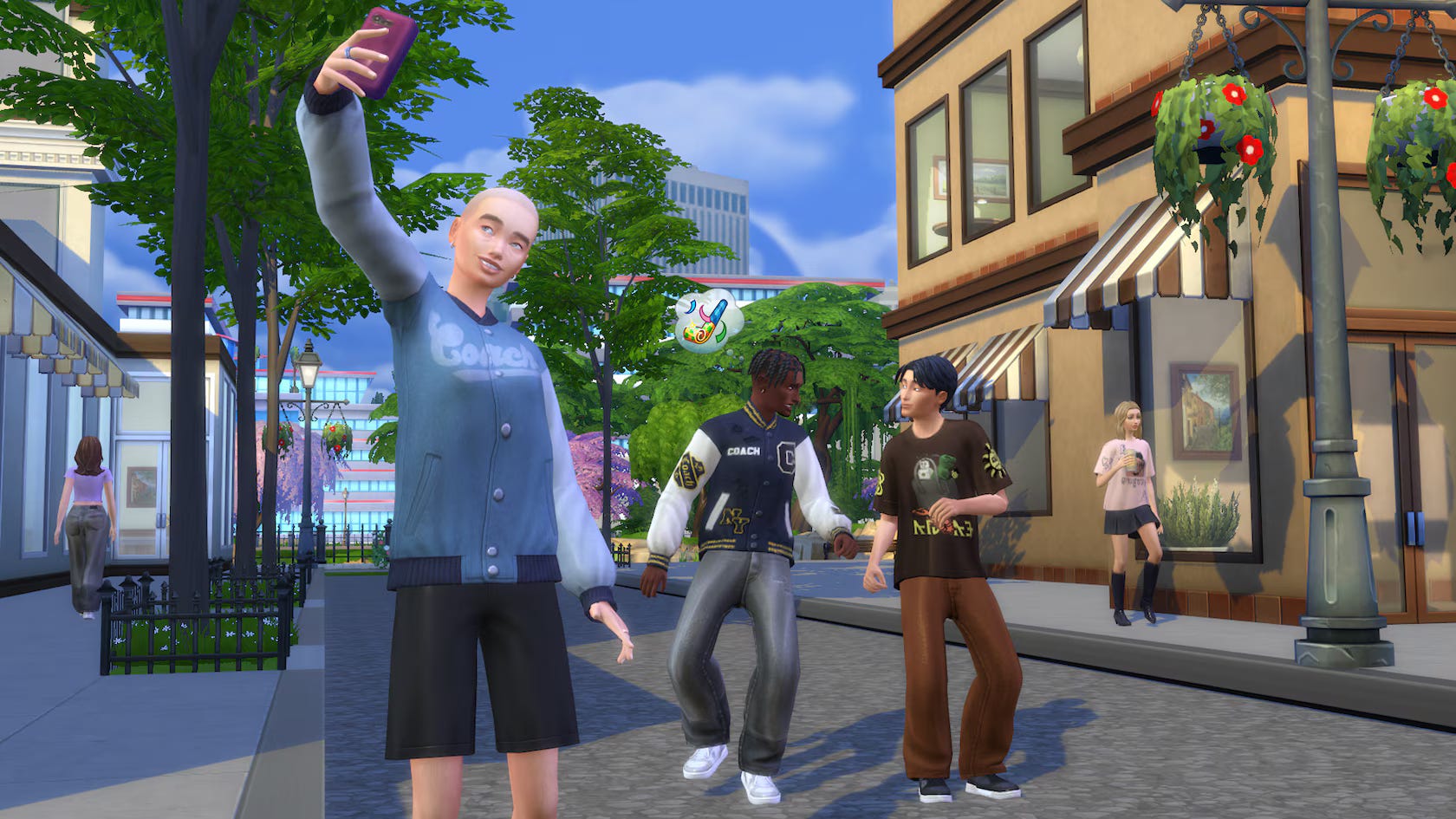
“Take the activation we did in The Sims with Coach. The Sims is not a sports game, but we understood what The Sims community wanted. We did some surveys to understand what type of brands would they actually want to see in the game. Where is there good overlap in audience? And if a brand were to come in, what’s the right way for them to do it? And what we did with Coach was democratize access to their products to The Sims community. [Coach] didn’t want it to be a paid product [in the game]. They just wanted to drop their entire product line, put it in front of the community, and surprise and delight them. When we did that, the socials blew up. Everybody was talking about it. A bunch of our gaming creators were talking about it. They were all really surprised and happy that it was made free. And then the media and everything picked it up, too.
“If done appropriately with the right brands, with the right title and understanding what the players ultimately want, it can drive that type of experience. But it is a bit nuanced title-by-title to make sure that you’re getting it right and it doesn’t feel random.”
He acknowledged that there are examples where in-game advertising has frustrated players, but that EA is ready to react to those situations.
“If something isn’t working and isn’t landing the way that we thought it would, quite frankly, we just pull it,” he told us. “We’ll say, ‘Hey, you know what? We tried it, it didn’t work, maybe we’ll try something different.’”
Meanwhile…
Compulsion Games, the former Xbox studio that is responsible for the BAFTA winning South of Midnight, is looking for work. The Canadian studio says it wants to collaborate with studios across games and entertainment. It said in a LinkedIn post: “With deep experience in creating acclaimed original IP, we bring our artistry, technical expertise and collaborative approach to every project. We are excited to support the development of memorable experiences that engage and entertain players around the world.” Xbox announced that Compulsion would become independent last week.
Video game veteran Glen Schofield is retiring after 35 years. He was a director and producer across three major Call of Duty games, and was also the creator of Dead Space and The Callisto Protocol. He’s struggled to find funding for his recent AAA project pitches, and has decided to back away from the business.
Steve Allison, the former Epic Games VP in charge of the Epic Store and Epic’s third-party publishing business, has joined Saber Interactive as chief business officer. Allison also held senior publishing positions at Midway, Telltale and Atari.
PR veteran Jonnie Bryant has joined Team17 as communications director. Bryant spent the last nine years at Bethesda, most recently as global PR director. He previously held senior PR roles at The Pokémon Company, Jagex, Blizzard, Take-Two and Vivendi.
Former employees of Build A Rocket Boy protested outside the company’s offices on Saturday over a large fan playtest event. The Independent Workers Union of Great Britain says that these playtests are usually carried out by professional staff. Build A Rocket Boy has laid off around 400 employees after poor sales of the 2025 game MindsEye.
The Entertainment Retailer’s Association, which represents major video game retailers in the UK (including Amazon, Game, Sainsbury’s and HMV) has criticised PlayStation’s plan to stop manufacturing game discs from January 2028. The trade body said: “Consumers deserve the freedom to choose how they buy their entertainment. Removing discs doesn’t represent progress – it simply removes choice. That’s bad for gamers, bad for retailers and ultimately bad for the long-term health and preservation of our games industry.”
Investment bank Aream and Co says that $2.3 billion was spent on 54 merger and acquisition deals in Q2 2026. This is the highest number since 2022. This figure was mainly driven by Scopely’s $1 billion acquisition of Loom. Other key deals included the sale of Balatro publisher Playstack to Integrated Media Company, and the management buy-out of Eve Online developer CCP.
Assassin’s Creed: Black Flag Resynced has sold two million copies in 24 hours.
And stylized animated first-person noir shooter Mouse: P.I. For Hire has now surpassed one million players.
Finally, Summer Games Done Quick 2026 has raised $2.4 million for international humanitarian group Doctor’s Without Borders.
That’s it for today’s Show. We’ll be back with three shows next week, featuring the likes of Jagex and Amazon. Until then, thank you for reading.


