


Listen now on Apple, Spotify or YouTube
In This Edition,
Take-Two CEO Strauss Zelnick on…
- The impact of AI tools
- Developing markets
- Advertising in PC and console games
- Ageing player base
- CEO advice

At the end of January, Google launched Project Genie.
The AI tool allows people to turn text and image prompts into 3D virtual worlds. Video game investors got worried, and share prices for numerous game companies took a tumble. That included the share price of GTA owner Take-Two.
I briefly spoke to Take-Two CEO Strauss Zelnick about it last month, where he insisted the new technology was a good thing for companies such as his. Today, I had the chance to dive a little deeper on his views around AI, and the impact it will (and won’t) have on the future of video games.
“The history of our industry is that we’ve always used technology to create great entertainment,” he tells us on today’s episode of The Game Business Show. “So, an advance in technology that allows us to do things better and quicker is great for us.
“I was kind-of stunned by the market’s reaction, because its reaction was somehow seeing it as a threat to what we do, when it’s quite obvious that creation tools are beneficial for our industry. I think the bear case for big entertainment companies is somehow that AI tools will mean everyone can create hits, but that doesn’t stand to reason. These tools may help you create assets, but that won’t help you create hits. There are loads of assets out there now. It doesn’t matter if you push a button to create an asset, or it takes you six weeks, at the end of the day, you have an asset. And thousands of mobile games are launched every year, and there are only a handful of hits.
“Equally, you can create assets that might look like a big release, that might look like NBA 2K or EA Sports FC. But creating a hit of that magnitude is a completely different animal and does require human engagement and creativity.”
“You can create assets that might look like NBA 2K or EA Sports FC. But creating a hit of that magnitude does require human engagement and creativity.”
Zelnick says that technology can help the company create “the best entertainment on earth”, but it’s not something technology can do on its own.
“Could you use AI tools more quickly to storyboard? Or to help you tease out plot points? Or tease out alternatives? Sure. Because these tools are based on massive data sets that are searchable and translatable into natural language. And that’s just more effective than the tools we’ve had before, like doing an internet search.
“But ultimately, it’s the same thing. It all depends on your expectations. No one ever added value with a PowerPoint presentation. Nonetheless, lots of them are made all the time. If you could reduce the amount of time you spend on a PowerPoint presentation and still have a good PowerPoint presentation… Hallelujah, that’s phenomenal. But no one’s saying: ‘that’s great. Chris, we’re going to give you a big promotion because of the amazing PowerPoint you did for the internal committee’. That’s not what we get paid for. What we get paid for is making the best entertainment on earth and that requires all kinds of things that technology cannot, and will never, do on its own.”
I suggested that tools like Project Genie might level the playing field for those looking to create games like GTA.
“Not even the littlest bit,” Zelnick insists. “There’s already plenty of technology out there that allow people to create video games, and as a result, thousands of video games are created every year, and yet the hits all cluster among the large entertainment companies, almost entirely, and now and then, an indie, which is generally speaking well-funded and pretty robust in and of itself.
“The notion that somehow new tools would allow an individual to push a button and generate a hit and bring it to many millions of consumers around the world, it’s a laughable notion. It’s just never been the case with entertainment. Right now [in music] there are programs that allow you to put out a prompt and get a professionally recorded song spit back out at you. It sounds like a song, but I defy you to listen to it more than once. It’s great to send as a greeting card to your partner on their birthday, but that’s about it.”
Where AI might prove impactful is the growing creator economy in video games, where people are making games on platforms such as Roblox.
“But that creator economy stands alongside the professional entertainment economy,” Zelnick says. “It doesn’t supplant it. It doesn’t replace it. And the history of the entertainment businesses as new technologies come along that enable new activities, they stand alongside the pre-existing businesses.
“I used to give, as an example, that the only entertainment business that was ever wiped out by a new technology in the history of electronic entertainment, which is since 1895, and I’m a student of that business, was vaudeville. But now I could argue that vaudeville hasn’t exactly been wiped out. We’re in the golden age of live entertainment. My son’s a comedian. I just went to see him perform in front of thousands of people in Boston on Saturday night. Like, how is that different from vaudeville? There are far, far more people attending today than in the 1920s. So, every entertainment business that was supposed to be destroyed by new technology hasn’t been.”
Zelnick describes himself as an optimist when it comes to the impact of technology.
“I just read an article that took the position that because of digital technology, people are dumber today than they were 10 years ago. I don’t think it’s true at all. When I was a little kid, calculators came along and parents were all up in arms that now schools would not teach kids math because they had access to calculators. Well, people are learning math today, even though there are calculators.”
He adds: “Technology is almost always a positive. Look, there are detriments as well. We’ve greatly benefited from nuclear technology in so many ways, and we’ve also had horrific uses of nuclear technology in the second World War. Thank God, not since then. Knock wood.”
I quipped I sometimes think the internet might have been a mistake.
“You can moan about the effects of social media, but media’s been around for a long time. Our great grandparents moaned about jazz music. And then with parents, or grandparents in my case, it was rock and roll music. And then it was hip hop music. But here we are. We’re all fine. We survived.”
Take-Two predicts 75 - 80% of its revenue to be outside of the US by 2036
Take-Two has often talked about growing outside of the US, and the opportunities of developing markets like India and Southeast Asia.
But today, it remains highly reliant on the US, Western Europe and certain parts of Asia for the bulk of its revenue. So, I asked CEO Strauss Zelnick what the company’s plans are for growing outside of its home territory.
“There’s this massive population that loves interactive entertainment that we’re not really serving”
“There’s this massive population that loves interactive entertainment that we’re not really serving,” he answers. “For example, India and Africa. I would argue we underserved the Middle East. We certainly underserved much of Asia and Latin America. We need to change that.
“One of the ways we have to do it is localize, which requires us to invest. And the other thing that we have to do is create distribution partnerships, largely for mobile. We also have to support streaming services that make sense. Finally, we have to be willing to use our geo pricing tool, and take the risks that someone might use a VPN to circumvent our geo pricing, which is a risk we will take in limited circumstances.
“If you look at our numbers now, we run about 65/35 in favor of the US in terms of our revenue. It’s certainly not true of population, with the US having a population of 330 million people. So, as the world opens up technologically… on the console side, that means going more to PC, which is already becoming a much greater share of so-called console releases. On the mobile side, it means having technology that allows us to address less technologically advanced devices. As those things occur, which they will, and as the distribution models open up either for regulatory or commercial reasons, or both, we have the opportunity to serve the rest of the world, and those numbers should really change. I would guess in 10 years, if we do things right, the US is 20% to 25% of our business and the rest is outside the US. And obviously the scale of our business will grow materially.”
‘Older players are not ageing out of games’
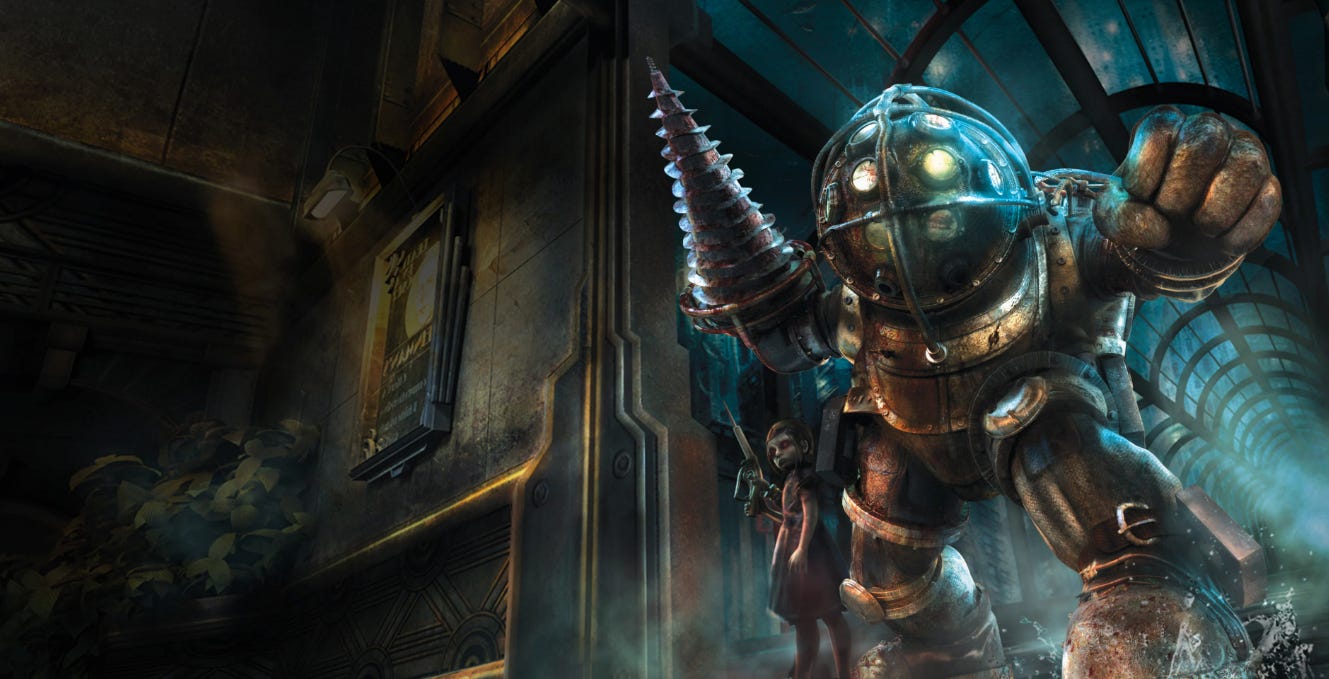
One topic I was eager to explore with Take-Two is the age of its audience.
The company’s IPs date back decades. If you were 17 when the last BioShock of Grand Theft Auto was released, you’re 30 today. And that age group faces altogether different pressures on their time compared to a teenager.
“We tend to think around here in terms of making the greatest entertainment on Earth. And in order to do that, we engage with the most creative people on Earth, and find a way to encourage them to work within our system,” Zelnick says. “And then when they do work within our system, we give them unlimited resources and insist that they follow their passion. That’s our recipe for success.
“We don’t sit around and try to game it the way like Pillsbury does… who’s our consumer? ‘Why, it’s Betty. Betty is 52 and she lives in Milwaukee and she has blonde hair and she makes a cake every Thursday night’…. No, we don’t do that. We hire the most creative people. Tell them that all we want them to do is pursue their passions. We’re going have a really rational environment. We’re all going to be kind. We’re going to work as a team. We’re going to seek excellence. We’re going to get out of your way. And you know what happens? More often than not, everyone shows up.”
Zelnick doesn’t believe players are ‘ageing out’ of games.
“It’s not happening,” he continues. “We stay engaged with the kind of entertainment we fell in love with at the age of 17. If I say, ‘You have an hour and all you’re going to do is listen to music.’ You will listen to the music you listened to at 17. If you fell in love with video games at 17 and you’re 40, guess what? You still do play video games. That’s why the cohort is continuing to grow as we age. That’s why we have industry tailwinds. I know Matthew Ball doesn’t really believe that, but our experience here at Take-Two is we are benefiting from industry tailwinds.
“Now, we only benefit if we make something great, of course.”
Take-Two: ‘It’d be unfair to put in-game ads in full price games’
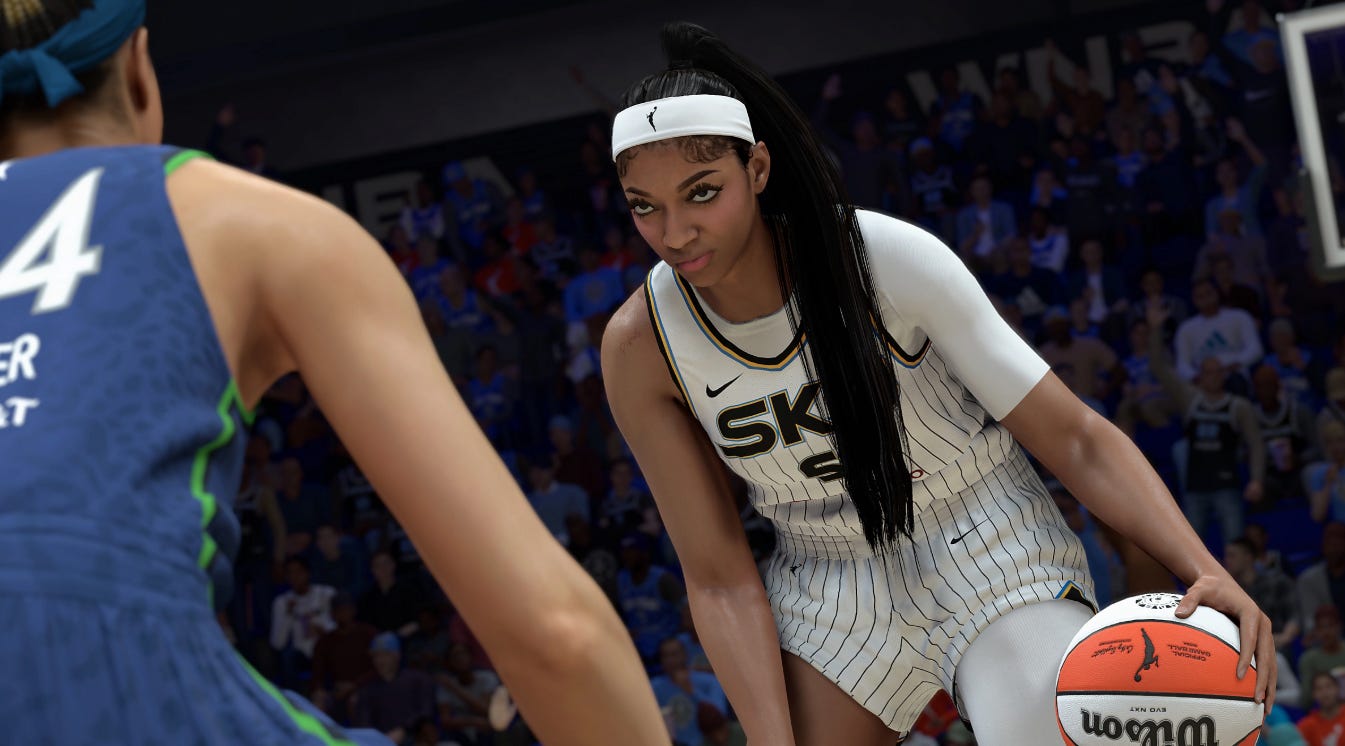
Last month we spoke to game analyst Matthew Ball about in-game advertising on PC and console. Advertising is a major monetization model in mobile, but it hasn’t been explored much on other platforms.
Ball suggested that sports games might be a lucrative space to explore advertising in pause menus or loading screens. He even pointed to Take-Two’s own statistic around the fact 2.5 billion games of NBA 2K are played every year.
But it’s not something Take-Two is interested in, at least not for premium titles.
“For free-to-play titles, yes,” he says. “For titles for which you’ve paid 70 or 80 bucks? No. We have some limited advertising inside games like NBA 2K because it fits with the vernacular. You want to see advertising in a stadium, because you would if you were there in real life. But that’s not a big economic contributor.
“It’s difficult for me to believe that we would want to have interstitial advertising in a game that someone paid 70 or 80 bucks for. It would seem unfair.”
Zelnick’s CEO advice: “Hit games cure all ills”
Zelnick has a new peer in the form of Xbox CEO Asha Sharma.
Her appointment sparked a conversation around the role of a CEO. Sharma doesn’t come from games and doesn’t really play them. Zelnick also didn’t start in games, nor does he consider himself a gamer. So, I asked what he felt were the key things a games CEO should be focused on.
“I don’t think the newly appointed head of Xbox needs any advice from me,” Zelnick says. “She’s a highly accomplished executive who’s done just great without ever having met me. I’m going to bet on her continuing to do great. Moreover, I have to focus on myself doing better, before I talk about other CEOs.”
He continues: “At the end of the day, what drives success in our business is making the best entertainment. The rest does tend to take care of itself.
“When I first became President of Fox, I was just responsible for the business side. My boss was the chairman, Joe Roth, and he was responsible for the creative side. If I did my job well running the business, and Joe did his job poorly running the creative, we would fail. If he did his job well, and I did my job poorly, we would succeed. And if we both did our jobs well, we would succeed mightily. And we did, thankfully.
“But the truth is that hits cure all ills. In the absence of making hits, you won’t have a successful entertainment business. That’s the thing to focus on. At Take-Two, we try to do all of the above. We try to run an amazing creative enterprise, and we try to run a highly rational, highly effective business enterprise. Sometimes we get it wrong, but that’s what we try to do.”
That’s it for today’s edition of The Game Business. Join us back on Thursday where we dive into some big stories, including the changes to the European age ratings. Thank you for reading.


