


Listen now on Apple, Spotify or YouTube
In This Edition,
Hasbro’s Chris Cocks on…
Avoiding live-service
Launching a AAA new IP
Tackling rising costs
The AI opportunity (podcast only)
The Game Business Live will take place in Los Angeles on Monday, June 8. We will be interviewing game industry legends Laura Miele, Jason Rubin and Matthew Ball live on stage. Tickets are available now.

Since 2018, toy giant Hasbro has spent nearly $1 billion on its video game business.
That’s what it’s cost to build six game studios, to create an internal publishing organization, and then make a bunch of games. The first two, sci-fi RPG Exodus and D&D action-adventure game Warlock, are due next year.
What strikes me about Hasbro’s games plan isn’t so much what it’s doing, but what it is not doing. It has seen first-hand how much money games-as-a-service can make. Monopoly Go from Scopely is one of the most lucrative games in the world, and Monopoly is Hasbro’s IP. So, it knows the financial potential of having a big online free-to-play game, but not a single Hasbro studio is making one.
“We’ve got some big marquee brands, more casual games like Monopoly and Clue, and then our entertainment brands like My Little Pony, Peppa Pig, and then we have some more core brands like D&D and Magic: The Gathering. Maybe Transformers and G.I. Joe I’d throw into that camp,” explains Hasbro CEO Chris Cocks in today’s The Game Business Show.
“That’s a really broad portfolio. So, where were we going to place our bets versus where we’re not? And we chose core games focused on PC and console, with more traditional business models. It was a safer bet for us.
“We’ll be building games mostly around D&D, Magic, Transformers, maybe some of our other properties, maybe selectively some new stuff. It’ll be very focused on action-adventure and role-playing games for PC and console. And then, we’ll partner with the best in the business on more casual games, mobile games, new and emerging platforms like VR, et cetera. I think we’re the number one digital games licenser in the world by a fairly large margin. That’s pretty lucrative business. It also really helps us reach a lot of different gamers, and helps to fund those efforts in building out our first-party capabilities.”
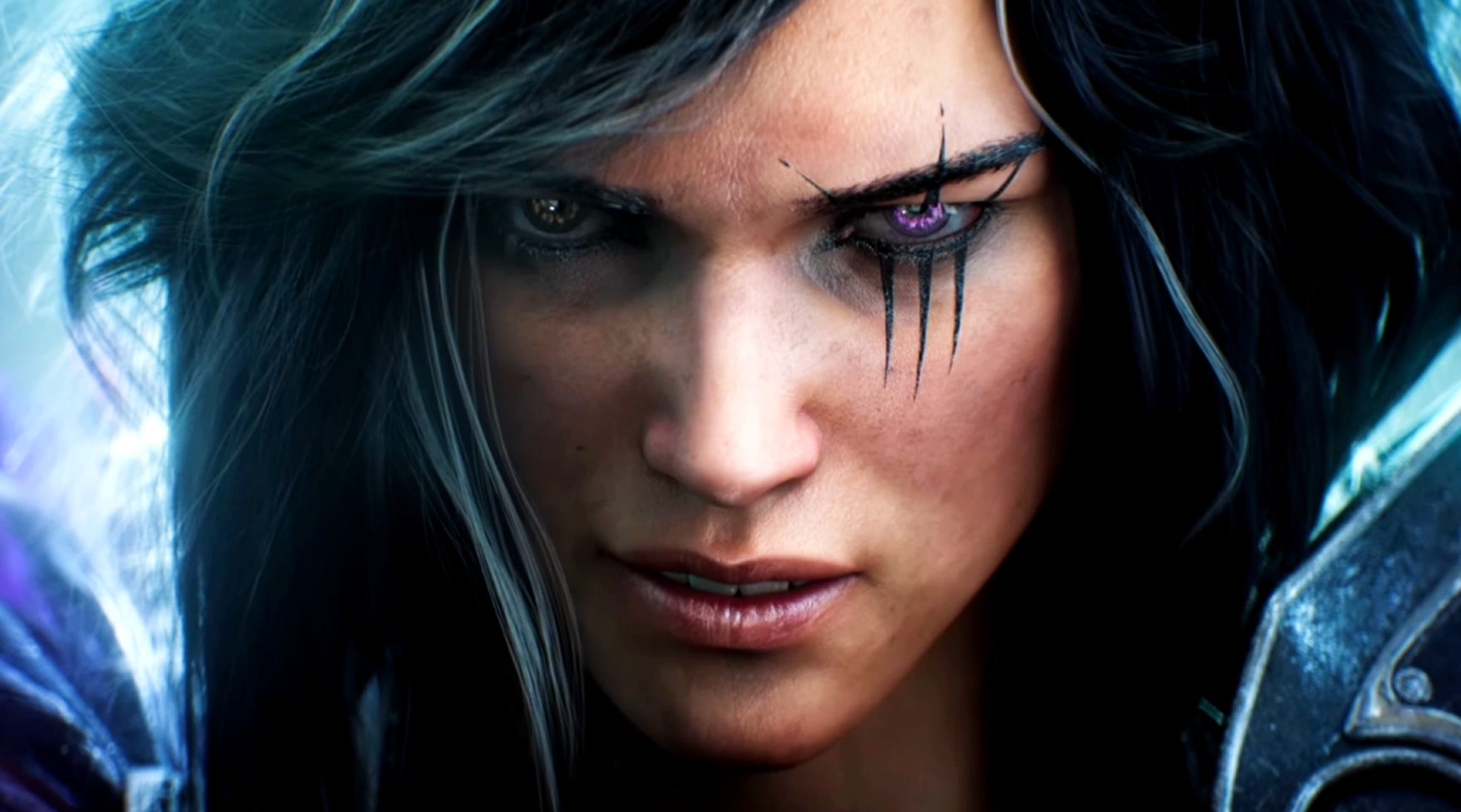
In video games, we’re familiar with the risks associated with games-as-a-service titles in an over-saturated and highly competitive landscape. But when it comes to companies outside of the industry, it’s typically the big numbers of Roblox and Fortnite that have caught their eye. Hasbro’s approach to video games is refreshingly old school.
“You can invest $100 million to build a really great mobile game, or a really great games-as-a-service, like a shooter. And the upside is you make billions and billions. But how many people achieve that upside? It’s very low single-digit percentages, if even that. The downside is you don’t make anything back, and it’s basically a wash.
“If you look statistically, and that’s dangerous because it’s a creative enterprise, but if you invest a fair amount of money and give a fair amount of time to a talented team to do a more traditional game, you probably won’t make billions, but your chances of at least making your money back is much higher. And even if you fail, you’re probably making 50, 60, 70 cents on the dollar back. So, when we just looked at the risk-reward equation of that and we looked at the design sensibilities we have — frankly the kind of games we like to play, and I’m more of a traditional gamer — we felt that to be the safer route.”
He adds: “I think there’s always going to be demand for good games that deliver a nice 40 to 50-hours worth of content set at a fair price.”
It might seem safer, but Hasbro’s premium games strategy is still high risk. It began making its own games in 2018, when companies were investing huge sums on big teams that will spend the best part of a decade on a AAA game. That’s what Hasbro has been doing.
But that space has shifted. Independent developers are increasingly taking over, making games faster, or with smaller teams, and delivering similar results. And Cocks admits that when it comes to Hasbro’s next wave of projects, it may need to adapt its strategy, including making games in cheaper locations.
“The cost to make those games has gone up quite a bit since 2018 and 2019,” he observes. “That’s something we’ll be thinking about in the next round of games. How do we diversify where our studio locations are? Right now, they’re pretty North America-based, particularly US-based. How do we use great markets like Montreal? We build a lot of RPGs and action-adventure games, and certainly there’s awesome talent in Eastern Europe, so how do we tap into that market? And then how do we use partners? We announced a joint venture with Saber Interactive for a to-be-announced game. We’ll lean into all of the above as we evolve the model.”
Advertisement

Through its Wizards of the Coast business, Hasbro has a number of video game-friendly franchises such as Dungeons & Dragons. And the huge success of Baldur’s Gate 3 proves just what a good D&D game can achieve.
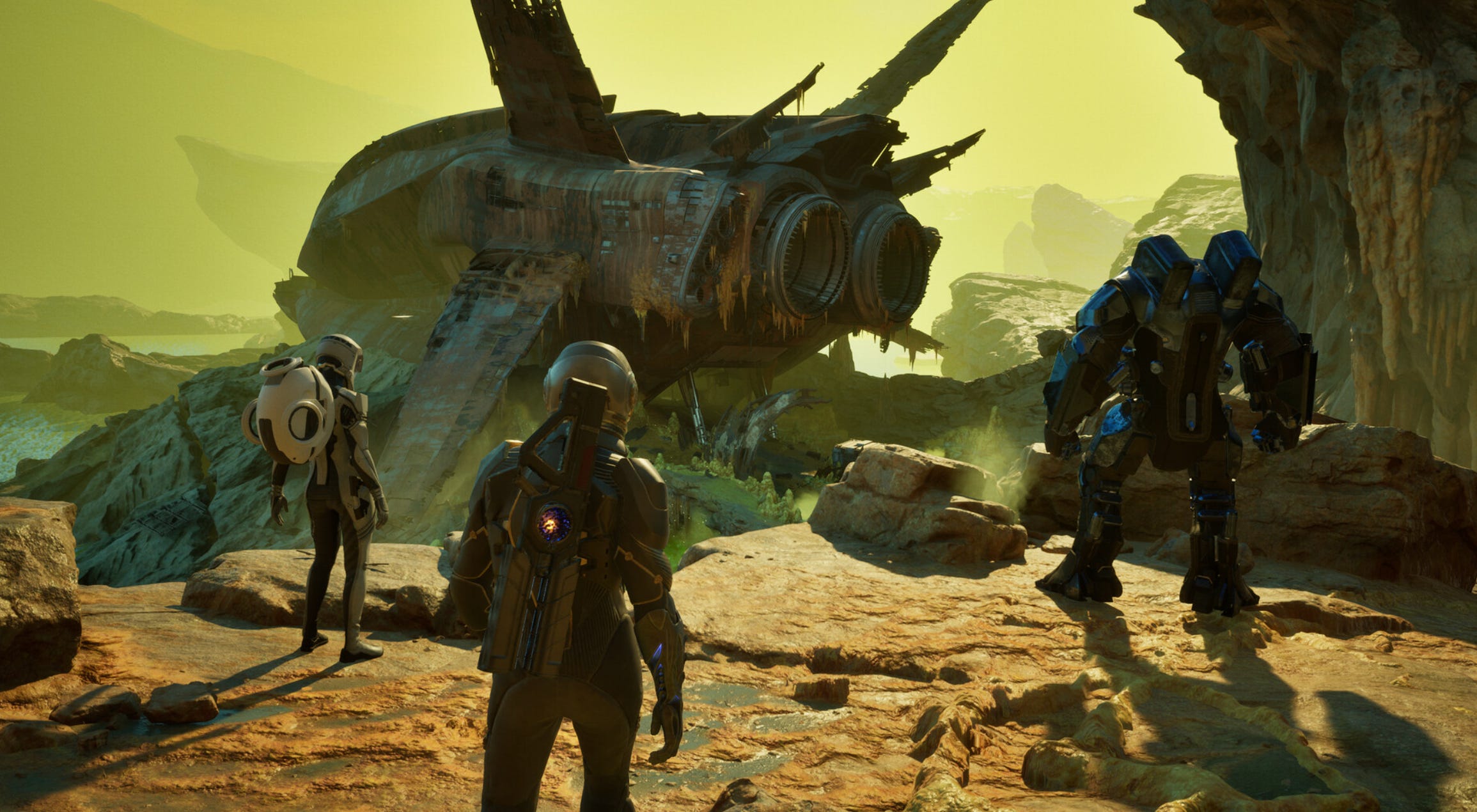
But Hasbro’s first game is not a D&D title. It’s something called Exodus, an entirely new sci-fi RPG from some of the people behind Mass Effect. A big AAA new IP is a rare sight in today’s industry, and I suggested to Cocks that if this was pitched in 2026, maybe he wouldn’t have given it the green light.
“First off, the team at Archetype, founded by James Ohlen, but then Chris King and Jesse Sky… it’s a lot of people from BioWare who made some of my favorite games,” he argues. “Gosh, being able to acquire talent like that and gather them all into one place, that doesn’t happen very often.
“And yes, it’s a new IP, but it’s not unfamiliar ground to us. Exodus is effectively D&D in space. We’re familiar with role-playing games, and familiar with how to make good ones. It’s a genre we understand.
“And lastly, in 2018 this was true, but I think it’s even more true in 2026… it’s a space that hasn’t had a good game in a long time. It’s been a while since Mass Effect 2 and 3. I think there’s a big need in the marketplace for that, and we’re certainly seeing that with the fan response. So, while it’s kind of a bold and maybe a risky bet, my hope is that it’ll be a good one. I get to play the game now and then, and I’m pretty pleased with how it’s coming together. Time will tell if it’s a good financial bet.”
I was starting to wonder if the Hasbro games strategy is just built around titles that Chris Cocks wants to play.
“Well, I’d be lying if that wasn’t true,” he laughs. “I definitely think passion is an important ingredient in wanting to invest in things. Passion yields a player’s understanding, a fingertip touch and feel for the game, and it helps you guide your investments when used wisely.”
Hasbro closed one of its studios earlier this year (Atomic Arcade, which was making a G.I. Joe title), but Cocks says it is still expanding. It’s building a publishing and ‘shared services’ function in Montreal. This is a group of people that will work across first-party and partner games. There are 150 people working there currently, and that’s expected to rise to 250 to 300 people in a couple of years.
Nevertheless, we’ve been here before. How many times has a major entertainment or technology company tried to crack video games, over-spent, and then closed it all down a few years later? We’ve just witnessed Amazon do it over the last six months. What makes Hasbro any different?
“I suppose we already start differently in that most of Hasbro’s reach, a lot of our revenue, a huge percentage of our profit, is based on games,” Cocks answers.
“We’ve been making games for 160 years, since Milton Bradley made The Checkered Game of Life in 1860. We know games pretty well. We have a history of making video games. Hasbro Interactive was founded in the ‘90s. We’ve been doing a digital version of Magic since 2002.
“We’d be operating with our head in the sand if we didn’t recognize that video games are the dominant play platform of our age and likely for the future, whether it’s a kid starting to play Roblox at the age of seven or eight, picking up a AAA game and a console at like 10, 11, 12, or mobile games throughout their lifetime. If you’re a company that’s based on play, you got to be able to figure out how to make your play be relevant on those platforms. And while we do a lot of partnerships, and that’s been pretty lucrative for us with games like Baldur’s Gate 3 or Monopoly Go, we need to have a piece of that and we need to understand it.”
Nevertheless, doesn’t Baldur’s Gate 3 and Monopoly Go also prove that Hasbro doesn’t need to have its own studios to be successful in video games? If Exodus and Warlock don’t deliver, Hasbro could just focus back on licensing and partnerships and still enjoy great results.
Yet Cocks insists that Hasbro understands video games. And that it won’t simply discard its $1 billion investment at the first sign of trouble.
“Do I want to be profitable? Yeah. Would I like it to be the next big business for Hasbro? Of course. Our shareholders want that, too,” Cocks concludes.
“Are we going to be patient? Do we think it’s a long-term investment? Yeah. The near term is Exodus and Warlock coming out next year. It’d be great if they were profitable, but more importantly, if we set the foundation of… Hasbro and Wizards of the Coast know how to make great games, and we’ve set up a couple new franchises, and we have a nice long pipeline for the next decade of game development… I’d feel pretty good about that.”
That’s it for today’s edition. Join us Thursday where we’ll be discussing the latest news, Nex Playground’s international expansion, and how to announce a live service game in 2026. Until then, thank you for reading.


