


Listen now on Apple, Spotify or YouTube
In This Edition,
Fuse Games’ Matt Webster on…
- His Star Wars history
- The state of racing games
- Working with LucasFilm
Star Wars Episode 1: Racer came out on my 14th birthday. I remember buying it with my birthday money. I played it constantly throughout the summer of 1999.
It was inspired by the epic pod racing scene from the Episode 1 movie, and it would go on to spawn a handful of other Star Wars racing games. There was an arcade racer in 2000, a kids kart racer in 2001, and then a full sequel in 2002.
Then it stopped.
“I don’t know [why we’ve not had one since],” says Matt Webster, founder and CEO of Fuse Games. “There aren’t many white whales left, but this is one of them. To make a great racing game is not easy. Also, you’ve got to think differently, and maybe it’s just the right time.”
Star Wars returns to the racing genre this year with Star Wars: Galactic Racer by Fuse Games. If you’ve not heard of Fuse, it’s because it only formed in 2023. This is its first game. But in truth, the majority of the studio is made up of veterans from EA’s Criterion studio, the developer famous for Need for Speed, Burnout and for creating various modes for the Star Wars Battlefront series.
Criterion developed the Endor Chase speed bike racer mission in the 2015 Star Wars Battlefront. After that, it created the (deep breath) Star Wars Battlefront: Rogue One X-Wing VR Mission for the same game. And then for 2017’s Star Wars Battlefront 2, Criterion made the space combat Starfighter Assault mode.
As a result, Webster and his team built a relationship with Lucasfilm Games, so that when he formed Fuse, he quickly got on the phone to the Star Wars company.
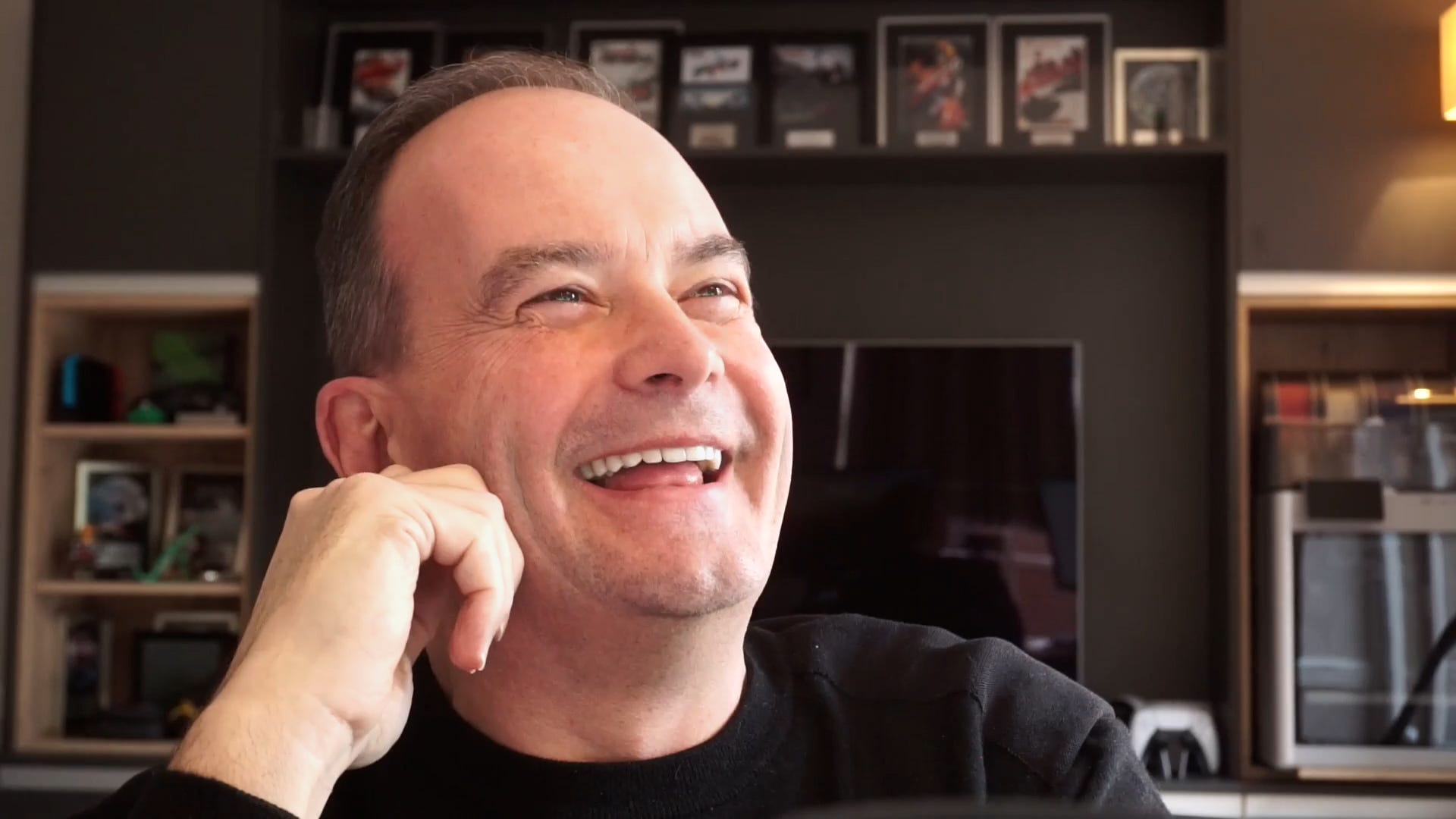
“We’ve got a new team, new tools with new technology, we’ve got new creative. And whenever there’s a new, there’s a risk,” Webster begins. “So, we look to mitigate those risks. We can mitigate tech risk by using something like Unreal, we can mitigate some talent risk by working with folks that we’ve got existing relationships with, and we can mitigate creative risk by playing in someone else’s IP.
“That felt, strategically as a studio, a good place to go. That happened to be an opportunity for us because we have great relationships with the folks at Lucasfilm. We had a bunch of different ideas for what could be our first game, and this one really resonated. We felt like we could breathe some fresh contemporary life into an experience that folks haven’t had for a number of years.”
One thing Webster learnt from the Battlefront series was that there’s a real nostalgia for those prequel Star Wars movies. Although Galactic Racer isn’t purely about pod racing from the 1999 film, it does feature prominently. And the nostalgic reaction (including from me) to the game’s reveal in December was notable.
“It is wild that,” Webster says. “My first touchpoint with Star Wars is the first film, but there’s many people now where their first touchpoint might have been Episode One, it might’ve been The Clone Wars. So, you can’t just lean on the one area that you know.
“That’s the other thing for us, when we’re looking at a racing game, particularly one that we feel is ripe for a bunch of innovation, where do we want to innovate? It’s a Star Wars racing game, so Star Wars fans crave immersion in that galaxy. They crave a story to be told, and characters to fall in love with. And beautiful locations that we know and love. That is a really fertile ground for us when we think about the second-to-second experience, but then more broadly in the sphere of Star Wars storytelling.”
Star Wars Galactic Racer is a racing adventure. It tells a story of the lead character Shade, and players can move about the paddock and interact with the Star Wars world.
“It’s a wonderful counter point to super high-intensity racing, to have these low-intensity moments where people are immersing themselves in Star Wars,” Webster says. “That’s a really significant differentiator for this game, where we’re moving the racing genre forward as a whole, in terms of its creative expression, as well as innovating in the exciting, second-to-second, moment-to-moment bits that we’re experts at.”
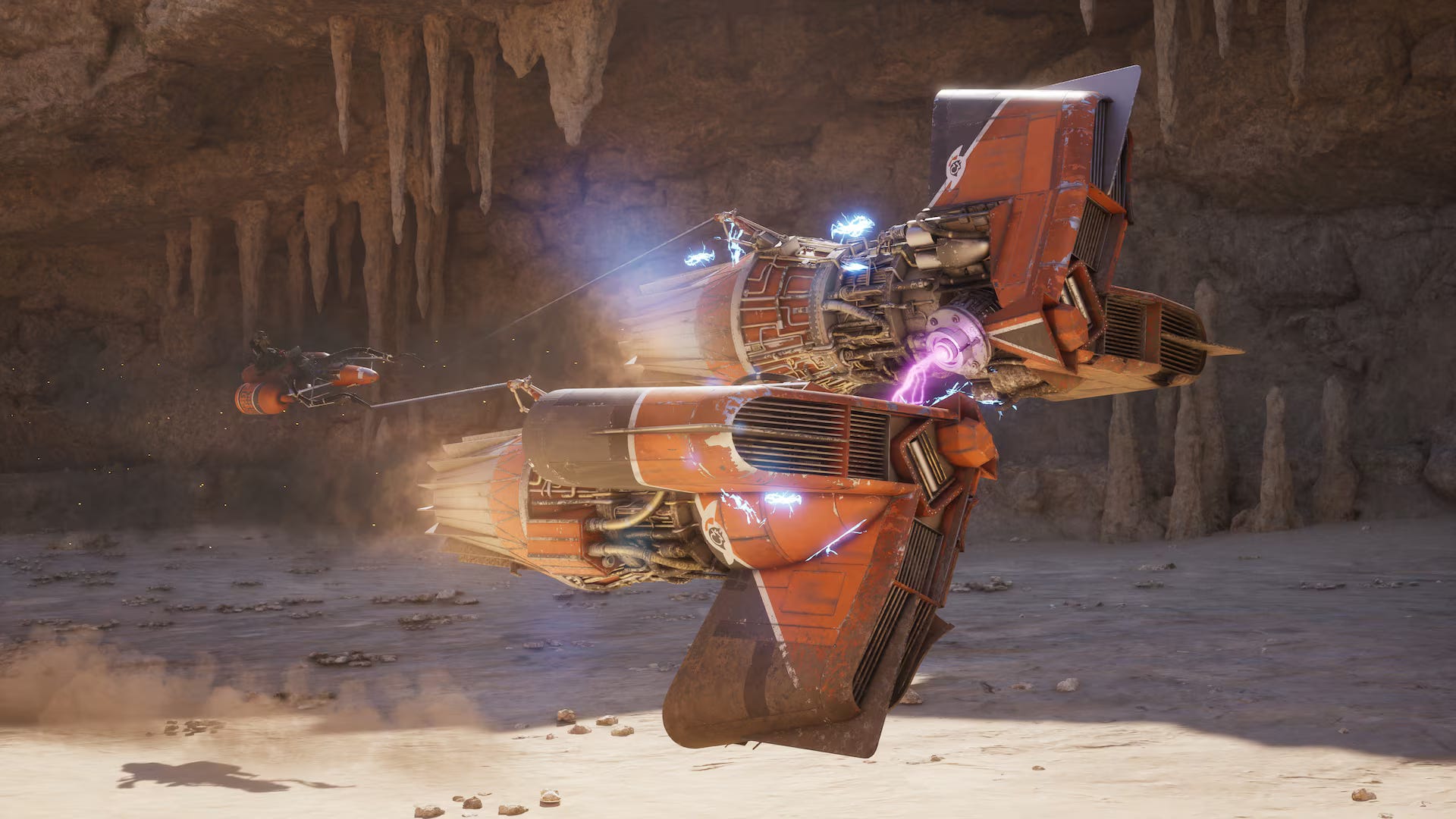
Fuse Games isn’t a small studio. It has 75 people internally, and Webster imagines there’s ‘double that’ working on the game.
“We’re very fortunate [in the UK] to have a mature distributed development industry,” he says. “It used to be that folks helped you out on your game because they had to. They were keeping the lights on. But that’s really matured over the last decade. Now you have fantastic partner studios that have people that are motivated to work on multiple things.
“We look at distributed development on a number of different threads. There’s outsource, which is a little bit more transactional. And then we have external development, where we have some teams that are working on a specific thing that’s self-contained. And then we have co-dev, which is the majority of the support that we have here, with some fantastic partners that are essentially extensions to the team.
“That allows us to scale in capacity and capability when we need it. We know these relationships have a finite timeframe, and we are not scaling and contracting based upon the needs that we have at particular points in time.”
Advertisement

I’ve known Matt Webster for a long time. He joined EA in 1990. He was a producer on the first FIFA game. And he was part of a real transformation at Criterion, which saw them become repeated winners at the UK’s Best Places To Work Awards (which I launched at GamesIndustry.biz).
But despite his track record, when he told me about Fuse, I was a little anxious. Fuse’s formation came alongside two other independent AAA UK racing studios: Maverick Games and Lighthouse Games. Those two teams were also formed by racing veterans, this time from Forza Horizon developer Playground Games.
The racing genre is inconsistent, even for the big giants. Some in the UK scene still wince at the memory of May 2010, when two huge new racing games were launched by UK teams: Blur by Bizarre Creations and Split/Second by Black Rock Studio. They were both great games that tried to do something different, but were commercial disasters. Bizarre and Black Rock were shut down.
It’s a tough genre. And for a lot of people, a game like Forza Horizon is all they really need to get their racing fix.
“We see opportunity,” Webster answers. “Every time we’ve made a game, we’ve tried to innovate. If you sort of zoom out a bit, it’s a genre that’s crying out for some fresh new ideas, and to steal from some other genres as well.
“We’ve always tried to do that in every game we’ve made. Particularly through the years of Burnout, but then into Need for Speed. And most recently when we made [Need for Speed] Unbound, [we tried] to freshen things up. That was a particular visual refresh. But also, we did some real systemic changes to try and condition players to not always think that they were going to win every race. That a hard fought fifth placed finish should feel as exciting and as valuable for you as a victory.
“So, there are things that we can do to freshen up the experience, and then there’s things that we can do, which will lead us into the Star Wars opportunity, where because you are decoupled from tires on tarmac, you can do some fun things.”
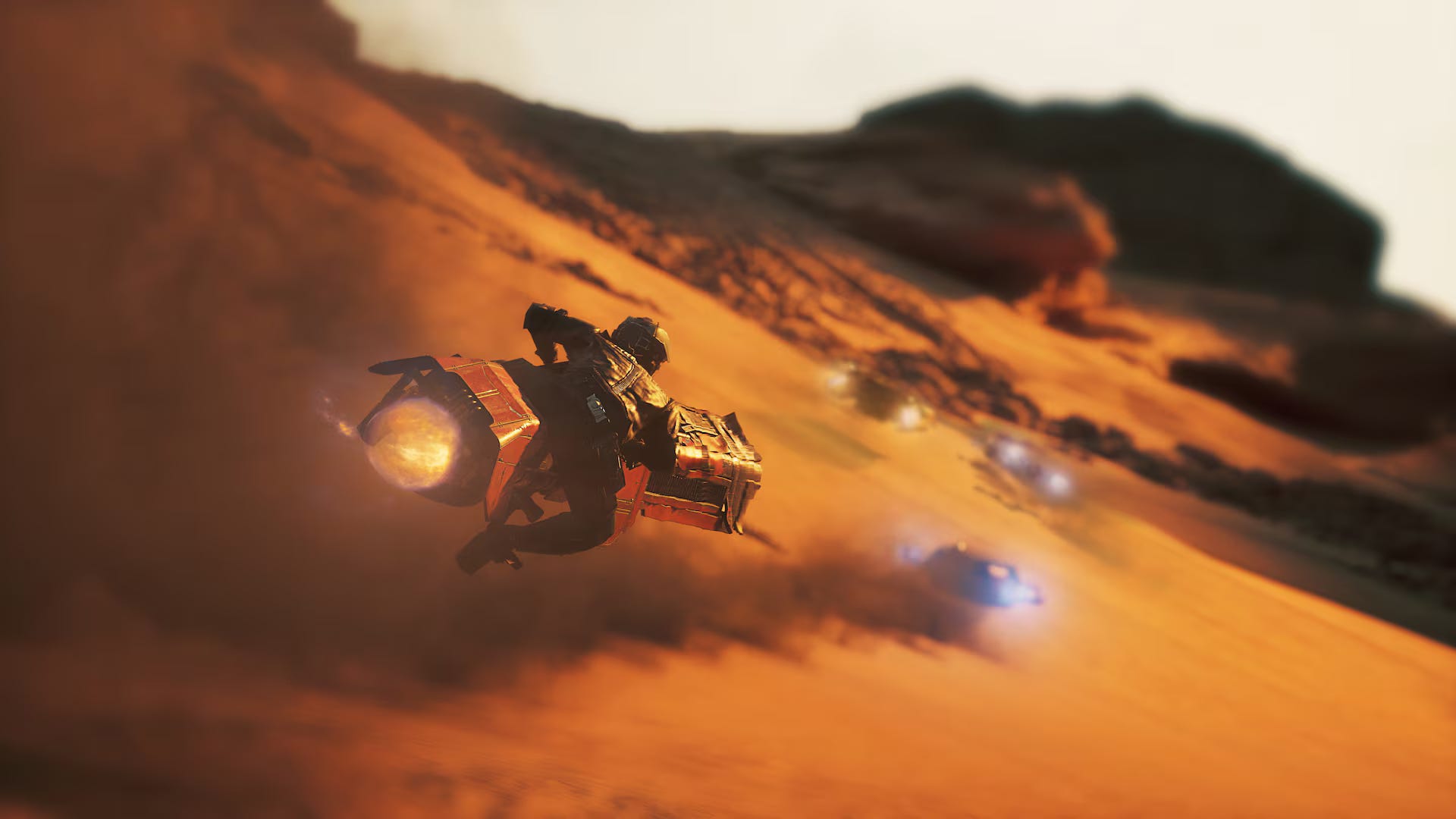
The news that Fuse Games was making a Star Wars racing title didn’t surprise me given the team’s past history. What did surprise me is who was publishing it.
The release is being handled by Secret Mode, the independent publisher that began life within Sumo Digital before spinning out. Secret Mode is an indie publisher, that launched games such as Still Wakes The Deep and A Little To The Left. These were great games that did well, but certainly not AAA projects like Galactic Racer. This is a clear step-up.
Now, Secret Mode is made up of experienced people, who have held senior roles at places like Sega, Codemasters and Ubisoft. But even so, I have to imagine Star Wars: Galactic Racer had a number of suitors from larger organisations, so why Secret Mode?
“We are a value-led studios,” Webster explains. “Values are not just something you slap on a website and never see them again. It’s how we operate our team, hire our people, measure our people… we take those things seriously. And we look for them in our partners. So, when we’ve been around the world showing people the game, and there were lots of people interested, we look for the sorts of folks that share our vision. And our interests with Secret Mode are wholly aligned. The success of this game is as vital for their vision and where they want to go, as it is for us. That is a compelling situation to be in.
“Plus, they’re in the UK, they’re ambitious, they’re hungry, and we share some similarities in terms of freshness. Whilst there’s a bunch of experience, we’re doing our own thing for the first time, so there are lots of similarities. And just huge amounts of support, encouragement, enthusiasm, expertise and insight that we get from collaborating with those guys. And of course, the incredible support and partnership we’ve had with Lucasfilm Games, pretty much since week three of us working at Fuse. Those three things coming together is what has brought us to this place.”
“LucasFilm are game makers. This is not a licensing department that’s rubber stamping, or not, a particular submission you give them.”
Indeed, Webster says working with Lucasfilm has been a “real privilege”. They’ve even worked together on creating a new Star Wars vehicle called the Skim Speeder.
“They are game makers,” he says. “This is not a licensing department that’s rubber stamping, or not, a particular submission you give them. And I have been in those situations before many years ago. This is a creative partnership. The game we initially pitched was adjusted and modified and steered in particular directions to reflect the opportunity that they saw. And along the way we’ve had a huge amount of support in a manner that they’ve not worked before.
“There are a lot of things in this game where we reached into the Star Wars archives and got to play with. But there is an awful lot of new there, and the new stuff required collaboration and iteration.”
Galactic Racer is a big bet for everyone involved. But if it comes off and delivers on the promise, it’s something that could establish more than one new independent British game company.
“We have big ideas for this game and beyond,” Webster concludes. “We look at this like it’s got a life beyond just one experience. [It could] open new doors that could be the next foundation step we take as a team to enable us to realise our dreams.
“But more importantly, [we] just want to deliver on those play fantasies, to be recognized for bringing something fresh into racing, beyond the fact that it’s a Star Wars racing game, and to establish ourselves as a sustainable, growing, independent UK-based development team.”
That’s it for today’s edition of The Game Business. We’ll be back Thursday for the second part of our Matthew Ball interview. Paying subscribers will also receive a market report from us this week, too.
Until then, thank you for reading!


