


Listen now on Apple, Spotify or YouTube
In This Edition,
Bethesda’s Jon Rush and Bill LaCoste on…
- The impact of the Fallout TV show
- ‘Thickening’ Fallout 76
- Its surprisingly friendly community
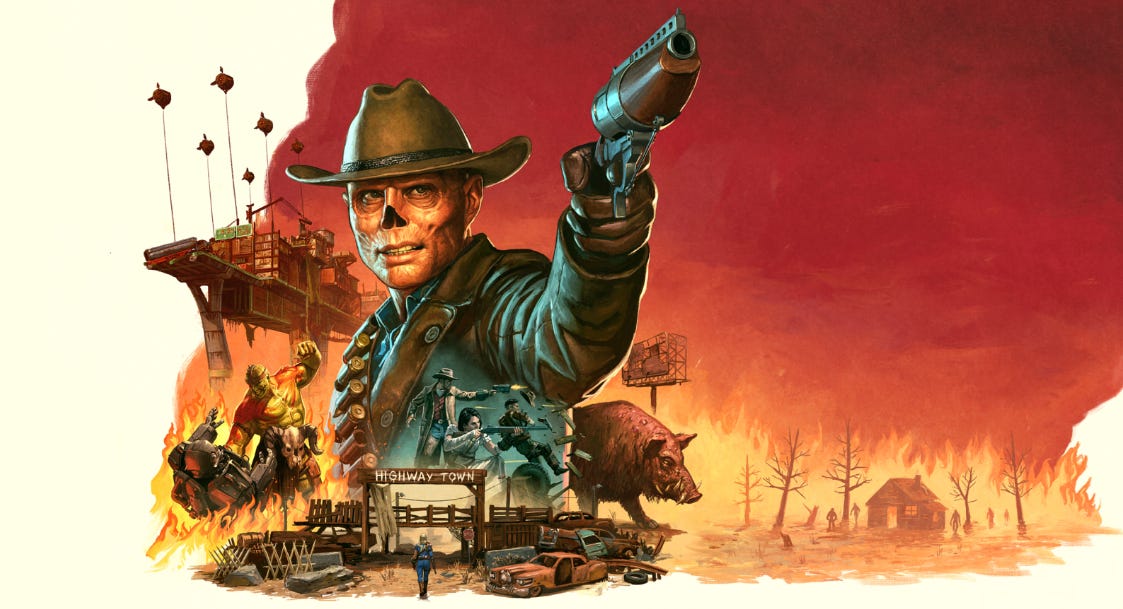
Late last year I had the privilege of chatting with Bethesda game director and executive producer Todd Howard.
The conversation, for those that missed it, was all around what the company was doing to capitalise on the second season of the Fallout TV show. The first season was a mega hit, attracting over 100 million viewers, and caused a major spike in players of the various Fallout titles. So, what is Bethesda doing for the second season?
And it was a lot. There were streaming partnerships, store discounts, an anniversary edition of Fallout 4, and big updates to the mobile game Fallout Shelter and the online game Fallout 76.
The series has just finished, and Bethesda offered me the chance to talk to the Fallout 76 team to dive a bit deeper into the subject.
If you cast your minds back to 2018, Fallout 76 received a very negative reception when it launched. Since then, things have recovered somewhat, and the game now has a small, dedicated community of players.
“Anytime someone starts a thread, and mentions anything about 2018, our fans immediately jump in and go, ‘oh, you obviously haven’t played since 2018, have you?’,” says Fallout 76 production director Bill LaCoste.
“And they’re like, ‘well, no.’ Then they jump in and are like, ‘oh wait, this game has completely changed.’ Yes, it has.”
The team went on a big journey with Fallout 76, first it had to rebuild trust with the fans, improve the server connectivity, and start delivering content, alongside constant fixes and improvements.
“Once they started seeing that, especially after [the 2020 update] Wastelanders, every six weeks they could rely on us to drop something that’s got content in it. And knowing that that’s coming on those days ,and being reliable for the past six years, is one of the ways that we’ve built a good rapport with our community.”
The old saying goes that you only get one first impression, and Fallout 76 failed with that. However, thanks to the TV show’s popularity, Bethesda had another shot. According to Ampere, the TV series saw Fallout 76 monthly players jump from under one million to over five million back in April 2024.
Things have settled down since, but it’s clear the TV show has had a profound impact on the online game. In today’s episode of The Game Business Show, I spoke with LaCoste and creative director Jon Rush to find out what’s changed.
The community helped new fans find their way
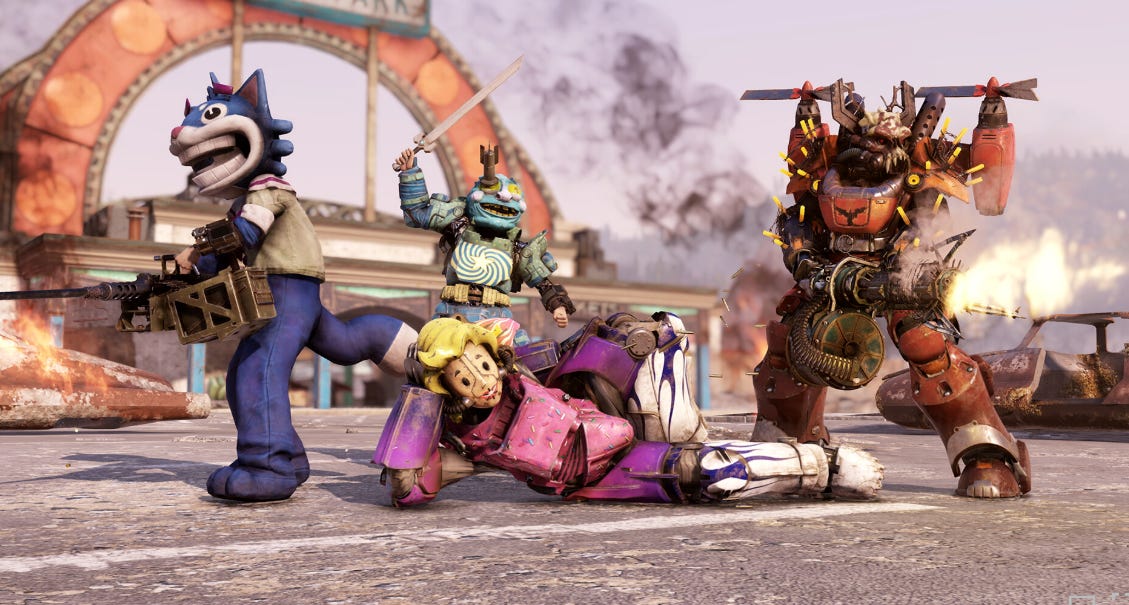
The Fallout TV show brought in new players to the Fallout 76 world. Some hadn’t played the game before and some were even new to video games overall.
And remarkably, it was the Fallout 76 community that took it upon themselves to help the newcomers out.
“We’re always making small adjustments to the game here and there that make it a bit easier for new players to hop in, or make it easier for players that are coming back after a little while,” explains creative director Jon Rush.
“But honestly, I’d say a lot of the onboarding was done by our wonderful community who recognized all of these fresh vault dwellers emerging from Vault 76, and set up camps outside of that and giving them free stuff and showing them things. It was very much a concerted effort between us and our community, welcoming this influx of brand-new players and returning players.”
Welcoming online communities are rare at the best of times, but given the post-apocalyptic, violent world of Fallout, I was especially surprised to hear that the Fallout 76 player base was so friendly.
“And so were we,” admits Rush. “Before we released the game, we were like… it’s post-apocalyptic, it’s Fallout, they’re going to all want to kill one another. It’s the complete opposite. It’s been great to see that. I’ve never experienced a community as great as the Bethesda Game Studios community.”
“Before we released the game, we were like… it’s post-apocalyptic, it’s Fallout, they’re going to all want to kill one another. It’s the complete opposite.”
Fallout 76 has a number of gameplay elements that have attracted a less aggressive audience. Players create their own camps, and there was even fishing added the game last summer. It’s the sort-of cozy gameplay you wouldn’t necessarily associate with the series, but it’s proved popular in Fallout 76. And although it’s not something the developers were expecting before the game launched, it’s something they’ve become accustomed to.
“It’s been over seven years of us becoming familiar with our community and what they want,” Rush says. “So, it’s not so much a surprise these days.”
Advertisement

Fallout Season Two plans have been in the works for over 18 months
When the first season of the Fallout TV show started in 2024, there were a few small tie-in elements added to Fallout 76. There was an outfit, and a backpack… but that was about it.
Yet even as the first season went out, the 76 team began planning for the second. And this took the form of the Burning Springs update. The update arrived just ahead of season two, and featured the fan-favourite TV show character The Ghoul, with actor Walton Goggins reprising his role.
“Burning Springs ended up being much more tonally in sync with what folks were seeing in the show,” Rush says.
But the journey to season two wasn’t just about Burning Springs. Rush and LaCoste spent the intervening 18 months trying to make Fallout 76 a deeper experience. Or, to use their word, a ‘thicker’ experience.
“If Fallout 76 is a single super fatty patty burger… making it thicker means ordering a double,” Rush explains. “Now we’ve got a double fatty patty burger. It doesn’t go beyond this shape, but there’s more to bite into.
“So existing systems, existing features, they get updated, and you get more reasons to engage in those. It could be something as simple as… there’s new stuff to do in fishing. There’s more fish. There are different ways to catch them. There are new rewards. That is making it thicker. It’s giving our player base more to do within the bounds that they already play in. Updates like Skyline Valley, like Burning Springs, which make the burger bigger, are always great because most Americans like bigger burgers. But sometimes it doesn’t really support the kind of stories that we want to tell. We always want to look for ways to enrich our players’ existing experiences.”
The types of ‘thickening’ the team did for Fallout 76 included revamping the camp system, plus the introduction of fishing.
LaCoste says: “We didn’t immediately come out of the [first] season of the show with, ‘Oh, what are we going to do for the next one.’ All this stuff was already in the roadmap. We found a lot of ways that we could continue to improve the quality of life for players and the systems that they engage with.”
There is no Fallout bible
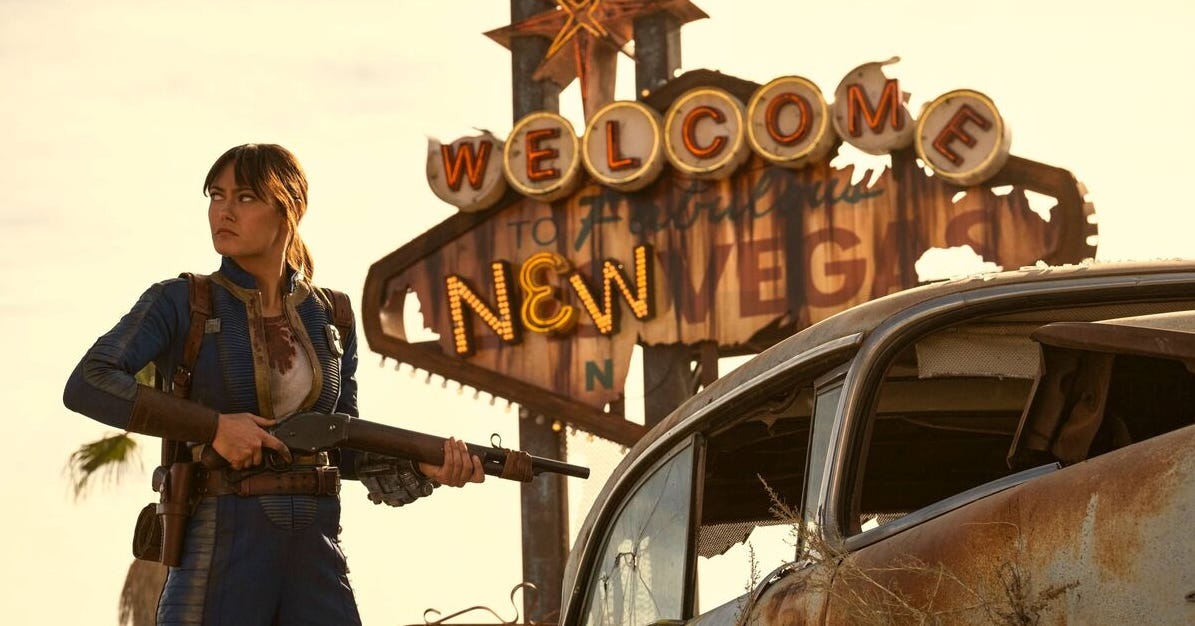
There are a lot of different creative teams working across Fallout. There’s Fallout 76, Fallout Shelter, the core Fallout development team and now a TV team all operating within the same universe.
So how do they make sure they don’t contradict each other?
“There are definitely challenges, because we’re playing with lore that’s been explored in Fallout 1, 2, 3, New Vegas, 4, and now the show,” Rush admits. “But with those challenges, there are also at least a hundred times more opportunities. Since [Fallout 76 takes place] so far back in the timeline, we have hundreds of years to tell our own stories in a region that’s never been explored in a past Fallout game… mentioned, but never explicitly explored. So yes, we have to be mindful not to step on toes as far as lore goes. And we’ve had a couple trips up here and there. But on the whole, we keep eyes on it.
“What we try to do is at least tease loose connections to stuff that players have noticed in some of the other Fallout games.”
Is there some ultimate Fallout bible for all the teams to follow?
“The bible exists here [points to his head],” Rush laughs. “It exists in the brains of others. It’s spread out pretty well. That said, the creative process is very organic. ‘Hey, do you remember when Brotherhood did this, is that a contradiction to…’ ‘Oh it is, what if they went this way instead?’ ‘No, in Fallout 2, they did this’. It keeps the studios talking, despite Bethesda being split between four different locations. It keeps the creative process very organic.”
The Ghoul was placed specifically to engage new players
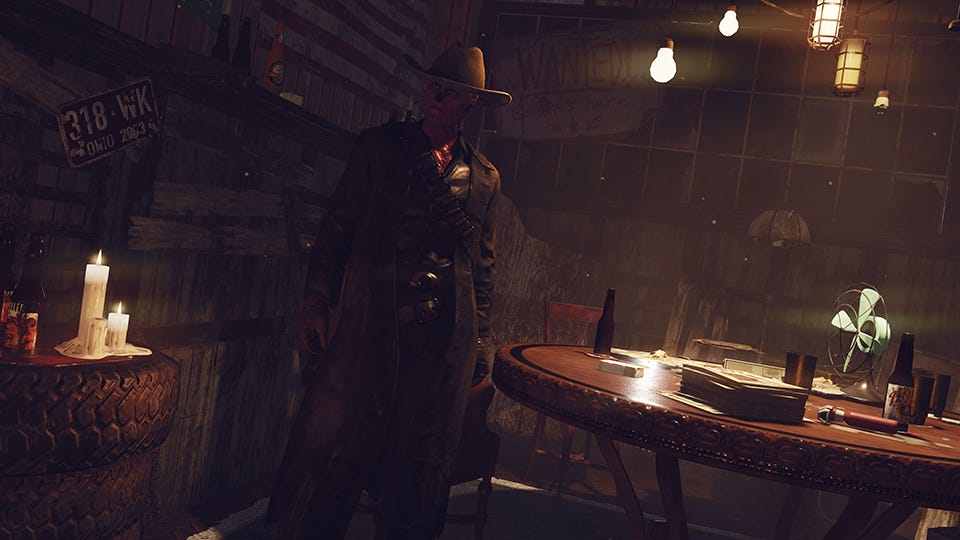
We spoke about how the Fallout community helped on-board new players coming in from the TV show, but Bethesda played its part, too.
This included making sure The Ghoul appeared early in the game for new players.
“We frequently talk about the new player experience,” Rush says. “Probably the biggest change that we’ve done to that over the years has been the introduction of load outs. If you’re a new player, maybe you’re not wanting a hardcore experience, you can choose to leave the vault at a higher level and choose between several load outs to get you along that play-style path without much learning along the way.
“The more we add, the more there is for our new players to learn, right? So, a big challenge we have with new players when they leave the vault is… we don’t want them to see pop-up, pop-up, pop-up, pop-up, pop-up, and get lost in all this messaging and information. So, we talk about ways to streamline that, or what’s really appropriate for them to be told right away.
“A recent example of that was, we wanted new players to see The Ghoul early. So, what’s a way we could do that without it being too intrusive? We put The Ghoul outside of the vault. So, when you leave the vault, players will see The Ghoul and likely talk to The Ghoul and get the information there, rather than a pop-up coming up and saying, ‘Hey, head to this new region.’ It’s a more elegant way to introduce them to content. We did that with new players very much in mind.”
That’s it for this week’s The Game Business Show. We’re taking a short break this Thursday as we gear up for some big Shows next week. Although if anything big breaks, you’ll hear from us!
Thank you for reading.


