


Listen now on Apple, Spotify or YouTube
In This Edition,
Nex’s David Lee on…
- The Nex Playground story so far
- Not repeating Wii mistakes
- Working with developers
- Keeping the price down

The latest US console sales made for grim reading.
It’s was the worst November in 30 years for console hardware. Xbox and PlayStation posted big drops year-on-year, while even Nintendo – which released Switch 2 back in June – sold fewer machines in November 2025 compared with the year before. Everyone was down.
Well, actually, not everyone.
Making a surprise appearance in the US hardware rankings, and even charting ahead of Xbox, was a largely unknown games machine called Nex Playground. A camera-based games device that retails for less than $250.
It’s aimed at families. It boasts famous kids brands such as Bluey, Sesame Street and Peppa Pig. It also has an ever-expanding library of games, which are all part of an on-going subscription service.
Today, Nex Playground is largely sold out. Parent company Nex is having to fly in stock at great expense to supply retailers before Christmas. It’s already surpassed 600,000 sales this year, which might not sound like a lot, but that’s four times the number it sold in 2024.
So where did this come from? Who is Nex? What are its intentions? How can the wider game industry get involved? And what can we learn from it?
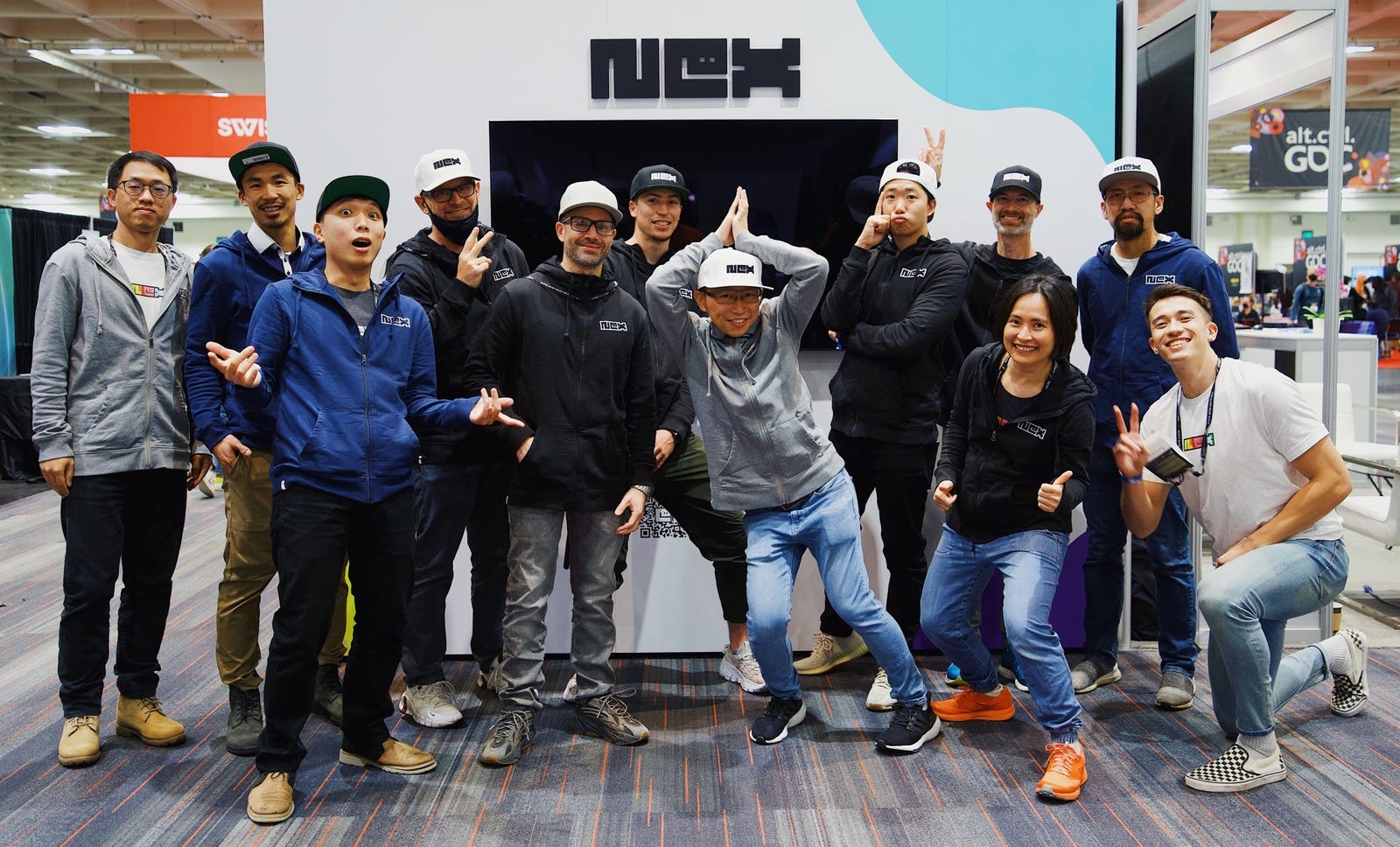
On The Game Business Show, I am joined by Nex CEO David Lee, who shared with us the company’s remarkable journey from building a basketball training app to creating the spiritual successor to Nintendo Wii.
From basketball to consoles
David Lee started his first business before he left college. That business was acquired by Apple, and he spent eight years building online web apps for the technology giant.
In 2017 he left to create a mobile application for one of his great loves: basketball. It was a shot tracking app that uses the camera on a smartphone. It was a bit niche, so the team expanded it to do other forms of activity training, from dribbling to avoiding hurdles.

The app was called HomeCourt, and during COVID-19 it unexpectedly went viral. The training games proved popular amongst people stuck indoors. Nex reacted quickly and created Active Arcade, which was a series of activity-based camera games for smartphones. It was a hit in Asia.
“When we were looking at Active Arcade data, we saw something very interesting,” Lee recalls. “If a user used it on an iPad, the retention is 3x better. If a user connects their phone or iPad to a TV, it is 10x better. We were basically building for the wrong platform. We needed a 65-inch iPad.”
And then one appeared. UK TV broadcaster Sky got in touch with Nex because it was developing Sky Live, a camera-based accessory for its range of TVs. It invited Nex to bring its Active Arcade titles to the big screen, and Lee duly obliged.
“The next step was, ‘Hey, where can we find another Sky?’ I searched the world for another. I couldn’t find any. So we said, ‘we may as well build one.’ And that’s how Nex Playground came to be.”
PS3 power
Nex Playground is designed for families, so it was important to keep the price low. But considering the pressures around rising component costs and global tariffs, how have they managed to keep things at $250?
“We are not going to compete with high-end graphics,” Lee says. “Our graphic capabilities on Nex Playground is roughly similar to PS3. But we can create great games on PS3. The graphics are not bad. It’s 10x the Wii. It’s not that it hasn’t improved [over Wii], it’s definitely improved. And it allow us to create immersive games.
“And there are no controllers. Controllers can be expensive these days. We have a simple remote to navigate games, and that’s it. Everything uses the camera, and the camera can track four people at the same time. We made a set of choices that can keep the price affordable.”
Is there an element of losing money on the hardware to drive users? Lee reminds me that Nex isn’t some multinational corporation with deep pockets.
“As a smaller company, we need to manage this really well,” he says. “It’s very important for us to build a sustainable business because building a sustainable is what’s good for our customers. It means you can, day in, day out, keep coming back to market with a better product. And that flywheel of more customers has us bring in more games, and we just keep having a better product.”
“We’ve needed to fly in supply to meet demand. We are in over 5,000 stores, and basically everybody’s out”
Nex Playground launched in 2023 directly through the firm’s website. There were just 5,000 units available, and it sold out before launch. In 2024, Nex floated the idea of putting stock into retail, but retail agents advised against it.
“They said: ‘You’ve only sold 5,000 units in a pre-order campaign. You can think about going into retail in 2026. Take it slow.’
“But then we sent samples to Walmart, Best Buy and Target. Apparently, all the buyers have kids and they tested it with their kids. Suddenly, everybody wanted to carry the product.”
Target bet big, stocking Nex Playground in half its stores, while Walmart stocked it in 100 outlets and Best Buy in 225. In total, around 1,000 US stores stocked the console in 2024.
“We spent a lot of time on making the retail experience great,” Lee says. Not just putting product on a shelf. That doesn’t really do anything. We created a demo set up. You walk up to it, see yourself and you can just play. It is pretty wonderful.”
That, mixed with word-of-mouth, meant that Nex sold through its year two stock of 150,000 units by the morning of Cyber Monday. It raised its target to 550,000 for 2025, and smashed through that over Black Friday.
“We thought [our initial target] was a bit crazy already,” Lee says. “We’ve needed to fly in supply from our manufacturing facilities to meet demand. It’s largely sold out in all of Sam’s Club, Best Buy, Walmart, Target… we have over 5,000 stores, and basically everybody’s out.”
Subscription advantages
We’ve been here before. We’ve seen accessible family games devices come out, have a strong few years, and then fade away. Wii was a phenomenal success, until it wasn’t.
Lee has done his research and believes Nex Playground can avoid the fate of Wii with the help of a different business model.
“One of the most important things we should do is learn from history and try not to commit the same limitations, and that’s why we have a subscription model,” he explains.
“Nintendo expanded the audience with Wii. When you expand the audience, and they want different things, and they only buy Wii Fit, Wii Sports and not many others… that’s a bit of a problem. Who am I to speak for Nintendo? Nintendo obviously has a really great strategy on how they want to serve the audience. But, from our perspective, we want to build something sustainable. And if we build a platform and people come in and buy a couple of games and that’s it…the whole system is not sustainable. It’s just not. It’s very important that we set ourselves up to serve our customer continuously with new innovations, that is how the whole system can sustain.
“But it started with Wii. We are standing on a giant’s shoulder.”
Lee believes parents actually prefer the subscription model.
“We created a product that’s 100% family aligned and solving real problems,” he says. “We see ourselves as a good alternative to outdoor, when outdoors is too hot, too cold, too dark, too wet, we have something that keep kids active and brings families together. [Our customers] have young kids and they don’t want kids to come back and ask them for things all the time. So, the subscription model works best for them. It’s actually a model they prefer.”
And from a Nex perspective, the subscription model is creatively freeing.
“We can count on that to keep investing in content. We have much more creative freedom to pick what games we create. So not just, ‘oh, I need to stick to a certain genre because only those genres sell.’ We don’t really need to think about that. We think about how we serve our customer better, how we innovate for them, how we can surprise and delight them.
“Games that don’t need to have a business model on their own… the creative freedom just explodes. We can try that and see whether the customers like it. It’s more fun. It’s equally fun for customers, because they don’t know what we have in store for them. This year we created 20 new experiences and many more updates. We upgraded the OS as well. This is all enabled by the subscription model.
“We have sustainable resources to keep innovating. Oh my god, it’s so liberating. Back when we created the mobile games, we couldn’t really figure out what the business model is. We spent so much time, so much time, on monetization.”
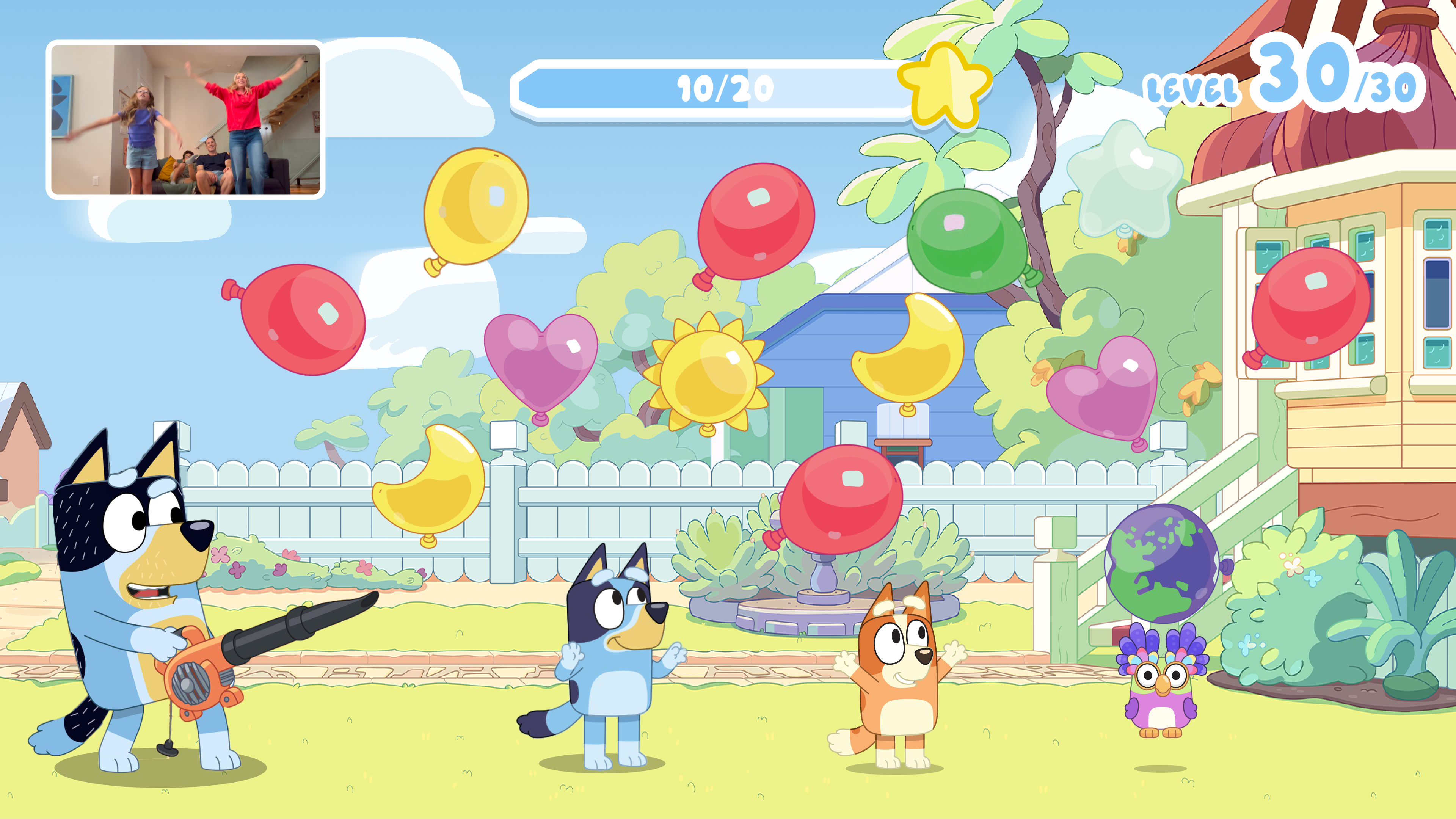
2025 saw Nex expand its games library to include more licensed IP. There are games based on Bluey, How To Train Your Dragon, Sesame Street, Barbie, Teenage Mutant Ninja Turtles, Zumba, Kung Fu Panda and Peppa Pig,
“Bluey is very popular,” Lee says. “Bluey is persistently Top Five on the platform. We also put our heart into making that game great, because it’s supposed to be how Bluey is like. In Bluey, the Heeler family play games, and we want [kids] to be able to play games just like Bluey and Bingo do. I’m really proud of the game and the internal studio that took on the IP and did the right thing with it.
“We always wanted to bring in recognizable IP. It brings in the audience, and it brings in the recognition and credibility. We are standing on our partner’s shoulders to create something great. It helps legitimize the product very quickly.”
Developer relations
Nex has three internal studios, which have so far built the majority of the games. But they’ve been expanding their second party relationships, too. Half of the 2025 line-up was made by external teams.
To begin with, Lee actively sought developers to work on Nex Playground. But after the impressive performance over Black Friday, the firm has seen a flurry of inbound interest.
“It’s gone from us knocking on the door and the door doesn’t even open, to them coming to us,” Lee says. “Oh my God, I am so thankful for the change. And now we have conversations with some really famous studios that are interested in making games for the platform.”
But it’s not an open platform. Nex is anxious about keeping it safe and secure for families. Therefore, developers can’t just submit games for the system… but what about in the future?
“Maybe. I don’t know yet,” Lee admits. “It’s little too far from that perspective. We want to keep it to very curated experiences so that we can care for our customers. I don’t want to turn it into some monetization engine for other games. We want it to be, ‘Hey, this is the platform designed fully, and from the ground up, to serve our audience’.”
“I don’t want to turn it into some monetization engine for other games”
With Christmas upon us, thoughts now turn to 2026. Nex Playground is currently only available in the US and Canada, and next year it will come to other countries. And naturally there’s the goal to sell even more units.
But long term, Lee has an even bigger dream.
“It would be great if there would be a Playground in every living room,” he concludes. “That’s where we want to get to. Create something so meaningful it earns a place at the center of the living room. That’s the long-term mission: to be welcomed into all living rooms in the world.”
That’s it for today’s edition of The Game Business. Do also check out our News/Analysis show (it’s a special double bill today). Until next time, thank you for reading.


