


Listen now on Apple, Spotify or YouTube
In This Edition,
Peter Moore on…
- The Sega Dreamcast legacy
- Xbox 360 RROD
- Launching FIFA Ultimate Team
- Liverpool FC regrets
Last year, video game veteran Peter Moore visited London to promote his memoir: Game Changer.
I had the privilege of hosting an on-stage interview with the former Sega, Xbox and EA leader, recounting his experiences launching the Dreamcast, Xbox 360, and FIFA Ultimate Team.
The talk was full of funny anecdotes, insights into the history of the business, but also a potent reflection on his time as the CEO of Liverpool Football Club.
You can watch or listen to the full conversation above. Alternatively, I’ve picked some of my favourite stories for you to read below.
Enjoy.
His initial experience of Sega was a bad one
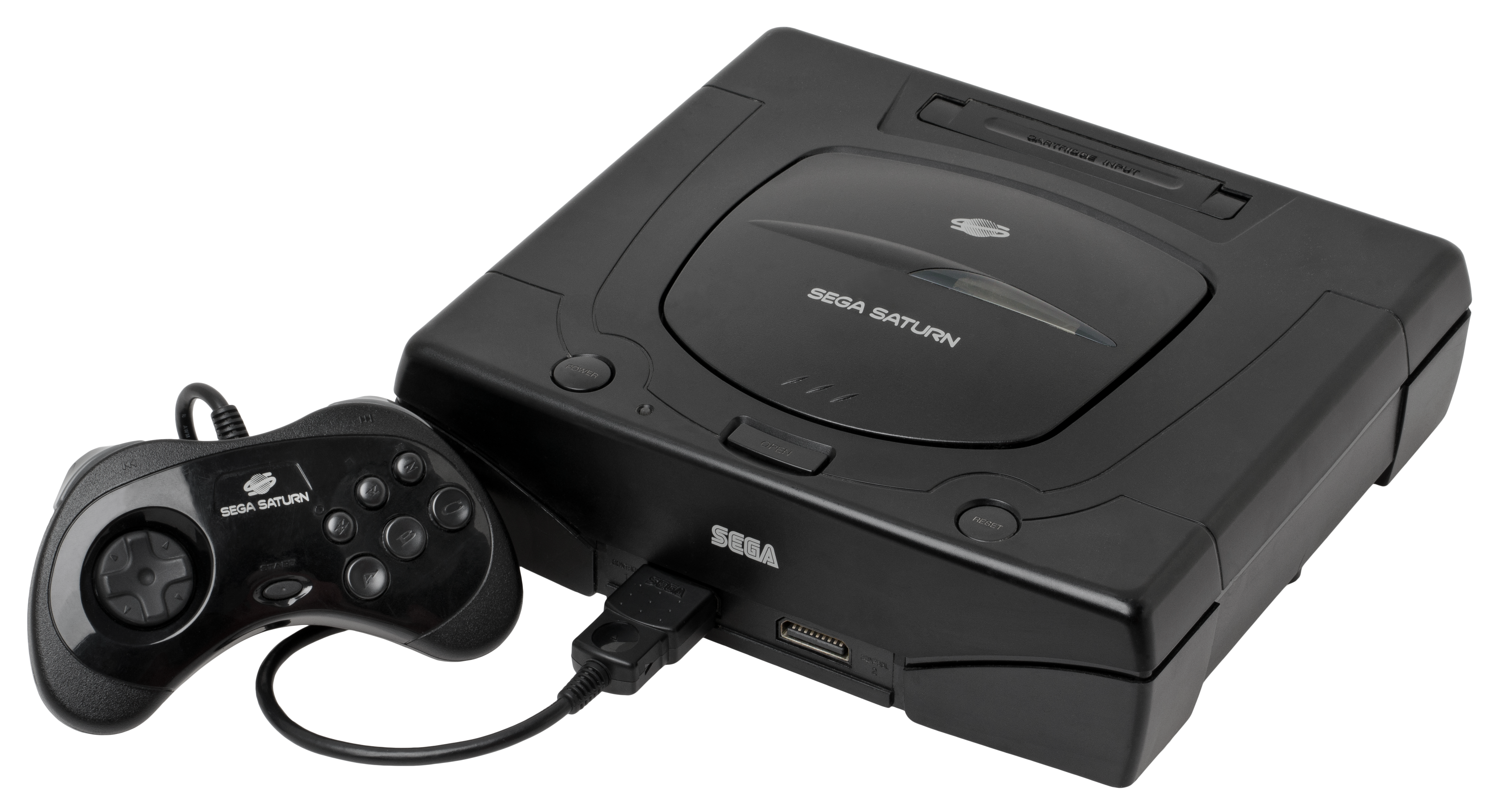
Before joining games, Peter Moore ran marketing for Reebok. But the shoe giant was losing the sneaker wars against Nike, and the company underwent major restructuring that led to Moore exiting the business.
“I am in outplacement in Boston,” Moore recalls. “And if you don’t know what outplacement is, if you ever watched an episode of The Walking Dead, it’s like that. It’s people who have been let go. And this is well before the internet. You go to this one place, you’ve all been fired, and they help you with your CV and you’re cold calling companies to ask [for a job]. Nobody was biting. But I caught a call from a headhunter called Rick Edwards, and he asked: ‘What do you know about video games?’
“The only thing I did know is I bought my son Tyler a Sega Saturn. $499. And I went back the following year to buy games and they said: ‘They’ve discontinued it. They’re not making games for it anymore.’ So, I felt slightly burned.
“And then it was: ‘Well, funny you mentioned Sega’.”
At the time, there were a strong overlap between selling trainers and video games.
“The Venn diagram of the demographics in those days between sneakers and video games were similar,” Moore explains. “It was teenage boys. Games had not progressed yet to what it is today. And so, if you could sell sneakers, you could sell video games.”
Sega’s developers didn’t trust Sega of America
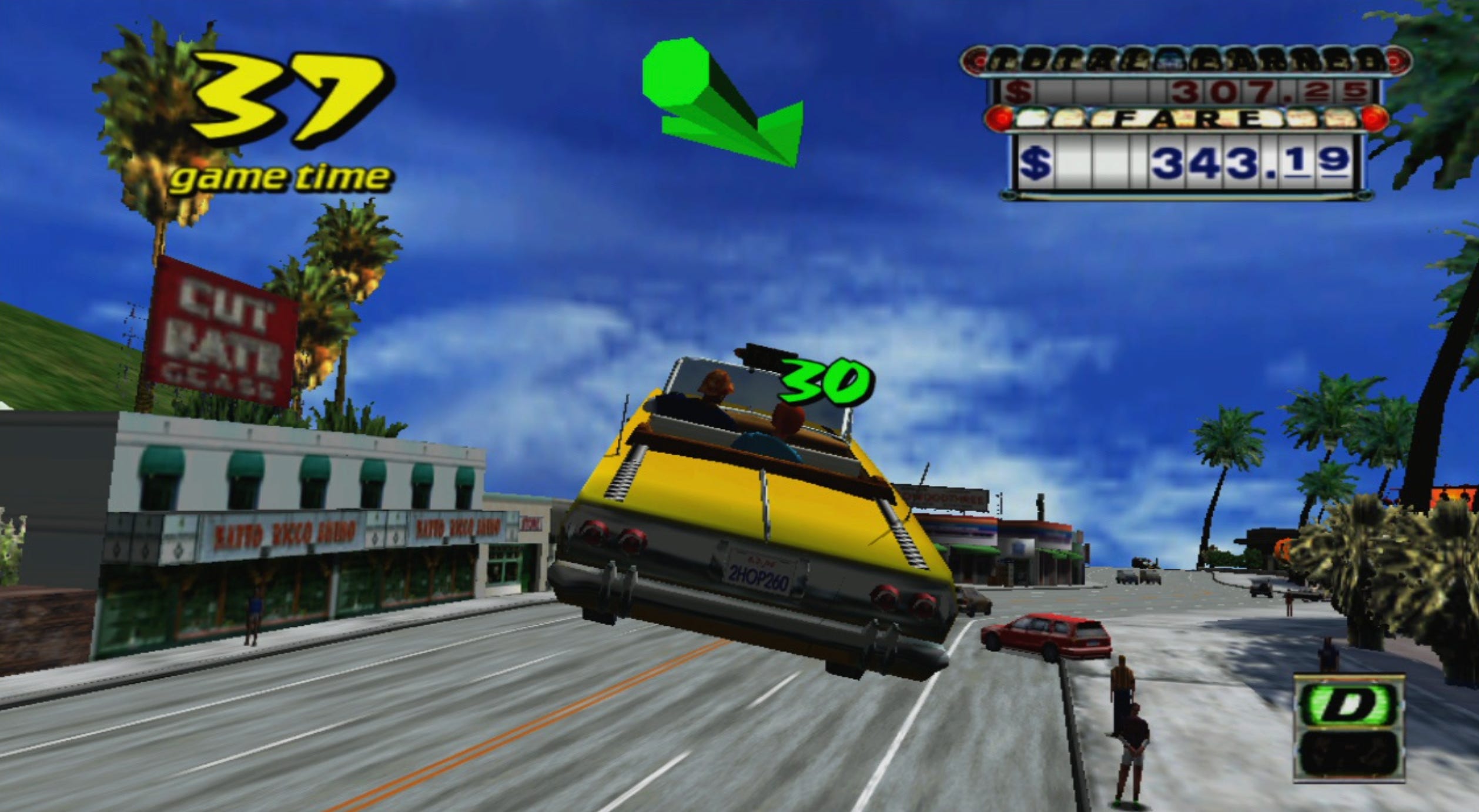
After Dreamcast lost out to PlayStation 2, Sega of America suggest the company should be producing more mature content to reflect the advancement in video game graphics. But Sega’s Japan studios were not interested.
“We were desperately going back, every two weeks from San Francisco to Tokyo, to argue that we needed to Westernize,” Moore recalls. “But the nine studios run by the prima donnas, all great guys, the Yu Suzukis, the Nagoshis… they didn’t trust us. They didn’t listen. They wanted to create content that they felt would be applicable to a Japanese audience. We’re the Gaijin, the foreigner that’s coming in and having the audacity to tell these Japanese developers what the world is all about and what they should do.”
Moore decided to put together a focus group of gamers, and see if that might convince the Japanese teams.
“If they’re not going to listen to me, are they going to listen to gamers? [Our group] was articulate, San Franciscan high school seniors that were gamers, and could articulate what they think. The question I suggested was: If a game publisher was a person, who would they be?’
“The first company comes out is EA. And it’s the quarterback. He’s cocky, six foot four, gets the cheerleader, everybody freaking hates him. Take-Two, Rockstar, they’re your drunken uncle that shows up from Vegas every two months with a woman of ill-repute on their arm, and everybody has a good time. Then they disappear and you don’t see them again for three months.
“Sega. It’s your granddad. He used to be cool, but even he can’t remember why anymore.”
Moore took this feedback to Japan. The message he wanted to get across is that Sega risked being left behind if it didn’t change what it made.
“I presented this video and the creator of Sonic, Yuji Naka, was there,” Moore remembers. “We always had a contentious relationship. Naka-san says: ‘Well, that’s not right. Everybody loves Sega. You’ve manipulated the video’. The red mist descended, the scouser that I am… he’s calling me a liar. And pardon my language, but verbatim, I look at my translator and I said: ‘Tell him to go fuck himself.’ And my translator says: ‘Moore-san, there is no word in the Japanese language...’ And I said: “I know there is”. I left Tokyo, I never came back. A few weeks later, I got a call from Robbie Bach [at Xbox]”
His time at Xbox was more successful, but Moore is still fondly remembered by Dreamcast fans.
“If I hang around [at Comic-con] long enough, somebody’s going to come up to me and say: ‘I’ve still got my Dreamcast. And it still works’. I don’t get that about the Xbox 360 all the time.”
Moore thinks the console war is partially his fault

We spoke to Moore last year about his time at Microsoft in our Xbox 360 anniversary piece. It was his second attempt at taking on PlayStation, and he was hired specifically for his confrontational approach against Sony.
“Maybe it’s all my fault, developing the console wars and getting in each other’s faces,” Moore wonders. “Gamers loved it. These are the lessons I learned from the sneaker wars of Reebok vs Nike vs Adidas vs Puma. You create this sense of competition, and the consumer loves it because they think they’re soldiers in a battle. I’m a PlayStation guy, I’m an Xbox guy, I’m a Sega guy or girl.”
He continues: “[Microsoft] was nerdy. It was Bill [Gates]. It was Steve [Balmer]. This is nerd central. I had lunch with Steve and his words were: ‘We don’t have people like you.’ He had seen me on stage at Sega throwing punches. I love being a challenger brand and giving Sony all kinds of irreverent abuse. We were just mocking each other all the time.”
“Steve said: ‘I need somebody to throw punches. We’re a bunch of nerds.’ Those were his words.”
EA struggled to find the $3m to fund FIFA Ultimate Team
Moore’s longest stint in video games was at Electronic Arts. And one of the biggest things he helped to push through was FIFA Ultimate Team, a game mode that would transform sports games.
“This would be 2008,” Moore recalls “I went up to EA Canada in Vancouver. It was a wonderful campus, an unbelievably talented dev team.
“FIFA was still neck to neck with Pro Evo at this moment. And we were going to make, which is always a drastic hold-your-breath moment, a game engine change. Pro Evo had a better playing game. There was no doubt about it. And we knew we would have a down year. When you change engines, you can’t get all your features back into the game. It usually takes two cycles. So, we were having a tough year with FIFA.”
It was during this year that the developer proposed a mode where players could create their own team.
“This was taking a cue from Fantasy Football,” Moore continues. “I’m going: ‘I don’t think Manchester United is going to like it if Steven Gerard is in a Manchester United kit, or Wayne Rooney is in a Liverpool kit. I don’t know if the licensees and the licensors is going to like this. It’s all the way up to FIFA, UEFA, La Liga, Premier League, Bundelisga, Serie A… we need to work with all of these leagues to allow us to break up their teams.
“I always remember that the cost of this was going to be $3 million. I had no idea where we’re going to get $3 million from. But we figured out we could do it. The first year we actually charged for the mode, which was silly. It’s like charging for parking at the mall, which is counter to bringing people in to buy at the mall. The following year we made it free. I don’t know what they do now, they don’t break it out, but I think it’s about $1.5 billion.”
His video game PR efforts didn’t go down well at Liverpool FC
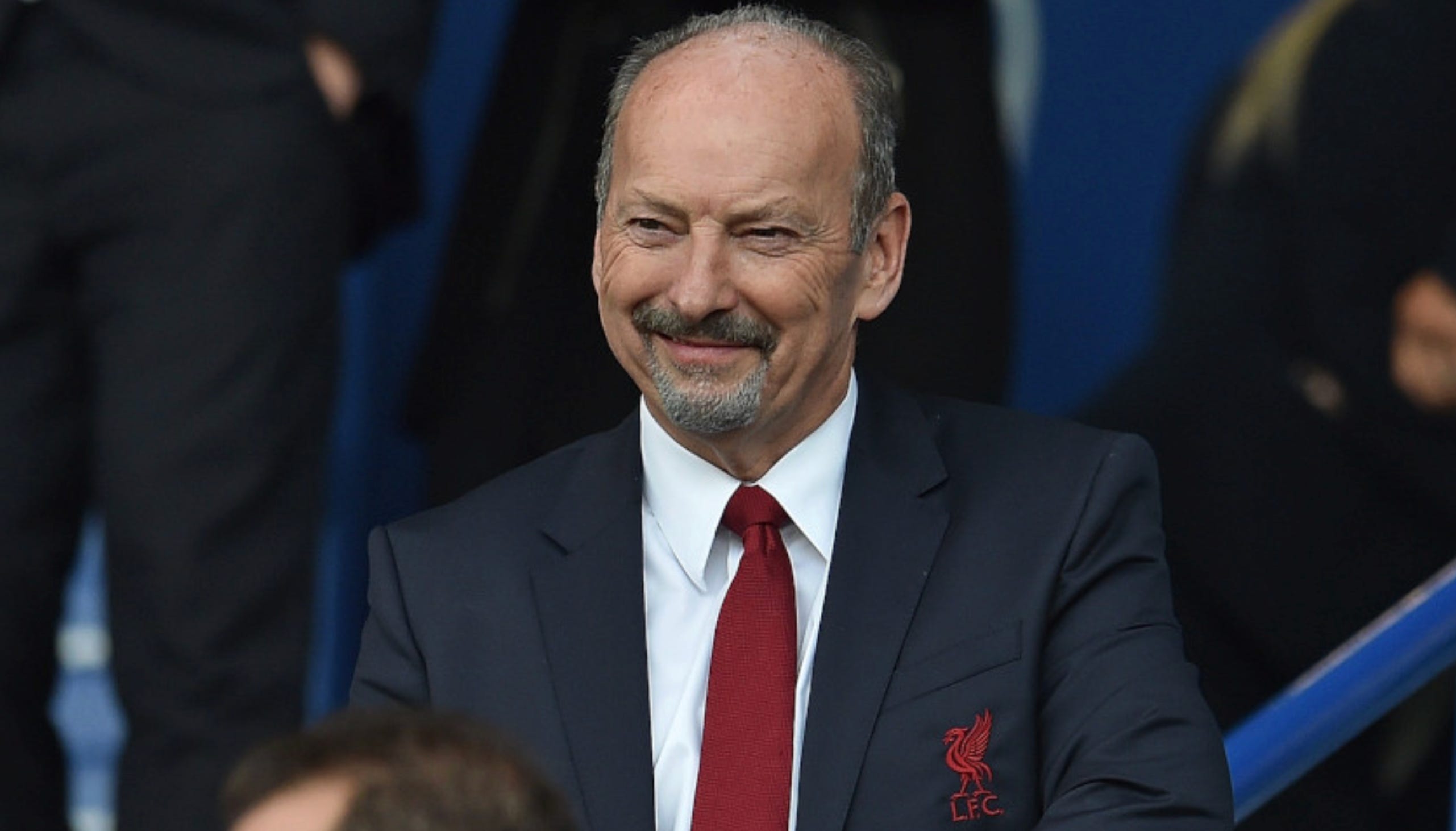
Moore had no intention of leaving EA until a headhunter got in touch. Liverpool Football Club was looking for a CEO.
Moore is a famous Liverpool fan. He watched his first game in 1959 with his dad, a 4-3 victory of Leyton Orient. It wasn’t an easy decision. It involved taking a financial hit, and it was an upheaval for his family. But ultimately, he returned to England.
On paper it seemed like a successful move. Moore helped Liverpool deliver its first Premier League title in 2020.
But he was often at odds with the club’s owners. Particularly around his PR approach, which he’d adopted from his time in games.
“At EA we were voted, two years in a row, the worst company in America, because of the end of Mass Effect.. This is when BP is polluting the Gulf of Mexico. Bank of America has brought down the global economy with subprime mortgages. But fucking Commander Shepherd dies in Mass Effect 3, and that makes us the worst company in America,” Moore tells us.
“At that point, I jumped on Twitter. I start engaging with gamers and all of the baggage that comes with that. I felt it was the best way to figure out how we could humanize the face of EA. I took that lesson of being the face and the ability to engage with gamers to football. Gamers are volatile, and football fans are volatile. I felt that not being cold and distant, which the football club was with absentee American owners, was the way to go.
“My American owners did not agree. They did not like the fact that I engaged with fans on social media. They felt it was unstatesmanlike. 99% of the time, it was very much: ‘Thank you for traveling.’
But there was one particular social media moment that Moore regrets.
“In our year that we were going to win the Premier League, every game was crucial. One Saturday afternoon, Norwich City beats Man City [Liverpool’s closest rival]. That was a huge shock. You start doing the math on the league, and you just knew that was one of these turning points. And foolishly, I tweeted a canary. Norwich City are the canaries. Within 15 seconds, I’m seeing 3,000 likes, 4,000 likes. I then thought: ‘Maybe I shouldn’t have done that’. And I shouldn’t have. My WhatsApp lights up: ‘Take it down’. It was stupid. It was unstatesmanlike, unprecedented, all the words that my performance review reflected that year.
“The fans loved it, but I shouldn’t have done that.”
He’d still be at Liverpool now if they wanted him
“I will not lie, when the cameras pan, as they often do, to the Liverpool Director’s Box, and I catch a glimpse of where my seat was… that’s hard.”
Moore had plenty of success at Liverpool, but ultimately he’d outstayed his welcome.
“There is this concept of disengagement syndrome,” he says. “One minute I am the CEO of Liverpool Football Club, and I know everything that’s going on. I know every moment at Anfield from when the turnstiles open, to me sitting in my seat and greeting Sir Alex Ferguson.
“Then my contract was up. It wasn’t renewed. It was a big shock. I’d still be there now if they wanted me, but they didn’t. The next season, where I’m sat at home in Santa Barbara, California, just watching on my own… that was hard. You know everything that’s going on, but somebody else is in your seat.
“I will not lie, when the cameras pan, as they often do, to the Liverpool Director’s Box, and I catch a glimpse of where my seat was… that’s hard.”
Check out our full 45-minute Peter Moore chat above. His memoir, Game Changer, is available now.
That’s it for today. We’re out at GDC this week, and we’ll have our first batch of GDC interviews for you this coming Thursday. So, join us back for that!


