


Hello there!
Welcome to The Game Business Micro. This newsletter is usually only for paying subscribers of TGB. But for this week, we’re making it free for all. If you like it, and want to get this every week, why not consider subscribing?
This week, it’s more troubling news. Just a few short weeks ago, during the height of Summer Game Fest, things looked - dare I say - positive. Ever since, we’ve had massive cuts at Ubisoft, the warning of big job losses at Xbox, a major reduction at Bungie, plus eye-watering prices for the Steam Machine and Xbox Series hardware.
It’s been a rough start to the summer.
This week, we dive into two of those stories – the cuts at Bungie, and the price rise of Xbox consoles. Plus, we round-up the rest of the news. Let’s take a look.
PlayStation lays off ‘most’ of the Destiny team at Bungie
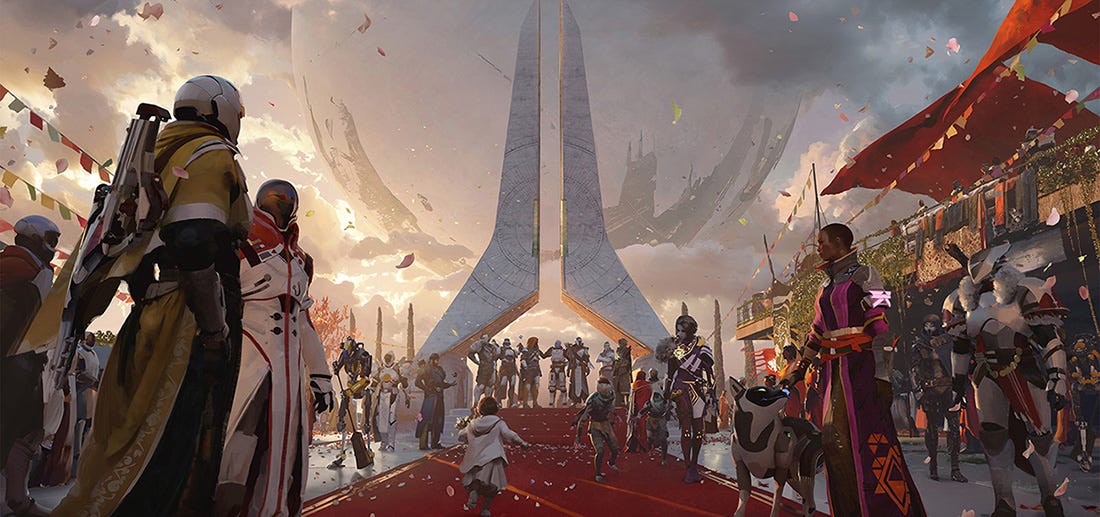
In Brief: PlayStation is laying off ‘most’ of the Destiny team and some of the Marathon team at its big live-service studio Bungie. The developer said in a statement: “We recognize Destiny 2 fell short of expectations these past several years. Following our final content update to Destiny 2, and with our future projects still in early incubation, we unfortunately could not continue operating at our previous size.”
What You Need To Know:
Around 292 roles have been cut, according to a filling at the Washington State Employment Security Department.
There have been numerous redundancies at Bungie since PlayStation bought the company for $3.6 billion in 2022, with more than 700 jobs cut or moved.
Bungie studio head Justin Truman is stepping down as a result of the latest news.
It all follows the end to major updates for Destiny 2. Bungie released the Monument of Triumph expansion on June 9, ending its full support for the shooter.
Bungie released its latest game, Marathon, in March. The extraction shooter peaked at around two million players in March (Ampere data), but that has fallen to just over 800,000 in May. However, the fan reception has been strong, and Bungie is now fully focused on trying to drive success for this game.
As a point of comparison, PlayStation’s other big live service bet, Helldivers 2, had 3.7 million players in May (Ampere).
My Take
PlayStation’s monster $3.6 billion acquisition of Bungie simply hasn’t worked out. But this isn’t just about the fortunes of the Destiny franchise, it’s also about PlayStation’s live service dream.
To understand that dream, we need to go back to the PS4 era.
During that generation, PlayStation’s software business grew significantly. Titles like The Last of Us, Spider-Man, Horizon: Zero Dawn and God of War achieved numbers that PlayStation first-party games (outside of Gran Turismo) hadn’t achieved before.
Now PlayStation makes most of its money from its platform division, which encompasses hardware, PlayStation Store sales and PSN subscription revenue. But with the growth of its first-party games, Sony was asking the question: How can we make our first-party software business as big as our platform business?
But that wasn’t going to be easy. PlayStation found it could get a game to ten, even 20 million sales, but it was proving difficult to go beyond that. In a 2021 interview I did with former PlayStation boss Jim Ryan, he discussed this exact issue: “I think some of the art that our studios are making is some of the finest entertainment that has been made anywhere in the world […] to gate the audience for that at 20 or 30 million, frustrates me.”
What’s more, the cost of making these games (and the time it was taking to make them) was going up exponentially. As PlayStation moved into the PS5 generation, it was faced with the reality that its teams would be making fewer games, spending more money making them, and not necessarily generating more revenue.
This situation required some fresh thinking, and the PlayStation leadership adopted two strategies. The first was to release some of its games on PC to reach more players (which hasn’t particularly worked out). And the second was to make some live service games.
Live service games are hard. Not only do you have to make a game people want to play, you then have to keep them playing. What’s more, it is highly competitive, even back in 2020, with games like Fortnite and Call of Duty monopolizing player time.
However, if Sony could find even a little success with live service, it could be transformative. Live service game revenue dwarfs that of a single player title. For a company like Activision Blizzard, a single-player project like Tony Hawks or Crash Bandicoot is almost irrelevant when sitting next to a Call of Duty or Candy Crush.
Now, PlayStation wasn’t a complete stranger to this side of the industry. Gran Turismo and MLB: The Show are live service projects, of sorts. And if you go back in time to previous eras, there have been first-party online multiplayer games like SOCOM and Warhawk. What’s more, the company frequently partners with live service games like Call of Duty. However, when it comes to building a large, modern, live service project, it’s fair to say PlayStation lacked know-how.
That was going to change as PlayStation embarked on a huge live service push. It signed online games from third-party studios, including Arrowhead (Helldivers 2), Deviation Games (mystery project), Firewalk Studios (Concord), and Haven Interactive Studios (Fairgames). And it commissioned a number of internal live service projects at Insomniac, Naughty Dog, Guerrilla Games, London Studio and more.
During this time, the video game industry was in a very healthy spot, and PlayStation started doing something a little out-of-character. Historically, PlayStation would ‘date’ studios before buying them. Developers might work on one or more Sony projects before becoming part of the family. Companies like Insomniac, Naughty Dog, Guerrilla Games, Media Molecule… they had all made a PlayStation first-party game before becoming a PlayStation studio. So, it was surprising to see the company acquire developers that hadn’t done that, including Haven and Firewalk.
But the big move happened in January 2022, when it announced it would be buying Bungie, the company behind Destiny and the original creators of Halo, for $3.6 billion,
In PlayStation’s view, this was the missing ingredient. Not only did it get them a moderately popular live service shooter in Destiny, it also got them that all-important expertise, which the whole organization would benefit from.
Ryan told me at the time: “I would back us to do [live-service games] ourselves, but when you have the potential to have a partner like Bungie who has been there, done it all before, learned the lessons and have got this wonderful, brilliant team who is there and has the potential to help us... we think we can take something that would have taken a certain number of years, and significantly decrease the time it will take to get it right.”
There were some worries. Bungie wasn’t at its peak when PlayStation bought it and Destiny 2 was showing signs of slowing down. Meanwhile, fans were concerned about what this all meant for PlayStation’s famous single player action games. Both Ryan and studios boss Hermen Hulst insisted that the story games weren’t going anywhere. And that was true. But with those games taking longer to make, and so much investment going into online multiplayer projects, it was inevitable there would be a slowdown in Sony’s single-player output.
Of course, it wasn’t long before the industry shifted. Live service was already hard, but post-pandemic, it was proving even harder. It was one thing to coax players away from Fortnite or Call of Duty or Counter-Strike, but it’s quite another to stop them going back to them. Sony’s own Concord proved to be the big shock. The game represented a huge investment, but it completely failed to connect. It was swiftly discontinued, and the studio closed down.
Over the following months, PlayStation corrected its strategy. It cancelled projects and closed studios. It was still making some live service titles, but the level of them had been paired back to reflect the market reality.
That takes us back to Bungie. In June 2024, Destiny 2 released The Final Shape, which effectively concluded the game’s story. Over six million people played this expansion (Ampere data), but with the story over – and in this highly competitive live service market – players started to abandon the game. Bungie struggled to find reasons to coax users back. By the start of this year, numbers had fallen to below two million monthly active users.
Its next game was Marathon, a hardcore extraction shooter that launched in March. Bungie has done the hard thing by making a title that’s actually well regarded, but it’s not the most accessible experience, and it’s got a lot of work to do to grow that audience.
PlayStation’s live service dream isn’t over. It has more titles to come, and it has had a hit in Helldivers 2. But like a lot of companies that over-invested in a strategy during a period of very strong industry growth, it is having to scale back.
As for Bungie, its focus now is on turning Marathon from a game a few people love into something more significant. It proves the studio has what it takes to build a strong product, and if it can find a larger player base, perhaps it can rebuild.
And maybe one day Destiny will return.
Xbox hikes console prices again as component misery continues
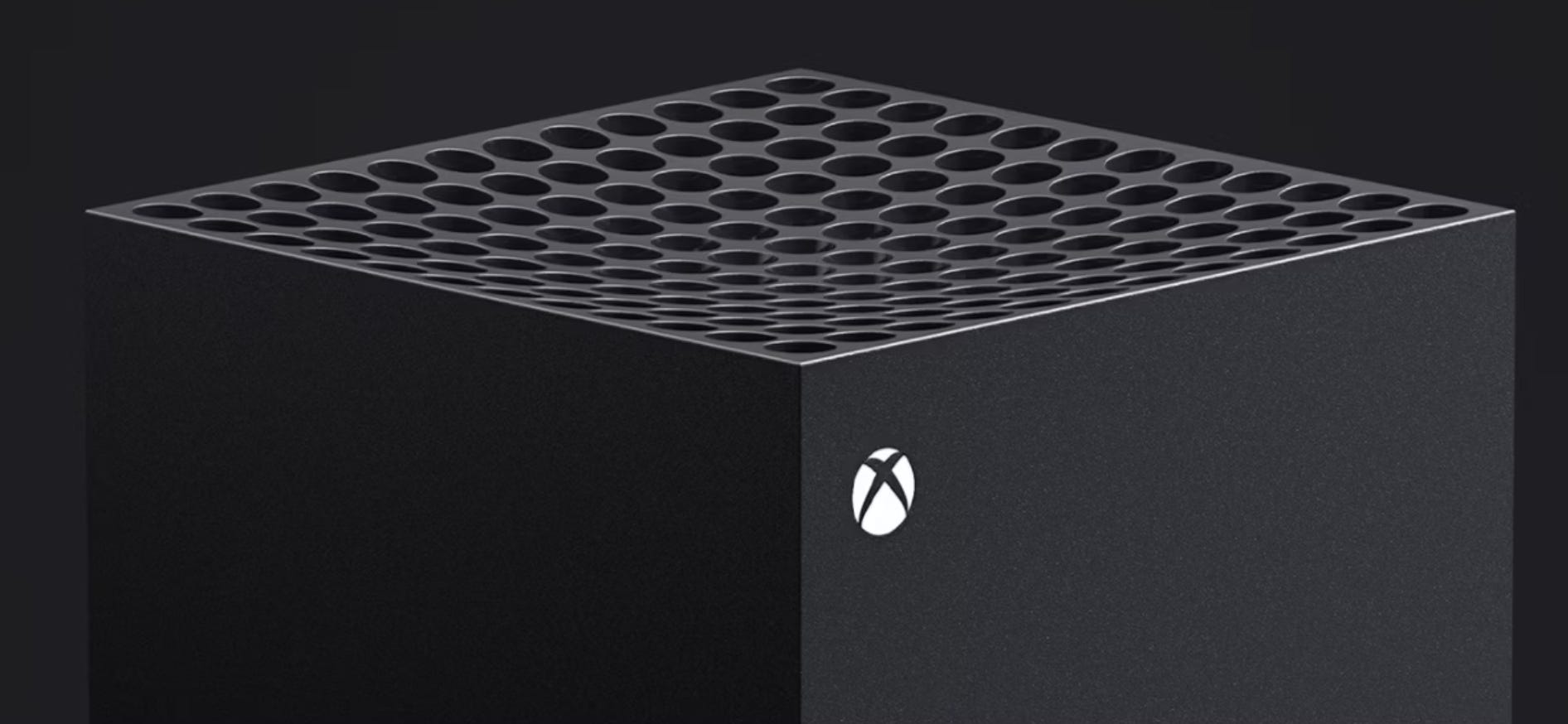
In Brief: The price of Xbox Series S and X is increasing by $100 for 512GB models and $150 for 1TB models. The 2TB model will be discontinued.
What You Need To Know:
The price increases begin from August 1.
The cheapest Series X 1TB model without a disc drive will retail for $749.99, while the disc-drive model will set players back $799.99. The 512GB Series S model now costs $499.99, with the 1TB model priced at $599.99.
Xbox expects memory shortages to continue for at least two years.
Xbox consoles rose in price twice last year. The Xbox Series X (with a disc-drive) now costs $300 more than it did at launch in 2020.
Xbox has added new programs to help make its consoles more affordable, including Buy Now, Pay Later options through Microsoft Stores, and interest-free financing for up to 12 months via Amazon.
Xbox is also leaning into pre-owned, supporting retailers by offering deals on second hand Xbox consoles
Back in March, PlayStation significantly raised the price of PS5, while Nintendo increased Switch 2 prices (comparatively slightly) in May.
My Take
Here we go again. We’ve had the PS5 increases, then the Switch 2 ones, then the Steam Machine price, and now it’s Xbox’s turn.
The component crisis is getting worse, not better. Things might settle down in 2028, but certainly not before.
What else is there to say? It’s a real existential threat for the video game business, as the hardware needed to play its games are becoming something only the affluent can afford. And there is now an expectation that we won’t be getting new PlayStation or Xbox hardware in 2027.
What’s interesting here is that Xbox is trying to come up with some solutions. ‘Buy Now Pay Later’ and finance schemes aren’t new. We’ve had them before. But it’s become important to strengthen and highlight them at a time when Xbox is actively trying to grow its console base. GTA 6, which is only launching on Xbox and PlayStation, is expected to cause an increase in interest for those platforms. And just before that, Xbox is releasing a new Gears of War that won’t be available on PlayStation.
So, Microsoft has a goal of growing its audience this year, and these prices are a barrier to that. Therefore, actively highlighting new schemes to make these devices more accessible might prove crucial. I found it fascinating to hear that Xbox is actively promoting second hand and pre-owned sales. That side of the market is likely to do well in this climate, and leaning into that is a smart move.
What next? Console rental schemes? A big game streaming offers? I wouldn’t rule anything out as platform holders try to navigate this crisis.
Meanwhile…
US game revenue reached $3.8 billion in May 2026, increasing 1% compared to a year ago, reports Circana. Year-to-date game spending remained 3% ahead of 2025 at $20.4 billion.
007 First Light was the No,1 game by revenue in May, and is already the fourth best-seller of the year. Launch month revenue for 007 First Light was the highest for a James Bond video game in the franchise’s history.
Forza Horizon 6 was the second best-selling game of May, followed by LEGO Batman: Legacy of the Dark Knight and Subnautica 2.
Hardware revenue is up 38% over May last year, driven by Nintendo Switch 2. We’re now through the first year of Nintendo Switch 2, so expect year-on-year comparisons to be weaker from now on in. PS5 revenue in May was down 43% over the year before. In fact, PlayStation unit sales had its worst May since May 2000, while Xbox unit sales had its worst May ever.Nintendo’s new development building has been delayed again. The new office covers 49,305 square metres across ten floors and is designed to be the new hub for software and hardware R&D. It was initially planned to be finished by the end of 2027, but it was delayed until 2028 due to an increased scope. The building is now expected to be ready by March 2029. The whole project will cost $748 million.
GTA 6 has a slightly higher price tag compared to other AAA games. It will cost $79.99 for the standard edition and $99.99 for the ultimate edition. The physical copy of the game won’t include a disc.
Italian studio 34BigThings has spun out of Embracer Group. The company’s co-founder Valerio Di Donata has bought 100% of the studio’s stock.
Kadokawa Corporation CEO Takeshi Natsuno has retained his position after an activist investor group tried to force him out due to the performance of developer FromSoftware. He held his position at the AGM, but his support dropped from 90% to just under 60%. Hong Kong-based activist investor group Oasis Management had pushed to have Natsuno-san replaced because it felt that the firm should have done more to capitalise on the success of Elden Ring. There’s already been an Elden Ring spin-off, a major Elden Ring expansion, while an Elden Ring movie is in production, so we’re not entirely sure what more they expected.
There’s a new $50 million video game investment fund that targets ‘auteurs’. The Denmu fund will support AAA, AA, indie, free-to-play, PC, console and mobile games, but it’s specifically looking for ‘visionary game makers’. The funds organizers are also connected with the Chinese and Japanese games markets. The fund has already backed various titles, with a plan to invest in between 10 and 20 titles over the next two years.
Atari’s MobyGames has launched a LinkedIn rival, where industry professionals can create profiles that record their career progress and achievements. There will also be personalized job listings, insight and tracking.
One of the co-founders of French games giant, Ubisoft, Claude Guillemot, has been killed in a plane crash, aged 69.
That’s it for today. Join us back here tomorrow with our bumper interview with Jason Rubin, which we conducted at The Game Business Live. The Crash Bandicoot director and Naughty Dog co-founder looks back at his career, with a bunch of special guest appearances. Until then, thank you for reading.


