


Listen now on Apple, Spotify or YouTube
In This Edition,
Xbox leaders unsure about direction
Is PlayStation right to kill discs?
Ben Kvalo on the future of publishing
Hello, and welcome back to The Game Business.
It’s been a nightmare couple of weeks for the console business. Prices rises, job cuts, the death of discs… it’s hard to be optimistic in the face of such unrelenting, unpopular decisions. And it’s not even over.
But it’s important to keep a level head. The price rises are frightening, but there are smart people trying to solve the issue. The job cuts are heartbreaking, this is a dark time, but the industry is shifting (I hope) to a more sustainable future. The journey to that future is clearly paved with misery, but we have to believe we can get there. There are signs, if you look for them, that we will.
In today’s Show and Newsletter, we discuss how people at Xbox are feeling about these imminent changes. Plus, analyse PlayStation’s decision to end disc production. And on the Show, we are joined by Midwest CEO Ben Kvalo, who has a vision for where the business is heading that I find hopeful.
Enjoy!
As huge cuts loom, Xbox is divided over its future
“They’ve done it backwards.”
I had a cup of tea with one of the most senior PR leaders in video games just a week ago and we discussed these imminent cuts coming from Xbox.
“You start with the bad news, take a pause, then you give people the good stuff,” they said.
Sharma’s first 100 days felt successful. The scepticism that greeted her appointment was rapidly turned around by a series of fan-pleasing announcements. There were small things like changing the logo and altering the company name, and more significant shifts, such as cutting the price of Game Pass and making some first-party games console exclusive. To Xbox’s (let’s call them enthusiastic) fans, Sharma was the second-coming.
Throw in the critical and commercial success of Forza Horizon 6, and there was strong positivity around Xbox for the first time in years, both outside and inside the organization. One Xbox manager told me at the time: “Asha has really brought hope back to Xbox.”
Today, the mood is different. Xbox is looking to reallocate where it spends money. The company wants to invest in its big franchises, and to do that, it needs to cut from elsewhere. Studios such as Compulsion, Ninja Theory, Double Fine, Undead Labs and others are deep in negotiation with Microsoft to avoid closure. The impact of this will likely reverberate across the business.
“We’re spread across too many projects, platforms and business models. We need to focus.”
There is frustration, and even division, within the Xbox ranks. Sharma has brought in a start-up mentality into Xbox. Speed is a priority. Teams that are used to weeks of meticulous planning (and countless meetings) are being asked to turn things around in days, even hours (the price rise announcement last week was pushed out earlier than planned after Apple announced its price increases earlier in the day). It is reactive and gets the business moving. But it can also feel messy and chaotic. And not all of leadership is behind every call. This is particularly true on the development side, where certain studio heads feel Sharma is listening too much to the consultants, and not enough to the people building the games.
What’s more, Sharma’s love of speed is going to run head-on into the time it takes to build hit games. You can adapt business models and distribution strategies quickly, but you can’t just rush out an industry-defining Elder Scrolls. Whatever plan gets put in place by Sharma’s new leadership team will take years to deliver.
That studio frustration comes partially from the belief that things had been improving. The teams were getting stronger game-by-game. And if we take the Xbox Game Studios business for a moment (which is the division most under threat) it actually delivered a broadly decent year. There’s a real sense amongst some teams that they’re being punished for the poor performance of Call of Duty.
That is the reality. Even if Obsidian had delivered an incredible year, even if The Outer Worlds 2 and Avowed had performed five times the numbers that they did, it wouldn’t have offset the drop on Call of Duty. A game like that, and Candy Crush, and Minecraft, and Warcraft, make a lot of Xbox’s output seem almost insignificant.
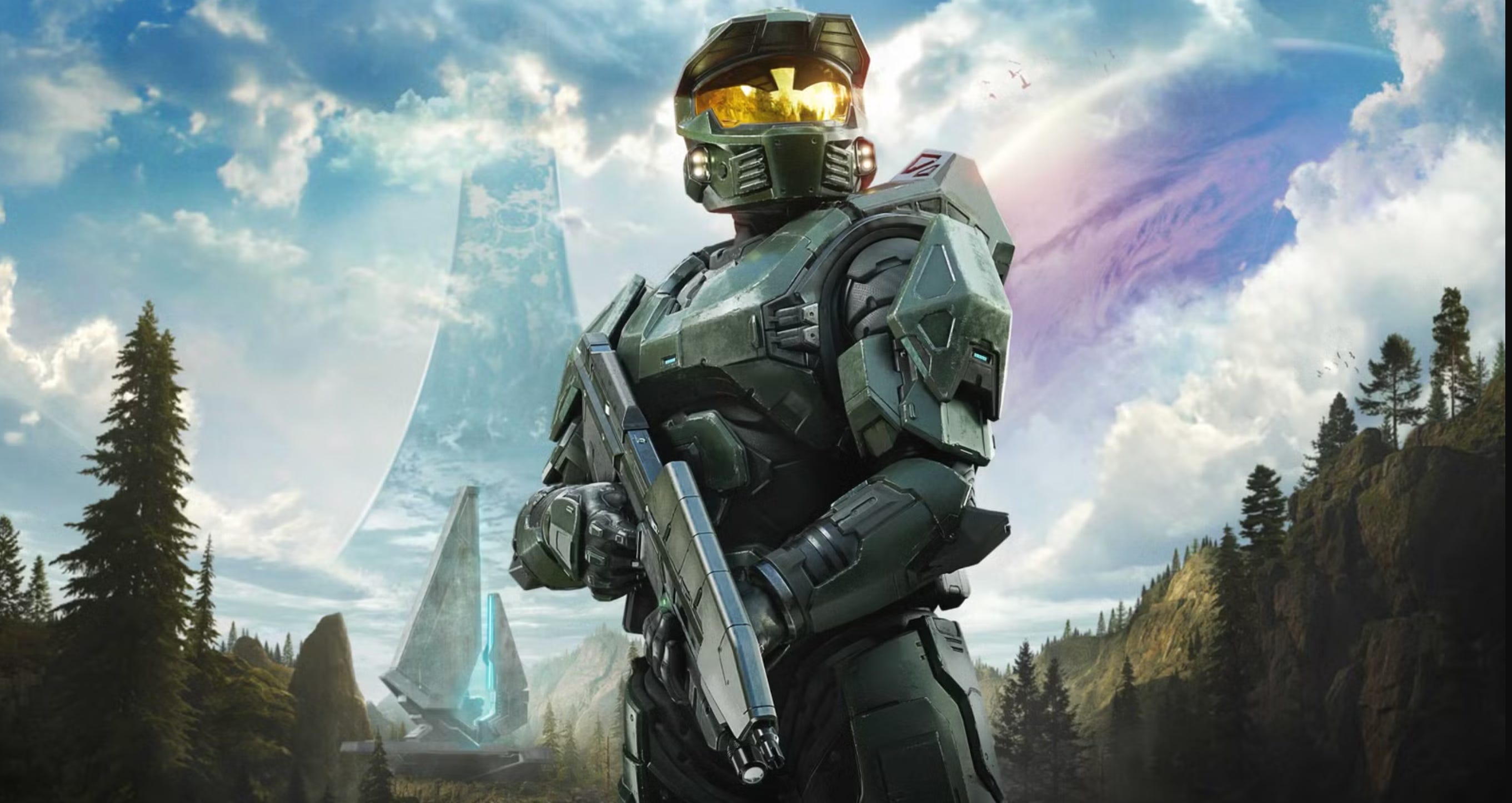
That’s why some people think getting rid of studios like Double Fine is a pointless exercise. “If they think they can take that budget, stick it on Halo, and suddenly turn it into a 95 Metacritic smash hit, they’re delusional,” said one development expert who was asked to advise the business.
“We’re chasing a declining market with franchises that are past their prime”
But, of course, it’s not just about budget. As one other Xbox leader told me: “We’re spread across too many projects, platforms and business models. We need to focus.”
Xbox says it’s pushing back towards the console (alongside PC and mobile). ‘The return of Xbox’, they call it. And they’re putting more resources behind its biggest brands. That’s the focus. It’s what they know, after all.
But this is where opinion is split. Numerous people I’ve spoken to at Xbox feel there’s too much “listening to Twitter”. With the component crisis and the overall market decline in console players, why is Xbox choosing to reinvest in hardware? The people I spoke to have low expectations that the newly exclusive Gears of War is going to have any real impact on Xbox Series S and X sales. They also point out Xbox has tried to rejuvenate Halo and Gears in the past, and tried to develop a mega game in Perfect Dark, too. What will be different this time?
“We’re chasing a declining market with franchises that are past their prime,” said one studio boss.
Growing those big brands is more about who they bring in and the leadership they have, rather than the money they can spend. Can Xbox attract the talent that can turn Halo into a world beater once again? That’s the objective.
I suspect there will be dissent whatever route Xbox chose to go down. There are those that are happy it’s gone back to a console-first approach, and there are those that feel the third-party publisher route was the right one (a plan they’d all bought into two years ago). The question is what does the leadership of Microsoft want out of Xbox? I asked another Xbox studio boss how he felt about the decisions, and he simply shrugged and said: “After Activision, this is Amy [Hood] and Satya [Nadella]’s Xbox now.”
Of course, emotions are high. Sharma said the current Xbox couldn’t continue as it was. Change was needed. And that change was inevitably going to let some people down. Xbox had told its studios it was behind them. It promised they could build what they were passionate about and they’d support it. It told them there were different to all those other tech companies.
But as Sharma says: “The plan’s the plan until it’s not the plan”.
And that’s not the plan anymore.
Update: Obsidian was listed as a company in negotiation with Xbox over potential closure. This was incorrect.
Do people even buy PlayStation discs?
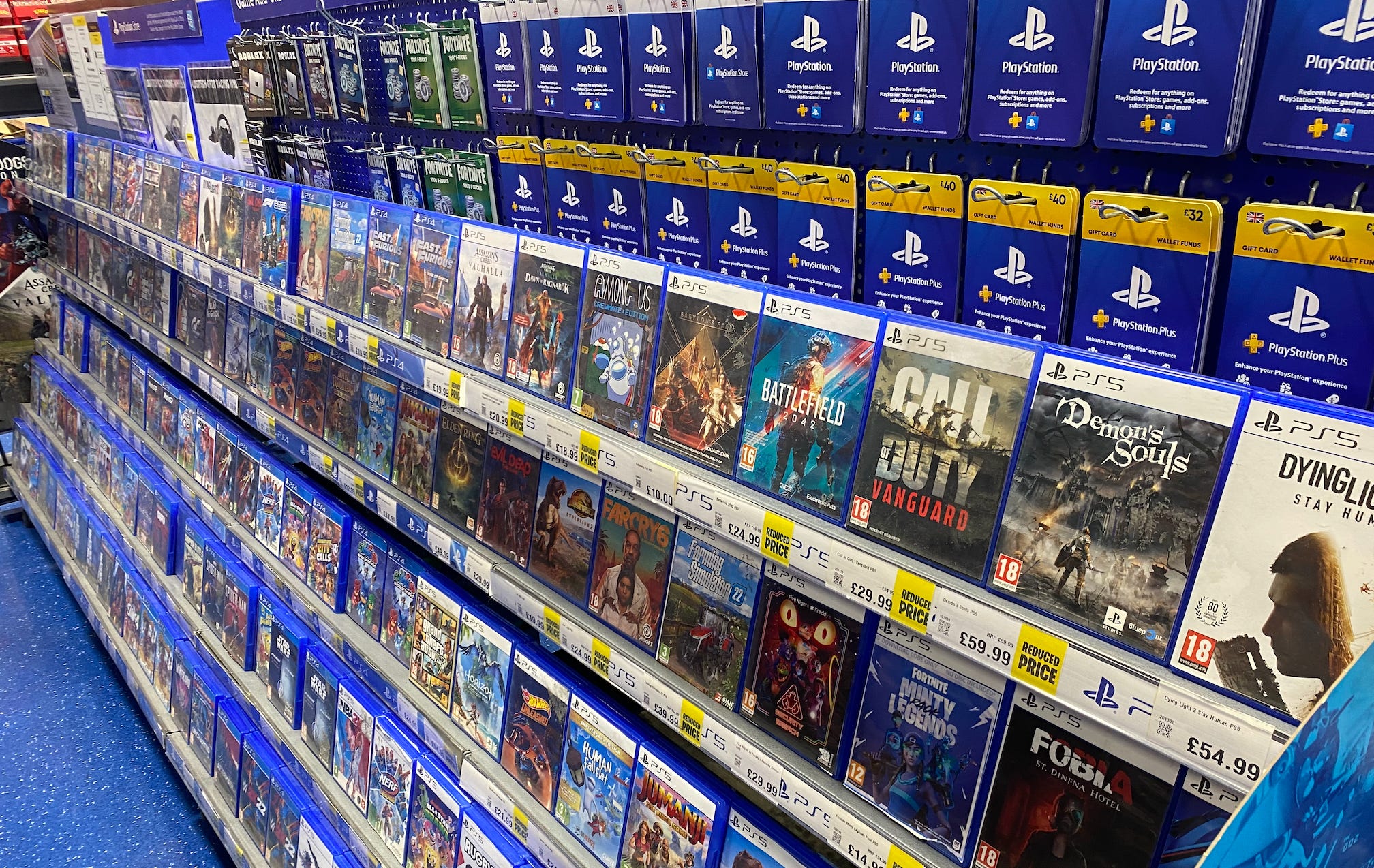
PlayStation made the surprise announcement this week that it will stop manufacturing PlayStation discs in January 2028. That’s not just for first-party games, but for all titles being released on PlayStation consoles.
Fans have taken to social media in dismay. There are those concerned about game preservation, there are collectors who lament the pivot to downloading, and there are those that like to share and sell their games after finishing them.
But outside of the social media noise, do people actually buy physical PS5 games?
There’s no hiding the fact that the physical market has declined significantly. For the 12 months ending May 2009, physical disc-based games generated $11.5 billion in the US (Circana data). For the 12-months ending May 2026, that number is just $1.6 billion. Digital is now dominant, although it varies by platform.
However, $1.6 billion is still a lot of money. And actually, that represents a 3% rise over the previous 12-month period.
For the first six months of this year, over one million physical PS5 games have been sold in the UK (Nielsen IQ data). That’s a drop of over 5% compared with the year before. But again, that’s still a lot of games.
To dive into a specific example, 007: First Light sold just over one million units in its first three weeks in Europe, and nearly 230,000 of those games were sold in a physical box. 78% of the game’s sales were sold via digital stores, but that 22% still represents a large number of players.
Over 22% of 007: First Light sales in Europe were physical
Of course, if people can’t buy physical, many will just buy digital. And we can expect that digital/physical split to become even more pronounced by the time January 2028 is here. Nevertheless, there is a risk of losing some customers by dropping the disc.
Now, PlayStation says it will continue to provide choice for players over where they can buy games, including from traditional retailers. This might involve the ‘code-in-a-box’ option that Grand Theft Auto 6 has adopted.
This is important for PlayStation to do. The firm is facing multiple class action lawsuits in the UK, Netherlands, Portugal and Australia over whether the PlayStation Store is a monopoly. The lawsuits argue that PlayStation is able to charge an ‘excessive’ 30% fee on games sold via its store because of a lack of competition. PlayStation argues that there are many alternative options for players.
Ultimately, for more than one reason, it’ll prove important for PlayStation to continue engaging with other retailers as we look ahead to the PlayStation 6.
Why flexible publishing might be the future of video games
On today’s edition of The Game Business Show, we welcomed Ben Kvalo, the CEO of Midwest Games.
During our chat we discussed where the future of the business is heading, and somewhat in relation to the new of Xbox cutting studios.
Kvalo discussed how it’s becoming harder for the big companies to justify the smaller and mid-sized projects, particularly if they need to increase focus on their more important brands that might be struggling.
“Understanding the ecosystem you’re operating within is such a huge key to understanding where you rank on things, and what needs to succeed for you to be able to continue to do what you’re doing,” he says.
Kvalo says we’re seeing the rise of a new middle in video games, mid-sized publishers who can fund mid-sized (or AA) games. But a challenge for a lot of these businesses is the inability to react when something big happens. Because these companies are often publishing multiple titles, it’s not easy to quickly pivot if something suddenly breaks out. This is also true of AAA and indie publishers, particularly as it’s hard to judge how well a game is going to do ahead of release.
Kvalo spent nearly five years at Netflix, and he believes the game industry can learn from how the streaming giant handles surprise hits.
“We couldn’t really build a lot of hype for a Netflix film. It was really tough. A lot of the marketing had to be the really quick ramp-up and in the moment, and then very reactive. And in order to build a reactive system, you have to be flexible in everything that you do,” he says. “We were putting out over 100 films a year, so the scale was just massive. We had to build a flexible system that took bets, but then also reacted when something else blew up.
“[In games] you might take 20 bets as a portfolio, as a traditional publisher, you have to put your resources towards what’s showing is going to likely be the biggest hit. Except you never know what might blow up, and you don’t necessarily create flexible systems to be able to quickly support that thing that’s a surprise. Whereas we did at Netflix. Something like Bird Box, which has been seen by over a billion people at this point, we reacted in the moment. Of course, we took a lot of bets. It was Sandra Bullock. But it was a medium level title. It was not the biggest priority, but then we reacted.”
Kvalo feels that a more modular approach to publishing, with external teams that can be scaled up and down when needed, will allow for more risk taking. This is something mid-sized companies need to do.
He observed that increasingly we’re seeing these smaller companies working on big licensed IP, which was previously something only large AAA publishers would handle.
“If you look at the higher end, it’s really tough to justify one of the giants doing a big IP play, considering the amount it’s going to cost them, and they aren’t going to own the long-term value of that IP,” he says.
“Whereas the middle can play in that space, can experiment in that space, can do something a bit edgy, which we know is what the audience wants right now. They want something that is a big IP they know, but in a very different way, and the middle can do that. And you’re seeing it.
“Fireshine has been killing it from the middle publishing level. Hooded Horse has been killing it. That is a really interesting space. Now, the ones that are succeeding are very disciplined in how they operate, they have good structures in place, and they’re smart about everything they’re doing, and they’re not over-scaling how they’re building their operation.”
Check out the full conversation on today’s The Game Business Show.
That’s it from us today! Please join us next week for more big interviews and insight. Until next time, thank you for reading.


