


Listen now on Apple, Spotify or YouTube
In This Edition
- ID@Xbox talk Project Helix and ‘the return of Xbox’
- Whatever happened to Moorcroft?
- Newzoo’s new market report
- And much, much more
Hello from sunny San Francisco,
I’ve been travelling the hotels and halls of the Game Developer’s Con… sorry, the GDC: Festival of Gaming, to learn what the future has in store for our beloved industry (it’s all AI, apparently).
It’s clearly a quieter show, and there isn’t nearly as much news, but I’ve still found it useful. And I have plenty of things for you. Including an interview with Xbox’s Guy Richards about indies, and how they relate to Project Helix and the ‘return of Xbox’.
I also had a great chat with Ben Porter of Newzoo about its latest PC and console report.
You can listen to all of this in today’s edition of The Game Business Show, which is available above. Or, if you’re too busy for that, I’ve distilled as much as I can into text form below.
Enjoy!
‘Indies are crucial to the return of Xbox’
Independent games are the “heart and soul” of Xbox’s new business strategy, the firm says.
Speaking to The Game Business, global director at ID@Xbox Guy Richards talked about the role independent teams will play in the upcoming Project Helix console, and Xbox’s wider mission to support gamers across platforms.
“In [Xbox CEO] Asha’s opening statement to the company, and the vision she has laid out, she talked about bringing great games to the platform,” Richards said. “Whether you’re looking at the volume of games, or the cultural or unique perspectives that developers are [bringing] to the platform, ID@Xbox is crucial to that.”
He continues: “It’s the heart and soul of what Xbox does. I look at the vision, I look at great games, and for me that’s all about the content, the variety of it, those big hits and making sure they come to Xbox.”
I asked Richards why developers should work with Xbox specifically, when they could focus their efforts on Steam and potentially achieve similar results.
“We’re working towards a future where you will be able to build once and ship everywhere,” he answered. “By making it easier, we will see more games come to Xbox quicker. If you’re a developer, putting your game out across as many different store fronts and platforms increases your opportunities for sales. We are differentiating and making sure it is as easy as possible for players to carry on playing wherever they’re playing [with Xbox Play Anywere]. Xbox is a great home for developers. We have a really engaged, high spending audience. It’s a great place to bring and sell games.”
Richards referenced Expedition 33, Hollow Knight: Silksong and Ready or Not, which are three hit independent games that Xbox partnered with last year. But, he stressed, it’s not just about the big success stories.
“Making $100,000, or $200,000, for a small team can be just as impactful as making $5 million or $50 million for a bigger team. So, when we start to look at those thresholds, say $100k for example, there are as many developers as ever making that amount of money on Xbox. That’s encouraging. And through different promotions and different tactics and changing our discoverability on new releases, we are always looking at ways to push those titles upwards in the rankings.”
“In places like Japan, Brazil, India, you don’t need the hardware to become an Xbox customer.”
Richards also discussed Xbox’s efforts to find games in new territories to help broaden the appeal of the platform. The firm hosted an event in India last month, and heard pitches and provided feedback to developers. It also supported the Xbox Game Camp project, where the company engages with future talent in markets such as Africa, Ukraine and Belgium.
Of course, some of these territories are not big console markets, which is why the firm continues to invest heavily in cloud streaming.
“I’m an existing console and Xbox gamer. For me, things like playing on handheld or playing on cloud are ways to extend and offer me some slightly different places to play where I haven’t been able to before,” Richards said.
“Whereas, we’re seeing in other markets that maybe cloud is actually the only way that people are engaging with Xbox, and that’s really encouraging. That’s through those partnerships we have with Samsung, LG, Hisense… smart TVs. That means in places like Japan, Brazil, India, you don’t need the hardware to become an Xbox customer.”
What happened to Project Moorcroft?
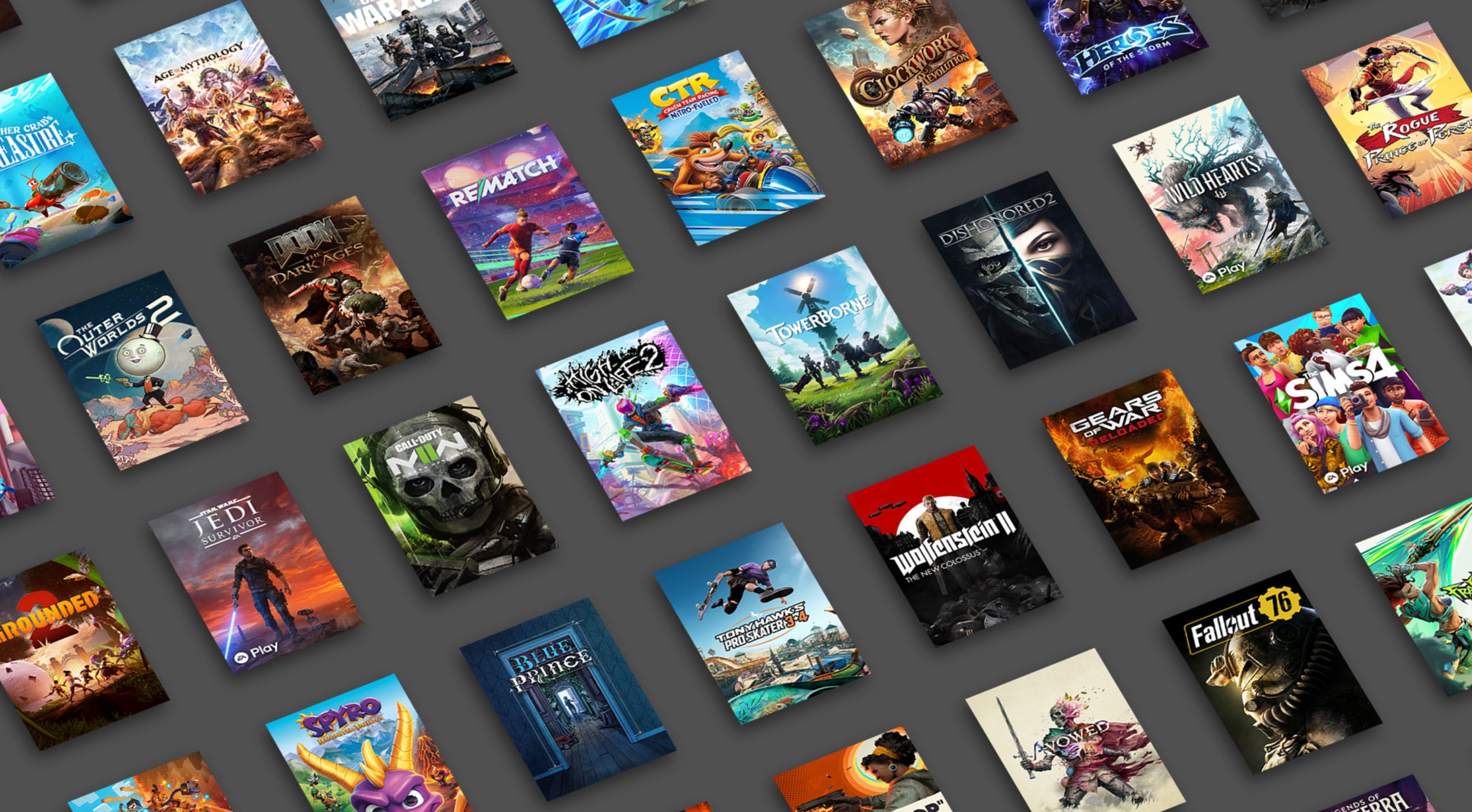
In 2022, Xbox revealed Project Moorcroft, where it would pay developers to create demos for upcoming games and bring them to the Game Pass subscription service.
Microsoft believed it could be an alternative to E3 or PAX, and would help developers get feedback and build excitement for its titles without the cost of exhibiting at shows.
It was supposed to be rolled out that year. But it never materialized. So what happened?
“It was a program where we were experimenting with some ideas for how we can support demos on Xbox,” said ID@Xbox global director Guy Richards.
“We have actually been doing a lot of stuff that is slightly different with demos recently. We’ve been doing our own ID@Xbox demo festivals on the store, which is a really great opportunity to get games out early for players to try. Especially if you’ve got a product page up, and you can start collecting wishlists on Xbox.
“There are some really nice tips and tricks to make sure that somebody who tries their games on Xbox can easily wishlist them. They get notifications when the game launches, or is discounted. Demos is an area we’ve been focusing on, but in a slightly different direction to what Moorcroft was.”
Advertisement

Newzoo reveals growth in $30 to $50 video games
Data specialist Newzoo revealed its 2026 PC and Console Gaming Report today, which goes into huge depth on the changing player habits across PC, PlayStation and Xbox in Western markets.
We had a chat with Newzoo’s Ben Porter on today’s episode of The Game Business Show (above) about the report, and it’s well worth a listen.
And here are some of the key facts and insights from the report:
PC and console revenue grew 7% year-over-year in 2025, but total PC and console playtime dipped slightly (down 1%). The revenue growth was driven by improved monetization.
Despite the success of Battlefield 6, Arc Raiders and titles like Counter-Strike 2, the amount of playtime spent on shooters dropped 5% year-on-year. Meanwhile, the battle royale genre dropped heavily, down 27% in terms of playtime. This was mostly due to declines for Fortnite and Call of Duty.
Fortnite’s decline looks worse than it is. Newzoo’s Ben Porter told us: “At the very end of 2023, we had Fortnite OG and LEGO Fortnite, and most of that playtime bump was actually captured in 2024. So, when you compare 2024 to 2025, you have more of a return to a baseline.”
PC is projected to surpass console revenue by the end of 2028, for the first time in more than a decade. PC revenue is expected to grow at a 6.6% compound annual growth rate between 2025 and 2028, compared with 4.4% for console.
The overall PC and console market is projected to reach $103.7 billion by 2028, Newzoo says.
PC will exceed one billion players by 2028. This is mostly due to regional success for the platform. PC grew 11.7% in China during 2025.
PC is still mostly about microtransactions, but premium games were the main PC growth driver in 2025, up 11.8% year-on-year.
Premium games are growing on console, too. In 2025, premium games accounted for nearly half of console revenues. This is up 12% year-over-year.
Console microtransaction revenues actually declined slightly in 2025.
Games that cost more than $50 still represent nearly 80% of total premium revenues on console, but lower priced titles are increasing.
The $30 to $50 price band is the fastest-growing tier across PC, PlayStation and Xbox.
26 games priced below $30 generating more than $5 million in revenue last year, up from 17 in 2024.
PlayStation saw 81 titles surpass $5 million in revenue last year, while Xbox recorded 34.
79 games accounted for 80% of all playtime in 2025 on PC. On PlayStation, 74 games accounted for 80% of playtime. While on Xbox, 91 games accounted for 80% of playtime.
Two thirds of console revenues come from the Top 20 games. Whereas on PC, half of the revenue came from games outside of the Top 20.
On PC, games outside of the Top 20 accounted for 42% of playtime, a rise of 6% year-on-year. On PS5, 38% of playtime was spent on games outside of the Top 20 (up 3%). And on Xbox, 45% of playtime was outside of the Top 20 (up 6%).
Minecraft saw a boost from the movie release, but Roblox actually widened its lead in the sandbox genre to 58% of the market last year.
Meanwhile….
GDC will return to San Francisco in 2027. The event will take place March 1 - 5. San Francisco has become a hot topic amongst attendees to GDC, where some feel it is too expensive and even dangerous to attend. However, it is also the heart of the US video game development industry.
From the beginning of June, games that contain paid loot boxes will be rated 16 under the European age-rating system PEGI. Games that offer time or quantity-limited offers will be rated 12 (although can be lowered to 7 if the game features spending that is turned off by default). Games that feature incentives for people to play at certain times, such as daily quests, will be rated 7. Games that feature paid battle passes that have elements that will be removed if results are not achieved by a certain time will be rated 12. And if a game features completely unrestricted communication functionality (without any protections of reporting facilities) will be rated PEGI 18.
Alpha versions of the Xbox Project Helix hardware will be sent to developers in 2027. During a GDC talk, VP of next generation Jason Ronald also revealed that Xbox mode will be rolled out to Windows in selected markets. It’s designed to bring the Xbox experience to players ‘but with the flexibility of windows’.
Pokémon Pokopia has been a hit. The Nintendo Switch 2 exclusive has sold 2.2 million copies in under a week, with one million sales in Japan alone.
EA has laid off staff from its Battlefield team. The firm says the game remains important, but it has seen its monthly active users fall from a high of 27.3 million in November last year to (a still good) 9.4 million last month (Ampere data).
Slay The Spire 2 hit a peak concurrent player number of 574,638. The indie sequel from Mega Crit nearly beat the 587,150 achieved by Hollow Knight: Silksong last year.
The new studio founded by Yakuza creator Toshihiro Nagoshi is facing closure after publisher NetEase pulled funding for its debut title, Bloomberg reports. The team was told last week that NetEase plans to cut funding for Gang of Dragon, which was only announced in December at The Game Awards. The money runs out in May.
Bossfight Entertainment has re-emerged as an independent outfit called Bossfight. The developer of Squid Game: Unleashed was part of Netflix Games, but was shut down in October last year. The developer has returned under the original leadership team of CEO David Rippy, chief product officer, Bill Jackson and COO Scott Winsett. Bossfight is working on a PC and mobile game.
NCSoft will acquire a 70% stake in mobile developer JustPlay for $202 million. The deal is due to close by the end of April. The Korean publisher is looking to expand into the casual mobile market.
Nintendo of America is suing the United States government over the tariffs it introduced last year. The firm is seeking a refund on the previously imposed tariffs that were struck down by the Supreme Court last month.
Epic and Google have resolved their dispute over Play Store fees. Google will be reducing its store fees to 20% in most major markets this year. The firm will also decouple its billing system from the Play Store, allowing developers to use other payment providers.
That’s it for today’s edition. We will have lots more GDC coverage for you next week, plus a big CEO interview you have to check out. Until then, thank you for reading.


