


Listen now on Apple, Spotify or YouTube
In This Edition
- Matthew Ball on the DRAM crisis
- Advertising on PC and console games
- Reasons to be optimistic
- Plus! Xbox noise, Eurogamer cuts and our live event returns
Hello and welcome back to another bumper edition of The Game Business.
It’s been quite a week of noise around Xbox’s leadership changes, and I’ve put together a little note on that.
But our big focus today is on part two of our Matthew Ball interview, following the release of his State of Video Gaming report. If you missed part one, that’s right here.
You can listen to it above, but if you’d prefer, I’ve picked three of the big discussion points for you to check out below.
Oh, and I touch upon the latest cuts made to Eurogamer, too.
Enjoy!
A small note on Xbox’s leadership changes…

You can’t have missed the big news. Phil Spencer, the head of Xbox since 2014, is retiring to be replaced by former head of coreAI Asha Sharma.
Microsoft Studios boss Matt Booty is being promoted to chief content officer, while Xbox president Sarah Bond is leaving.
There has since been a whirlwind of noise around that story, with exposes, interviews and conspiracy theories.
We’ve had gamers analyse Sharma’s tweets and Gamertag information to find out if her gamer credentials are legitimate.
We’ve had very critical comments made about Sarah Bond to The Verge, placing the blame at her door for some unpopular internal decisions.
We’ve had the former Xbox boss Seamus Blackley suggest that Sharma is here to be a palliative care doctor who ‘slides Xbox gently into the night’.
There was an interview on Windows Central, which hints that Xbox might change course on releasing games on PS5… but probably won’t.
There’s been a lot of noise, but that’s all it is.
Asha Sharma doesn’t need to be a gamer, or to have come from games, to be an effective Xbox CEO. The job of a CEO is to manage the team, hire the right people, and provide them with the tools and environment to succeed. She’s surrounded by games people, including Matt Booty. So, analysing her Gamertag, or her past history, isn’t as helpful as understanding her leadership philosophy (which I’d love to discover).
It’s not news that Sarah Bond wasn’t always a popular figure internally at Xbox. But to blame her for many of its troubles, when she wasn’t the ultimate CEO, feels somewhat inaccurate.
The views of Seamus Blackley are no more relevant than my own. Although it’s quite the quote.
And the Windows Central interview just highlights how early we are Sharma’s this story. She hasn’t been in place a week, so don’t expect any radical strategy shifts until things have been analysed, discussed and debated. This is a getting-to-know-you phase. Not a moment to cancel Fable on PS5.
I spoke a bit about this on Monday’s edition of The Game Business Micro (paid subscribers only). But all we can do is wait and see.
Nintendo has already raised the Switch 2 price over the DRAM crisis… you just haven’t noticed
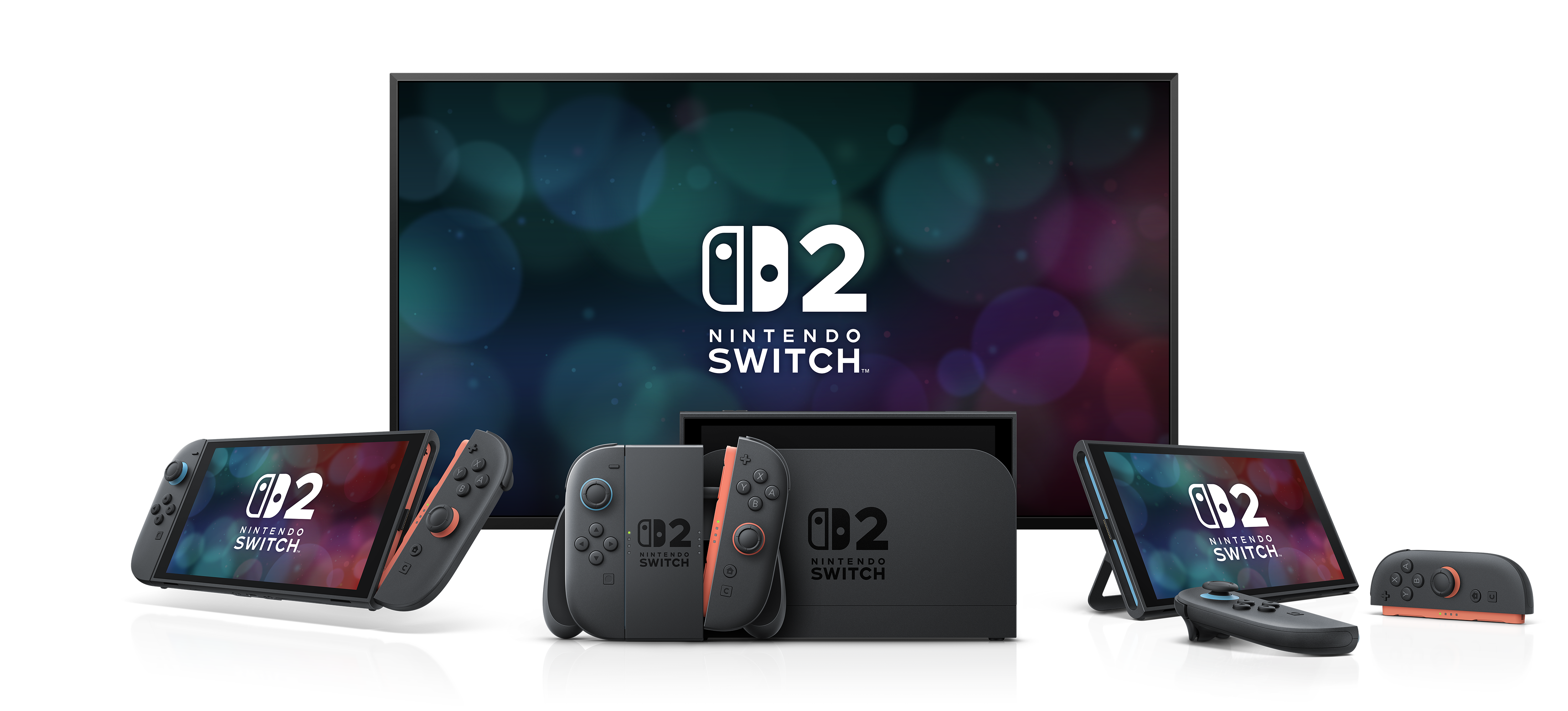
The rapidly rising costs of computer storage and memory is already playing havoc with Switch 2 pricing, it’s just Nintendo has been able to hide it.
That’s according to analysis from leading games consultant Matthew Ball, who admits he is “pretty frightened” by the DRAM situation, which has seen costs skyrocket due to the demand from AI companies.
“I think people aren’t recognizing that Switch 2 has done a pretty big price hike. Nintendo has just been able to hide it, but they might not be for much longer,” Ball tells us.
He adds: “Nintendo terminated the Switch 2 bundle with Mario Kart after three to four months. That’s really early. And I suspected it is primarily a DRAM thing. It’s $449 for the Switch 2. It’s $80 for Mario Kart. That’s $530 all in. [Nintendo] sells them for $500 as a combined unit, but if they deprecate that unit so that it’s $450, and if you wany Mario Kart, you now have to spend $80… they’ve done a price increase for the 85% of customers that buy Mario Kart. They now have to spend $30 more. That’s getting close to a 10% increase.”
What’s more, Ball observes that Nintendo has a ‘bring your own storage’ approach to Switch memory, which is a challenge families face after buying a console.
“SD cards are expensive,” he notes. “[You buy] a Switch 2 at $449, but you need to spend what used to be $49, and now is like $129, on an SD card. And you have three kids and you want them to all have their own… it’s not a $449 device.”
He says that one of the reasons PlayStation has avoided price rises, and was even able to discount over the Holiday window, was because of significant revenue growth on PlayStation Network. And this might be an avenue for Nintendo to explore going forwards.
“We’ll see if Nintendo Switch Online has a price hike,” Ball ponders. “I would suspect so. That’s one of the reasons why PlayStation has been able to keep their price flat. They’re now making $5.1 billion a year on PlayStation Network. Three years ago, they were making $3.4 billion. We may see Nintendo do the same thing.”
He continues: “We see a lot about the headlines on DRAM. We see a lot of deserved scrutiny among the gamers as to why they’re being so negatively impacted by trillion-dollar companies pursuing AI. I actually think that the impacts have been a lot more severe already. If you think that things are bad now, and we’re just seeing the quasi-responses… if this continues, it could get much worse.”
One of the areas that Ball thinks isn’t being discussed is the impact rising prices might have on existing customers. In particular, he’s wondering what might happen when people’s devices break?
“People are talking about, I can’t upgrade. People are talking about, I might not be able to afford GPU. But we haven’t really encountered the people who are like: ‘My GPU broke, and I can’t replace it.’ That’s going to be strange. What happens there? Something that used to be $200 is now $700.”
He continues: “You talk about PlayStation doing 140 million units, or the Switch doing 150 million… a lot of those units are replacement units, especially for the Switch. So, there are going to be some families that buy a $450 Switch, then their kid accidentally breaks it two or three years in, where you’re used to the price coming down… it sucks. And it’s expensive. It hurts a family. What happens when your PlayStation 5 that you bought in 2020 goes down and you can’t afford the replacement? And maybe it’s more expensive. That’s going to be weird. I’m pretty frightened on that front.”
One possible avenue for those who cannot afford to replace or upgrade their devices is game streaming. Now, streaming isn’t immune to these challenges, but it could prove to be an avenue for customers that want to keep playing the latest games, but cannot afford the hardware.
Ball has previously been skeptical over the prospects of streaming, but admits we may see a short-term boost given the current situation.
“There’s definitely an argument to be made that although the historical cost trade off of cloud game stream subscriptions versus hardware didn’t make sense… we might end up with a weird period where it does, at least some of the time,” Ball says. “I’m still sceptical because devices are now outstanding, even a low-end Android is still pretty remarkable. But we’ll see.”
Ball expects to see advertising in PC and console game loading screens
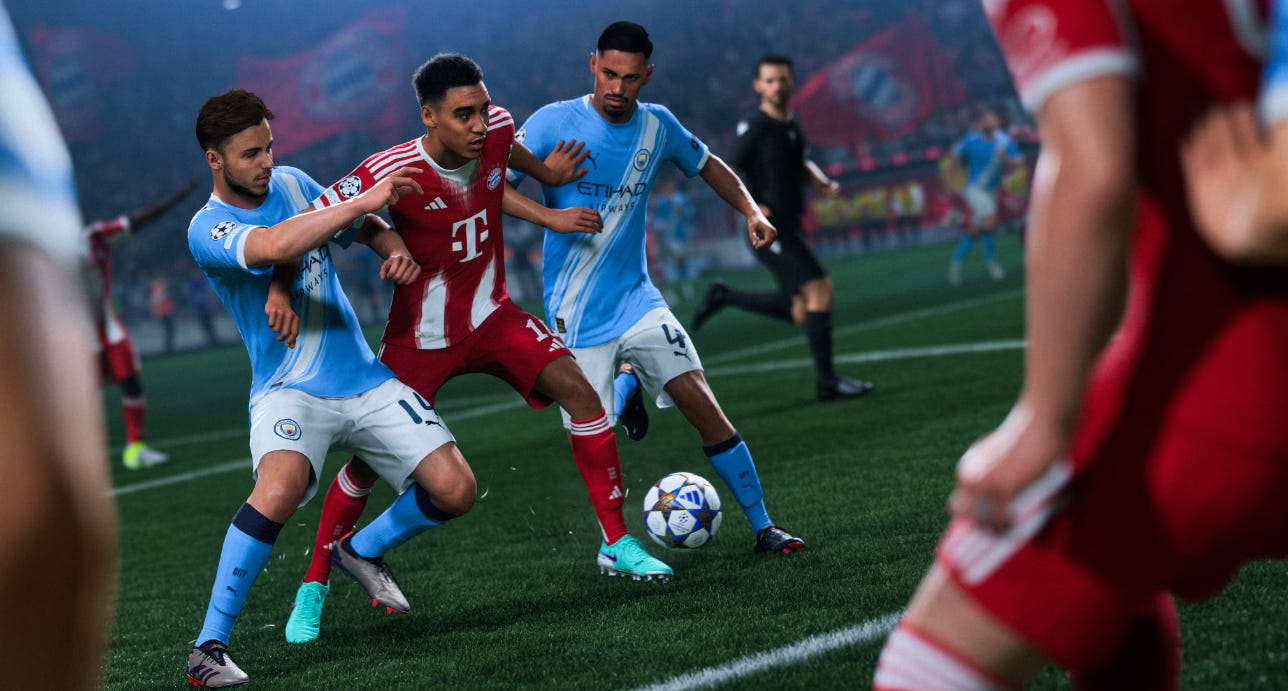
Matthew Ball devotes numerous slides in his State of Video Gaming 2026 report to in-game advertising.
It’s a huge market on mobile. Total advertising spend on mobile games last year nearly matched consumer spending on PC and console combined, and this year it may exceed it.
Mobile is a different beast to PC and console, of course. But Ball is convinced we’ll see advertising become a bigger part of PlayStation, Xbox and PC games.
“There are a few different truisms, right? Eventually advertising does reach all addressable surface areas. It does. We see it in an Uber app. We see it in Tinder. It’s now in ChatGPT. It’s going to be in Gemini. We see it at gas station kiosks. Every place that can have an ad does ultimately have an ad, because the user economics suggests that it should be there. Yes, it’s clumsy.
“When you take a look at Hulu or Peacock, and now it’s coming to Disney Plus and Netflix, they make pretty ample use of pause screen ads. There’s no reason why you can’t see a shampoo bottle when you’ve paused Bridgerton, and the same thing will likely come in some shape or form to PC and console
“The more important thing is the economic reality. If we say that audiences in the eight major markets [US, UK, Germany, Japan, Korea, Canada, Italy, France], which are 60% of all PC console sales globally, are not spending more, the costs are going up, we don’t want layoffs, we don’t want fewer games, we don’t just want the same games… we don’t want price increases. The money needs to come in one way or another.”
He points to news that EA are exploring advertisement slots for its sports games.
“2K said last year that two and a half billion games of NBA 2K are played a year. I don’t know what 2K is thinking, but EA has teams working on ad deployments. If we think very basically… that’s two and a half billion games that were match made and have some loading screen. That’s such an extraordinary amount of inventory. Would Ford Mustang or The Avengers or Old Spice pay some pretty material sum for that inventory with a targeted, valuable audience? Of course”
Advertisement

‘The industry understands things aren’t going to change’
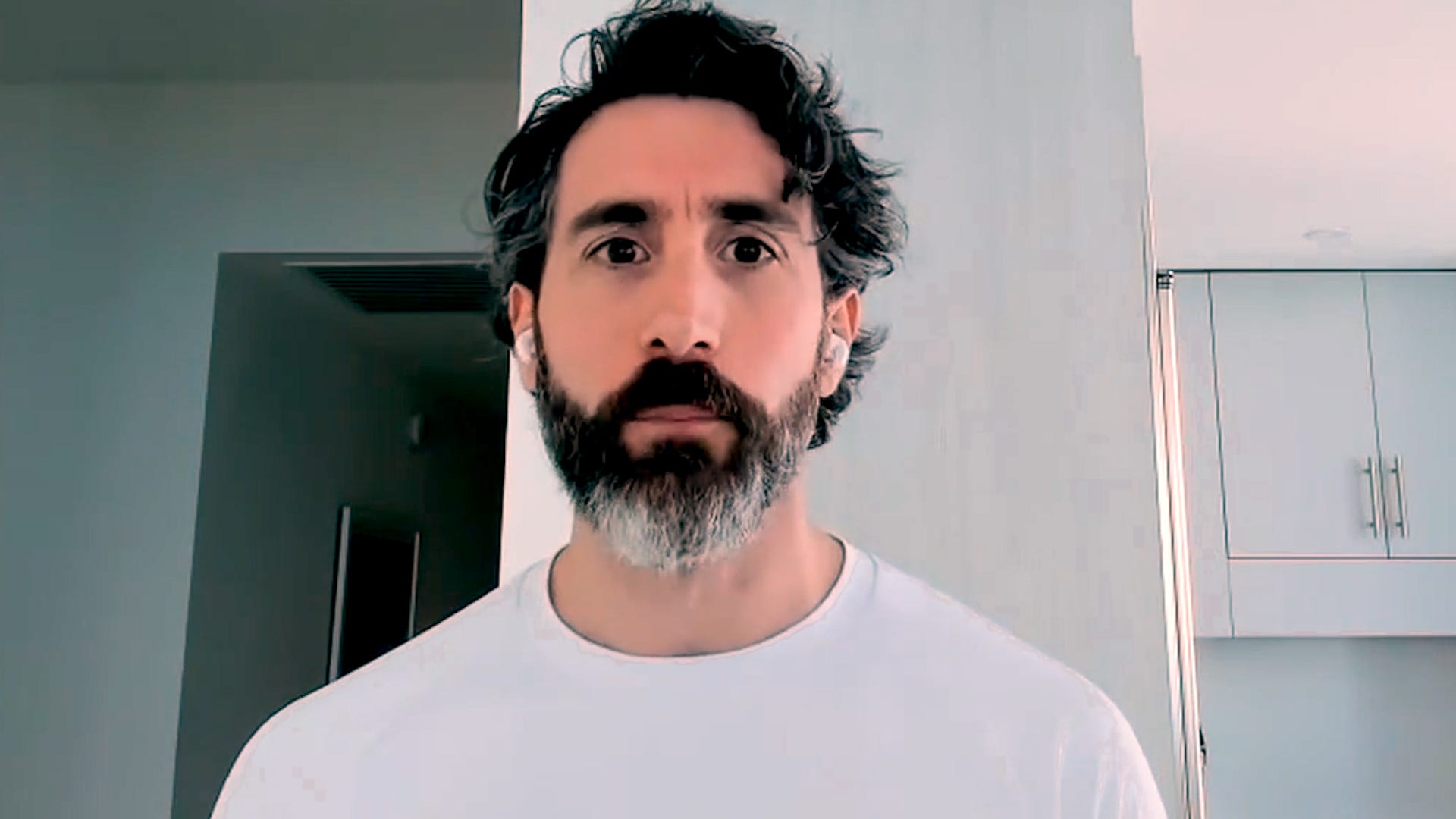
Ball’s report was a tough read. The message from the start was video games are losing the attention war. So, I dreaded asking: how does he feel about the future of the business?
“What we thought was ‘survive to 25’, ‘stick it out to 2026’… this is not a temporal problem,” Ball says. “It’s a restructuring problem. Where I am optimistic is when people look at that and say, we have to think differently about what we’re going to do and why.”
He continues: “What we saw in 2023, 24, 25, and now 26, most of those underlying challenges have gotten worse or not changed. The real tragedy, are the companies that weren’t able to change path. And I don’t mean that the management team refused to do so… it’s that if you started making a game in 2020 with a certain budget, you can’t necessarily pivot. You can’t we now understand what is and isn’t going to change, and therefore we can move towards it.
“How different are things likely to look five years from now? If the first part was digesting, recognizing, accepting, now it’s planning and responding. And if you say it’s going to be like it is right now, that doesn’t mean you can’t participate in that market, but it should change what you build, why you build it, at what cost structure and on what time.”
To check out our full interview, watch the video above.
More cuts at Eurogamer as IGN struggles with its Gamer Network acquisition
IGN has made more cuts to its Eurogamer team, The Game Business understands.
Senior editorial staff, plus the site’s video team, have been made redundant. One video host is being transferred to IGN.
It follows IGN’s ill-fated acquisition of Gamer Network in 2024.
Since the acquisition, numerous rounds of redundancies have been made across most of Gamer Network’s brands, which had included the likes of Eurogamer, VG247, GamesIndustry.biz, Rock Paper Shotgun, Outside Xtra, Outside Xbox and Digital Foundry.
VG247 is now mostly a guide’s operation, after its editorial team was redistributed. Digital Foundry bought themselves out from IGN and went independent last year. The majority of GamesIndustry.biz’s editorial team (including myself) took voluntary redundancy at the end of 2024 (some roles have since been replaced). And now more cuts have been made to the Eurogamer team.
The video game media landscape has undergone sizeable reductions in recent years, driven by changes at Google, a struggling ad market and a weaker video game business.
The Game Business Live ‘free’ for paid subscribers
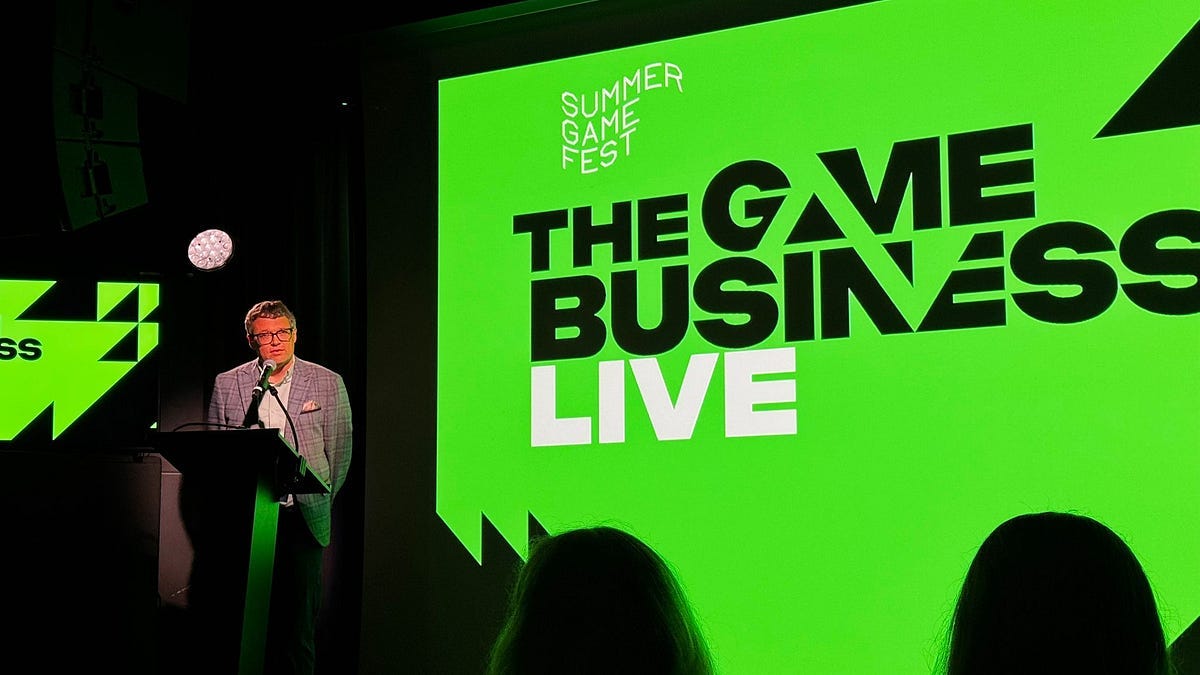
The Game Business Live will return to Los Angeles on Monday, June 8, as part of Summer Game Fest.
Taking place at The Grammy Museum, the leadership event will once again feature big names from the global video game industry.
Paid subscribers to The Game Business will be eligible for a ticket at no extra cost. Tickets will cost $100, which is the same cost as a paid subscription to The Game Business.
Paid subscribers also receive our monthly market report, our Monday morning Micro newsletter and podcast. And the occasional bonus episode, too. We’ll also give existing subscribers early access ahead of tickets being available.
More details on speakers and tickets will be revealed next month.
Meanwhile…
Skate developer Full Circle is changing its team structure, leading to an undisclosed number of layoffs.
Circana expects US game spending to rise 3% to $62.8 billion in 2026, driven by Nintendo Switch 2, Grand Theft Auto 6 and subscriptions.
Development veteran Clint Hocking has left Ubisoft following the company’s recent restructuring. He was the creative director on the upcoming Assassin’s Creed Codename Hexe. Head of content for Assassin’s Creed Jean Guesdon is now acting as the creative director.
French publisher and developer Nacon has filed for insolvency. The firm’s majority shareholder Bigben Interactive was unable to make a €43 million loan repayment. The publisher is now looking at how to reorganize its debt.
Marvel’s Wolverine, the highly anticipated PS5 game, is coming out on September 15, 2026. Two months ahead of Grand Theft Auto 6.
The new studio formed by XCOM designer Jake Solomon, Midsummer Studios, is to close. Solomon shared alpha footage of its unreleased game Burbank on social media.
Scopely is to acquire a majority stake in Istanbul-based developer Loom Games, the developer behind the hit mobile title Pixel Flow. Financial terms were not disclosed, but the deal values the business at $1 billion.
NetEase reported a 6.9% rise in overall revenue in 2025 to $16.1 billion. Its gaming segment in particular grew 10.1% to $12.1 billion.
That’s it from us today! Lots and lots going on. Thank you for reading.


