


Listen now on Apple, Spotify or YouTube
In This Edition,
Housemarque’s Ilari Kuittinen and Mikael Haveri on…
Growing its ‘genre’
Becoming a PlayStation studio
Going from 40 employees to 120
In April, PlayStation’s Housemarque studio launched Saros.
The new IP is typical of the 31-year-old Finnish developer. A challenging, uncompromising third-person, bullet hell, action game with rougelite elements. It received strong reviews upon release, just like the team’s previous game Returnal.
These games are famous for their fluidity of movement and satisfying controls. And they’ve found a dedicated audience.
“If you get into the flow state it starts to be what we call ‘bullet ballet,” Housemarque studio head and co-founder Ilari Kuittinen says. “It just starts to be second nature and you immerse yourself in this world.”
Returnal and Saros are niche games. But the hope is that they can become a significant niche. It’s not uncommon to see intimidating hardcore experiences break out and find a large audience. We saw it with Game of Thrones in TV, and probably one of the most famous video game examples is FromSoftware, the developer of Elden Ring.
Like Housemarque, the Japanese developer makes uncompromising games for a specific, hardcore audience. They’re notoriously difficult with dense, complex lore. But, over time, FromSoftware’s games have appealed to more and more people, to the point where 2022’s Elden Ring has become a mega hit, with over 30 million sales.
“FromSoftware have been doing a similar genre for a very long time and built up their fan base [over that period],” Kuittinen notes. “We have two unique games out. Returnal, Saros. It’s kind of a new thing that you need to educate the market about, so that people say, ‘Hey, these flow states are really cool.’”
Housemarque believes it’s all about continued education, game-by-game.
“FromSoftware’s journey from King’s Field to what they are today… We’re not presuming that we would be anywhere close to that,” Kuittinen continues. “But [like them] we will keep our core, keep educating the market that these are the coolest game you can play. That’s our goal.”
Brand director Mikael Haveri adds: “We will get there step by step.”
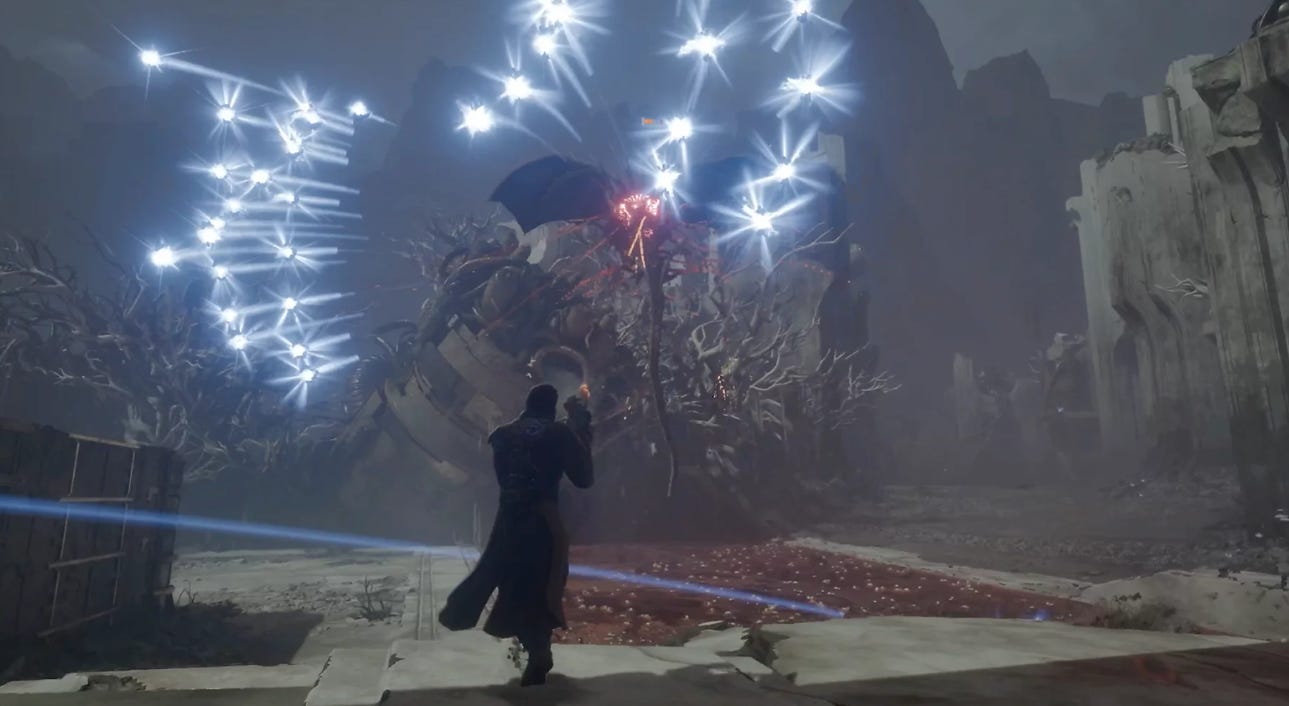
Housemarque isn’t at the FromSoftware scale today. Saros launched in April during a competitive window for video game releases, and although it found an audience, it didn’t light up the sales charts. But there’s still time, Haveri says.
“It’s funny, Returnal, when we shipped, it started gaining traction a bit later. A lot of the community got to unlock it a little bit more and then that tends to trickle down and people get more interested in it.”
Kuittinen adds: “This is just the start of the discussion and conversation with the gaming community. If you have played Saros, you know that there are a lot of things that we can do and tweak and add. We hope that we can keep on doing that for a while.”
“We are now truly a PlayStation first party as we have shipped the game.”
Housemarque had around 40 to 50 people around the release of 2017’s Nex Machina. It was also working on multiple projects. Today, it has a staff of nearly 120, and all focused on one game.
“It’s quite different jumping into this scale of doing one game at a time with this amount of people,” Kuittinen tells us “That’s been a big change in the studio to learn how to make these bigger experiences, and how to organize that.”
That, of course, means a lot of new people. And an influx of new faces can impact a studio’s culture and identity.
“We attract people who understand our design sensibilities and the things that we are trying to accomplish,” Kuittinen explains.
“There are some people who challenge the way we do things because of where they come from, like a Ubisoft with their thousand-people teams. They’re like, “Hey, you shouldn’t do it this way.” And we’re like, “Well, we don’t have a thousand people.” There are always some cultural clashes. We try to focus on the core and our gameplay-first mantra. Half of the people weren’t with us when we shipped Returnal. So, there are lots of discussions and different opinions. But eventually we prevailed to do our thing and not deviate from the core values.”
It’s not just a bigger team, Housemarque is now part of a bigger organization, too. The company was acquired by Sony in 2021. We were even speaking to Kuittinen and Haveri while they were at an internal PlayStation event in California. And although they’ve been working with PlayStation for 15 years, it’s been quite different being fully on the inside.
“There are a lot of things going on we weren’t aware of,” Kuittinen says. “Such as how much help there is from different parts of the organization, and we certainly embraced it with this game.
“Mikael said that we are now truly a PlayStation first party as we have shipped the game. We are here [in California] and peers from the best developers in the world are high-fiving us, giving congratulations and praising the game. It’s pretty amazing, coming from [1997’s] Super Stardust, a little game studio with 10 or 12 people, to where we are at the moment.”
When it comes to the next stage in the Housemarque journey, the immediate focus is on supporting Saros. But plans are afoot for what comes next.
“We just pinch ourselves… are we dreaming that we’re given this opportunity to create this thing? A new game, new IP with these resources?” Kuittinen concludes. “But we are quite grounded as well. We were 26 years as an independent, just managing to survive and moving from one game to another. Right now, we are talking about how to proceed with Saros and discussing with the community. But then, of course, what we should do in the future? There are interesting opportunities we’d like to look at that might not be at the scale of Saros. There are so many things that we want to explore, and we will find whether it’s possible or not.”
That’s it for today’s edition. We will be back on Thursday where we will be looking at the video games media, what’s going on at Xbox, and featuring returning guest host Lucy James. Until then, thank you for reading.


