


We’re celebrating one year of The Game Business by offering 20% off paid subscriptions until April 1. Paid subscribers receive a bonus weekly podcast, plus a monthly market report. Click here for more.
Listen now on Apple, Spotify or YouTube
In This Edition,
AdHoc Studio’s Michael Choung and Nick Herman on…
- Failing to find money
- The interactive narrative genre
- Self-publishing
- Comedy games
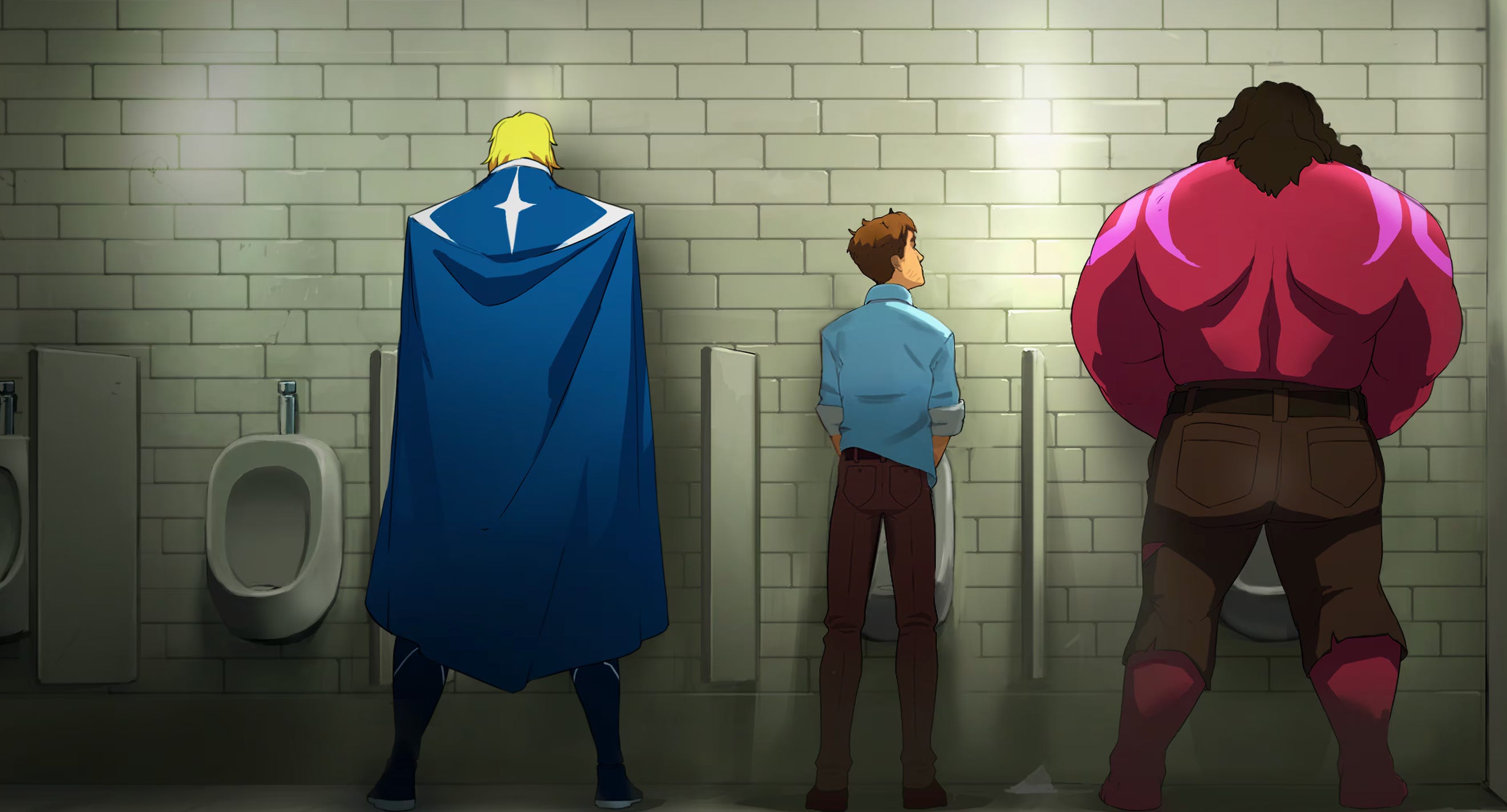
Dispatch has now sold four million copies.
If you missed this game, Dispatch is an interactive, narrative-based, superhero workplace comedy. It boasts an impressive cast from the worlds of Hollywood and video games. And it was the debut title from AdHoc Studio, which was formed by veterans of Telltale Games.
It also almost never came out.
“We’ve been going to all these conferences for seven years looking for money and trying to make the next six months work. It’s been hell,” says creative director and co-founder Nick Herman.
CEO Michael Choung adds: “Nick jokes that we could make a whole series of Final Destination movies based around all the near misses and existential threats that we’ve had to weather.”
Dispatch began as a live action project that got closed down because of the pandemic. It was repurposed as an animated game, found a publisher, but then that publisher dropped it.
By now the market had shifted. Investors and publishers had become risk averse, and Dispatch was seen as a gamble.
New IP is always a risk, but the bigger concern was the genre itself. Interactive narrative games just weren’t selling in big numbers.
“We were looking at it differently in terms of the size of the opportunity,” Choung says. “You’re not going to hear more cynicism around the limited appeal of these games than from people that actually make them. [But] we knew that these games had a ceiling that hadn’t been seen before. We knew that the opportunity was massive. So, we set out to prove that people are looking at it in the wrong way. It’s almost the thesis of the studio.”
But that was a challenging argument to make.
“We’re founded by two writers and two directors,” Herman says. “You talk to any [investor or publisher], and those are the least useful people in their minds: ‘Where’s your programmer? Where’s your designer? You don’t have anyone who worked on Halo?’
“Then you go to Hollywood and they don’t understand games. Both those conversations were difficult.
“Then when you finally get someone who does understand, they’re telling you: ‘These things aren’t selling very well anymore.’ And you have to explain why those other games that had a lot of money put into them - and you’re sometimes talking to the people who put the money into them - didn’t make it. You have to tell [these investors] they’re wrong. Then they don’t believe you and you start to wonder if you know anything.”
Ultimately, Herman says, they had to convince investors they were better than the other narrative game makers out there.
“It feels gross,” he admits. “But we had to push through the grossness to get here.”
There were other reasons Dispatch seemed risky to potential backers. The episodic model is hit and miss, so AdHoc “stopped telling people” that was the plan. It’s also a comedy, and the developer was repeatedly told “comedies don’t sell in games.” In fact, it almost discouraged them from going down that route entirely.
“We had such a stack of things that felt like risk, adding yet another one via genre felt egregious,” Choung recalls. “It took some time and convincing.”
Herman felt that investors were confusing comedy games with games that were trying to be funny, but weren’t.
“It’s not like there’s all these incredible, hilarious games that no-one is buying,” he says. “It’s a trust fall where we’re like: ‘We can actually be funny in our game’. But we had to prove it.”
“We knew that these games had a ceiling that hadn’t been seen before. We knew that the opportunity was massive.”
Dispatch wasn’t cheap to make, either. By 2024, the developer had 30 employees, it had an outsource animation partner, and a cast of world-famous actors. Choung described the budget as being “on the middle, lower-end of the AA space”.
But AdHoc did manage to keep costs down. Herman says that partners and actors read the script, saw the animation, and were eager to help, especially as this was a debut project. Of course, after four million sales, “a lot of those [fees] are going to go up,” he notes.
Playing a Critical Role
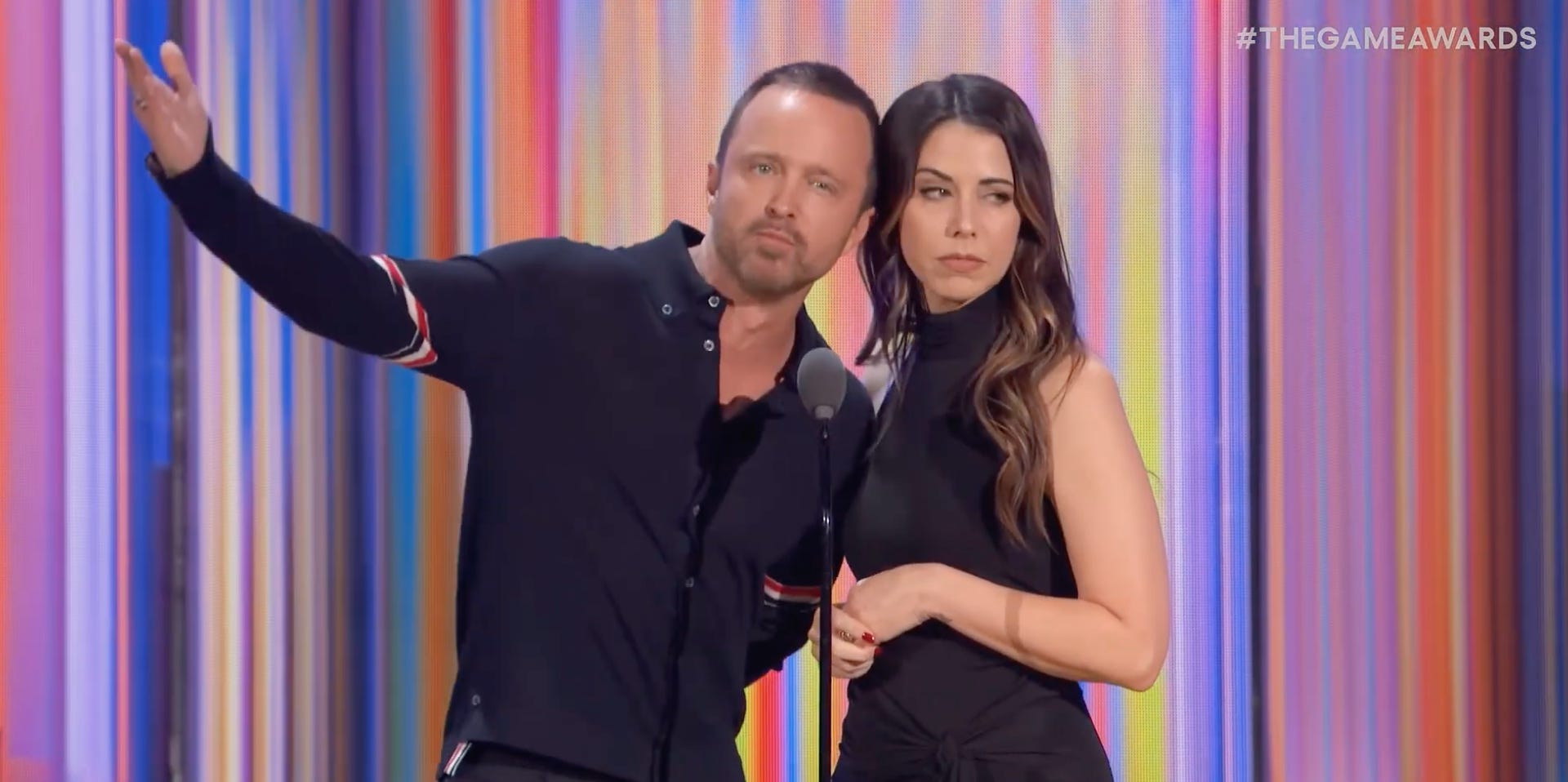
AdHoc needed a partner and Dispatch was proving a tough sell. But there was one interested party in the form of Critical Role, the famous online D&D series.
One of the lead actors in Dispatch is played by Critical Role’s Laura Bailey. Bailey was sent animation and scripts, and this was seen by Bailey’s husband, Critical Role CEO Travis Willingham. Willingham was eager to get Critical Role into the video game space and was impressed by AdHoc’s work, so he approached it about making a Critical Role game.
During discussions, the developer suggested that Critical Role might want to help it finish Dispatch first. But the conversation didn’t become serious until The Game Awards in 2024, when the game was revealed to the world.
“We were at The Game Awards without a deal,” Choung says. “And then, because of the TGAs and the impact that it had on wishlists, the conversation with Critical Role became much more serious and accelerated.”
Herman adds: “Without that show, I don’t know that Dispatch would’ve made it. We could see the end of the runway not too far into the next year, and we needed that huge spike in interest to generate confidence in investors and others. It was huge.”
“Without The Game Awards, I don’t know that Dispatch would’ve made it.
Critical Role came in with the funding, but it’s not a publisher. That meant AdHoc had full control over how to release and promote Dispatch.
“We ended in a place that was the best for the studio and the project financially and creatively,” Herman says. “We’d pachinkoed our way to the jackpot. It’s something that I hope other people hear, and that it provides them with a bit of hope if they’re in the middle of what feels like an existential crisis. Michael was the steady hand a lot of the time, as some of us were losing our heads and freaking out.”
AdHoc stuck with the episodic approach. It believed that was best for the experience and for generating conversation. However, it found in pre-release testing that players who got to episode four typically finished the whole game. So, it released two episodes a week in order to get people there quickly.
Ultimately, it all worked. But Herman found publishing a lot harder than he had anticipated.
“We are very glad we did it, but it was certainly a journey. We didn’t have anyone on our team who had ever published a game before. It was the naivete of… well, I was at Telltale for 10 years and they self-published everything, so it can’t be that hard. We were very humbled by that experience.
“There are a lot of upsides to being in control of that. I don’t know why we would ever go back to working with a publisher.”
He continues: “I wouldn’t cross it off completely, but it would have to make a lot of sense. We just announced we’re coming to Xbox. We now know how it works with these first party platforms. We have these relationships. We’ve done it before. Certainly, help is useful. And there are other pieces to publishing, like marketing. I was also the person building the store pages and hitting the button to set the game live. And there’s something that I really enjoyed about it… there’s an art to building a Steam page.”
Herman is keen to stress that AdHoc had support, whether that’s from agencies it hired, or publishers like Kepler and Supergiant that were eager to help.
“The industry is small in a lot of ways,” he explains. “You find out who the real ones are by surviving as long as we have. It’s one of the best things about the industry and things like GDC and other conferences, where people are just so willing to share and be helpful.”
Beyond the niche
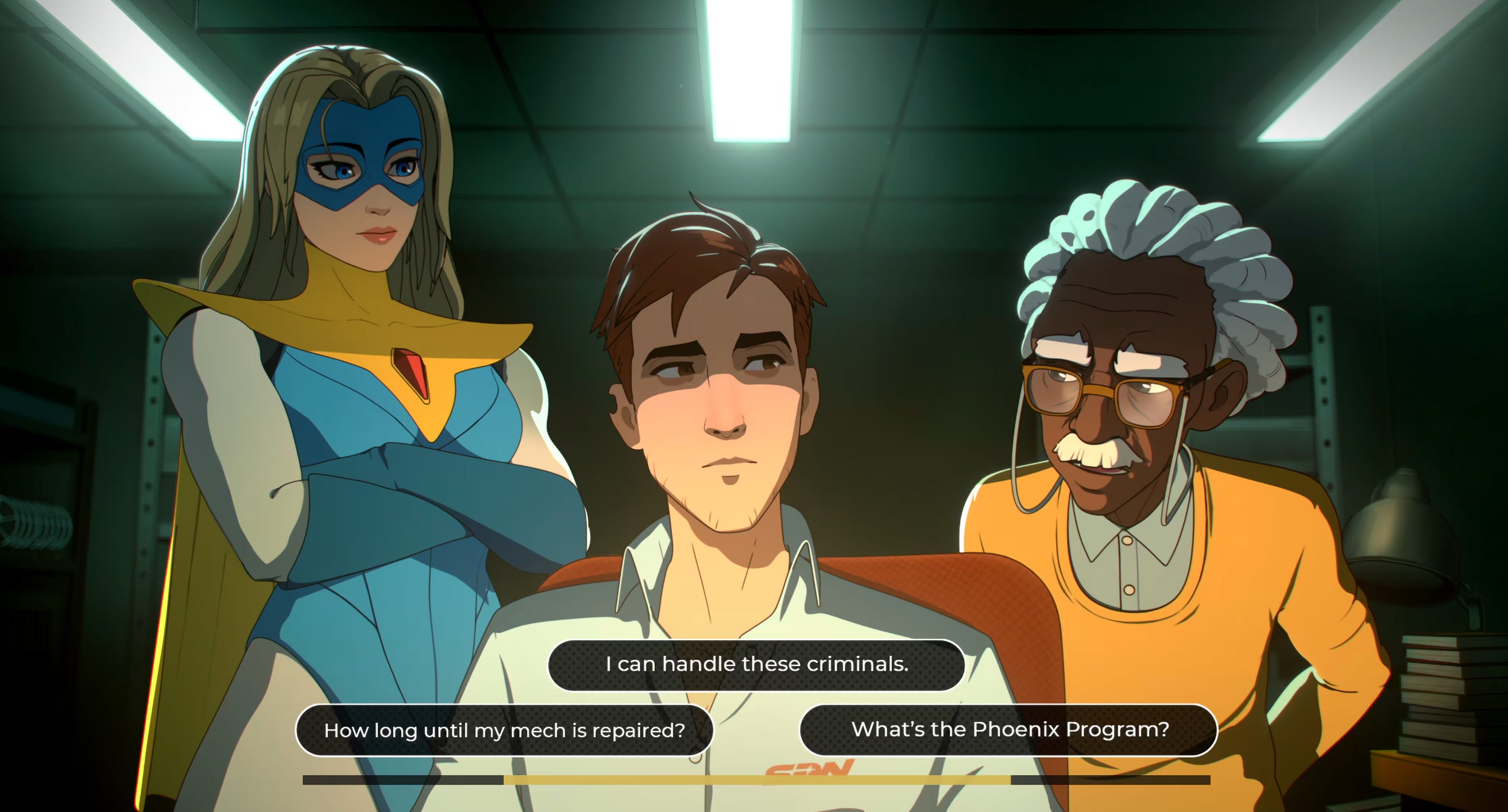
Herman and Choung don’t see Dispatch as a fluke. They believe the genre always had this potential. The game was a reaction to the fact their friends and families weren’t interested in their previous titles. They liked similar movies and TV shows, so why not these games? So they listened to the feedback and created something new – a game that empathises character over plot, with high quality animation and a likeable cast. They made a game for a specific group, and that specific group turned out to be over four million strong.
Regular readers of The Game Business have heard this story before. Helldivers 2, Clair Obscur, Space Marine 2 and Arc Raiders are all examples of what happens when you take a niche genre, focus on the audience, and deliver a strong product. Being risk-averse in today’s industry isn’t going to get you very far.
As for AdHoc’s next move, there’s a Critical Role game to make, plus some form of follow-up to Dispatch. The company is now looking to hire people, including in the publishing side. But when it comes to making games, it’s not just about adding more people.
“We think that’s a creative problem, less a production problem,” Choung explains. “The tendency for game studios is to think like production companies and not like businesses. They’re much more concerned about what a potential output is versus what the outcomes are. We’re making creative games. We don’t want to just build a studio that can make things. We want to make things that actually connect with people. To do that, you have to scale creative leadership before scaling [anything else].”
Herman concludes: “You don’t green light a film without a director and writer attached, right?”
Disclaimer: The Game Awards is run by Geoff Keighley, who is also the co-founder of The Game Business.


