


Listen now on Apple, Spotify or YouTube
In This Edition,
Embracer CEO Phil Rogers on…
Winning back trust
The plans for Fellowship Entertainment
Reducing development costs
Tomb Raider and Amazon
There are more changes happening over at Embracer.
With all the various spin-offs, divestments, closures, and lay-offs, it can be hard to keep up. The company has spent the last few years reshaping itself following almost five years of excessive expansion had left it with over $2 billion in debt.
Its latest proposal, on paper at least, makes a lot of sense.
Embracer adopts this decentralized model, where the companies it owns act largely independently. Now, it is looking to unite some of its best-known studios and IP into one standalone, centralized, public business called Fellowship Entertainment.
Under the leadership of current Embracer CEO Phil Rogers, Fellowship will be home to Warhorse and Kingdom Come: Deliverance, Crystal Dynamics and Tomb Raider, Dambuster Studios and Dead Island, Middle-earth Enterprises and, well, Middle-earth. Plus, many others.
“When we think about the business going forward and how do we win in the entertainment industry, the idea was to create a smaller group of studios where there’s more alignment in terms of games, genres, tech stacks and what not,” Rogers told The Game Business. “With IP being a core theme.”
“Certainly, we’ve got a collective way of looking at stuff.”
To illustrate this, RPG developer Warhorse announced it is working with Middle-earth Enterprises on a Middle-earth game.
“If there was one thing that really symbolizes what Fellowship could be, the right teams working on the right IP, then that was a great thing to announce,” Rogers said. “And the fact there was some online rumors about it, we just felt, let’s just say it. It really does symbolize [what we can do]. Of course, we wanted to also mention that they’re working on the next instalment in Kingdom Come. It was important to get that balance.”
He added: “We had something like 15 million likes on that Warhorse post over the course of 24, 48 hours. That’s a great response.”
During our chat with Rogers, we discussed rebuilding trust in Embracer, the return of Tomb Raider, licensing dormant brands like TimeSplitters, AI and future acquisitions.
You can watch or listen to the whole conversation above. Alternatively, read our write-up below.
“I hope trust is improving”
The Embracer story has been well told, but it’s worth a recap.
Between 2019 and 2023, it spent billions of dollars acquiring companies like Saber Interactive, Crystal Dynamics, the Middle-earth IP, Koch Media, Gearbox, Asmodee, Warhorse, Eidos Montreal, and on and on.
And then it all went wrong. The industry stopped growing. A $2 billion investment deal fell through. And Embracer was forced to sell assets, cut staff and close studios.
As a result, the Embracer name has become a byword for the excessive spending that characterized the video game industry in the early 2020s. And there’s understandable animosity from employees, investors and the wider industry.
“It’s been a very humbling experience,” acknowledges Rogers, who joined Embracer towards the end of its spending spree.
“There’s a lot of reflection on that in terms of how the industry changed and could we have not all predicted this?”
He continues: “We know we’re on a journey. Internally it’s about getting in front of [employees] and talking more plainly, which we’ve tried to do. People need to understand what’s going on in the industry, how it impacts us, what we’re doing, what do we want to do more of, perhaps what we want to do less of… so they understand some of the logic.
“I’d hope trust is improving. In the industry, if you poll 100 people [asking] what they think about Embracer… whatever that score is, I want it to be better in a year, two years, five years, and that’s the pragmatism. Lots of companies in this industry have had tough times, and then reset and rethink things, and then improve. We’re absolutely in that camp.”
Advertisement

“I don’t think with more money you find more fun”
In today’s Show, Rogers speaks extensively about managing development costs.
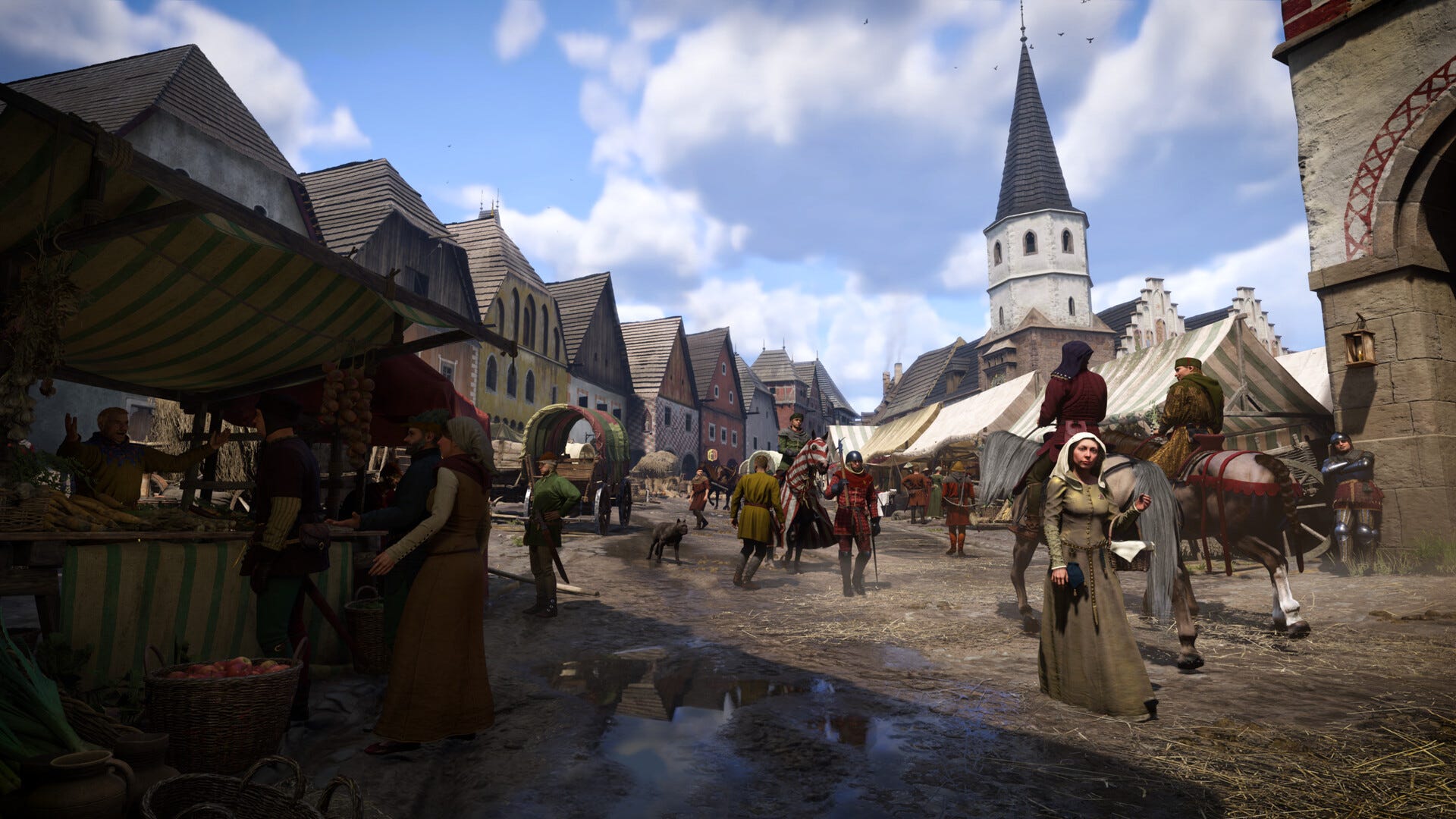
We discussed the success of Warhorse, the team behind the medieval RPG Kingdom Come: Deliverance 2. The title was a critical hit and has sold five million copies worldwide. What’s more, Warhorse is based in Prague in the Czech Republic, which is a considerably cheaper place to run a developer compared with California, where sister studio Crystal Dynamics is based.
“When you talk to studio execs, people know about man-month rates [the cost to employ one person for one full month] and how they vary across the world. But there has to have talent as well,” Rogers explained.
“I really feel there’s a resurgence now of European-based development talent. Great people in California can make great games, but when your man-month rate is that much higher than the rest of the world, you’ve got to really make sure those skills are at that level of differential.”
A cheaper location can help. But Rogers said that keeping costs under control is more about establishing the underlying systems with a core team.
“I don’t think necessarily with more money you find more fun,” Rogers continued. “I remember your interview with Owen [Mahoney, former Nexon CEO]. I spent time with Owen at EA, and Owen talked about his reflection on [hit shooter] Arc Raiders, and once they knew they had those underlying systems in the game, they felt confident that they could manifest something that would [work] when people got their hands on it. We all understand in the industry that if you’re building without those systems, costs can easily get out of control.”
Meanwhile, not all games need to be huge AAA endeavors. Rogers pointed to a series of Tomb Raider spin-offs that he oversaw at Square Enix.
“We called it the Lara Croft series,” he remembered. “Lara Croft and the Guardian of Light was made with 20 people in about a year. They took creative decisions like… it’s very hard to get the camera right, so let’s go isometric. That solves the problem. And we wanted to introduce co-op. Introducing co-op into a tens of million-dollar development would be risky. But doing it in a way where you could do it in a 12-month production was [more manageable].”
What about AI tools? There’s a lot of excitement that AI could speed up teams and therefore drive down costs.
“It depends on how teams want to utilize AI,” he said. “There is pre-production, production, post-production. Post-production is where you’ve got your game, now you’ve got to debug, you’ve got to localize, and really polish it out. [With AI tool] do you use the same amount of time but just do it deeper and to a more polished state? Or do you quicken it up to take time out of delivery?
“Pre-production’s a great one. If you can concept and get to pre-production prototyping quicker, do you do more? Do you take more shots on goal? Could you do 10 prototypes versus historically when you might have only had the budget for one or two? We’ll have choices here game-by-game and team-by-team.”
Embracer eyes Amazon Luna for Tomb Raider
Amazon’s decision to back out of video games has seen it close studios, cancel projects and end publishing arrangements with numerous developers.
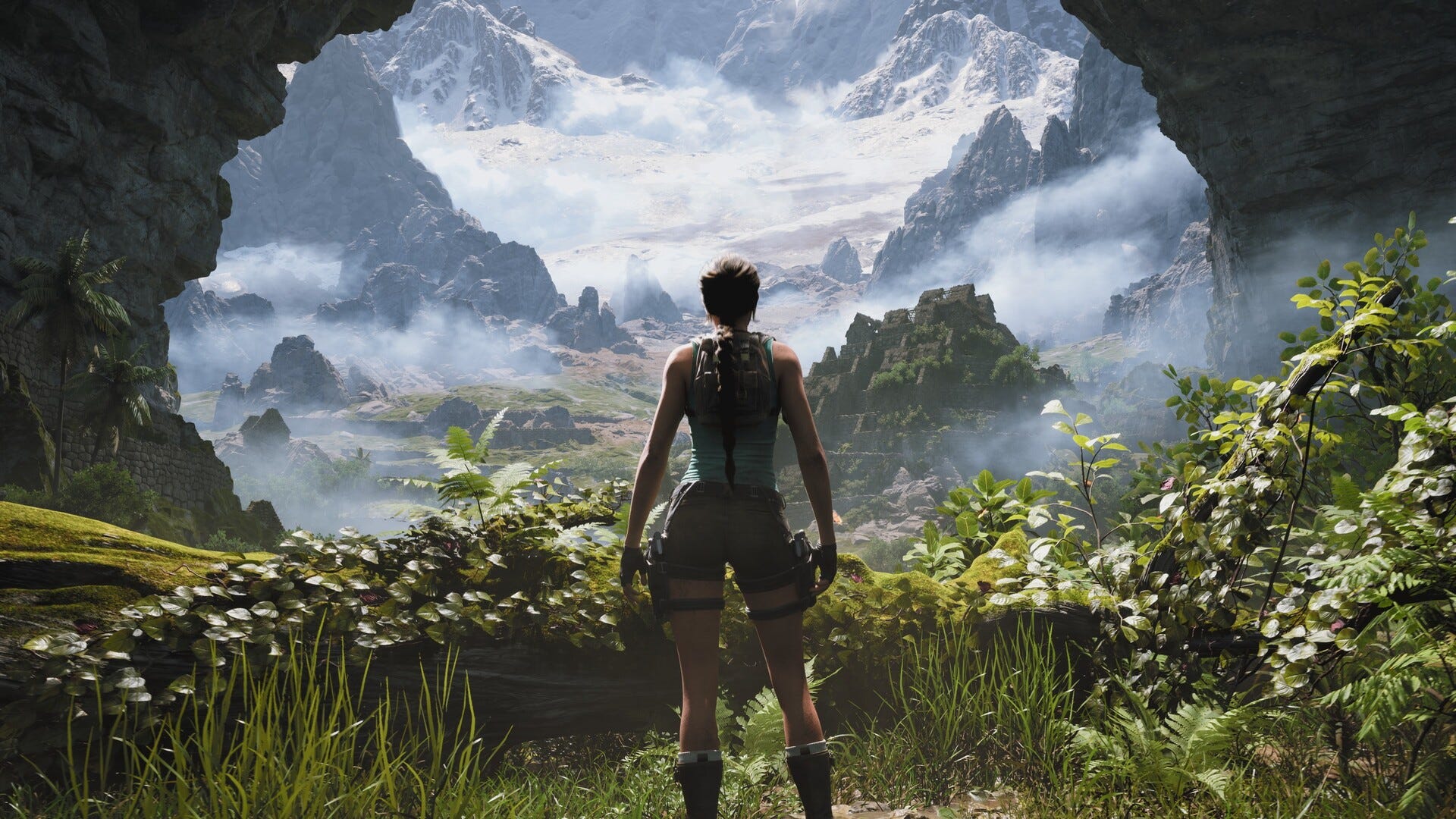
But one partnership it is holding onto is Tomb Raider. Amazon is publishing this year’s Tomb Raider: Legacy of Atlantis and next year’s Tomb Raider Catalyst, which are being made by Embracer’s Crystal Dynamics and Flying Wild Hog teams.
Rogers admitted that Amazon’s decision to scale back has had an impact on these projects, but it’s not all been negative. In fact, it’s brought Embracer closer to the people running Amazon’s games streaming platform Luna.
“It’s had a massive change in terms of who we’re connecting with,” he says. “But in some ways, it’s just shortened some cycles.
“Luna is interesting. I do think about how the gaming industry is going to expand, and streaming could really offer something. So, the fact [Amazon Games Studios and Amazon Luna] were quite separate before, but now it’s run as one group, means we’re closer to the Luna leadership, which has been helpful.”
This is particularly interesting around the upcoming Tomb Raider TV show, which will air on Amazon Prime Video. Amazon could cross-promote both the show and the games, and make them accessible side-by-side. It’s something it attempted with the recent Fallout TV series.
“There will always be dedicated machinery,” Rogers said. “But for a lot of people, coming home, turning on a TV, and then seeing an option between watch this or play that... isn’t that really cool? And then if you want to play, you just pick up your controller of choice.”
Embracer is open to a TimeSplitters remaster pitch
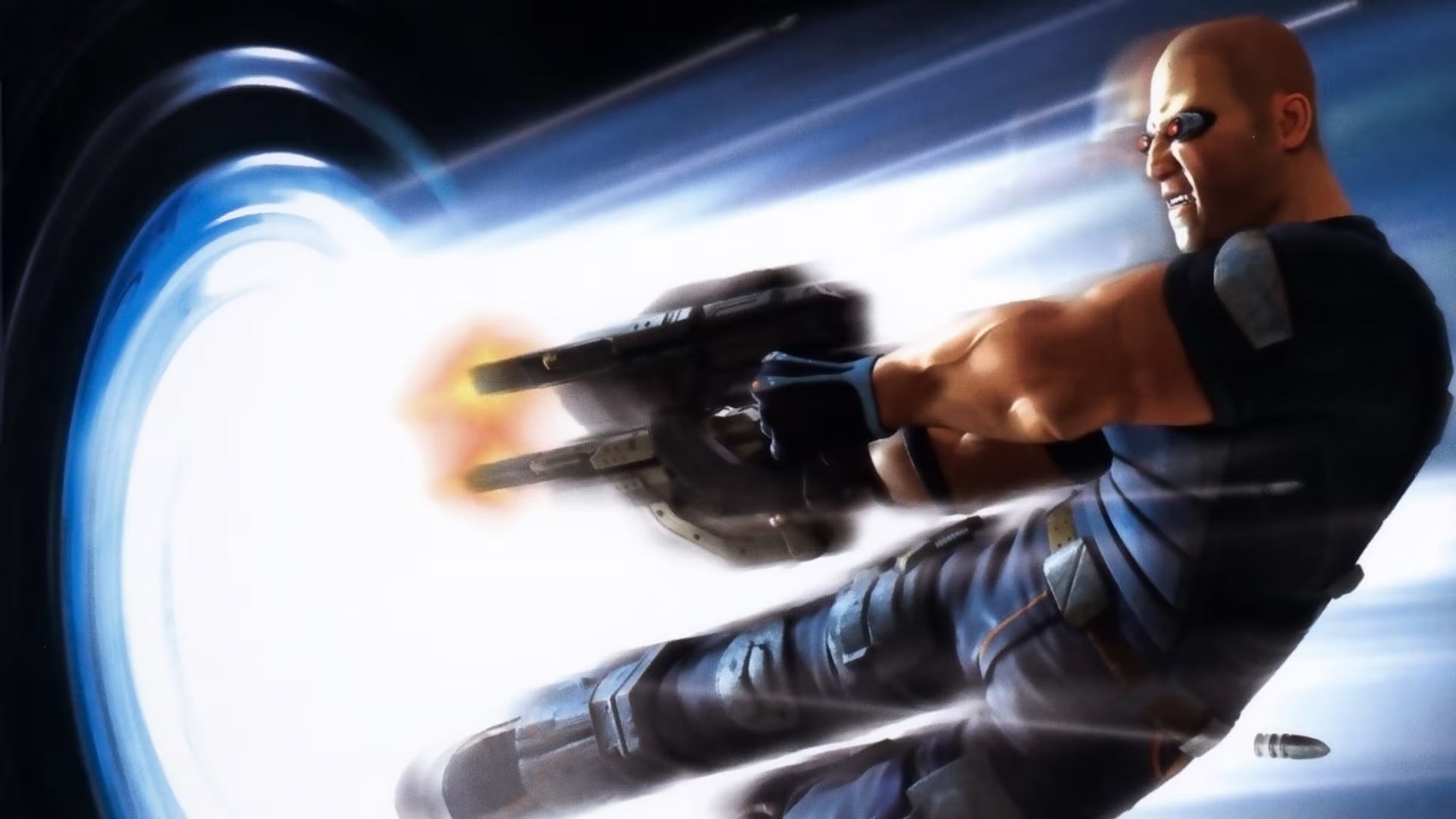
During its announcement last month, Embracer said it wants to licence out its dormant IPs to external teams.
These IPs include Saints Row, Deux Ex, Legacy of Kain, Red Faction, Thief and TimeSplitters. Companies can license the IPs, build new games, create film adaptations, or even just remaster or remake older titles.
“We can’t work on everything ourselves,” Rogers said.
“I feel intuitively that licensing for this next 10-year chapter could be interesting. We could find other teams who say, ‘I’ve got this idea’, ‘I’ve got a treatment.’ This happens in other entertainment forms, right? You get treatments, and you work on that basis. Whether it’s remakes, remasters, a new treatment or an adaptation in some way.”
Embracer may acquire again, if there’s money
During its earnings, Embracer discussed the prospect of future mergers and acquisitions.
This is more for the Embracer side of the business, Rogers said, as opposed to the Fellowship side. And he insisted the firm has learnt from past mistakes.
“It’s certainly with learnings,” he said. “Funding for any M&A would come through organic cash flows, which is really important to mention. The Embracer [segment] has a lot of businesses that have created good positions. Some of them are very specialized. And again, if M&A can help grow those businesses, then it’s on the cards.”
He added: “Going back to my time with Owen [Mahoney] at EA. He used to talk a lot about discipline in the business and margin structures. EA back then used to have a very clear capitalization, so what was capitalized and what was expense. Your P&L was basically more in line with the cash flows. If you’re making profits, you’re making cash. And that will give us an opportunity to look at M&A as an option.
“The original Embracer thesis is interesting, which is how you create an umbrella for entrepreneurs. There’s common ownership with some controls and guidance, but let these people get on with their business. And that’s [still] the thesis but evolved now for 2026, with tons of learnings.”
That’s it for today’s edition of The Game Business. Join us on Thursday for our Summer Game Fest preview edition. Until then, thank you for reading.


