


Listen now on Apple, Spotify or YouTube
In This Edition
Owen Mahoney on…
- Lessons from Arc Raiders
- The end of AAA
- The AI future
- Multiple game industries
When Owen Mahoney was given the chance to invest in (and eventually buy) Embark Studios - the developer behind Arc Raiders - he didn’t hesitate.
“It was the easiest ‘Yes’ I’ve ever said,” he tells The Game Business.
But the investors behind Nexon, the company Mahoney led for ten years between 2014 and 2024, were not so certain.
“I got a lot of pushback from investors and Board members. Certainly, a lot of the analysts I talked to were like, ‘what the hell are you doing? That’s crazy.’
“But in their defence, there were a couple of things., Number one, the mental models represented by what Embark did are completely different than most of the mental models operating in AAA online game development today. And usually when you’re buying a company, especially for large numbers, you want to buy one that’s profitable. Not only did they not have any profit, they didn’t have any revenue. Not only did they have no revenue, they didn’t have a product. And they were three years away, by our now clearly optimistic estimate, of coming out with a product.”
On paper, it sounded like a questionable deal. But Mahoney had additional insight his investors and analysts lacked. Embark is made up of people from EA’s DICE studio, the developer behind the Battlefield series, and it’s led by former EA exec Patrick Soderlund. In his past life running corporate development at EA, Mahoney played a big role in EA’s acquisition of DICE and the hiring of Soderlund.
“This is a fabulous group that are operating at a level that people don’t really operate in our industry,” Mahoney explains. “They’re very, very rare.
“And they [wanted to understand] how Nexon made games like MapleStory and Dungeon Fighter grow for 20 years. How is that possible? It was a real yin and yang where their strengths were things that we wanted and our strengths were things that they wanted. That’s what you look for in M&A. So, it was an easy decision. But it was very hard from the outside to understand it.”
Embark: A Case Study
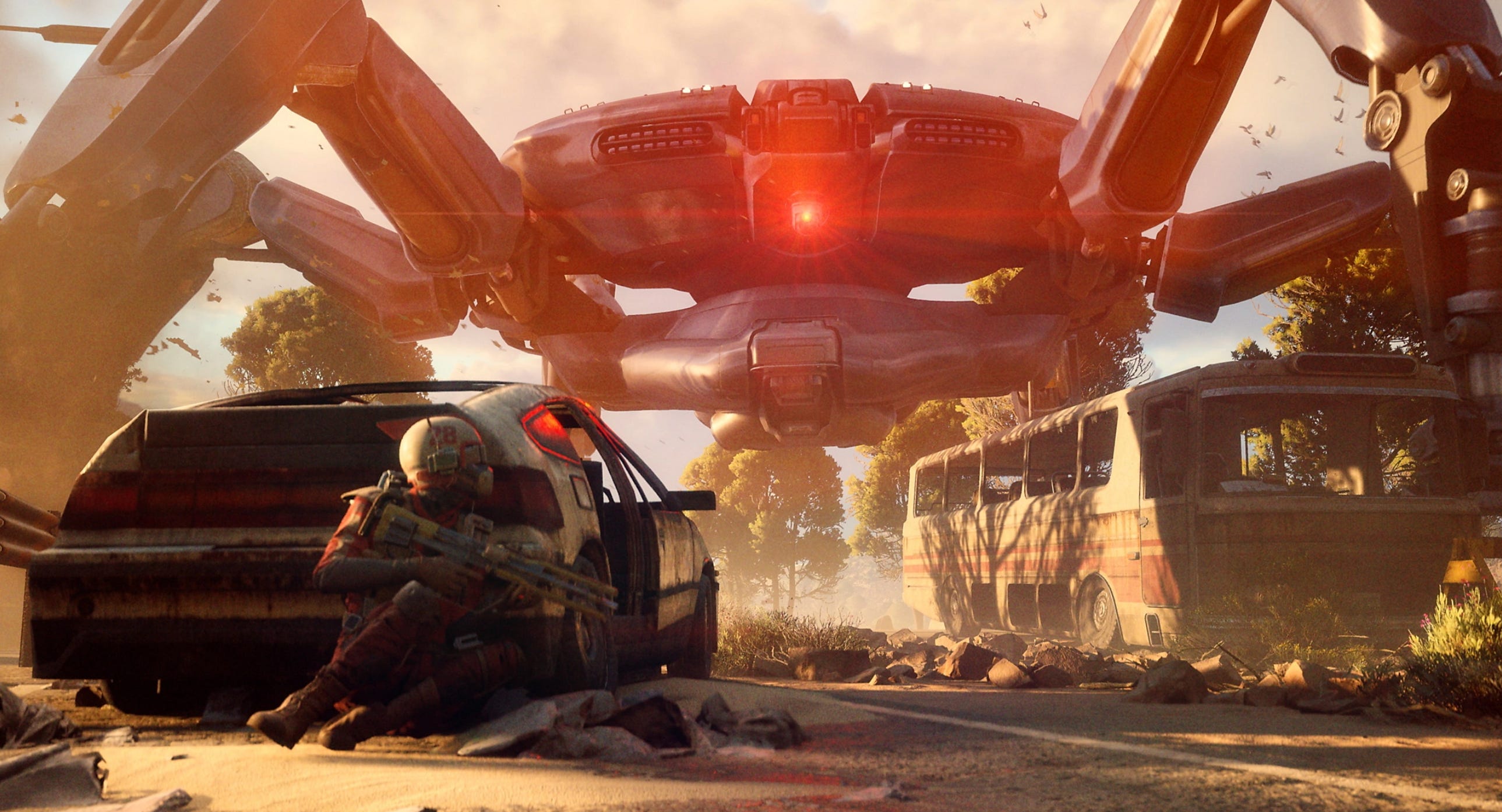
When we interviewed Patrick Soderlund back in October, we discussed the studio’s first game, The Finals. The title launched and almost immediately reached 20 million downloads, but within a month the player count had collapsed.
Embark panicked, but Mahoney and the Nexon team did not. They had seen it all before. Nexon’s MapleStory had a similar journey, and Mahoney also points to Apex Legends and No Man’s Sky as other high-profile examples. The important thing was that The Finals was fun.
“It had some issues, but they could identify them, and we know that if you fix them, it usually works out really well,” he says.
Of course, if a game isn’t fun, no amount of patience or persistence will change that. And that’s why the original version of Arc Raiders (which was meant to be Embark’s first game) was scrapped mid-way through development.
Re-starting development is a tough thing to do, but Embark had avoided excessive hiring, and had actually spent the first nine months building tools and pipelines in-order to make games faster. So, it was a costly decision, but not too costly.
That is what makes Embark such an important case study. This isn’t a small indie that somehow captivated millions with a cool idea. It’s a mid-sized studio, owned by a publisher, which had failed (twice) and managed to recover.
“Games are systems and Embark understands that at their core,” Mahoney says. “They could say, ‘well this is a really fun system.’ Or ‘this system isn’t quite working for me.’ Once you have that in your mind, then you start making decisions very quickly about things.
“You don’t have to spend tons of time on really expensive graphics and character art. Those things are secondary to the core gameplay that you’re trying to get to.
“Also, they made very good technology decisions. The world you’re running around in [in Arc Raiders] is not designed by an artist. It is modified by an artist, but it’s laser scan data from satellites, and then they bring it into their tools and modify it. They didn’t spend all that time and effort painting a lot of leaves on a lot of virtual trees. They put their time and effort into the game. It’s a whole different way of thinking about game development. And that is more core than any hack or trick that someone can emulate.
“We as an industry will all be a lot healthier if we thought about these things a lot more.”
Powered by people
Mahoney is talking from a position of success. He backed Embark and it paid off. But did he really do anything different to anyone else? Concord was also a game made by former leaders of a successful studio (Bungie), but that one ended in disaster. And there are numerous studios that were spun up by former Call of Duty or League of Legends veterans that haven’t managed to deliver an Arc Raiders. So, what’s the difference?
“The examples that you just gave were, ‘we bought this company because five years ago they made some game, So therefore they’re good.’ It doesn’t work that way at all,” Mahoney explains.
“One of the reasons why game companies cannot be successfully rolled up, as Embracer found out to the horror of its investors, is that game companies are really just collections of people.
“If we use Patrick as an example. I had known him for a long time. I had brought him into EA when we bought DICE. We kept in touch and I knew that he really wanted to do something different, so his head was in the right place. I knew his team was sick of making Battlefield and wanted to do something different. They had something to prove.
“The industry sometimes gets that wrong. They get so excited about the banking deck. People start counting up the money. They talk about the integration of the phone and database systems and all that. And all this stuff that really matters, where the value is created, is just completely forgotten. It doesn’t happen everywhere, but it happens a lot. The M&A that I’ve seen go sideways has been about those sorts of mistakes, and not focusing on where the real value is created, which is the developers.”
AAA woes
Mahoney has started publishing his thoughts on the state of the video game business via his blog. I’ve had numerous analysts and industry leaders forward these onto me over the past year. And one of the topics he keeps coming back to is the structural problems facing AAA game development.
“Structurally the industry is in really bad shape. We’re sort of at the end-of-days.”
“Let’s play game company tycoon,” Mahoney begins. “You’re sitting in the CEO seat. You’re running a $23 billion company. And you have to make a decision, in a very short period of time, to greenlight a project. And you know, if that new project doesn’t do well, you’re going to be explaining to your Board why you burnt $300 million in company cash.
“You get one of those mistakes with a Board of a company that size. If you do it again, they’re going to be calling openly for your head, and by the third time you’ll have an activist investor. Every CEO who runs a public game company is in that exact situation.”
This creates an environment of risk-averse CEOs funding familiar projects at huge cost.
“I think that the AAA industry is structurally at its end. And without a serious rewrite of the ways we go about making games, it’s going to end in more disaster than it has already,” Mahoney says.
He continues: “How come it was so unobvious that Embark was a great deal for Nexon until about three weeks ago? What does it say about the industry? It reminds me of when Minecraft came out of nowhere and every single belief, bromide and cliche that we had about high-fidelity graphics was blown out of the water once again. Clash Royale came out and suddenly everybody realized that you could have synchronous online PVP play, whereas the day before people said: ‘Nobody wants that on mobile’. These are the things that the industry grapples with. They believe one thing until someone shows them different. That is an indication of where the industry’s head is at right now. Everybody’s so busy trying to execute on today’s business, they’re having a real hard time thinking about tomorrow’s business.”
Of course, it hasn’t escaped the industry’s notice that many of the breakout games of the last 24 months haven’t come from big AAA studios. Whether it’s Arc Raiders, Clair Obscur, Peak, REPO, Schedule I… the biggest new hits of the day are not costing $300 million to make.
And this gets to one of the other challenges that Mahoney talks about. If we are saying that the real innovation is coming from small and mid-sized studios. And we’re also saying that publishers and platform holders are risk-averse… then who is going to fund those projects?
The funding has dried up somewhat, but Mahoney is convinced there’s a real opportunity. This would normally be a ripe market for venture capitalists, who love an industry in need of disruption. But there are not many VCs with game industry knowledge and it can feel risky, especially as it might be years before they find out if the thing they’ve invested in actually has a chance of success.
“You could go five years, spend $50 or $100 million dollars, and not have an indication of product market fit,” Mahoney admits. “You might not even have a product market fit for a year after it launches, right? It launches up, then it doesn’t do well, then you fix it… and you’ve got No Man’s Sky.”
This funding situation has created a big opportunity for indies and organisations like Roblox, Mahoney says. But it means there’s very little in the middle.
“[Game makers] get this sort of Sophie’s Choice. They can either build something as an indie without much experience, or go work in a factory, which is essentially what working for those big AAA developers looks like. It’s a terrible choice. And then you go work in a factory and work on one tiny piece of a game, and it’s not fun. Structurally the industry is in really bad shape. We’re sort of at the end-of-days.”
AI to the rescue?
“I believe that the industry will probably triple in the next five to seven years”
Mahoney’s prognosis about the game industry sounds bleak, but he actually believes it’s about to undergo a major growth period. And the reason for that optimism is AI.
It’s a sensitive subject, and he’s cognizant about the concerns around AI. He is frustrated at game execs who see it as a cost-saving measure. And he knows AI has an “unbelievable ability to create a lot of slop.”
“But so does Photoshop,” he adds. “And I think the market will do what it’s already been doing, which is rejecting slop and bad product and only demanding good product.”
But for Mahoney, AI is akin to the internet. And just as online gaming transformed the game business and brought in new players, he expects AI to do the same.
“I continue to believe that the industry will probably triple in the next five to seven years,” he concludes. “Just like every major wave [of technology] has had a major positive impact on the video games industry. The nature of the medium itself is changing, and that’s very, very good for us.”
That’s it for today’s edition of The Game Business. If you’d like to hear the full interview with Owen Mahoney, do check out the video at the top. We’ll be back Thursday for our News and Analysis edition. Until then, thank you for reading.


