


Listen now on Apple, Spotify or YouTube
In This Edition
- VR industry reacts to Meta
- What could Steam Frame do?
- Will Gen Alpha save the sector?
Hello there!
We thought we’d have this edition a bit earlier for you, but then Ubisoft went and announced more cuts, cancellations and changes. So a hasty re-record was required.
It’s been a ceaseless, miserable, slow process for the Ubisoft folks as the company tries to catch-up with an industry that has, in many ways, left it behind. Let’s hope this is the last of it.
Today’s edition isn’t really about Ubisoft. It’s our VR special, where we react to the news that Meta is scaling back its investment in virtual reality. The VR sector has come to rely on Meta for much of its player base and revenue, so this news sounded existential. But is it?
On the Show today, we welcome VR specialist and analyst Cassia Curran, and Owlchemy Labs (that’s the Job Simulator lot) boss Andrew Eiche, who discuss where we are with VR, and how it might survive.
Of course, if you prefer to read, I’ve selected some of the key takeaways in the handy article below.
Enjoy!
Is it game over for VR?

Last week, Meta announced a series of cuts to its VR division. It announced that it was closing three VR studios: Twisted Pixel (Deadpool VR), Sanzaru Games (Asgard’s Wrath) and Armature Studio (Resident Evil 4 VR). In total, around 1,000 people are affected.
Reality Labs, which is the name of the division that VR sits within, has lost around $70 billion since 2020. And now Meta is pivoting its focus towards wearable tech (like augmented reality glasses) and AI.
“Meta’s goals are not aligned with the XR industry,” says Andrew Eiche, who runs Job Simulator developer Owlchemy Labs.
“Their goal is not to make XR as great as it could possibly be. Their goal is not to make the best industry. Their goal is to make social platforms and their goal is to do this in whatever way they can. So if suddenly the investment shifts to AI, XR hurts. And if they are the only game in town that’s making any real money, they control the fate of all these developers.”
“Meta’s goals are not aligned with the XR industry. Their goal is not to make XR as great as it could possibly be. Their goal is not to make the best industry.”
Cassia Curran, the founder of the Curran Games Agency which specialises in XR and VR, adds: “Meta’s not interested in a game console business. They don’t want a Nintendo Switch-size business, they want an iPhone size business. That’s what they’re going for. Games is a sort-of stepping stone.”
So what does this mean for the future of VR games? Does it even have one? I sat down with Curran and Eiche, to find out.
VR is in for short-term pain, but it will not die
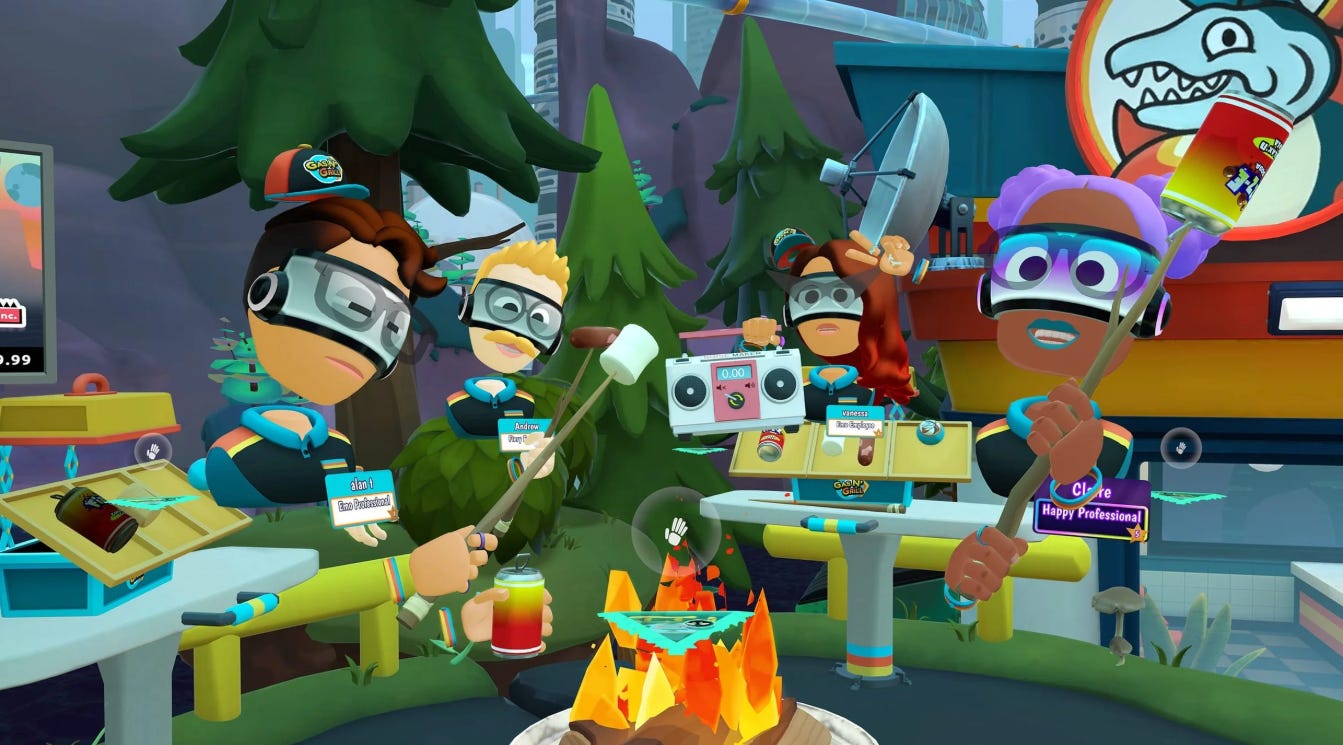
The VR industry has become reliant on Meta. Curran estimates 70% – 80% of VR revenue comes from the Meta Store.
“In the short term, [Meta’s decision] is concerning to me,” admits Owlchemy’s Eiche. Owlchemy is one of the more successful VR studios. It just announced that Job Simulator has sold six million copies, and last year’s Dimensional Double Shift has now hit one million installs.
“But long term, less so. There’s a bunch of interesting devices and form factors coming down the pipeline. The problem is we have to survive the short term to get to the long term.”
He adds: “It’s great to see that we’re starting to get competition, with our parent company [Google] doing Android XR, and the Steam Frame coming down the line. We’ve had all our chips in one basket as an industry, and if that company decides that they’re done, then we’re in a bad spot.
“So that’s why the long term is brighter because there is legitimate competition coming. We all just have to make it through 2026 first.”
Curran insists: “VR is not dead. VR games are too cool to die. There is a reasonably-sized core of VR gamers who are really passionate. There’s also, in the last year and a half, a new audience segment. The Roblox generation have really jumped in. The Quest 3S headset was very affordable and data suggests that 33% of US teens own a headset. So, [VR] has quite deep market penetration amongst a certain age group. And you see that with how certain games do well, and certain games haven’t.”
Gen Alpha is key to VR’s future
Curran’s observation points to the big hope for VR developers, which is that as Gen Alpha grows up, that will result in more success for VR.
“Gen Alpha is a VR native generation,” Eiche says. “VR is to them what tablets were to Gen Z and what laptops were to Millennials. It’s a part of their daily lives. Is it a small industry? Yeah, it’s small. But in the early eighties for gaming, you had the people who had the games, and the people who would go to their friend’s house to play them. And you see a lot of similarities here. As these kids grow older, it’s going to expand.”
There’s uncertainty around the headsets
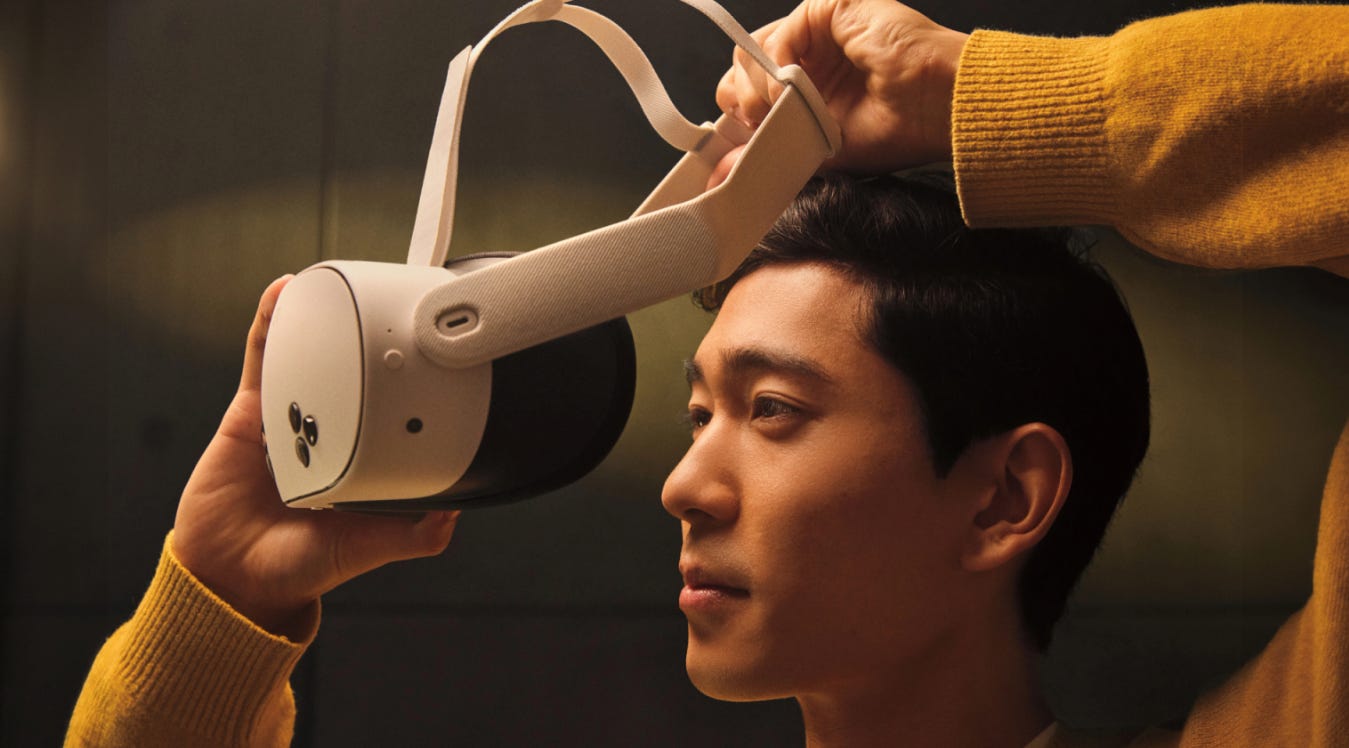
One big question around Meta’s shifting strategy is, what does this mean for its headsets? The Meta Quest range is comfortably the market leader in this space, but there hasn’t been a significant revision since 2023. And will Meta continue to subsidize the hardware costs going forward? Eiche and Curran don’t think so.
“It’s nice that Steam Frame is coming out, so there is that,” Curran says. “And we have various major companies, Google and Apple, that continue along these lines, But Apple Vision Pro has underperformed. And I feel Google Galaxy XR has underperformed compared to expectations.
“I worry that Meta will no-longer be subsidizing headsets. The $299 Quest 3S was really great for bringing in this younger audience. If they don’t subsidize, what does that mean? Maybe it’s a case where as that audience grows older, and they have more disposal income, they’re happy to upgrade to the next level of device. That would be the hope.”
Eiche adds: “When it comes to like, ‘Hey, we’re subsidizing the headsets’. Meta’s investors and the Board are going to be asking: ‘Mark [Zuckerberg], why are you spending money on this when you could be reinvesting it in artificial intelligence?’”
Meta games strategy didn’t make sense
Eiche was particularly critical of what Meta was doing with its first-party teams.
“They never even gave these studios a chance to spin out and survive,” he says. “So, you’re taking a large set of knowledge that existed across XR that we’re potentially losing. A lot of those people are probably going to leave and not come back.”
“I understood Meta strategy with these studios at the start. Use the studios to secure very large IPs like Deadpool or Batman, and then use that as a loss leader to be like, ‘Hey, you like Batman? The next Batman Aham game is on this headset, so you need to buy this.’ That’s a coherent strategy. But when you stop launching headsets… what’s the strategy here? And then they’re pushing these studios to continue the same work when they have all the data that says that the industry is swinging towards free-to-play live games.
“We had a company subsidize and follow a path that they likely knew was a dead end, that we at Owlchemy knew was a dead end. It makes you question, what were they doing with this?”
Meta Horizon Worlds has become a problem
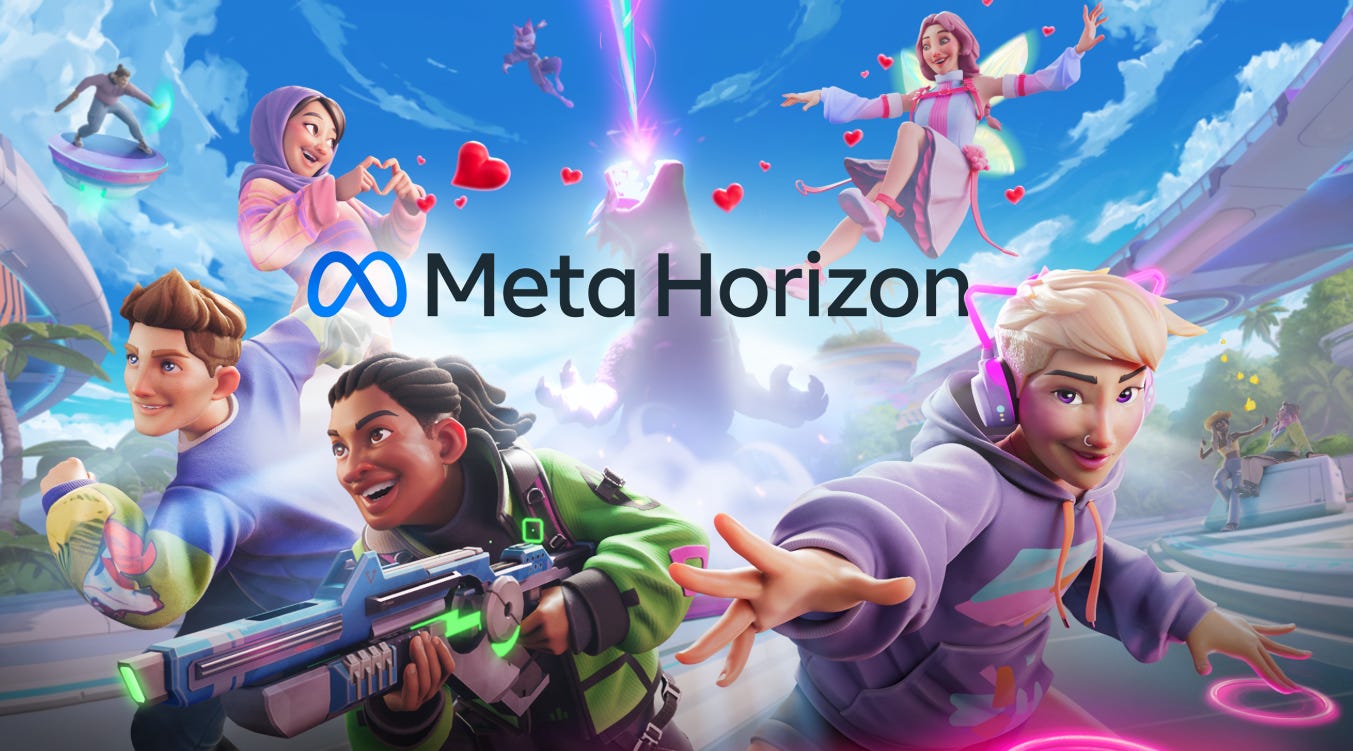
In 2021, Meta launched its ambitious Horizon Worlds title, which is a Roblox-like concept where users can create their own experiences. It has been a core focus for Meta, and this has become a real problem for VR developers.
“The Meta Horizon content is shown at an equivalent level to the game content,” Eiche says. “If you search Job Simulator, you’ll see [our game] at the top, and then you’ll see a bunch of Meta Horizon Worlds versions, which are free. And that makes it very difficult for me to say, ‘you should spend $19.99 to buy our game’, when there’s five others that are free.”
Horizon Worlds has made discovery much harder on the Meta Store, but Curran believes that might change.
“We’ve been monitoring the user activity on Horizon Worlds and it’s not that successful. More native applications like VR Chat are more successful than Horizon Worlds, despite the amount of funding that Meta has put into it. The rumor is that Horizon Worlds will be focusing on mobile-only going forward and not have VR support. That is potentially good news for VR developers as the store will then be cleaned up.”
Steam Frame is an opportunity
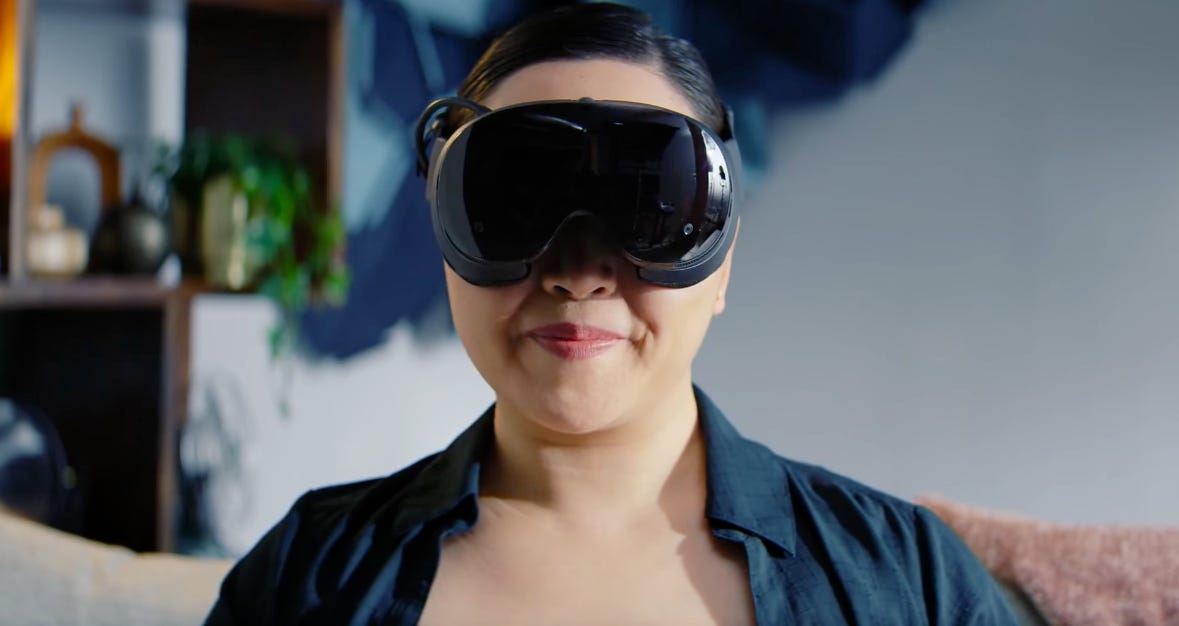
The upcoming Steam Frame headset is exciting to the VR industry. Both Eiche and Curran mentioned the device several times. Unlike Meta, Valve is a video game company, and it isn’t about to abandon this business to chase AI or wearables or whatever the next tech trend might be.
However, outside of titles like Half-Life: Alyx, VR remains a very small business on Steam. According to Video Game Insights, 361 VR games were released on Steam in 2025, that’s almost half the number that was released in 2020.
“Steam Frame is really targeted directly at core VR gamers,” Curran says. “I think it’ll be too expensive for the younger Roblox generation. But I am going to estimate it will sell about two million headsets, and the people who buy it will have a lot of money to spend on content.”
VR is still learning
The VR industry isn’t new. Job Simulator is ten years old this year, after all. But even so, it’s still early days.
“We’re still learning what works really well and what doesn’t,” Curran admits. “There’s been a lot of money spent by Meta into lots of experiments, and a lot of experiments have failed.”
Because of this, a pivot away from relying on big tech and towards a more focused group of passionate companies that are collectively learning the way forward… that’s probably the best approach in the immediate term.
“To use cell phones as the example, and we’re in the Palm Pilot era for VR headsets,” Eiche concludes. “We’re figuring it out. We still have clunky devices that are a little bit embarrassing to wear, that are hot and heavy. But we’re moving in a better direction.
“I’m actually pleased that the industry is taking its time. I know that doesn’t please tech investors, but building this and understanding it and growing it is going to make for a healthier, more sustainable industry in the long run…
“As long as we agree that it’s worth existing at a core human level.”
Meanwhile…
Ubisoft has cancelled six projects and delayed seven others as part of its ‘reset’, which will result in an additional €1 billion loss this financial year. It is also mandating staff return to the office five days a week, and is now looking to save an additional €200 million over the next two years from further job cuts and potential closures. The much-delayed Prince of Persia: The Sands of Time remake is among the cancelled projects, alongside three new IPs.
The firm has also revealed its new structure. The firm now operates from five creative houses. The first, Vantage Studios, is co-owned with Tencent and is where big games like Assassin’s Creed, Far Cry and Rainbow Six will sit. Creative House 2 will focus on shooters include The Division, Ghost Recon and Splinter Cell. Creative House 3 is all about ‘sharp live-service’ games, such as For Honor, Riders Republic and The Crew. Creative House 4 is focused on narrative experiences and fantasy worlds, so that covers Anno, Beyond Good & Evil, Rayman and Prince of Persia. And finally, Creative House 5 is the casual games segment, covering games like Just Dance and Uno. In addition to the houses, there will be the Creative Network, which provides production support for all five houses, and the Core Services, which covers localisation, business operations and QA. Some studios will be assigned to certain houses, while some will be part of the Creative Network.
In its State of Mobile report, Sensor Tower revealed that for the first time ever, consumers spent more on non-game apps than they did on games. The big reason for this is generative AI apps, although numerous sectors saw significant growth. Overall non-game apps grew 21% to $85.6 billion, while game apps delivered $81.8 billion, a rise of 1% over the year before. Despite the revenue growth, the number of game downloads dropped 7% to 50.4 billion. It’s the second consecutive year of download drops.
Strategy games were the biggest genre on mobile last year, driven by popular 4X titles such as Last War: Survival and Whiteout Survival. Puzzle games are up, especially in Europe, with Royal Match the big driver. In Asia, the shooter market grew quite a bit, helped by the game Delta Force.
Industry veteran Jude Ower has launched the Good Game Club, a new podcast to discuss how video games can be a positive for society. It was announced at the Davos conference, and will be hosted by Ower and Sybo Games CEO Mathias Gredal Norvig. Guests will include Solsten founder Bastian Bergmann, Game Academy’s David Barrie, Ustwo’s Maria Sayans, SpecialEffect’s Dr Mick Donegan and FuturLub’s Kirsty Rigden.
Former Nintendo of America president and COO Doug Bowser has joined Hasbro’s board of directors. He departed Nintendo at the end of last year.
That’s it for today! Join us next week for more interviews, news and analysis. Plus our December market report (paid subscribers only). Thank you for reading!


