


Listen now on Apple, Spotify or YouTube
In This Edition,
- Keywords issues AI warning
- Netflix targets kids
- Mario movie does the business
Hello and welcome back!
We’ve managed to go this long without doing a full AI-focused edition of The Game Business. But today I really wanted to share with you this chat I had with Jon Gibson, the head of transformation at Keywords Studios.
Keywords works with major game developers around the world, so it has quite a nuanced perspective on AI. And I found what Gibson had to say fascinating. He talked about AI being in its ‘chaos’ phase, and how few studios have worked out how to use it within their pipelines. It’s a great chat and I’ve selected some choice quotes below. Of course, you can also check out the full interview above, on YouTube, or via all good podcasting platforms.
Also this week we touch upon the Super Mario Galaxy movie, and the familiar sounding Netflix Playground. Enjoy.
The uncomfortable truth about AI
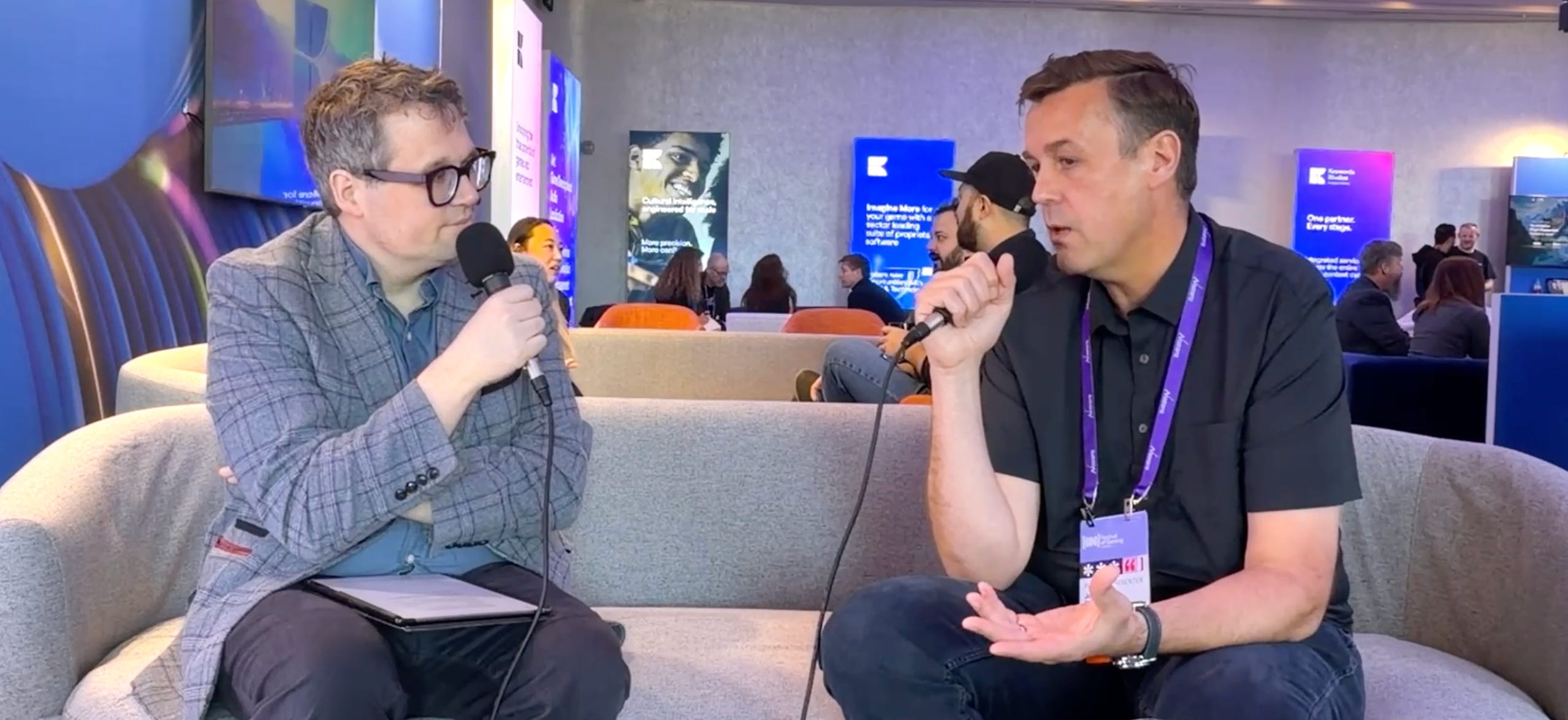
Keywords Studios has tested over 500 AI game development tools, and found only ‘half a dozen’ actually help ‘in the right way’.
That’s according to Jon Gibson, head of transformation at Keywords Studios. Gibson joined us on The Game Business Show ahead of his GDC talk on ‘the uncomfortable truth about AI in game production’, where he discussed how “everyone’s focusing on building better AI, and no one’s really focusing on how to use it in a live production environment.”
He said: “AI feels like it’s in the chaos phase right now. And we need to move to the usable phase. How do we use AI in live production environments? How do we use AI in a way where it complements teams rather than potentially threatens teams? And also how do we use it in a context where it’s governed, it’s controlled, it’s IP safe, it’s legally safe, it’s ethically and morally safe? The gulf between cool AI demos where you put in a prompt and you get something amazing, to actually AI in production where you get consistent, high-quality results steered and directed by humans, is quite a big leap.”
He continued: “A lot of people focus on what’s cool. They focus on the tool itself or the model itself, rather than what they’re trying to do. A company will use a tool or build a tool without a specific use case and try and cram it into their production pipelines, rather than flipping that problem around and saying: ‘What are our pain points? What are we trying to solve?’ And then building a tool against that.”
Gibson said that most AI game development tools are currently not fit for purpose.
“There’s a lot of garbage out there,” he explained. “We do a lot of R&D within Keywords. We tested about 500 different AI tools on some of the R&D projects we’ve done, and there’s about half a dozen that we feel complement development in the right way.”
The focus on cool AI tools, rather than how they might fit within development pipelines, is potentially exacerbating concerns amongst game makers. Gibson pointed to the GDC State of the Industry report, which revealed that 36%* of developers are using AI, but 52% don’t approve of its use. [*Note: Gibson incorrectly said 90% in the interview].
“I think not having controls and governance around AI is part of that issue,” Gibson said.
“A lot of companies are not really explaining to their people why they’re using AI, and why it’s a good thing, and what the strategy is. They’re going into using AI models without that clarity. And it concerns developers.”
“There’s a lot of garbage out there”
Ultimately, AI tools will only work if the culture within the organization supports the strategy, he said.
“That culture is really about helping developers understand what they’re using, why they’re using it, and how it affects them and how it affects their roles specifically.
“There are very few people I meet who are totally closed off to using AI in game development. What you find is people asking questions, which a lot of businesses are currently unable to answer. We’re gradually reaching a point where those questions are being answered and people are becoming more comfortable and confident about the usage of AI in game development.”
He added: “It’s a slow process. That statistic of 52% of developers being concerned about the usage of AI, that’s gone up every year for the last three years. As AI tools and AI models and AI technology in general has become more prevalent, the lack of understanding and the concern has increased. Until we’re able to work out how to meaningfully build this technology into production pipelines in a way that is safe, in a way that adds value, in a way that complements the talent that already exists in this industry, and doesn’t threaten that talent, I think there’s always going to be that level of concern.”
Overall, Gibson told us that AI will have a meaningful impact on game development. He compared the technology to the shift from 2D to 3D, which also proved chaotic until game development pipelines caught up.
“We’re at that same phase with AI,” he said. “It’s impressive. It’s amazing. It’s transformative. It’s revolutionary. But going from a single prompt and something amazing, to something consistent and high quality that can be used in game development, that’s where the gap lies right now.”
Netflix targets 14.5 million US gamers with new Playground app
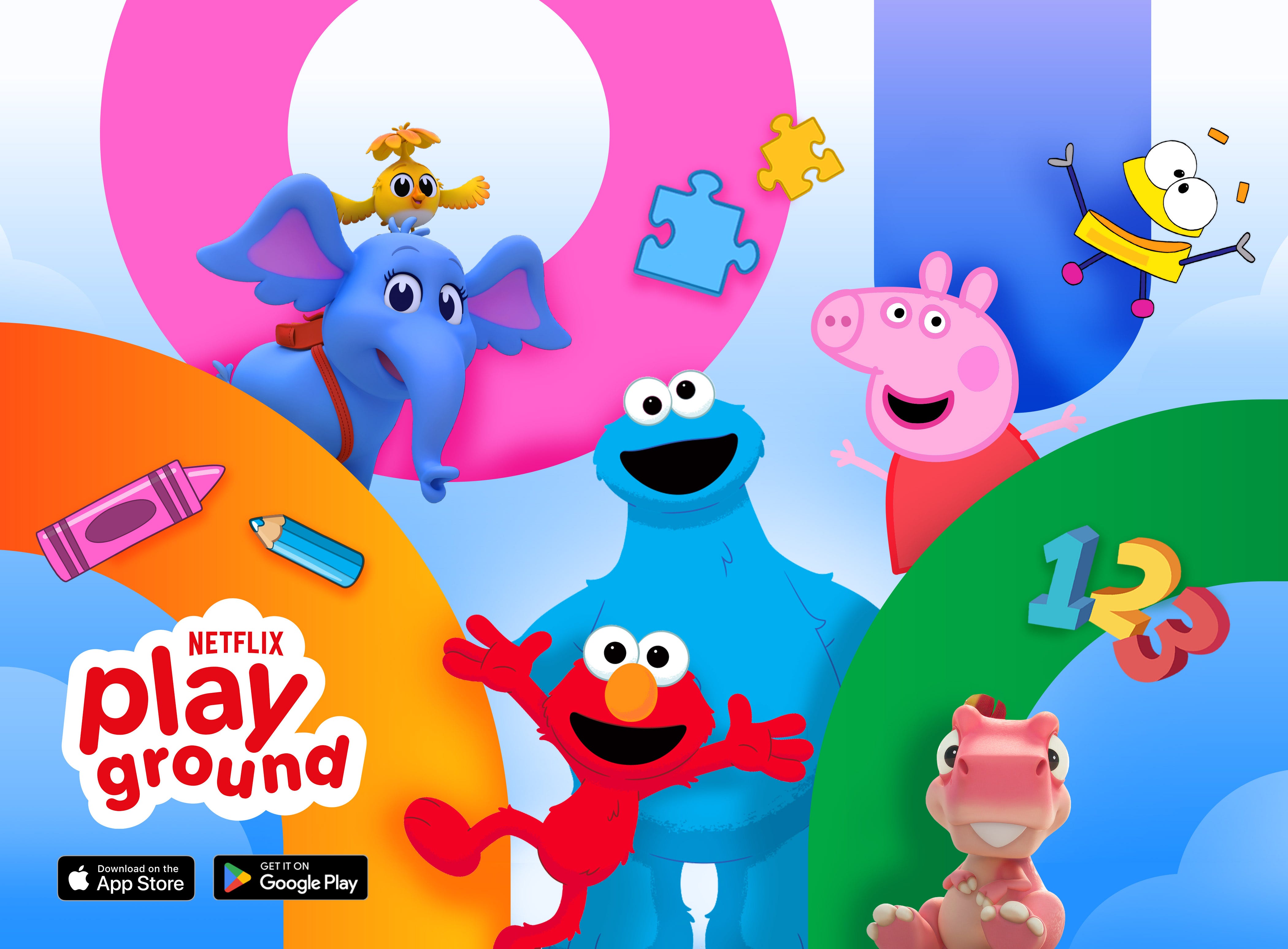
Streaming giant Netflix has ramped up its bid to win over kids and parents with a new mobile app featuring the likes of Peppa Pig, Sesame Street and Dr Seuss.
The Netflix Playground (not to be confused with the Nex Playground) will feature a selection of games available to all Netflix subscribers that feature no ads, in-app purchases or extra fees. The games can even be downloaded and played offline.
The kid’s games market is significant. According to Ampere, there are 14.5 million gamers under nine years-old and four million under five. But with growing concerns over the digital health of children, there’s been an increased focus around online safety and screen time management for younger players.
Kids giant Roblox has struggled with this conversation, with parents growing concerned around the title’s social tools and user generated content. 35% of verified users on Roblox are under the age of 13.
Netflix isn’t the only new competitor targeting kids and parents in the video game space. The camera-based game console Nex Playground has proven to be a hit in the US, and also features trusted kids brands such as Sesame Street, Peppa Pig and Bluey. It also adopts a subscription model, with no in-app purchases.
Of course, the other major player in the market is Nintendo, with its high-profile kids brands such as Mario and Pokémon. The company has sold over 170 million Nintendo Switch and Switch 2 consoles worldwide.
Meanwhile…
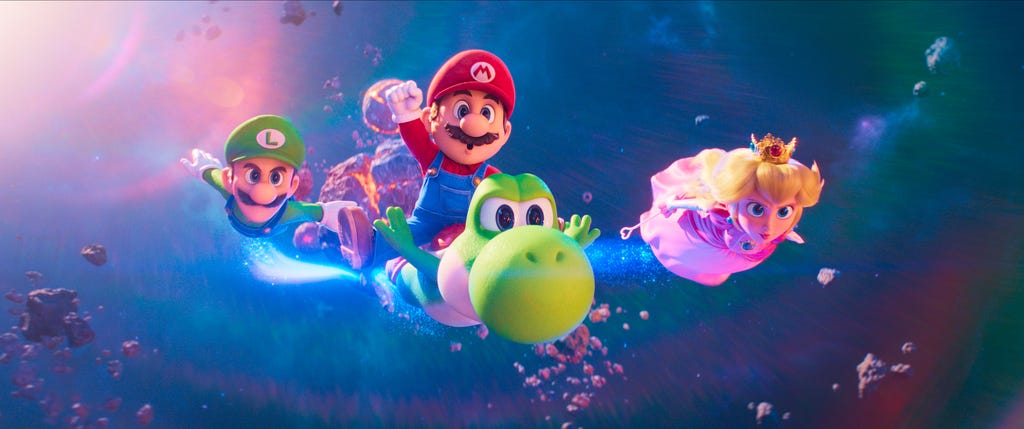
The Super Mario Galaxy movie delivered $372.6 million in revenue for its five-day opening weekend, which basically (but not quite) matched the $375 million of the original film. Mario is now the only animated movie franchise to have two films that delivered more than $350 million in its opening weekend. The film didn’t do great with critics, with a 42 on Rotten Tomatoes. But fans were happier, with an 89 fan score. The film had a budget of $110 million.
The Super Mario Galaxy 1 and 2 collection for Nintendo Switch jumped up the charts in the UK following the film’s release, with sales up 107% week-on-week (physical sales only). However, the game missed out on the Top Ten (Nielsen IQ data). Nintendo is set to release two games starring popular characters from the film in the coming months, including a new Star Fox and Yoshi game.
In what is a rare moment for the mobile video game sector, Supercell CEO and co-founder Ilkka Paananen will be awarded the prestigious BAFTA Fellowship next week.
Hazelight has now sold 50 million games across its three titles. 2018’s A Way Out has sold 13 million copies, 2021’s It Takes Two is on 30 million, and 2025’s Split Fiction has sold seven million copies so far.
The United States Patent and Trademark Office has rejected Nintendo’s patent around in-game characters summoning a sub-character to aid it in combat (as seen within the Pokémon series). Nintendo has two months to respond, with the option to extend if necessary. It is all part of Nintendo’s on-going case against the 2024 game Palworld, which it believes infringes on multiple patent rights.
This is potentially good news for Hello Games. The No Man Sky developer just announced a new No Man Sky expansion which appears to be similar to Pokémon. It’s called Xeno Arena, a new feature where players explore the universe to collect a team of creature companions, then use them to fight other creatures in turn-based battles.
Five independent studios have established an ‘alliance’ called Nova Assembly. Developers Unfrozen, Sad Cat Studios, VEA Games, Weappy and Game Garden will share expertise and resources, and even establish their own publishing division to handle marketing, distribution and community. In total, the Nova Assembly has ten titles in development.
The Nintendo Switch 2 version of 007 First Light has been delayed until later in the summer. Developer IO Interactive said that the Xbox, PlayStation and PC versions are still set for May 27. Hopefully this one doesn’t do a Borderlands 4 and disappear entirely.
Eidos Montreal has laid off 124 employees, with studio head David Anfossi also leaving the developer. The redundancies are reportedly the result of the cancellation of a long-in-development new open world IP.
That’s it from us today! We’ll be back next week with more interviews, news, analysis and insight. Plus, full details for our upcoming The Game Business Live event in June. Until then, thank you for reading.


