


Listen now on Apple, Spotify or YouTube
In This Edition,
Kickstarter’s Asher McClennahan and Ico’s Thomas Bidaux on…
- The return of Kickstarter
- What’s putting developers off
- How to be successful
Kickstarter has been growing again.
In 2024, 463 video game projects were funded on Kickstarter, which is the highest number in the platform’s history. The figure dropped slightly in 2025 to 443, but that’s still the second-best year.
In terms of money, $26 million was raised for video game projects in 2024, the highest figure since 2015, and 2025 broadly matched it.
2025 saw bigger success stories, too. 11 projects raised more than $500,000 last year, which is the highest number of projects in that band since 2015, and more than twice the number from 2024.
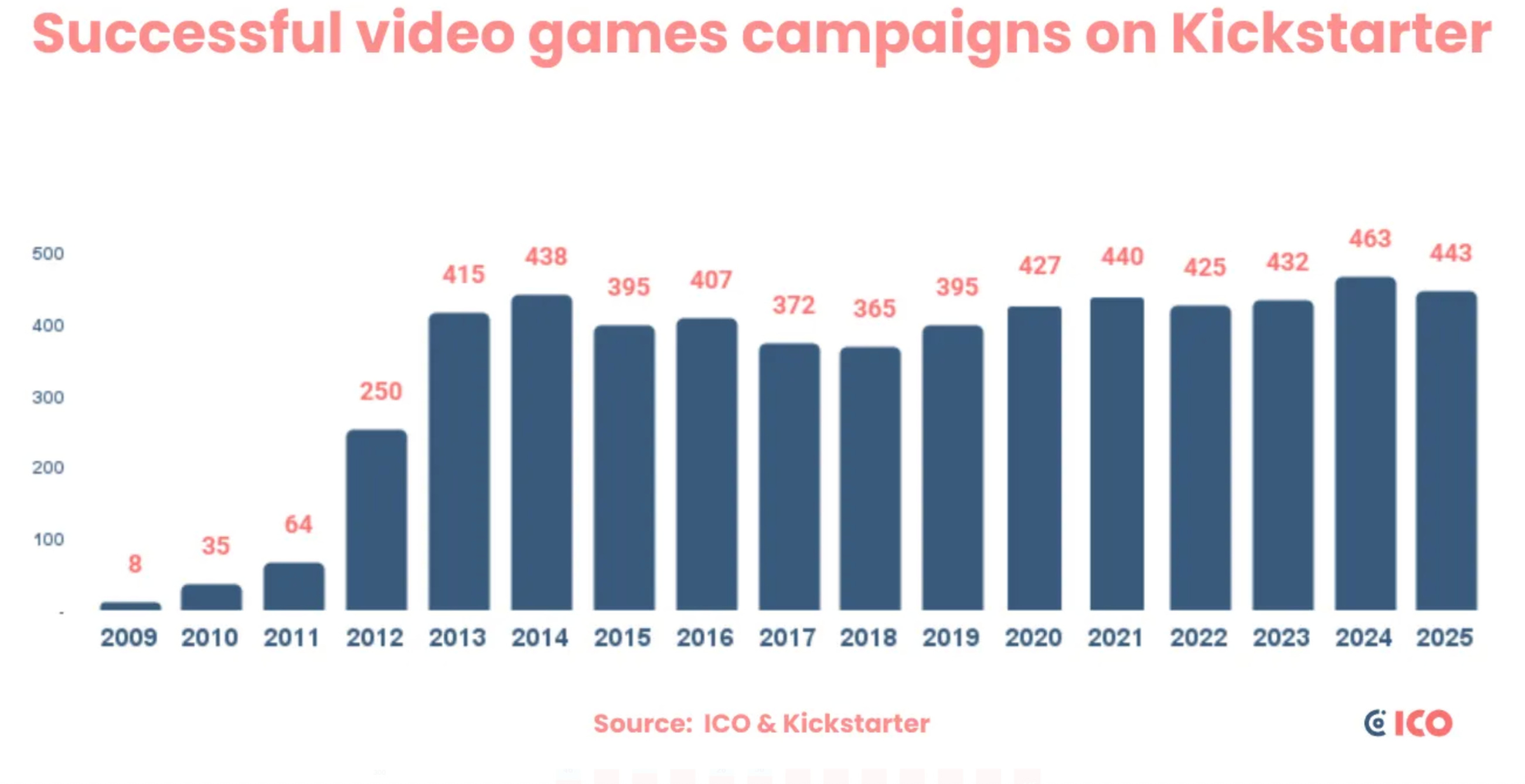
This data is courtesy of ICO Partners. And although the figures are clearly positive for crowd-funding, we’re still talking relatively low numbers overall.
“400-plus games a year that get funded on Kickstarter… that’s about two weeks of Steam releases,” says ICO Partners CEO Thomas Bidaux.
“It’s stable. It’s growing. It’s not insignificant. But this is not something that people are going to in droves to get funding.”
The investment landscape is tough. Publishers and investors are scaling back the projects they’re signing and the money they’re spending. By contrast, Kickstarter is showing signs of stability and even growth.
So, why are we not seeing even more games turn to crowd-funding? Particularly those games that just need a little bit extra to get the over-the-line?
We dived into the subject with Bidaux and head of games at Kickstarter Asher McClennahan.
Kickstarter doesn’t work for all games
“I have three red flags,” Bidaux begins. “One is games for kids. They don’t work because getting parents to put money into a project that has a delivery in six to 12 months is very unlikely.
“My second red flag is mobile. The people we see back projects on Kickstarter are very PC-first and then console. Mobile almost doesn’t exist, and very difficult to do. Distributing the keys is difficult. Apple and Google don’t have the Steam option to basically get free keys. And the price point for mobile games is, on average, lower than a PC game. So, getting a significant amount of money from the mobile space is extra difficult.
“My third red flag is free-to-play. Free-to-play is kind-of the opposite of crowdfunding. Crowdfunding happens six to 12 months before you even play the game. Maybe you have a demo, but maybe not. You’re saying: ‘Give me money because you know you’ll love it.’ The philosophy of free-to-play is: ‘Don’t give me money, try it, and maybe down the line you’ll pay me.’ They’re both very community driven, but it’s difficult to communicate to people why they should give money now.”
It’s hard to know the value of the items that developers may be giving away with free-to-play Kickstarter campaigns, Bidaux explains.
“You can have a hat or a cat or whatever, visual items, but the value of that is difficult to project. I know a video game is $20 or $30 or $50, because of that genre. But how much is a hat? $1? $50? You need to play the game to have that sense. People have done things where if you give them $50 on Kickstarter, you’ll get a $100 worth of in-game currency. But then maybe everything is super expensive and $100 is nothing?”
Bidaux stresses that there are always exceptions.
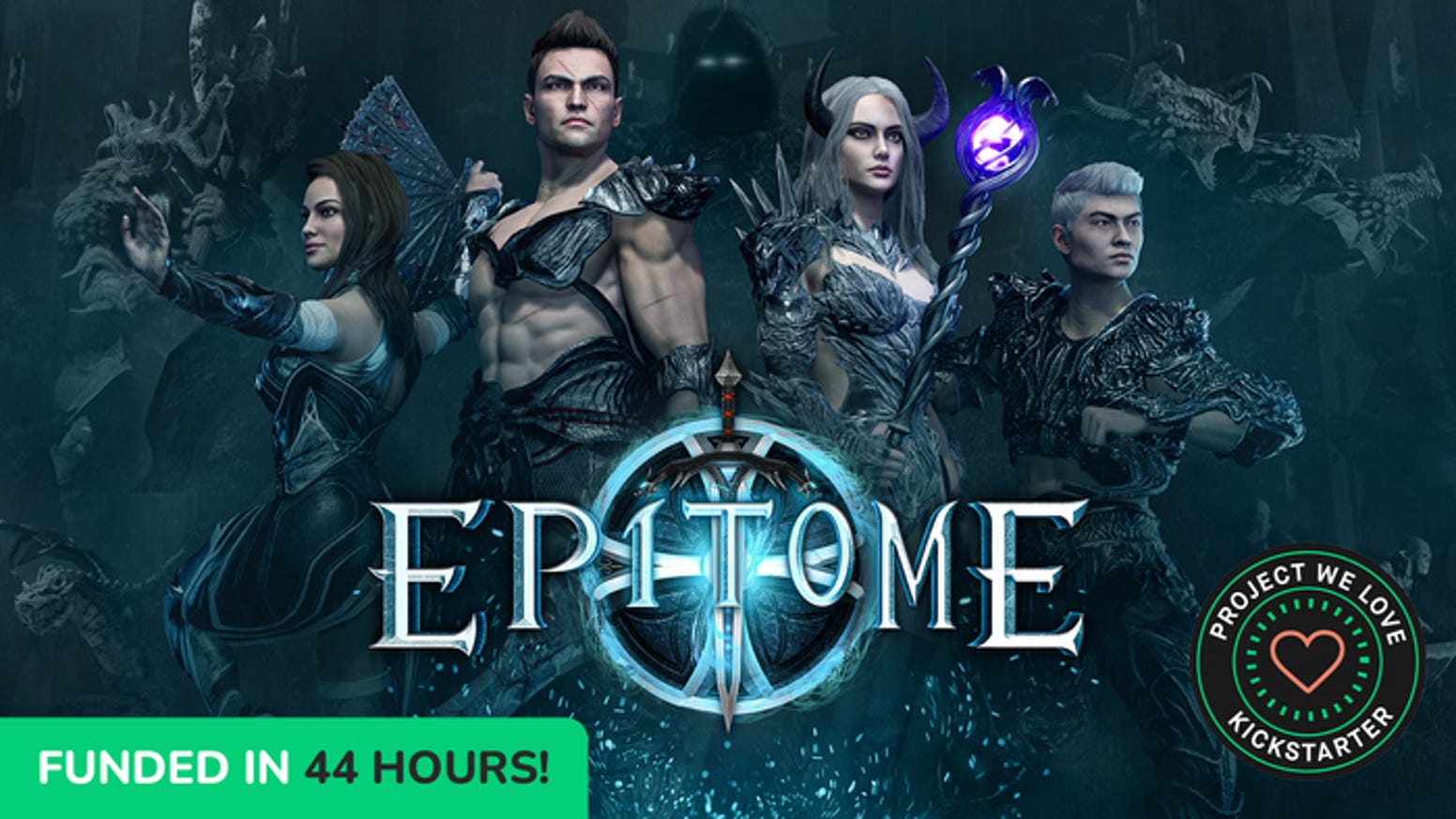
“These red flags can be disproven. There’s a game called Epitome that just finished a Kickstarter campaign. They did a €500,000 Euros with 20,000 backers, and they are a free-to-play MMO. They went deep into the nostalgia of MMOs from 10/15 years ago, and that resonated with people. But they’re free-to-play. These aren’t hard rules.”
Crowd-funding is time consuming
The energy and time that goes into maintaining and supporting a Kickstarter campaign, particularly for a smaller team, can be significant.
“This will require energy, effort and probably dedicated resource in order to deliver on it,” McClennahan says. “It is so hard. It is so worth it, but it becomes all of your being while you are planning for and running your campaign. I want people to come in eyes wide open.”
“For every seven backers that you bring to the platform, Kickstarter will bring you three to four.”
Bidaux adds: “A crowdfunding campaign is an exercise in time. Before you launch the Kickstarter campaign, you need to do the Coming Soon page. This is where you can pre-launch your page. And then when you push the button, they’ll get notified about it. It’s such a good exercise to do that everybody should do it. But you need to leave at least three months between your Coming Soon and your Kickstarter launch. So, four months of Kickstarter is a thing you need to manage as a studio when you have other things to worry about.”
What’s more, a Kickstarter campaign can’t come first.
“Kickstarter brings you about 30% of your backings,” McClennahan continues. “For every seven backers that you bring to the platform, Kickstarter will naturally bring you three to four generally. That is to say, you still need to find that other 70%. And so that’s your Discord communities, your paid advertising, your email newsletter, getting people excited at shows and getting them to follow the pre-launch page.”
Kickstarter backers can’t leave Steam reviews
One thing that puts some developers off Kickstarter is the inability for backers to leave Steam reviews once the game is out.
“The way Kickstarter functions for video games, you’re going to Steam and saying: ‘I’ve got 1,000 backers, can I have 1,000 keys for those backers?’ Those backers are your super ultra fans. Then, they download the game, put a review… but that review doesn’t count, because they were given a free Steam key.”
However, Bidaux feels this concern is unwarranted. A lot of the people who utilize Kickstarter aren’t just doing it for the extra funds, but as a marketing tool. It creates a 30-day window where a new game’s most active fans are highly engaged with the project, sharing it and talking about it ahead of release.
“Yes, you are going to lose some reviews from your most hardcore fans,” Bidaux acknowledges. “But you will have hardcore fans who are not going to go to Kickstarter. Maybe they don’t like crowdfunding. Maybe they don’t have the money that month. Maybe they missed it. You don’t lose all your fans.
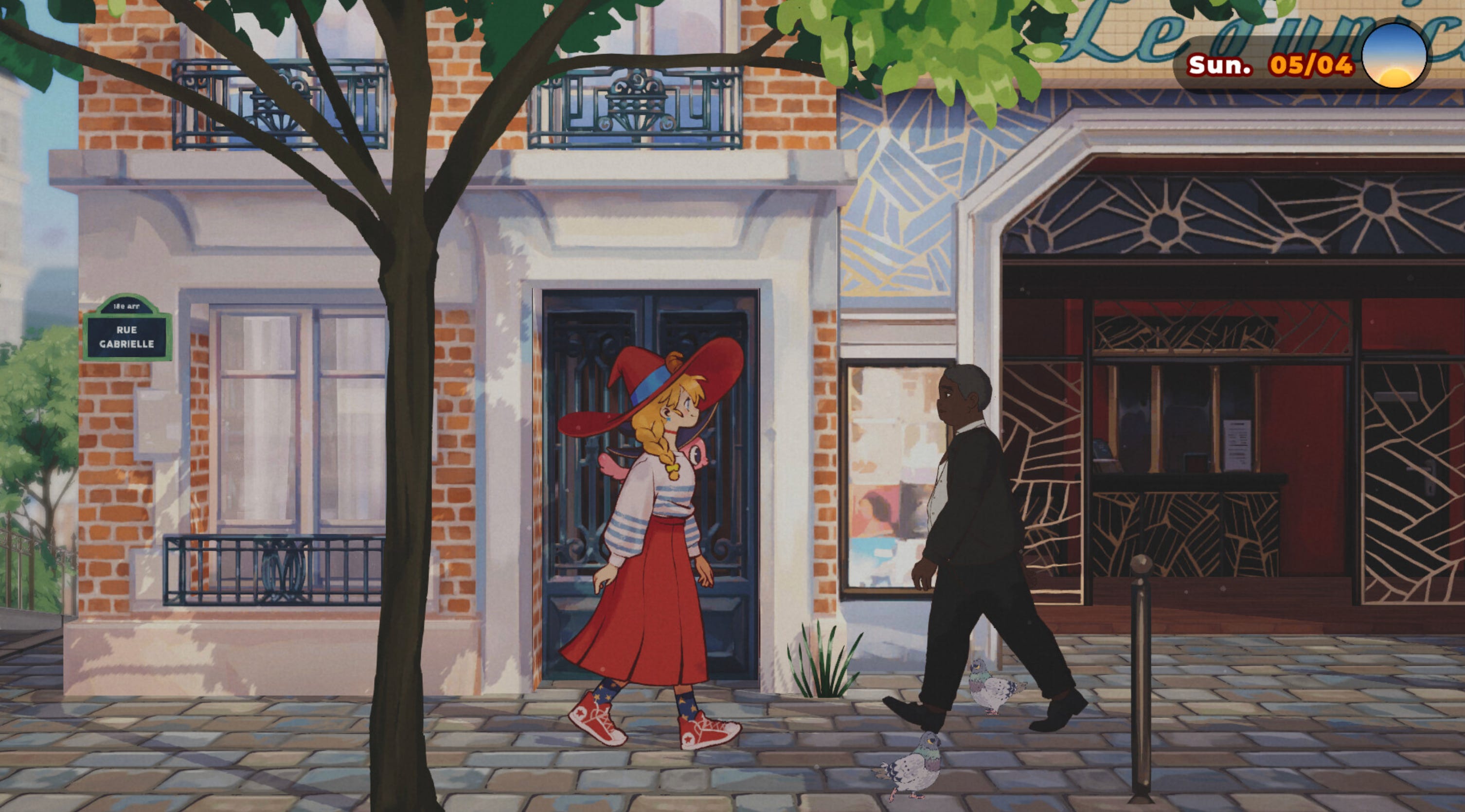
“But also the uplift you get from a Kickstarter campaign in terms of visibility makes up for it. I’ll give you an example of a French project called The Witch Bakery. They launched their Kickstarter campaign with 10,000 [Steam] wishlists. And then by the end of the campaign, they had 37,000 wishlists.”
Early Access can be more effective
One of the biggest rivals to Kickstarter isn’t another crowd-funding platform, but rather Early Access. With developers typically turning to Kickstarter later in development, for some studios, it can make more sense to create and release an Early Access version instead. That means they can build a community and generate revenue until launch, not just for 30 days.
But Early Access isn’t suitable for all games. Story-driven titles, for instance, would have the game spoiled via an Early Access release.
“And there are systemic games that go to Kickstarter, and then do an Early Access,” Bidaux adds. “They’re not exclusive from one another, but we see those trends.”
… but there is room for more video games on Kickstarter
“I wish it would grow. There’s a lot more room, as we’ve seen [by the number of] tabletop games,” Bidaux says.
“It will grow slowly and it will be more along the lines of this being a good marketing exercise. We have a finite number of marketing beats for a video game and developers will be like: ‘We could do with more. Maybe we should do a Kickstarter campaign?”
McClennahan concludes: “It is growing. 2024 was a great year for us, 2025 [had] 10%-ish more video games on the platform. And from the conversations that I’ve had, there are even more coming in 2026.”
For the full interviews with Bidaux and McClennahan, check out the links to the video and podcast above.
That’s it for us today. We’ll be back on Thursday for more news, analysis and insight. Until then, thank you for reading.


