


Listen now on Apple, Spotify or YouTube
In This Edition,
Could we see console shortages this Christmas?
Why is a Russian propaganda game on Steam?
Fighting misogyny and racism in games
Plus, a new $50m games fund emerges
Hello! It’s a bumper edition of The Game Business today.
We have some concerns from a major retailer around console stock this Holiday. Plus, we hear all about a new $50 million games fund aimed at ‘visionary creators’.
But our big chat on the Show today is with George Osborn, who is the author of the new book Power Play: Video Games, Politics and the Battle for Global Influence. He joins us to discuss his findings around Saudi Arabia, China, Russia and more.
You should check out the full chat above. But if you can’t, I’ve picked a couple of stories from the conversation, including one about a Russian propaganda game that is freely available worldwide on Steam, and what game companies can do to fight misogyny and racism in game communities.
Here we go.
Major retailer warns of console shortages ahead of GTA 6 launch
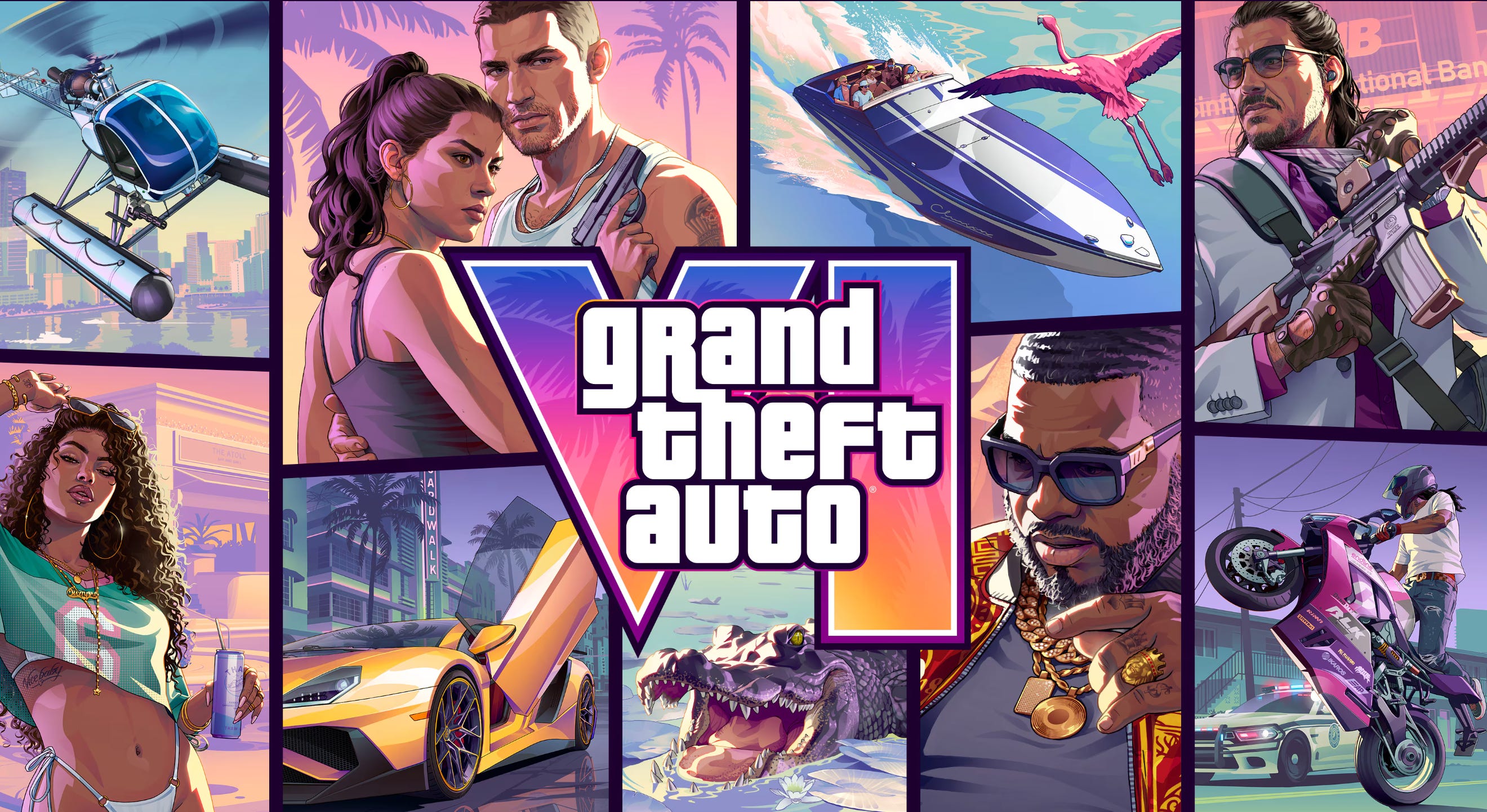
A major games retailer has warned that there won’t be enough consoles to meet demand over the Holiday period.
Game shops are expecting a surge in interest around PlayStation 5 and Xbox Series S and X when Grand Theft Auto 6 launches on November 19.
But a senior games buyer, speaking without the permission of his employer, told us: “We’ve been informed that because of the on-going issues around hardware component availability, we won’t be getting the units we want ahead of GTA.” He added: “Demand will likely outstrip supply during the year end period.”
We’ve contacted PlayStation and Xbox about the claim. Sony CEO Hiroki Totoki told investors in May that “for calendar year 2026, the necessary volume has been secured”
However, Xbox Chief Strategy Officer Matthew Ball told The Game Business earlier in the month that there are already supply issues.
“I can tell you definitively demand for our console exceeds the supply,” he told us. “We are putting them in as many stores as possible. We are producing them as quickly as possible. There is a severe limitation to how quickly we can do that, but it’s not a question of appetite. We need to do more, but there are constraints here. And so there are, unfortunately, a number of different markets in which we do not have supply. There are other markets in which we have inadequate supply. That is a privilege as a company it is a challenge for us to figure out.”
When we asked about the potential impact of Grand Theft Auto 6, he said: “It’s going to invigorate a lot of players. It’s going to move some additional devices.”
Rockstar announced this week that Grand Theft Auto 6 will come in two versions, a Standard version for $79.99 and an Ultimate Edition at $99.99. The game’s price is around $10 higher than other AAA games. The physical edition of the title does not include a disc at launch.
Why this Russian war propaganda video game is still on Steam
In today’s episode of The Game Business Show, we are joined be George Osborn, the author of Power Play: Video Games, Politics and the Battle for Global Influence.
The book launched earlier in the month, and discusses how certain Governments and groups – including Russia, China, Saudi Arabia and the alt-right – are using video games to control and influence people both within their countries and outside of it.
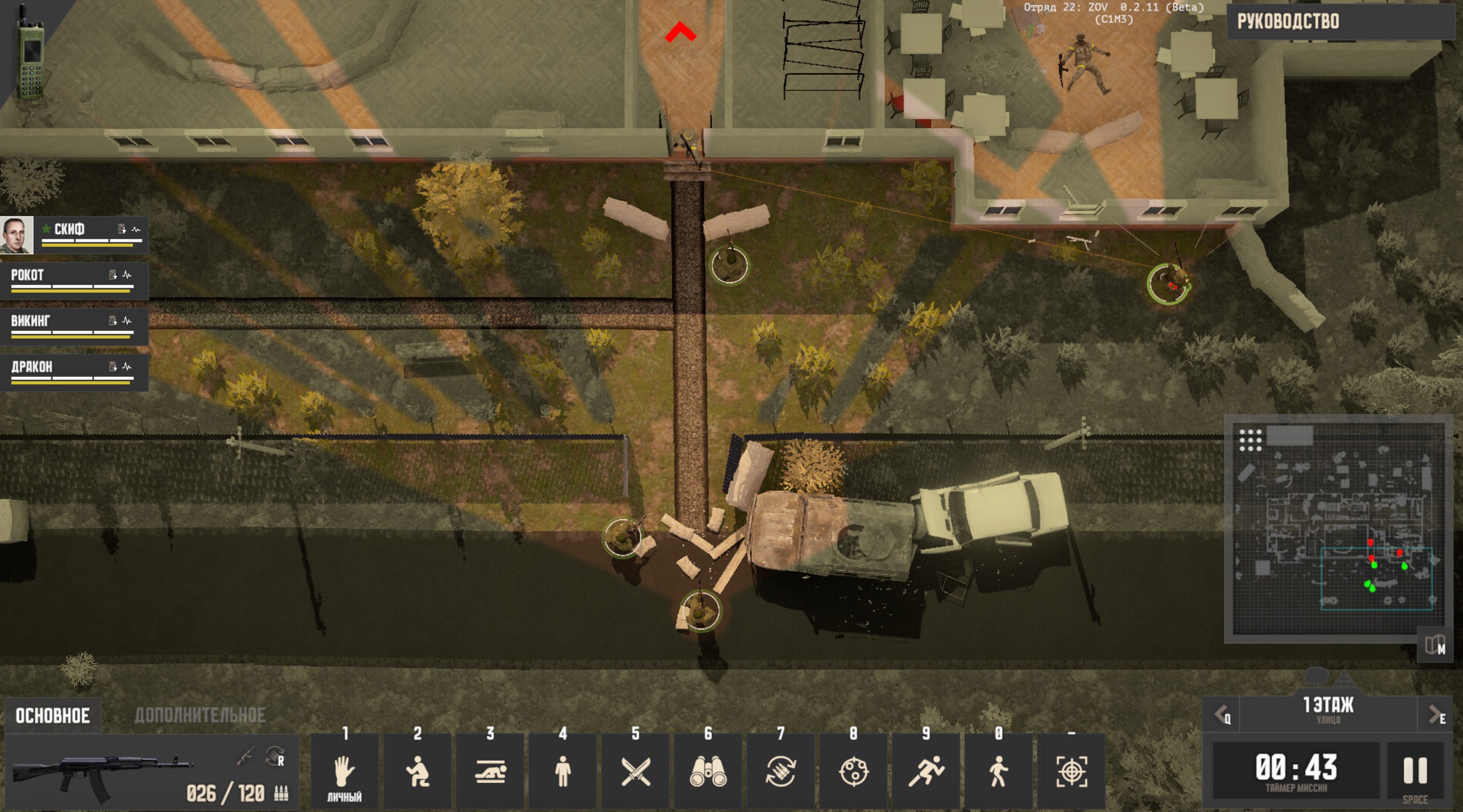
It’s a fascinating read, and one segment of the book focuses on the game Squad 22: ZOV, which has been made in partnership with the Russian armed forces. The game is a tactical shooter that highlights Russian narratives around the war in Ukraine. And it’s largely viewed as a piece of Russia propaganda.
However, it’s only been banned in Germany and Ukraine.
“Squad 22: ZOV directly promotes Russian narratives around the Ukraine war,” Osborn explained. “It is also officially used as a training manual for youth cadets in Russia to help them understand the basics of conflict. It contains very prominent pro-Russian propaganda. But one of the things I found out by speaking to a lot of officials, is that one of Russia’s big understandings around its information operations is how to stay within the rules within democracies. So, it has learnt how to intervene and interfere and disrupt the information landscape within democracies, which makes it hard for people to fight back.
“For example, the state department, when it was taking foreign disinformation a bit more seriously, essentially you had to prove that certain parts of the Russian state was directly funding or sponsoring an act for it to be essentially upgraded from something you suspect of being an information campaign, to something you can publicly identify as doing so. Russia learned extensively how you flush money through proxies.”
“Steam knows this is a propagandistic piece and they know that it’s created by the Russian Government”
In the book, Osborn is critical of Steam’s involvement, or lack of involvement, in moderating content that he describes as “disinformation tools.”
“Steam is basically unmoderated,” he said. “It has incredibly low moderation standards. If you release games into there, you have global reach on your content, and if you go to the Steam page for Squad 22: ZOV, you see on the forums a full-blown propaganda war is going on underneath it. Ukrainians and Russians fighting over their perspectives, and the war more generally. The only reason it’s been banned in certain places is due to specific elements of Russian iconography, specifically the Z-symbol that has been painted prominently on the side of Russian tanks. In Germany and Ukraine it’s classified as a hate symbol, and therefore, it’s banned in those places.
“Steam knows this is a propagandistic piece, they know that it’s created by the Russian Government, they’ve had plenty of interactions with the Russian Government because they’ve got a strong relationship with Roskomnadzor, the country’s censorship agency. So, if they are willing to work with the Russian state to send content in Russia to keep Steam online, I think they should probably take Russian propaganda off its stores internationally if it wants to demonstrate it’s a responsible business.”
The Premier League is the template to follow in the fight against misogyny and racism

One of the topics in Osborn’s book looks at the rise of bad actors weaponizing video games on social and political issues.
On the Show, we discussed the apparent rise of misogyny and racism within video game communities. And in discussing what can be done to combat it, Osborn pointed to English football.
“In the 1980s, football culture looked like it was just football hooligans,” he said. “Violent men who were nihilists, who wanted to find reasons to fight one another. It wasn’t until the Hillsborough disaster, when 97 people who innocently went to a football match, were killed as a result of a major crush, which was exacerbated by policing incompetencies who treated everyone there as a violent hooligan.
“It wasn’t until that happened, that we emerged with this mixture of some regulation, but also evoking a lot of the standards that clubs wanted to live. We don’t want this to be a place for violent young men to go and beat the living daylights out of each other, we want to bring women into stadiums, we want the full racial mix of the UK into our communities, and we want them to feel welcome, safe and included. And the result has been the Premier League has become the biggest league in the world, the most commercially successful, the best attended, and now we’re starting to see a similar thing on the Women’s side.
“So, what do we do about it [in games]? Not tolerating things like misogyny, racism… it’s central to setting the standard across our communities. It says we don’t want it to be dominated by loud, noisy voices who have maybe either been weaponized, or are trying to weaponize our spaces for their own ends. We want to say what standards we want to follow. And we want to appeal to as many players as possible.
“Ultimately, making that decision about whether you want to run that bar where the windows are smashed in and the regulars are glowering in the corner and shouting at people, or do you want to run the bar that’s popular because it’s clean, and it’s welcoming, and the community is friendly and the staff are helping you out with things, and when something goes wrong, they notice it and report it to the right people. This might just seem like a wider safety thing, but it’s also about protecting our wider values, too.”
For the full chat with Osborn, check out today’s edition of The Game Business Show.
A new $50m games fund says finding money ‘brutally hard’
There’s a new $50 million video game investment fund that targets ‘auteurs’.
The Denmu fund will support AAA, AA, indie, free-to-play, PC, console and mobile games, but it’s specifically looking for ‘visionary game makers’.
The funds organizers are also connected with the Chinese and Japanese games markets, and are hoping to bridge the gaps between Western and Eastern companies and audiences.
But it’s been a challenge securing the money for the fund.
“It was brutally hard,” said general partner Michael Fan.
“We started it at the worst time possible: most major funds in video games wanted to get out of video games. Everyone wanted to talk about AI, defence, pharma, or robotics, and we just wanted to talk about video games. And not only that, we want to invest in PC/console premium games. Or indie games. We talked about looking for iconic games when everyone only wanted to invest in big genres and big categories. When we discussed having the artists at the center, everyone was talking about how to replace humans with machines and automation. And when we first talked about our thesis regarding the emergence of the Chinese premium game market, or the renaissance of the Japanese game industry, a few years ago, and connecting those scenes with the West, very few people were interested in East Asian premium games and looked at other regions.
“Nothing in our presentation was trendy.”
General partner Ryan You added: “Games are one of the defining cultural forms of this era and the largest entertainment market in the world. So, when capital rushed out of games and into AI, we saw a mispricing. Being contrarian isn’t the point, but being contrarian on something this large and enduring, with the right thesis and the right structure to capture it, is.”
“When capital rushed out of games and into AI, we saw a mispricing”
Although Denum is about supporting auteurs, this is still a project-based fund. The firm is investing in games, rather than taking equity in studios.
“Equity sits at the bottom of the capital stack,” explains You. “It’s the residual claim, last to get paid, unsecured, carrying the full downside and long-term investment horizon. To compensate for that, equity has to price in a very high return. And because a fund ultimately has to exit through M&A or IPO, only a consistently fast-growing company gets it there. So, equity structurally forces the company onto a growth treadmill: chase the next big thing, make bigger and riskier bets, keep the growth rate up.
“The brutal part is that even a second hit at the same scale doesn’t grow the company. So, a studio can ship a great, profitable game and still be a failure by that math. That’s also why so many gaming companies, large and small, chase live-service: it’s one of the few models in gaming that can deliver the sustainable growth equity demands… but with a much lower hit rate. Some studios do compound organically through IP, but that usually plays out beyond even a five-to-ten-year horizon.
“That equity model was theright one when the industry was growing double digits, and it’s still right for startups genuinely chasing the next platform, technology, or distribution innovation. But for the vast majority of game companies the math doesn’t work that way, and we think that growth-at-all-costs, boom-and-bust cycle is a big
part of why the industry is seeing the layoffs it is today even with $200bn+ pie.”
Denmu said it offers developers a ‘meaningful share’ of the revenue from day one, so there’s no waiting for the investor to recoup. The fund will back beyond a single game, and will often take a minority equity, which it will pay for. DENMU will also get involved in the production and release of the game.
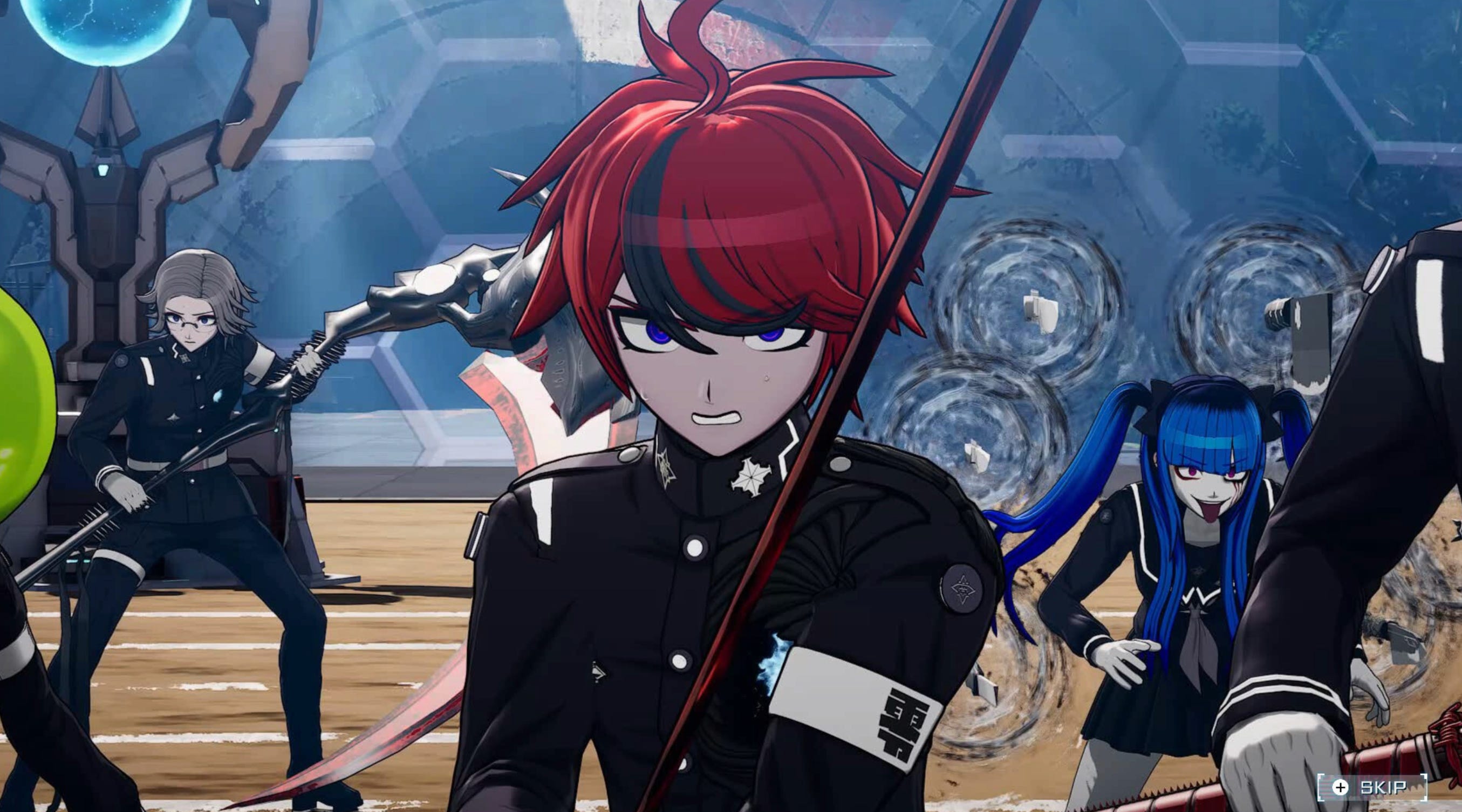
It’s already backed games such as The Hundred Line: Last Defense Academy, Blue Protocol: Star Resonance, Bleach: Soul Resonance, Labyrinth of the Demon King, MotorSlice and Silly Polybeast. It’s also backed a AAA title based on a major entertainment IP. Over the next two years, DENMU plans to invest in between 10 and 20 projects.
That’s it for today’s episode! Join us on Monday for the next edition of The Game Business Micro. And then on Tuesday, our final recording from The Game Business Live… our legend interview with Jason Rubin. Until then, thank you for reading.


