


Listen now on Apple, Spotify or YouTube
In This Edition,
Day 4 Night’s Davide Soliani and Christian Cantamessa on
- Finding investment in 2025
- Bringing satire to games
- The magic of 1990s Rare
- Doing something radically new

For all the excitement around Divinity, Star Wars Fate of the Old Republic and Tomb Raider, the announcement from The Game Awards that most caught my attention was the one about a confused badger.
Bradley The Badger is a satirical action adventure game from Day 4 Night, a new development team formed by Davide Soliani (Mario + Rabbids) and Christian Cantamessa (Red Dead Redemption, Shadow of Mordor). The game features the archetypal, cute, anthropomorphic platform character, who find his adorable world has been replaced by a series of levels that play clear homage to titles such as Bloodborne, Cyberpunk and The Last of Us.
What’s more the levels are unfinished, and Bradley obtains the power to manipulate objects and alter the world around him. It was one of the most strikingly original games on display at The Game Awards.
It sounds like a bold sell, particularly in today’s game industry. And yet Day 4 Night was formed just over a year ago, right in the middle of the current industry turmoil, and quickly secured funding from the likes of 1Up Ventures and Krafton based on this game.
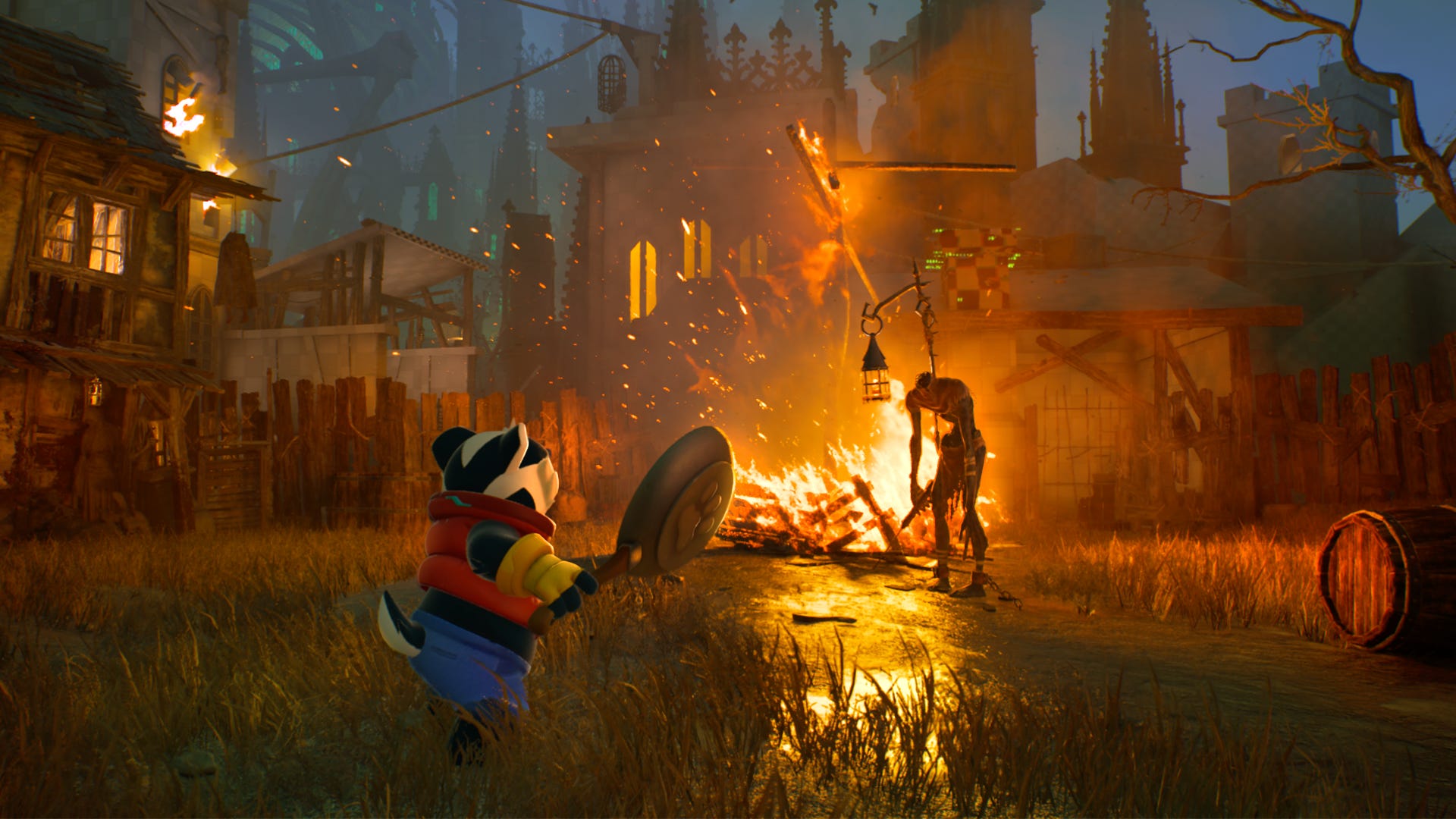
“I think that we’ve created something unique,” says Davide Soliani on today’s episode of The Game Business Show. “It’s something that stands out, both in term of story and gameplay mechanics. But you’re right, it’s the worst period ever to come up with a game company. At the same time, it’s in the period of troubles where you have to come up with something new.”
It was precisely the bonkers pitch behind Bradley The Badger that won over 1UP Ventures, with the firm’s Ed Fries calling it “easily the most creative thing we have seen in quite some time.”
Cantamessa says: “There are two categories of people who invest in games. There is the more traditional one, who is interested in trends and continuing these trends. And there is the investor that takes bigger risks and bigger swings.
“There are moments where the industry is very appealing to investors. For example, the COVID days and immediately post-COVID. There was a lot of investment, but a lot of it was [spent on] continuing ongoing trends. Now, yes, a lot of the money has dried up, but it’s brought out of the woodwork investors, and potentially publishers as well, that are trying to do something different and trying to be more innovative or disruptive. That’s why we managed to get our funding.”
However, Soliani and Cantamessa admit they didn’t spend a huge amount of time worrying about the finance.
“A lot of the money has dried up, but it’s brought out of the woodwork investors that are trying to be more innovative or disruptive”
“I would love to be able to say we had like this great business case and we just went out there and were super confident, but we just thought we have this game idea and we want to do something different than what we’ve been doing,” Cantamessa says.
“We never thought for a second that it was the wrong time to do it. We didn’t look at the market and we didn’t look at the financials of the whole thing until it was too late, until it was like, ‘oh, I guess we’re doing this now and this is the situation we’re in, so we’ve got to make it work now.’
“We’re two creatives. We’re not business school guys. We were driven by passion. We were not caring too much if the situation was the worst one or if it was not the right period of time.”
Soliani adds: “Our personal goal is not to become rich. Our personal goal is not to become huge as a studio. Our personal goal is to do something meaningful and something that we truly feel could be a game that you would love to play.”
Day 4 Night secured funding and started up during a different time to some of the other new teams out there. The firm is likely to need additional capital, and it is speaking to publishers, but its eyes are open to how challenging that can be. Whereas teams formed in more affluent times perhaps didn’t feel the need to be so cautious.
“We’re approaching development using our experience of making massive AAA games, and selecting very carefully the things that worked very efficiently for us, and sidelining the things that we know never worked, and often we were doing because that was how the industry was supposed to do things.
“We’re handpicking the processes; we’re putting in place the things we always wanted to do. Like every Friday, the whole team plays the game, and if you made a feature, you’re not allowed to play the feature and somebody else has to play it, publicly in front of everyone. Things like that.
“Limitations always work to enhance the creativity, and usually make things better. And so whether it’s creative limitations or financial limitations or resources limitations… for us, they’re just another way to innovate.”
The benefits of a stable team
Another benefit, Soliani says, is how long the team have stayed together. Soliani and Cantamessa have not worked together much in the past (they began their careers at Ubisoft, working on rival internal projects), but they’ve been firm friends for over three decades. But the majority of the 24-person studio were part of Soliani’s Mario + Rabbids team at Ubisoft Milan, including Christina Nava, Gian Marco Zanna, Luca Breda and Grant Kirkhope.
“We have a core team of veterans that have worked together for many years, some of them for even 25 years,” Soliania explains. “So, we completely trust them. They are family. They know what to do, and we are agile compared to bigger teams that are harder to manage.
“Sometimes in my life, I ended up working with people that I never met before, I never spoke with, because the team was like 600 people divided into six different parts of the world. Yes, [Day 4 Night] are working remotely, but we know each other and we talk every single day.”
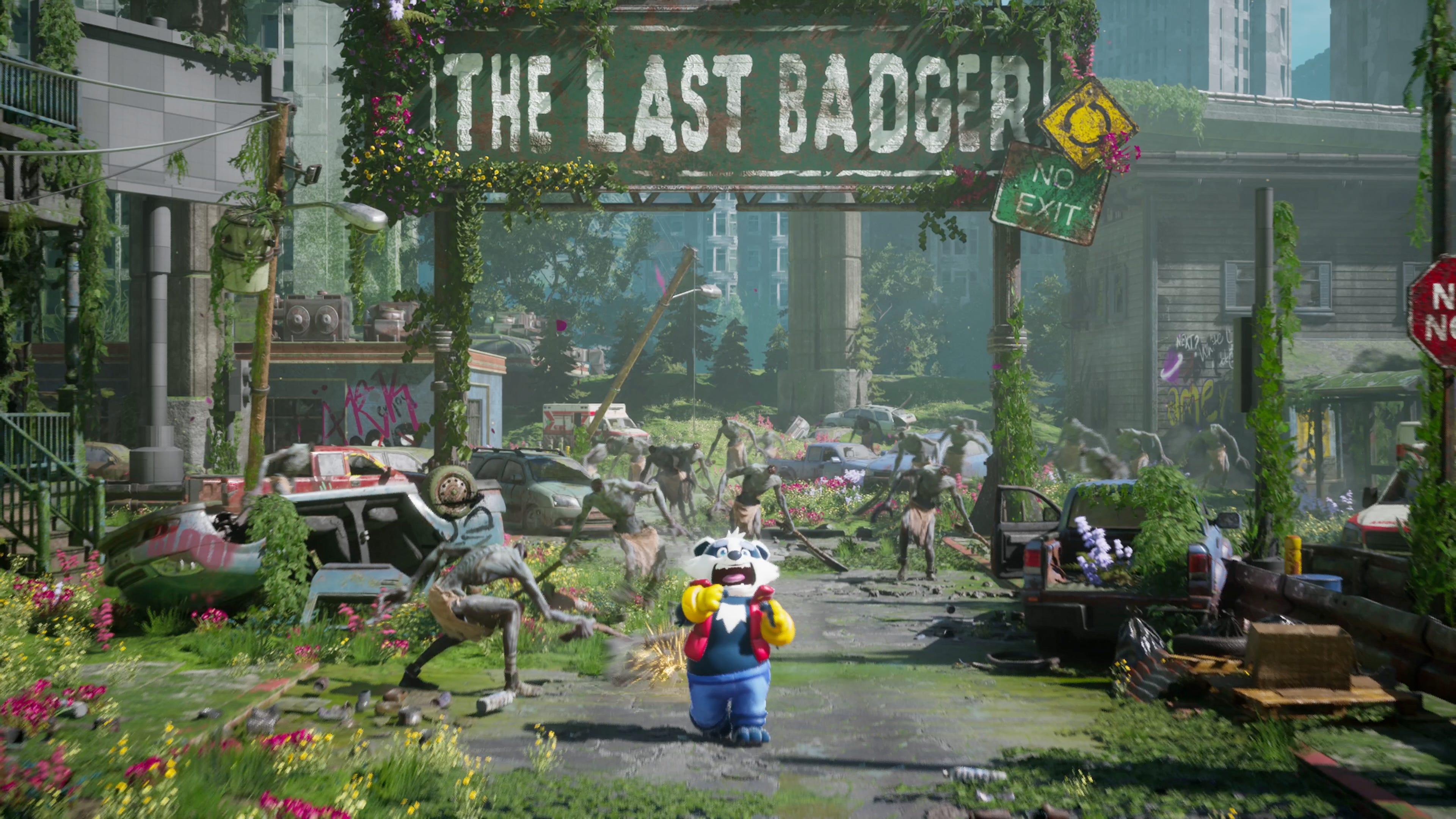
At the beginning of the 2000s, Cantamessa made the move to the UK to join DMA Design and found himself on a certain game called Grand Theft Auto 3. It was a game, he said, that moved very quickly. And he’s getting a similar sense with Day 4 Night, which only formed just over a year ago, and already has something up and running that people can play.
“I remember being a very small team, moving very quickly, playing the game together and being in love with the game,” he says. “I am feeling that same vibe with this team. I haven’t felt that in a really long time. Sometimes, it’s easy to turn game development into a job. And, at least for me, it hasn’t felt like I’m going through my job. It feels like an adventure every day. That makes you just want to get going and do more stuff.”
A gaming love letter
Bradley The Badger is a satire of the video game business and the people working within it.
“It felt right to us at this juncture in time for the industry to have a component of satire, because there isn’t that much of it out there,” Cantamessa reasons.
“And if you look at every other media, there is a healthy amount of discussion and irony on the techniques, on the genres, and on the people themselves that make these things, from books to movies. We felt like maybe we can contribute something for the game’s space as well.”
Soliani continues: “It’s a love letter to the game. It’s a game that speaks about video games, about the people that are doing the video games, and about this industry. So, there is a bit of ourselves in there, but I truly believe that those experiences are shared by others [working] on AAA games. And we want to talk about that, but we want to do it in a family way.”
“It felt right to us at this juncture in time for the industry to have a component of satire, because there isn’t that much of it out there”
Probably the biggest element that won me over with Bradley The Badger is how much it felt like something the UK developer Rare would have made in the 1990s. And not just because the game’s music is by legendary Rare composer Grant Kirkhope. The whole game gave me distinct Conker’s Bad Fur Day vibes, which is also a satirical game, albeit one for a more adult audience. It also happens to be a personal favourite of mine. When I said this to Soliani and Cantamessa, they both cheered.
“[Rare] hit a point that was like a creative apex of gaming with Banjo Kazooie, GoldenEye, Perfect Dark, Conker’s Bad Fur Day,” Cantamessa explains. “My work on the Perfect Dark reboot sort-of speaks to my devotion to Rare of the nineties.
“Back in the day, we were doing platforming games for the Gameboy Color. We were working on our games and then playing Banjo and going, ‘Well that’s it. We should just go home. We should find another job and make coffee somewhere.’ Rare is off to great, great things now, but we are still in love with the olden days of their productions. And if we can capture some of the magic again, that would be the best.”
Soliania adds: “Rare was a point of reference for us. I remember that back in the day when we started Mario + Rabbits, Gian Marco Zanna, who is now the managing director of [Day 4 Night] but was a producer of Mario + Rabbids, he told me we should call Grant Kirkhope. And I said, ‘Are you crazy? That guy’s going to ask us for millions and millions. And he’s a legend. We cannot afford that guy.’ And then we sent him a simple mail, and he was super easy-going. I couldn’t believe it. But the first two months, I was completely scared of sending him any feedback. I was just saying ‘yes, yes. It’s fantastic’.”
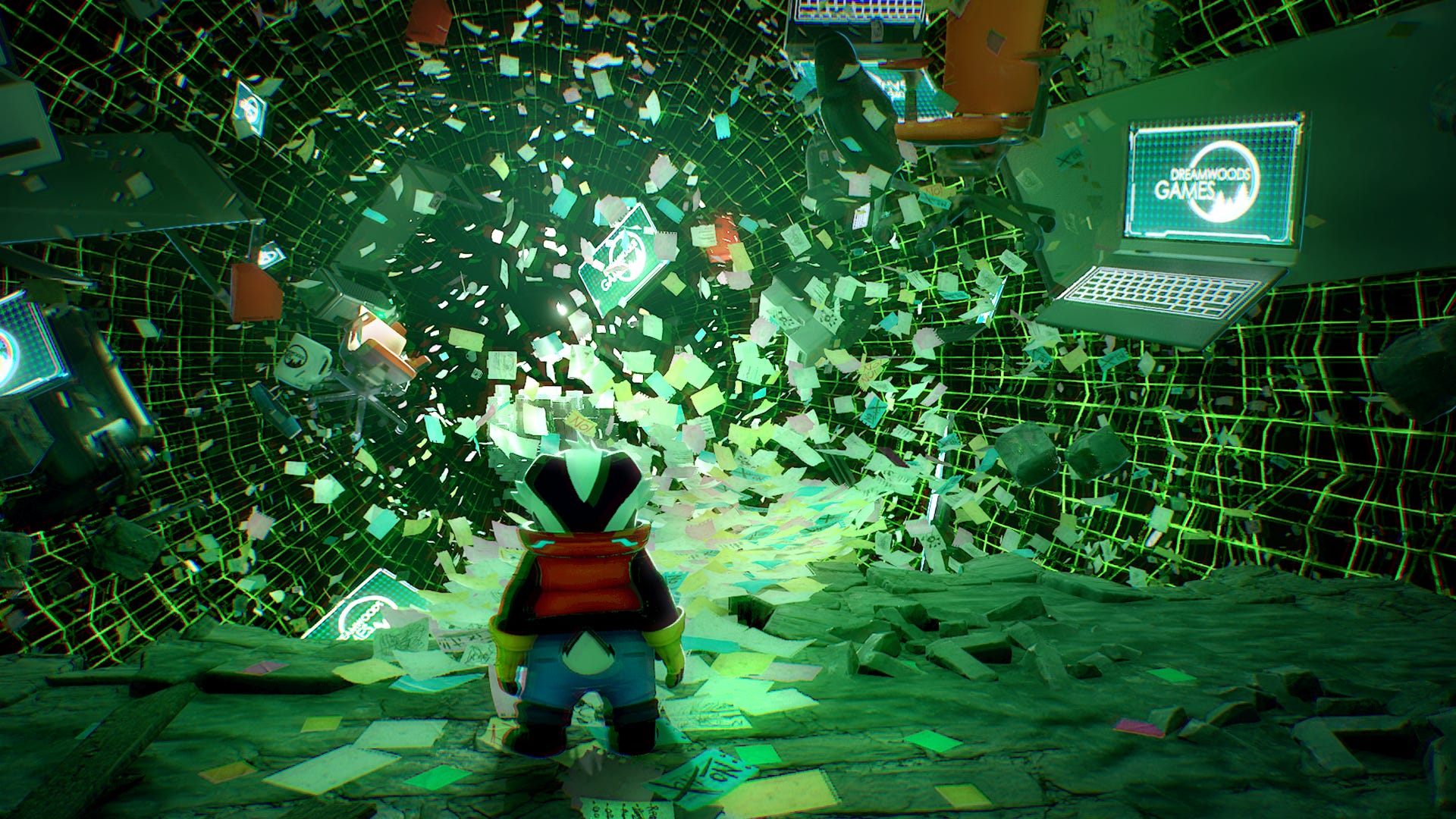
Bradley The Badger is undeniably a risk. We’ve seen countless examples of unique ideas fail to break through in a congested and crowded marketplace. But equally, playing it safe is just as dangerous, if not more so. And if 2025 has taught us anything, it’s that new ideas from new studios is the place where breakout hits can emerge.
Of course, I’m eager to play the game. So, I had to end my conversation by asking, now they’ve had this big TGA moment, when can we expect to see more of Bradley? Or is it a case of slinking back into the shadows to get the game made?
“That’s exactly what we will do,” Soliani concludes. “We’re going deep diving and we will not reemerge for a while, because we need to finish with extra care what we are doing. And then there will be a moment where we’ll resurface with something even more meaningful.”
That’s it for this week’s The Game Business. Join us next week where we will be talking Fallout, NEX Playground and the year that was 2025. See you then.


