


Listen now on Apple, Spotify or YouTube
In This Edition,
Hazelight’s Josef Fares on…
- Avoiding trends
- AI
- Working with EA
- Following Split Fiction

It’s a story as old as the video game industry. Something unexpected does well, and suddenly everyone is doing it. World of Warcraft becomes huge, and we’re bombarded with MMOs. Skylanders is a shock hit, and retailers are flooded with plastic toys. Dark Souls sells millions of copies, and you can’t move for souls-likes.
If there’s one thing this industry loves, it’s a trend.
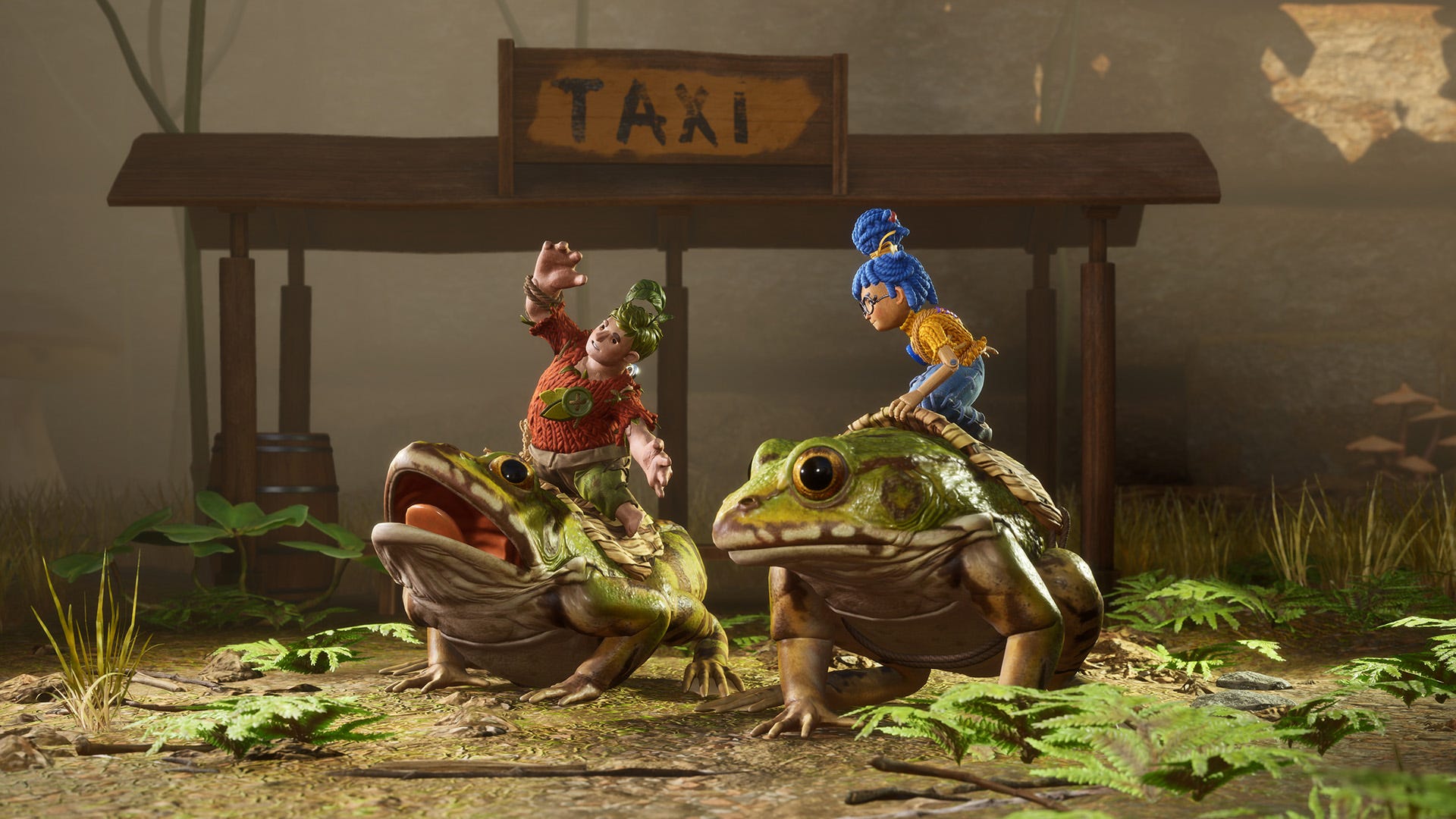
One developer that has no time for trends is Hazelight. The studio was set-up to create, against all advice, story games that require two people playing co-operatively. It shouldn’t have worked, but it did. And spectacularly so. Its first game, 2018’s A Way Out, sold 12 million copies. It followed that with 2021’s It Takes Two, which has now sold an astonishing 27 million units.
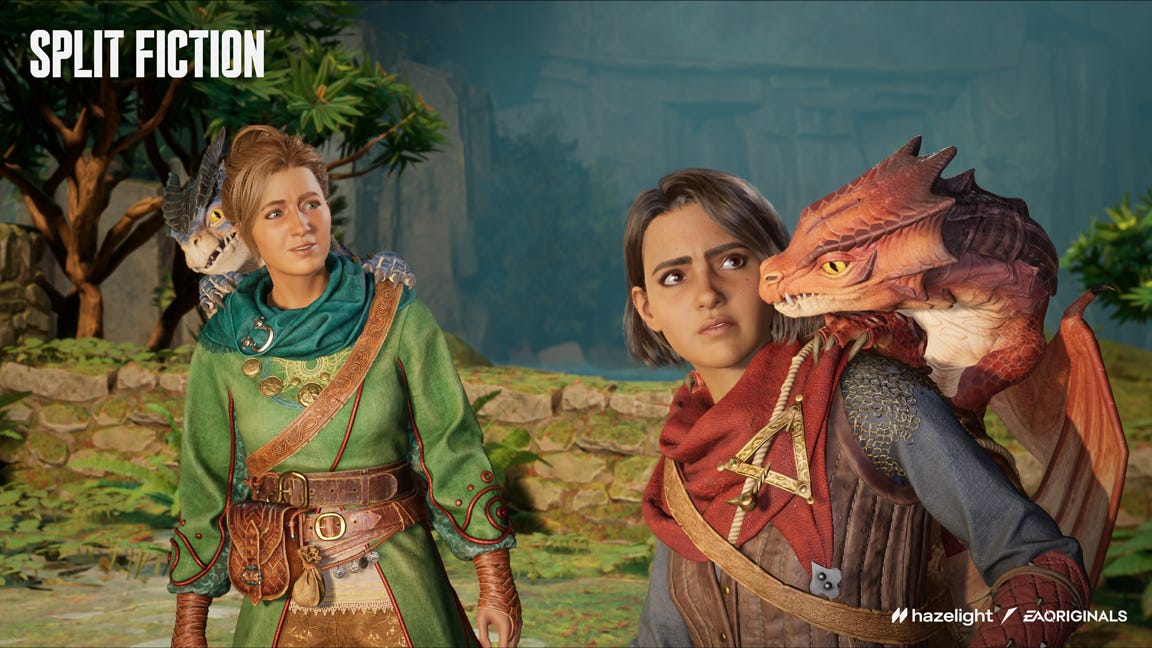
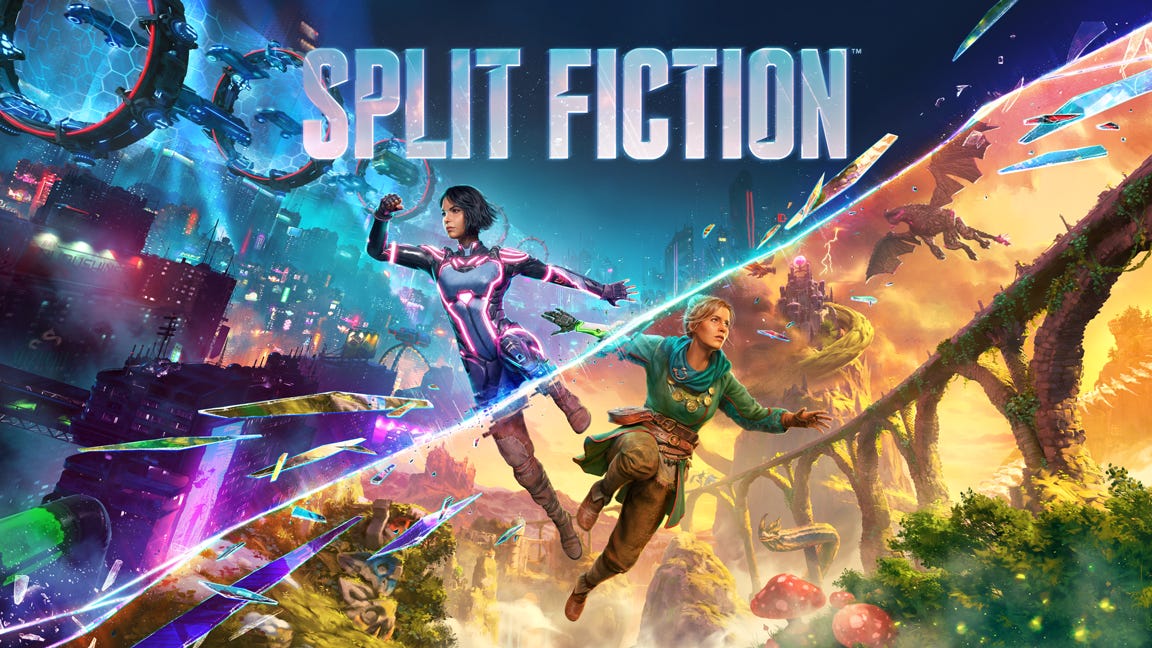
Last year it delivered Split Fiction, another co-op-only story game, and that flew out of the gates, too. After just two months it hit four million sales.
“I remember in the beginning, not many people believed in them,” says director Josef Fares. “There was no market for co-op-only, blah blah. Now it’s the opposite. Now we’re selling more than some of the biggest AAA titles.”
Fares isn’t a business man. He leaves most of that to Hazelight COO Oskar Wolontis. But he stresses the importance of having a balance between the commercial and the creative. He cites the Friend Pass, which is the system that allows two people to play Hazelight’s games online even if only one person has a copy.
“I felt that if you are playing together on a couch, you shouldn’t pay extra if you’re playing online with someone. That didn’t make sense. So, we came up with the Friends Pass, and that in itself became good for business. It started from a creative decision and then became a business thing.”
He continues: “Every decision, every single decision, taken by Hazelight will be based on what we feel is great for the game. We’re not going through data thinking what will sell or not sell. That’s not how we do it. I’m not saying that the business is not important. It’s important to combine them together. If you lean in too much on either side, either too much on creativity or too much on business, it’s going to be bad for the game.”
It’s why Fares will never make Hazelight a public company.
“I will never put Hazelight on the [stock] market,” he tells us. “Because you have to make stupid decisions to make the financials [go up]. That I don’t like. That doesn’t make sense. Then we lean too much on the business side.”
Hazelight and EA
From the very beginning, Hazelight has had a strong partnership with Electronic Arts, which has published all three of its games. EA has garnered an (often unfair) reputation for being the industry’s corporate villain. Indeed, on the surface, Hazelight and EA seem unlikely bedfellows.
“There are a lot of great people at EA. They know how we work. They respect it and they leave us be,” Fares says. “Let’s be honest, there’s not a publisher in the world that hasn’t fucked up now and then. Sometimes I feel that EA is getting more shit than they deserve. I mean, come on, Nintendo, Microsoft, Sony, everybody’s done something that’s not good. But for some reason, EA has become this bad guy.
“For us, it’s a super good collaboration. I’m very open about. If it was bad, I would’ve said that in this interview as well. But we have a great relationship. I’m not saying that they haven’t done any mistakes like every other publisher.
“All the people I am surrounded with at EA are gamers. They love games. It’s not like I’m sitting with corporate people with suits. It’s not like that. And people should not worry, because Hazelight will do always what it wants.”
“I hope that publishers don’t look at a game like Expedition 33 and think, ‘oh, AA is a new thing. Let’s only do that.’ I don’t believe in that.”
If there’s one thing that does concern him about publishers in general, then it’s their penchant for chasing trends. He tells us he’s “generally optimistic” about where the industry is heading, but is somewhat concerned by the excitement around AA games.
“You do hear, after the success of things like Clair Obscur: Expedition 33, that the AA games are taking over. But I would not be able to live without a AAA title. I really want to play the blockbuster games. You can’t do GTA for $10 million. We need both. It’s important not to get stuck in ideas, like AA is a new thing, or indie is a new thing, or ‘blah, blah, blah’ is a new thing. We need the diversity. I hope that publishers don’t just look at a game like Expedition, which has been super successful, and think, ‘oh, AA is a new thing. Let’s only do that.’ I don’t believe in that. You had a huge amount of AA games that came this year, which nobody cared about. Let’s remember that.”
I pointed out that it’s a lot harder to take risks at AAA level.
“I would argue that, actually, Naughty Dog is pushing the envelope of innovation with a AAA budget,” he counters. “I would argue Rockstar is doing it. Nintendo is, most of the time, doing it. So you can do a big AAA title but also take innovative risks.
“But once you go over a $100 million dollar budget, you’re going to be like, ‘okay, shit. There’s a lot of money on the table’. People are more scared. It’s understandable. But it’s proven that you can do it.”
Break stuff
Hazelight certainly takes risks. In fact, the company’s whole development ethos is to ‘fuck shit up’.
“The fuck shit up mentality, without fucking up, is important, because we take things to the next level,” he says. “We can explore. If you are limited, because of risk and being scared, it’s not good for the game. So, for us, it will always be like that, whatever the budget.
“With that said, obviously there’s a responsibility. People need money to pay the rent, and there’s a responsibility to who’s paying for the budget, and to actually deliver the milestone, to do a great game, to not slack, to do something really well.”
In order to truly ‘fuck shit up’, Hazelight needs to “wake up the creative monster” in people, Fares says.
“It’s easier said than done because people put a lot of limitations on themselves, and it’s mainly coming from their mind,” he explains.
“Once you stop listening to that, shit will start happening. And how do you do it? Well, first, you practically push that person… in a nice way, obviously. You say, ‘not this’, ‘let’s do that’. ‘that’s been done before, let’s try this way’. And eventually they come into this ‘fuck shit up’ mentality where they’re like, ‘okay, there are no limits’. And then you make that person feel confident that there really are no limits. People have so many possibilities inside them, and that’s not only for creating games, but in general. It’s just, stop listening to this [points to head] and just feel it instead.”
A hazy future
Fares is clearly an optimistic person. He acknowledges that it’s tough out there, but feels that game developers, collectively, are understanding more about how to make great games.
But does his optimism stretch to the hot button topic of the day, the rise of AI?
“We have been working with AI for a long time in game development. The problem is the generative AI,” he says. “If [an AI tool] is helpful to get your vision out there, I don’t see why we shouldn’t look into it. But… it’s the generative AI that people are a bit like…
“It’s really hard to answer. If you look at Midjourney, for instance, when it came out it was so impressive. And five years later… the bar hasn’t gone up much. Maybe this is the limit of it.
“You get someone generating a game concept and saying, ‘oh look what might happen in five years?’ But who knows? In five years, maybe it’s going to be like Midjourney… not much better.
“At the end of the day, you still need someone that has a vision or idea of what game it is. I don’t see AI taking over. I don’t. But it’s really hard to answer. Who knows what happens in the future?”
“I will never put Hazelight on the [stock] market. Because you have to make stupid decisions to make the financials [go up]”
In many ways, Hazelight lives in its own world. It effectively created and mastered its own genre. Its games are so successful it doesn’t have to worry much about anything. The company has 80 employees, with no plans to expand much more.
So, what’s left to achieve?
“Oh, so much,” Fares answers. “Our industry is extremely young. Look at the movies. They’ve been around, what, 125 years? If you look at games… when did we start? The 1980s? 1970s?
“There’s so much potential in how to tell a story, how to find new mechanics, how to find new genres, how to find new ways of making games… it’s so exciting. I won’t talk about the future of Hazelight but… obviously co-op will always be part of our DNA because we’re the best in the world right now. But I would not be surprised what happens in the future, because I might have some ideas.”
Hazelight is well into its next project. The game has a vision, and Fares says that as long as you have that, and believe in that, it takes the pressure off.
“I don’t even know this word ‘pressure’. I feel extremely confident of everything we’re doing. I can easily say that our next game is better than Split Fiction.”
He concludes: “We’re on a good path. Hazelight is a very respected studio that people look up to and get inspired by. And the key thing is to keep fucking shit up.”
That’s it for today’s edition of The Game Business. We’ll be back on Thursday where we’ll discuss whether the video game industry really exists…
If you enjoyed this, why not become a paid subscriber? Not only does that help us to keep going, but paid subscribers also get our Micro edition every Monday, plus our monthly market report.
Until next time, thank you for reading.


