


Listen now on Apple, Spotify or YouTube
In This Edition
- GoldenEye legends talk Scrabble
- Are old games hurting new sales?
- Asia and MENA data
- Plus, VGC’s Andy Robinson joins the Show
Hello there! And welcome back to The Game Business.
On this week’s Show, I’m joined by my good friend Andy Robinson, the founder and editor of Video Games Chronicle. Together, we chat about the latest industry stories, the growing popularity of old games, plus the latest data coming out of the Asia and MENA game markets.
But best of all, we’re joined by Dr David Doak and Steve Ellis, two of the masterminds behind GoldenEye, Perfect Dark and TimeSplitters (which are three of our favourite games). Doak and Ellis join the Show to discuss their new rogue-like Scrabble game, Beyond Words.
You can check out the full Show above. But as usual, I’ve shared the saliant facts and quotes in the articles below.
Enjoy!
GoldenEye and TimeSplitters creators: “Maybe this isn’t what we should be doing”
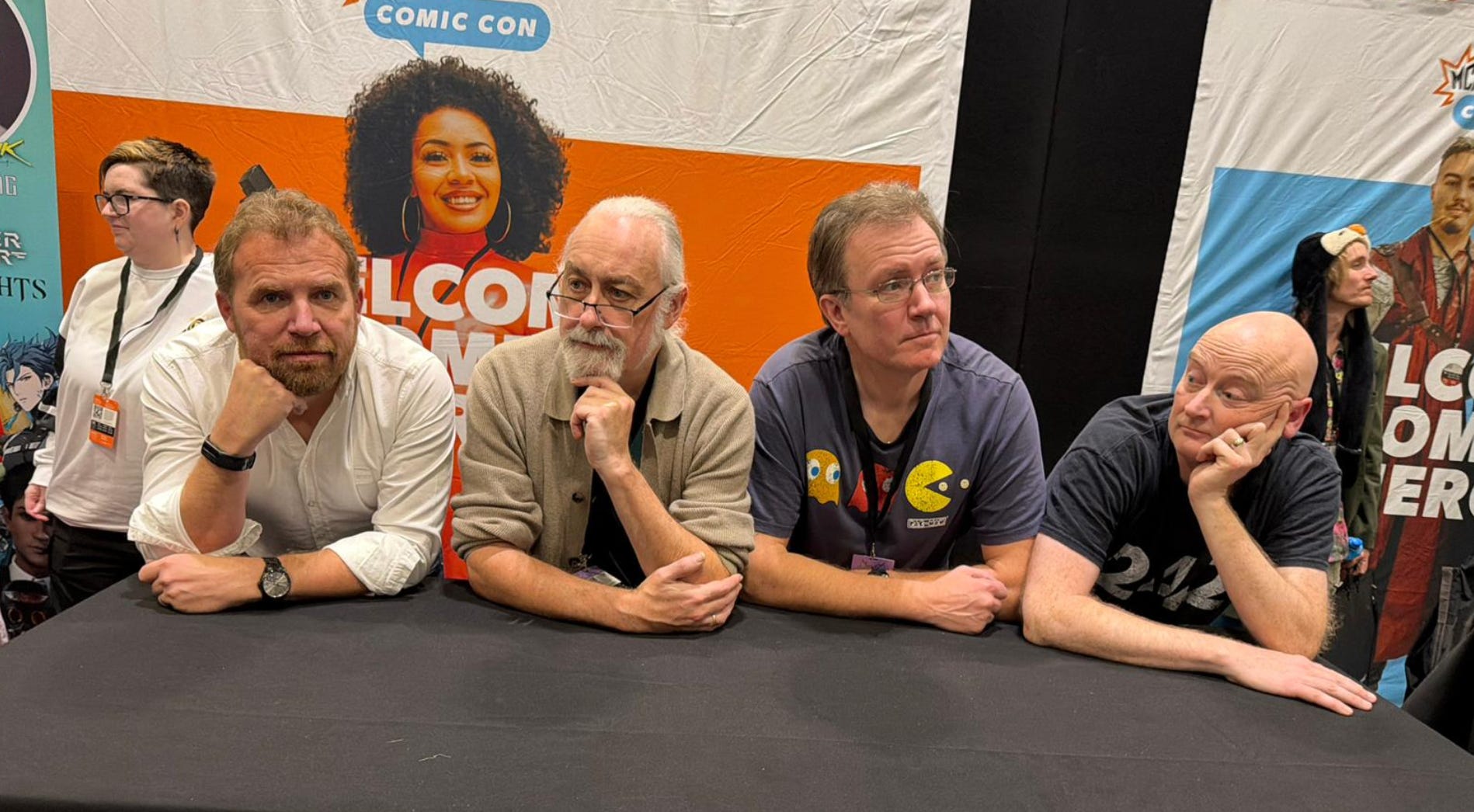
I last spoke with Dr David Doak and Steve Ellis in October.
The two were part of a panel I’d put together in London to celebrate 25 years of TimeSplitters and Perfect Dark, which are two games they had helped create. After the panel, they were swamped by fans of their work, which also includes the seminal N64 hit GoldenEye.
Today I am speaking with them again, but this time it’s about something new. Doak and Ellis have reunited on a rogue-like Scrabble game called Beyond Words, which is out early next year.
This isn’t the first time Doak and Ellis have reunited. In 2021, they were hired by Embracer to relaunch Free Radical Design, the studio they had first formed in 1999, to create a new title in the TimeSplitters series. But in late 2023, as part of a wider Embracer restructure, the game was cancelled and the studio closed down.
“After all that, the first thing we wanted to do was nothing for a while,” Ellis tells us.
“So that’s what we did. We had a few months off. But we still felt like we wanted to do something. And having been through all of that, building a team and being forced to shut it down again, we wanted to do something smaller. And for me personally, when I’m running a company with loads of people, I don’t get to do any programming. I like programming. It’s why I got into the industry. So, we wanted to do something small and something where we could be hands on.”
Ellis and Doak started building some prototypes to try and find something fun, and then one weekend Ellis came up with a game that could be reasonably described as ‘Balatro meets Scrabble’.
“It was immediately obvious that there was an interesting game to be made,” Ellis says. “So, we put the other stuff on hold and that’s what we’ve been doing since.”
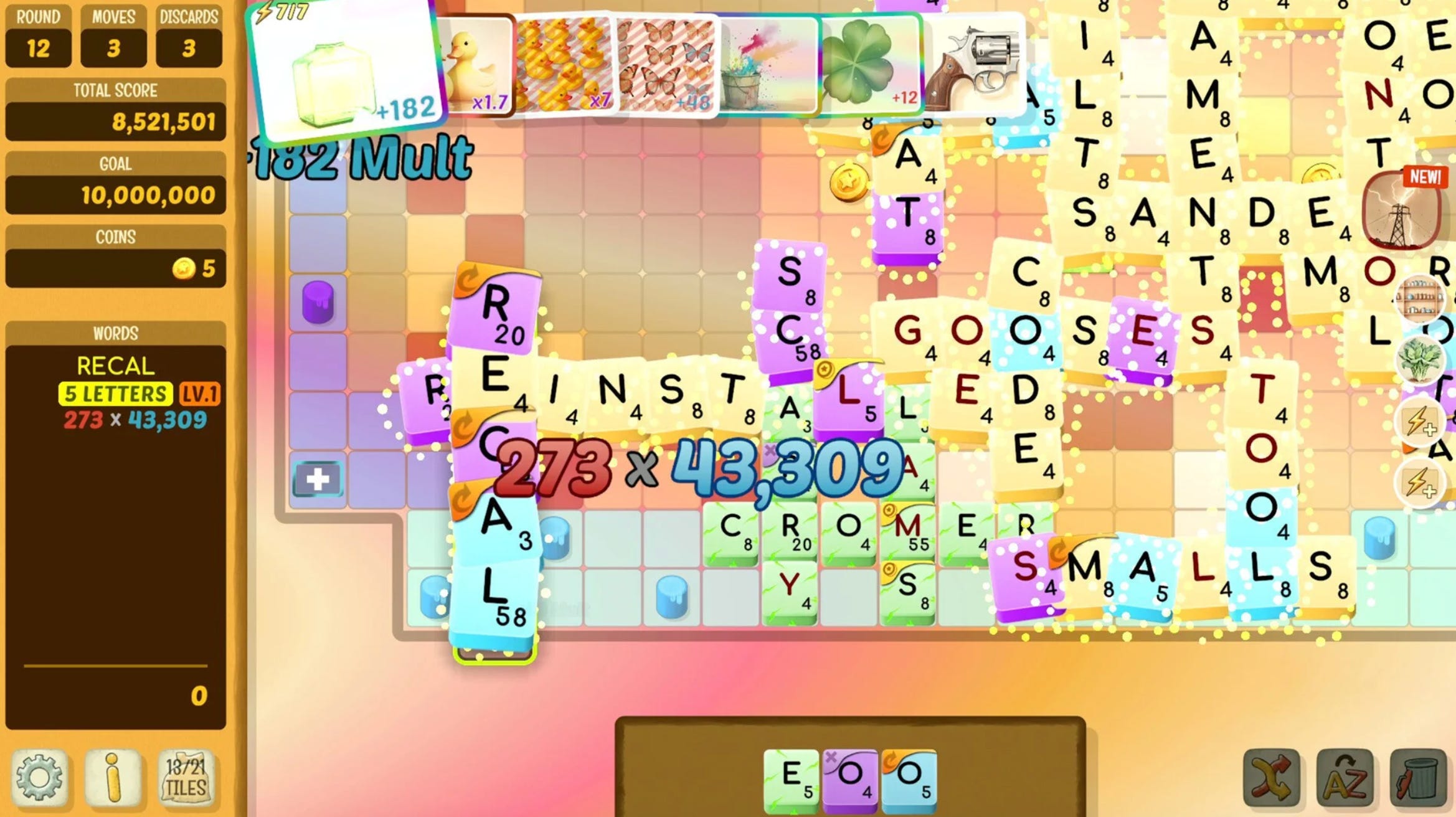
The idea of the GoldenEye developers reuniting on a game that isn’t a shooter might be disappointing for some fans, although Doak quipped on social media that Beyond Words is still an FPS… “a first-person speller.”
Ellis doesn’t rule out returning to shooters one day, but he remarks that it’s hard to make a game in a genre they’re increasingly disconnected from.
“We’re not as young as we used to be, and it’s hard to make a game that isn’t something that you would play yourselves,” he observes. “I’m not really any good at playing shooters anymore. I don’t have the reactions for it, which makes it really hard to judge whether it’s right or not. This is more the kind-of game that I would play now.”
Doak adds: “It’s been enjoyable to make because we enjoy playing it. It feels like making a toy in a way that when we did the TimeSplitters reboot, that didn’t feel like making a toy. There was a lot of great experiences there, and a lot of nice people to work with, but you were thinking… are we actually going to innovate with this?”
What’s clear is that Doak and Ellis believe in Beyond Words. They’ve formed a studio called MindFuel Games, they have signed a publishing deal with PQube, and they’ve released a free demo on Steam. So, is this a one-off, or should we expect more from them in the future?
“Getting the band back together has been really good fun,” Doak says. “But it would be nice to have some success with it. Because it’s almost like a validation that you are still able to do something.
“We did that [TimeSplitters panel with you] recently. And you go to these places and it is great to meet people and have them tell you that the things that you made touched them. But always in the back of your head you’re thinking, ‘yeah, but that was like 20 years ago. Maybe I’m not any good at that anymore?’
“I think we’ve made something that’s good [with Beyond Words]. It would be brilliant if it could go out and have some success. If it does, we definitely have the appetite for doing more stuff. But if it doesn’t, we might then be going, ‘well, maybe this isn’t what we should be doing’.”
Are old games killing new ones?

Last week, Sega’s management team were asked why just 17% of its game sales in the last quarter were from new releases.
The Sonic publisher suggested a few reasons, including higher pricing of newer releases, strong competition, and the notion that gamers are waiting to buy the ‘definitive edition’ of games.
And Sega isn’t alone in this situation. Increasingly, back catalogue is taking up an ever-growing chunk of companies’ game sales. Capcom reported a nearly 54% rise in profit during its last financial report, and this was mostly due to strong sales of Resident Evil Village (released in 2021) and the Resident Evil 4 remake (released in 2023).
Now we know that older games are dominating playtime. Newzoo says that just 12% of playtime in 2024 was spent on games released that year, and that includes annual sports titles and Call of Duty. In fact, 57% of playtime was spent on games that are six years or older.
However, that’s primarily due to the popularity of on-going live-service titles like Fortnite, Minecraft, Roblox and GTA Online. These games are huge and take up hundreds (even thousands) of hours of people’s time, so they’re naturally going to dominate the playtime stats. Just because people are spending huge amounts of time playing older online games, doesn’t mean they’re not buying newer titles, which might be shorter experiences (and therefore have less of an impact on the playtime figures).
However, US data firm Circana shared some interesting insight from its player engagement panel for PlayStation 5, which shows just how engaged players are with newer titles:
Last week, there were 1,456 games on PS5 that had at least one player in the Circana panel. Of those games, only five reached 10% or more of the player base, and only 48 reached more than 1% of the player base
Out of those 48 games that reached 1% of the PlayStation 5 player base, only 12 of them were games released in 2025. If we remove sports games, that drops to eight titles: Call of Duty: Black Ops 7, Battlefield 6, Where Winds Meet, Arc Raiders, Skate, Ghost of Yotei, Borderlands 4 and Dispatch.
This is during a week in the run-up to Christmas, when newer games typically to do quite well (although the release slate is a bit quieter this year).
Video games are ageing more slowly today, and it’s not uncommon to see legacy games in the Top Ten best-seller lists (typically driven by discounting). We’ve been reporting the weekly European charts from GSD since September, and over the last eight weeks we’ve seen Titanfall 2 (2016), Spider-Man 2 (2023), Doom Eternal (2020), Far Cry Primal (2016), and South Park: The Fractured But Whole (2017) reach the Top Ten, alongside mainstays such as It Takes Two (2021), GTA V (2013), Red Dead Redemption 2 (2018) and Hogwarts Legacy (2023).
Publishers have multiple ways to drive interest in older titles today, including via digital sales, subscription services, software updates and, in specific cases, tie-ins with TV and film adaptations. We’re seeing game companies becoming more adept at managing a game’s lifecycle, and delivering strong results for years beyond the initial release. And it’s natural this would have an impact on newer product.
Of course, there’s no disputing that live-service ‘forever’ games are the ones having the biggest impact on player time. But the reality is that live-service social games like Fortnite are played for different reasons than a story game like Assassin’s Creed or Silent Hill. Nevertheless, those story games have their own competitive challenges to overcome, and that includes the fact that there is an abundance of older titles that can stand toe-to-toe with more modern product, and typically at a far lower price point.
Asia and MENA markets to reach $89bn this year – Niko Partners
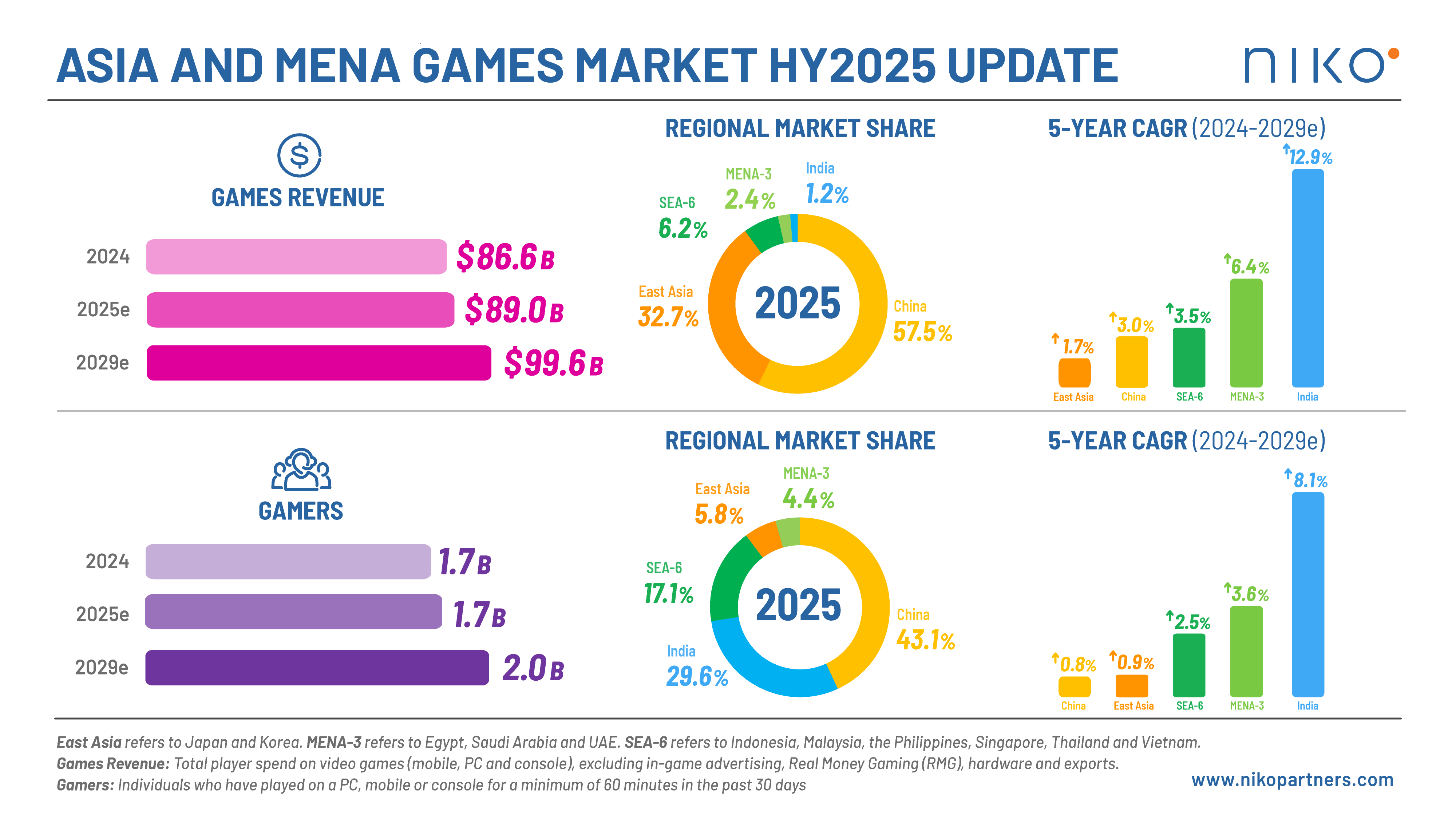
Data specialist Niko Partners now expects the Asia and MENA markets to hit $88.97 billion in 2025, a slight increase on its previous estimate.
The firm is a leading tracker of game sales in China, India, Japan, Korea, Indonesia, Malaysia, Philippines, Singapore, Thailand, Vietnam, Egypt, Saudi Arabia and UAE.
That $89 billion number represents a 2.7% increase over the year before. This year will have also seen 1.7 billion players across those 13 markets, which is also a 2.7% rise year-on-year.
PC and mobile are the key drivers, as you would expect, but there are new growth areas, including a rising number of female players.
Other key facts:
India, MENA, and Southeast Asia will be the fastest-growing regions in terms of revenue and number of gamers through to 2029. And India, MENA and China will see the biggest growth in average revenue per user by 2029.
India is the fastest growing market in the region, and is expected to exceed $1.5 billion in gamer spending by 2028. However, it’s the growth in players that is truly remarkable. Niko Partners believes that there will have been 500 million gamers in India this year, and that will grow to 700 million in 2029.
China, Japan, and Korea are by far the most mature markets, and by 2029 they’ll account for $88.8 billion in revenue, which represents around 89% of the total revenue across all 13 markets.
Malaysia and Vietnam are set to be the fastest-growing markets in Southeast Asia by revenue, while growth in Indonesia and Thailand has slowed due to socio-economic challenges.
Consoles will only account for 6.3% of revenue in 2025 across the regions. However, Niko Partners expects consoles to be the fastest-growing platform segment through to 2029. This will be driven by Nintendo Switch 2 and growing spend on free-to-play titles and subscription services, such as Xbox Game Pass, PlayStation Plus and Nintendo Switch Online.
You can check out more from Niko Partners’ latest update here.
That’s it for today’s edition of The Game Business. Join us next week as we kick off our coverage of The Game Awards, including an interview with TGA host, producer and founder (plus, yes, co-founder of The Game Business) Geoff Keighley.
Until then, thank you for reading.


