


Listen now on Apple, Spotify or YouTube
In This Edition
Obsidian’s Marcus Morgan and Justin Britch on…
- An iterative approach to development
- Releasing three games in a year
- Surviving the contested RPG genre
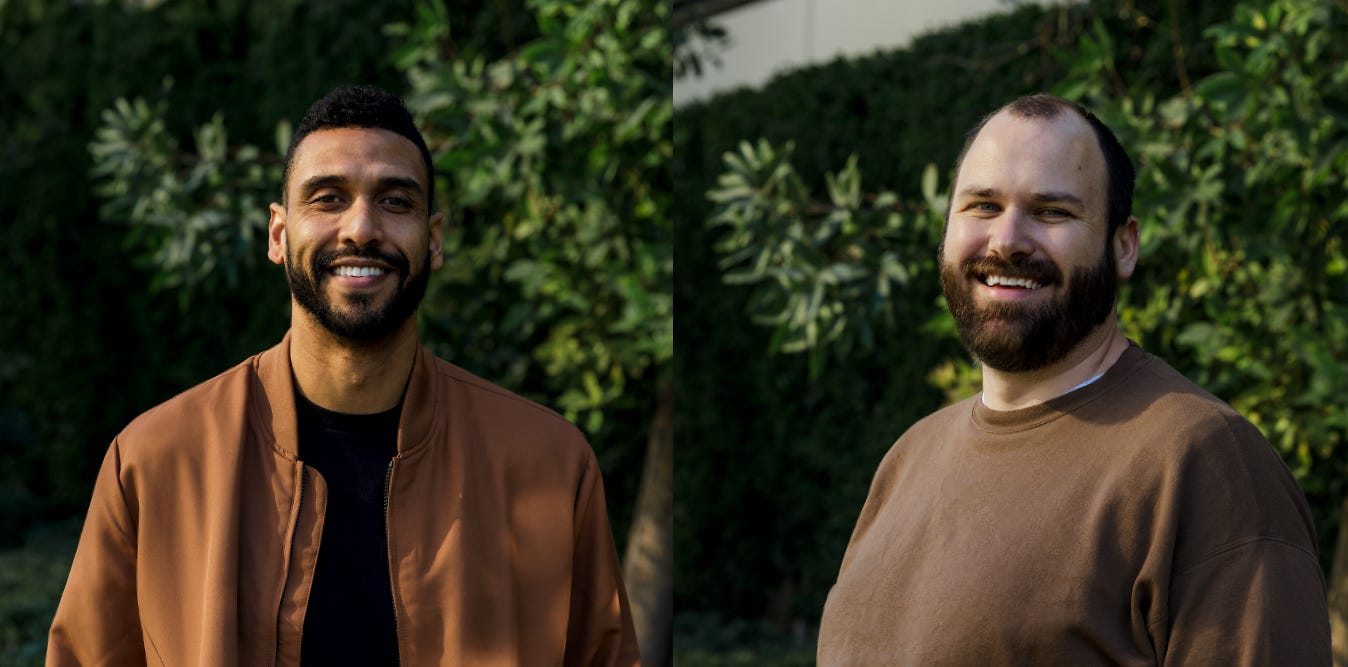
When you get a job at Obsidian, you get to pick a class.
There are three to choose from: Warrior, Wizard and Rogue. And then over 20 years, you level-up and receive ‘gifts’ related to your class.
“They’re just a lot of fun and speaks to the fact we want people to be here forever,” says Obsidian’s VP of operations Marcus Morgan.
“You start with some D&D dice, and then you get the various aspects of those things. So, [for Warriors] you get a shield, and then an axe, and then a helm. The wizards get a cloak… We couldn’t help but RPG it up. It has made things complicated logistically.”
VP of development Justin Britch, who has been at the company for 12 years, points to his staff propped up in the corner.
Morgan continues: “We have talked about if you want to stay for more than 20 years, like Justin and I plan to do, then you can multi-class. You could collect the other elements of the different classes.”
So, to complete the set, you just need to stay for 60 years?
Morgan laughs: “That’s right.”
Britch adds: “It’s a reasonable amount of time.”
This employee gift system speaks to two aspects of Obsidian as a studio. The first is how its approach to game development is influenced by RPGs.
“The roots of our studio are based in D&D,” Morgan says. “And all of us think about ourselves as dungeon masters. We create a setting, we create a world, we create a set of experiences that lets players go on the journeys that they want.”
The second aspect that these gifts represent is around the firm’s focus on retaining staff.
“Usually after the first couple of months, I sit down with every new [employee] and I’m like: ‘We hope this is a place where you want to be for 10, 20 years,’” says Britch. “There’s just so much that you learn going through the process of shipping a game, and it is different from company to company. We place a huge value on people going through and learning what an Obsidian game is, what it means to be at the start of a project and what it means to be at the end.
“One of the reasons we’re able to keep people for longer is that they can work on different things over years and over projects. They work with different teams and people. That keeps it fresh even if you’re working in the same studio for a long time. And then we get the benefit of people who understand what is Obsidian, and what is our ethos, our process and style of making games. That stuff really pays dividends over the years.”
The reason we’re talking about staff retention is because I’m trying to get a grasp on Obsidian’s impressive level of output. Since the studio was acquired by Microsoft in 2018, it has launched six games: 2019’s The Outer Worlds, 2020’s Grounded, 2022’s Pentiment, and this year it has released three: Avowed, Grounded 2 (in Early Access) and The Outer Worlds 2.
Obsidian is a multi-team studio, but even so, that’s an impressive output. And having a stable studio with staff that understand the company, the games and their co-workers, has certainly helped them to achieve that.
But perhaps a bigger factor is Obsidian’s realistic approach to scoping projects, and its almost iterative approach to making video games.
“One of our core foundational pillars is ‘build upon past success’, which is: take what we have, iterate on that, improve, then ship it and improve again,” Morgan says. “That iterative process is part of what we believe helps us make better games, whether that’s in an Early Access state with Grounded, or whether that’s with The Outer Worlds 2, which is building upon a lot of the aspects of The Outer Worlds 1. We keep a lot of our same tech stack and we iterate on that.
“I’ll say too, we are really anxious to see how players react to our stuff. The most fun part about game development is people playing your game.”
Britch adds: “We’re impatient at the end of the day.”
The Obsidian identity
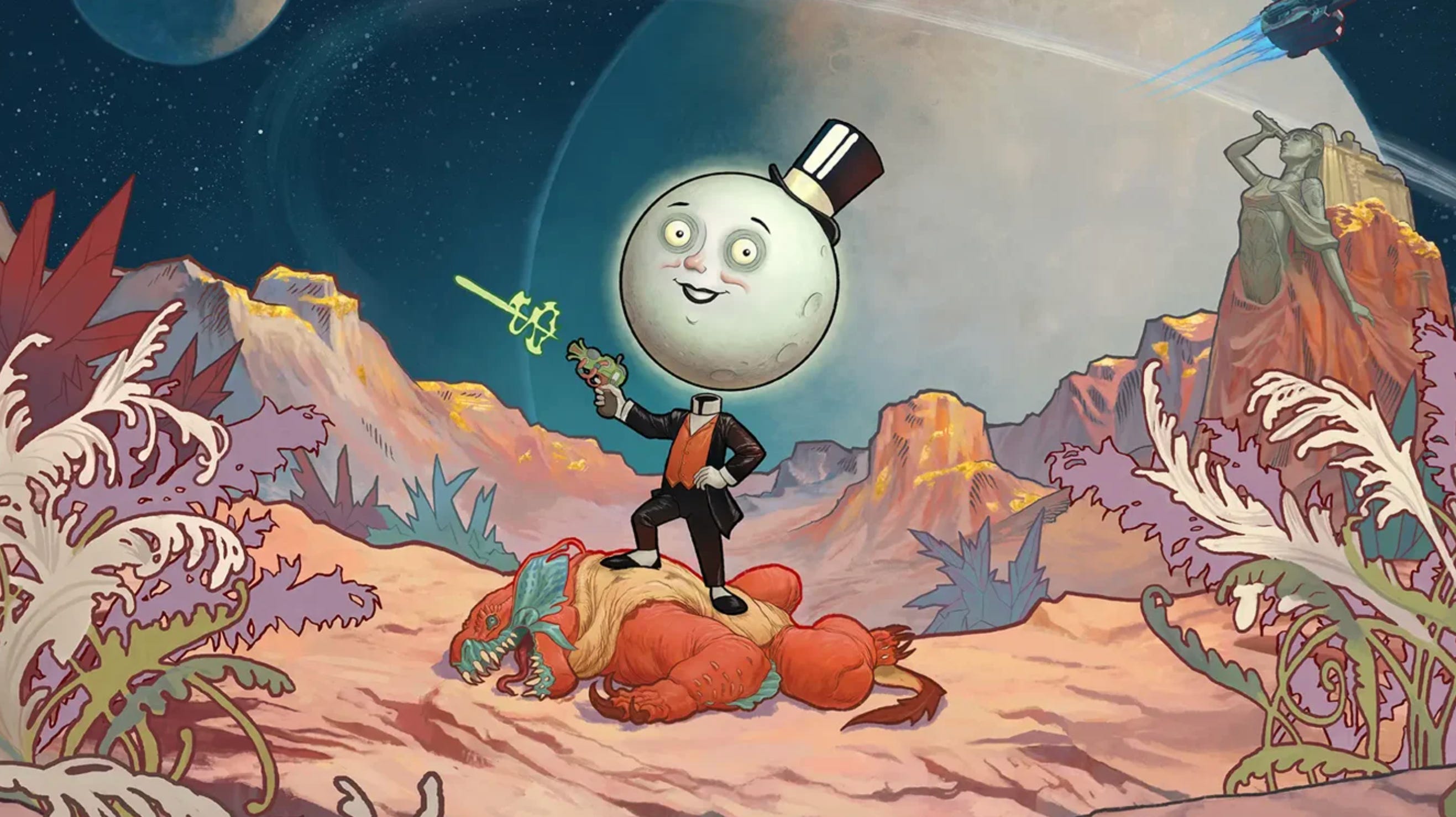
There’s an argument to be made that The Outer Worlds 2 should have been a Fallout game.
After all, The Outer Worlds is heavily inspired by Fallout. Obsidian even made one of the more popular Fallout games (2010’s Fallout: New Vegas). Both Obsidian and Fallout are now owned by the same parent company (Microsoft). And this December there’s the highly anticipated second season of the Fallout TV show.
In other words, a Fallout video game would have done very well right about now.
Yet what might have been good for Microsoft’s bottom line, wouldn’t necessarily be what’s best for Obsidian. The developer has a history of making sequels to other people’s games, including that aforementioned Fallout title. But over the last decade, Obsidian has focused on building its own IP.
“I know everyone on the internet, on every game we announce, asks: When’s the next Fallout: New Vegas? When’s the next whatever?” says Morgan.
“But this year, all three of the games are IP that we’ve created. Our history prior to Microsoft surrounded working on others’ IP. And this is the joy that we get of… how do we build our own IP? And we’ve got to the part where we have sequels to all of them.”
“I know everyone on the internet, on every game we announce, asks: When’s the next Fallout: New Vegas?”
Ever since Pillars of Eternity in 2015, Obsidian has been seeking its own identity and place in the pantheon of great RPG studios. But its iterative, almost conservative, approach to game development might make that difficult. After all, they’re competing with giants like Bethesda, CD Projekt and Larian, which have huge teams spending multiple years crafting massive projects. Now it has the backing of Microsoft, was there any consideration about Obsidian going bigger with its projects?
“In full transparency, the journey around The Outer Worlds 2 and Avowed put [our approach] to the test quite a bit,” Morgan tells us. “There was a little bit of self-doubt or self-questioning of… should we be chasing after these aspects of AAA? As we went through that journey, the lesson we learned was… stay true to our roots and keep building the games we make, as opposed to chasing after others. We are always inspired by all of the RPGs that exist, but we also have our own style of RPG.”
“When I look at Larian’s RPGs, or Bethesda’s RPGs, or CD Projekt’s RPGs, they are compared, but they’re all very different. I want a different experience when I go play Baldur’s Gate than I do when I go play Cyberpunk. We’ve worked on Neverwinter Nights, we’ve worked on Fallout, so it can’t help but be somewhat ‘are we just trying to be like that?’ Our goal with The Outer Worlds and Avowed is to more clearly define what it is to be Obsidian as a standalone entity, as opposed to chasing after what already exists.”
“We want The Outer Worlds 2 to be big”

This talk of Obsidian being conservative and iterative perhaps downplays the ambition for The Outer Worlds 2, which released last week. The first game sold five million copies, and this sequel has had a strong marketing campaign featuring US actor and comedian Ben Schwartz.
“We want the Outer Worlds 2 to be big,” Britch says.
“It’s not that we’re not ambitious, it’s that we’re very realistic right at the beginning of a project, making sure that we know that we can make this game, and we firmly believe that this is something that we can succeed in. That’s where that conservativeness comes from. We are pretty picky about the projects, and we have a diligent process about it.
“We don’t want to put ourselves in a situation where we have one bad project and then the studio goes away. All this ties into: What do we want the game to do? What is an Obsidian game? And if we’re going to make a huge bet on The Outer Worlds 2, we want to make sure we feel strongly about that from day one.
“We actually waited a while to show Xbox the game, because we knew that it was going to be something that was special. So, when we had something great to show, we sat everyone down, said ‘hey, check out what we’re doing’. And we appropriately blew them away.”
“We don’t want to put ourselves in a situation where we have one bad project and then the studio goes away”
Morgan says that The Outer Worlds 2 hasn’t suddenly become mainstream. It’s still a specific style of RPG for a certain audience.
“When you look out at the industry now, we’ve seen things that used to be niche explode into these mega [games]. Look at the Souls games from FromSoftware, or Baldur’s Gate 3… those [came from] a focus on their core audience that then expanded into the masses. That’s where we want to remain focused.
“Even with our marketing campaigns being backed by celebrity spokespeople, hopefully you still see a loveable jank to all of that, which speaks to the core of what we want to reach. It’s not our goal to go full blown AAA. Not that I have anything to say about that, but we just want to be Obsidian and hopefully Obsidian can become bigger and better with each iteration.”
Ultimately, Obsidian’s future doesn’t rest solely on The Outer Worlds 2, just as it didn’t rest on Avowed or Grounded. But rather, it’s about all of those titles that, one-by-one, allow the studio to keep getting that bit stronger.
“We want to be around for 100 years,” Morgan concludes. “We legitimately think about that. It is maybe naive [because of] how the industry is structured, but that’s our goal. We want to just keep getting better at what we’re doing, and iterating on that.”
That’s it for today’s episode of The Game Business Newsletter. We will be back Thursday with our usual News and Analysis edition, featuring Video Games Industry Memo’s George Osborn on the podcast. See you then!


